Our new study suggests that the appetite effects of artificial sweeteners vs real sugar may depend on biological factors, as women and people with obesity showed greater hunger related responses | JAMA Network Open | JAMA Network https://t.co/MRtWsfgtnv
The article shows startling data on the rising mental health crisis in teens. To me, it signals an urgency for more research to find ways help this struggling generation https://t.co/BRLl9djgSB
I just showed my support for UNICEF and the children. Check out UNICEF USA to learn what they are doing, and how you can help too. https://t.co/gTm5oaisVG
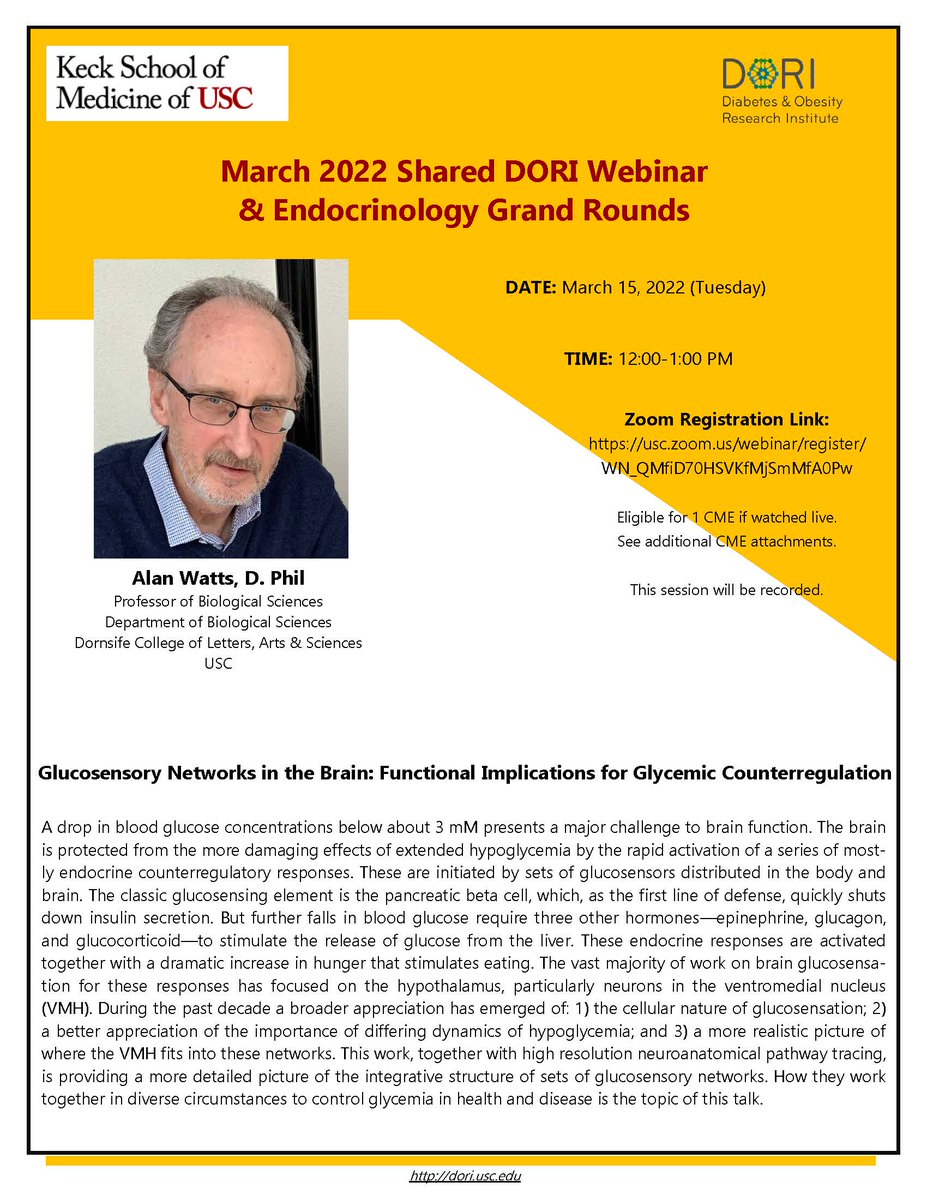
March 2022 Shared DORI Webinar & Endocrinology Grand Rounds- Alan Watts, D. Phil
Glucosensory Networks in the Brain: Functional Implications for Glycemic Counterregulation
DATE:
March 15, 2022 (Tuesday)
TIME: 12:00PM-1:00PM
Zoom registration link: https://t.co/QiE21RLdUM
.@USC and @ChildrensLA's joint clinical and translational research program earns a perfect score on their application to @ncats_nih_gov!
Read more here --> https://t.co/FKu9Eoi9pN
This randomized crossover trial found that both females and people with obesity, and especially females with obesity, have heightened brain reward responses to sucralose (non-nutritive sweetener) vs sucrose (nutritive sugar) consumption. https://t.co/ZgNUWf7ld4
Differential Effects of Sucralose vs Sucrose on Appetite and Reward Processing https://t.co/JWHFZ8dBwS via @JAMANetworkOpen part of @JAMANetwork@BRANCH_LAB_USC@drkatiepage check out the newest findings from the BRANCH lab!