जहाँ एक जमुई की घटना ने बिहार को शर्मसार कर दिया। दूसरी तरह बिहार के एक शख्स ने इंसानियत की अनोखी मिसाल पेश कर दी।
83 साल के चमन लाल अमृतसर में तीर्थयात्रा के दौरान रास्ता भटक गए और करीब 1,200 किमी दूर गया, बिहार पहुँच गए। उन्हें सिर्फ अपने गाँव का नाम याद था।
गया में मजदूर नीरज ने उन्हें देखा।
घर ले जाकर खाना खिलाया।
और कई दिनों की तलाश के बाद इंटरनेट व ChatGPT की मदद से उनके गाँव,फतेहगढ़ गुजराँ, लुधियाना, का पता लगाया।
लेकिन नीरज यहीं नहीं रुका।
वह खुद चमन लाल को लेकर बिहार से पंजाब पहुँचा और उनके परिवार से मिलवाया।
परिवार ने उन्हें देखते ही गले लगा लिया।
नीरज को फूलों की माला पहनाकर धन्यवाद दिया।
एक अनजान बुज़ुर्ग के लिए नीरज ने जो किया।
वह सिर्फ मदद नहीं इंसानियत की मिसाल है। ❤️
सलाम है ऐसी सोच और ऐसे इंसान को।
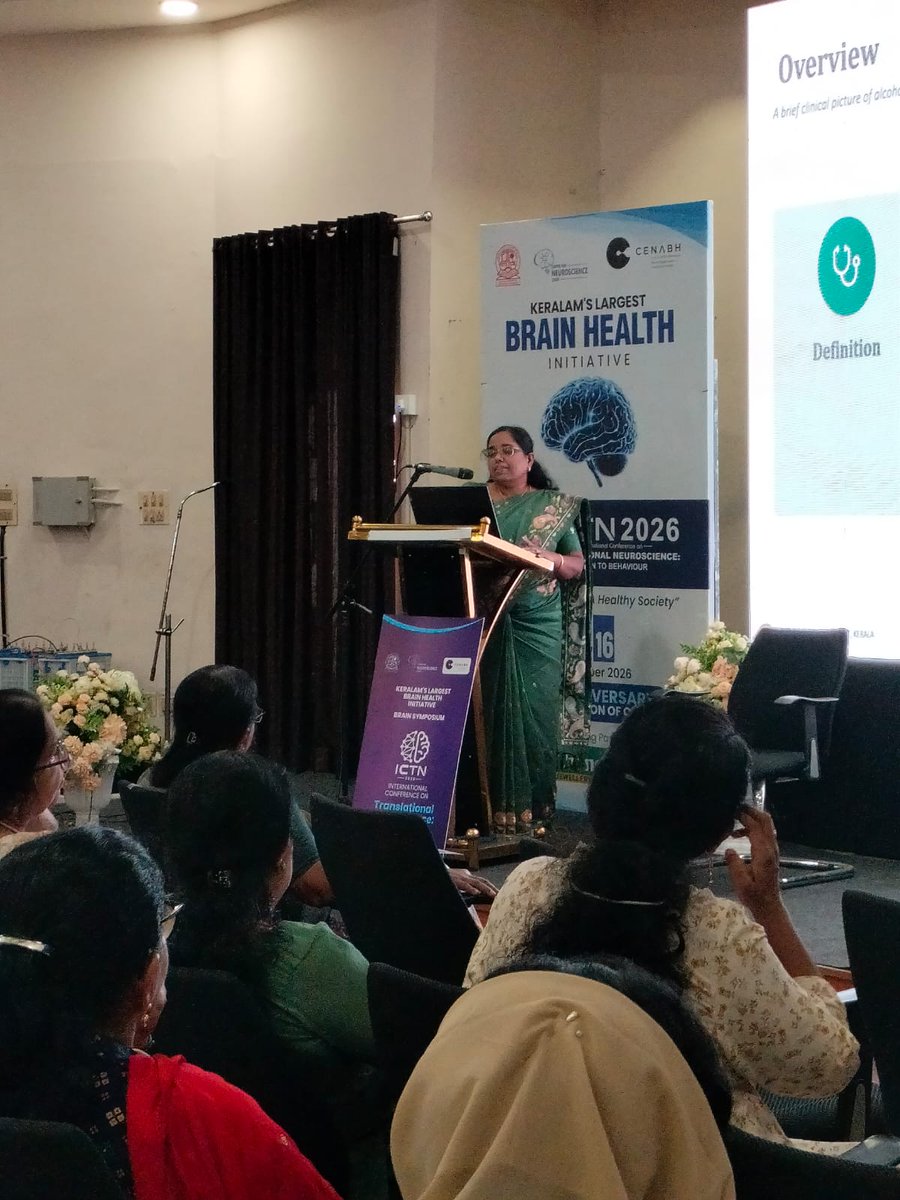
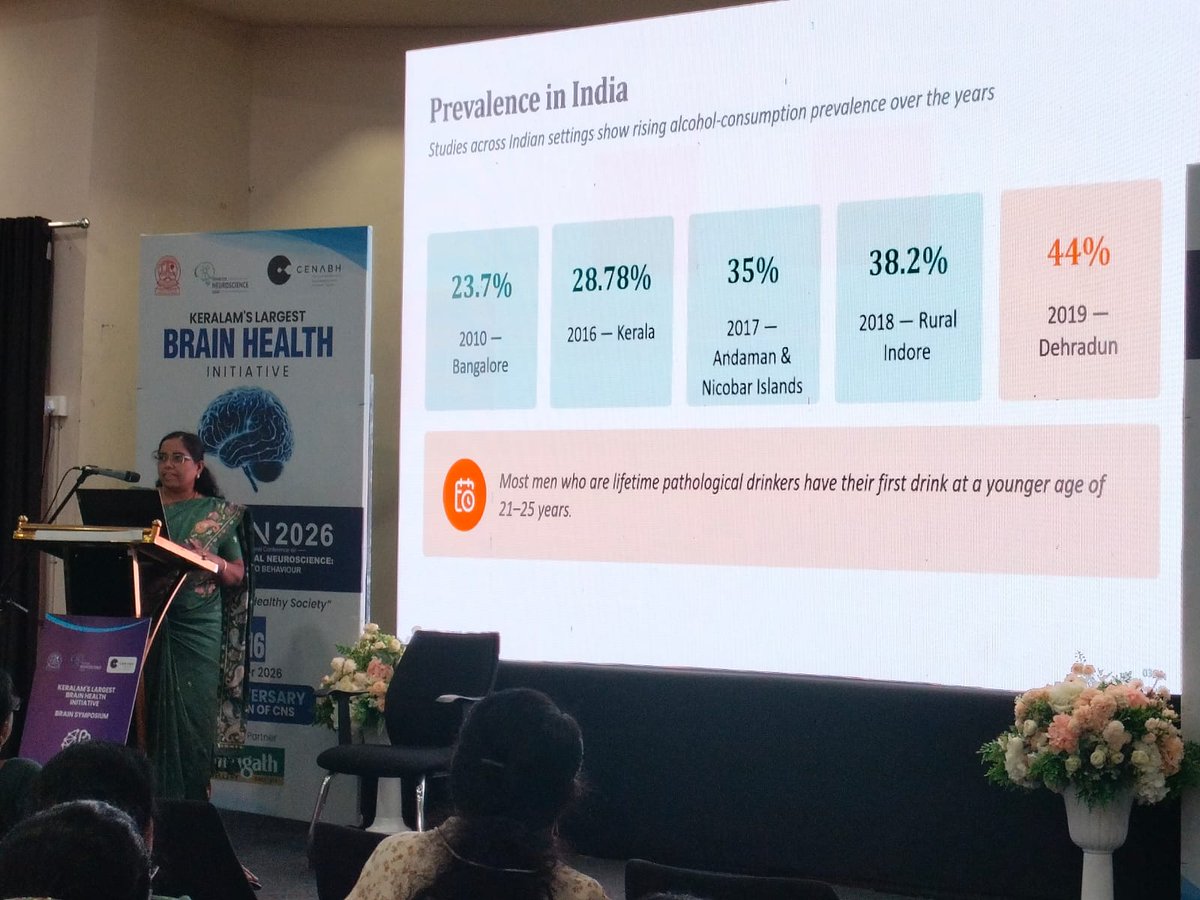
🧠 Dr. R. Bhuvaneswari Presents at ICTN 2026
📍 Kochi | 15 September 2026
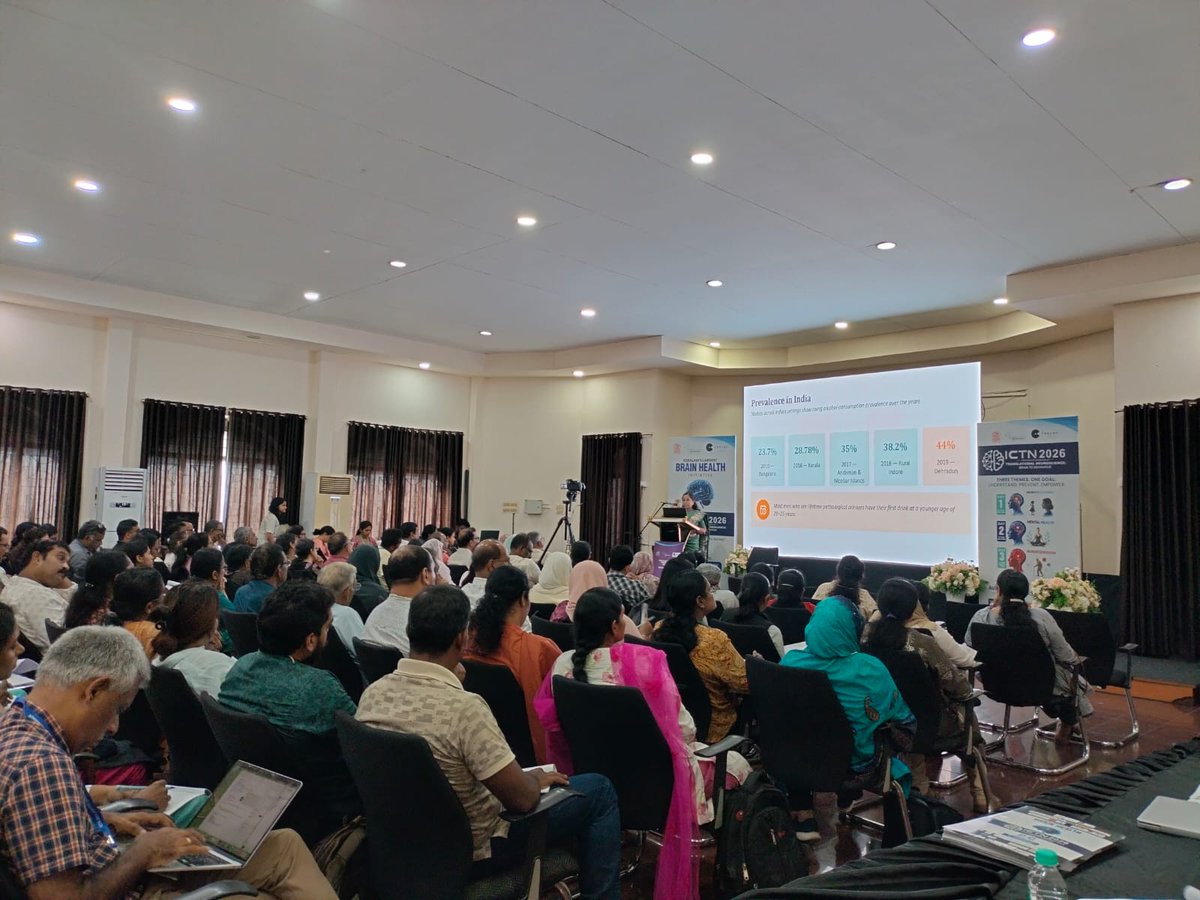
Dr. R. Bhuvaneswari, Research Officer (Homoeopathy)/Scientist-3, NHRIMH, Kottayam, delivered a presentation at the International Conference on Translational Neuroscience: Brain to Behaviour (ICTN 2026), being held from 14–16 September 2026 at the Seminar Complex, CUSAT.
As part of the Brain Symposium on Mental Health, she presented on:
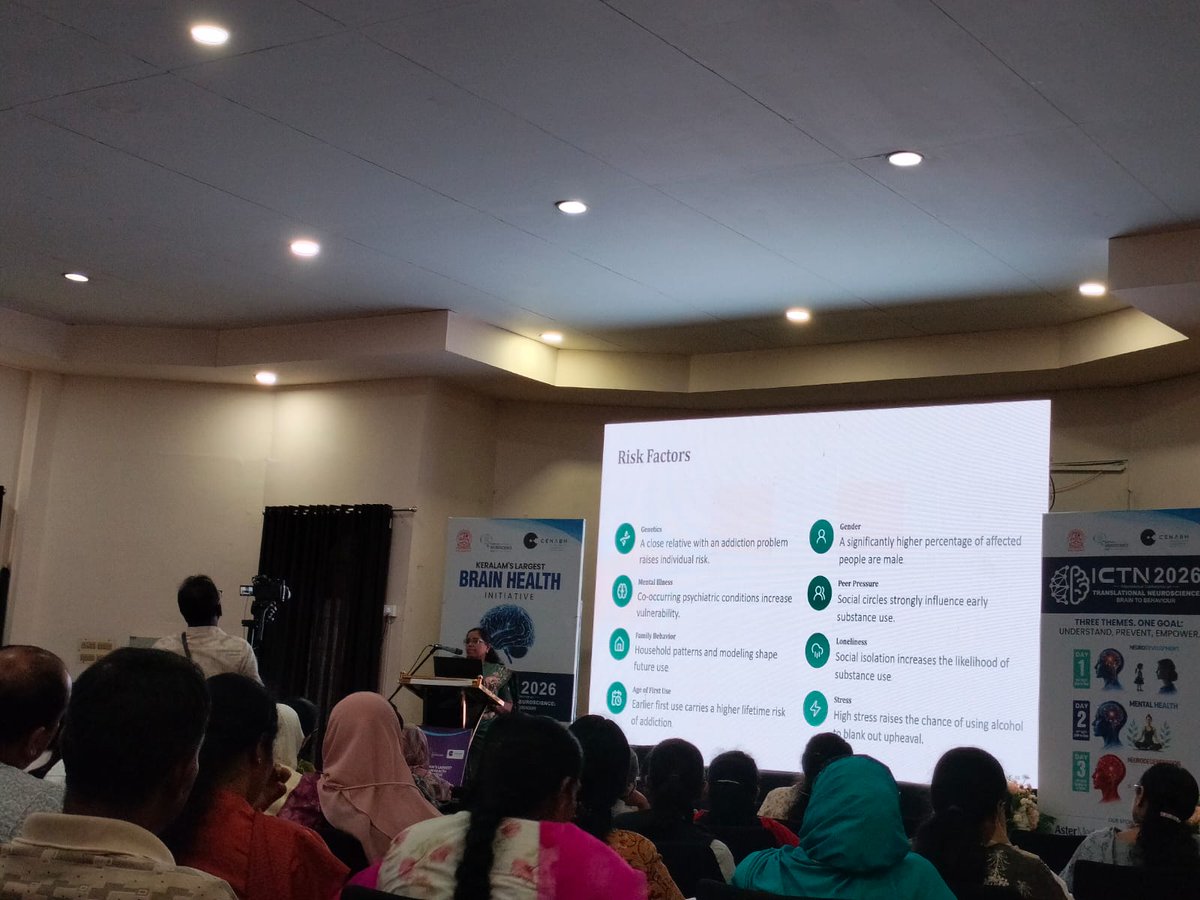
🎙️ “It’s Not Just Drinking – Hidden Behaviours of Alcoholism”
The session explored the behavioural dimensions of alcoholism, aligning with the central theme of ICTN 2026—“From Brain to Behaviour.”
Organised by the Centre for Neuroscience, Department of Biotechnology, CUSAT, the conference brings together researchers, clinicians, postdoctoral fellows, students, industry representatives and members of the public to discuss emerging developments in translational neuroscience.
The Mental Health Brain Symposium brings together clinicians, practitioners and psychologists to deliberate on mental healthcare pathways and emerging challenges in mental health care in Kerala.
👏 Congratulations to Dr. Bhuvaneswari on this academic contribution!
#NHRIMH #CCRH #MinistryOfAyush #ICTN2026 #TranslationalNeuroscience #BrainToBehaviour #MentalHealth #Alcoholism #Homoeopathy #ResearchAndAcademics
🦠 DON’T LET H1N1 CATCH YOU OFF GUARD!
Awareness and timely precautions can go a long way in protecting ourselves and our communities from H1N1.
🌡️ Watch out for: Fever, cough, sore throat, headache, body aches and weakness.
🛡️ Stay protected: Follow good hygiene practices, cover your mouth and nose while coughing or sneezing, avoid close contact when unwell, and seek timely medical advice if symptoms persist.
📢A little awareness. A few simple precautions. A safer, healthier community.
Stay informed. Stay vigilant. Stay protected.
#H1N1 #SwineFlu #InfluenzaAwareness #HealthAwareness #FluPrevention #PublicHealth #DiseasePrevention #StaySafe #MinistryOfAyush #CCRH
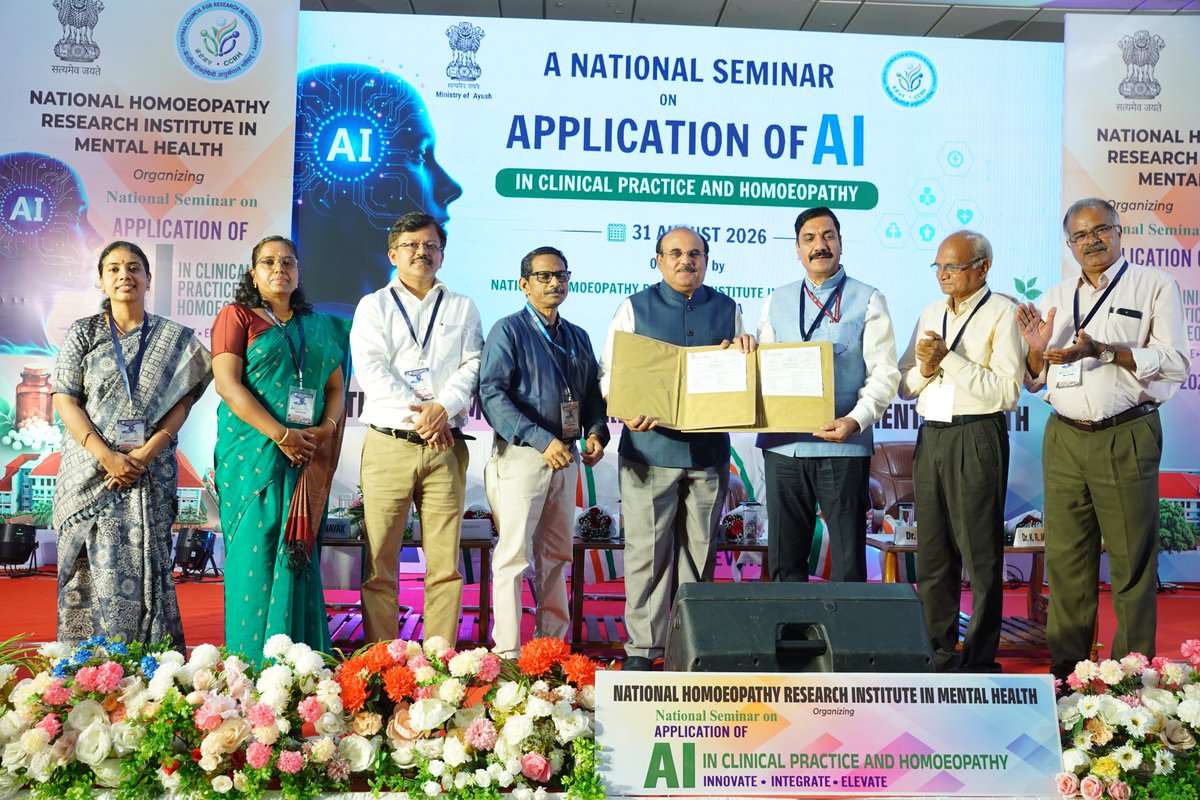
🤝Strengthening Interdisciplinary Collaborations in Psychiatry & Mental Health
A significant highlight of the National Seminar on “Application of Artificial Intelligence in Clinical Medicine and Homoeopathy” was the signing of Memoranda of Understanding (MoUs) between the Central Council for Research in Homoeopathy (CCRH), New Delhi, and leading Homoeopathic institutions and organisations across India.
The MoUs aim to strengthen academic exchange, knowledge sharing, collaborative research and interdisciplinary engagement in Psychiatry and Mental Health, contributing to the advancement of Homoeopathic education, research and clinical practice.
📌 MoUs were signed with:
🔹 Sonajirao Kshirsagar Homoeopathic Medical College & Hospital, Beed, Maharashtra
🔹 DKMM Homoeopathic Medical College, Chhatrapati Sambhajinagar, Maharashtra
🔹 Hamsa Homeopathy Medical College, Hospital & Research Centre, Telangana
🔹 Swasthya Kalyan Homoeopathic Medical College & Research Centre, Jaipur, Rajasthan
🔹 JIMS Homoeopathic Medical College & Hospital, Telangana
🔹 JSPS Government Homoeopathic Medical College, Hyderabad, Telangana
🔹 MNR Homoeopathic Medical College and Hospital, Sangareddy, Telangana
🔹 Sarada Krishna Homoeopathic Medical College, Kanyakumari, Tamil Nadu
🔹 Vinayaka Mission’s Homoeopathic Medical College and Hospital, Salem, Tamil Nadu
🤝 An MoU was also signed with Sevabharathi, Ettumanoor, to promote interdisciplinary research and explore further avenues of institutional collaboration.
These collaborations mark an important step towards building a stronger network for interdisciplinary research and academic cooperation in Psychiatry and Mental Health, fostering the exchange of expertise and creating new opportunities for collaborative initiatives.
🌿 Strengthening collaborations. Advancing research. Transforming mental healthcare.
#NHRIMH #CCRH #MinistryOfAYUSH #Homoeopathy #Psychiatry
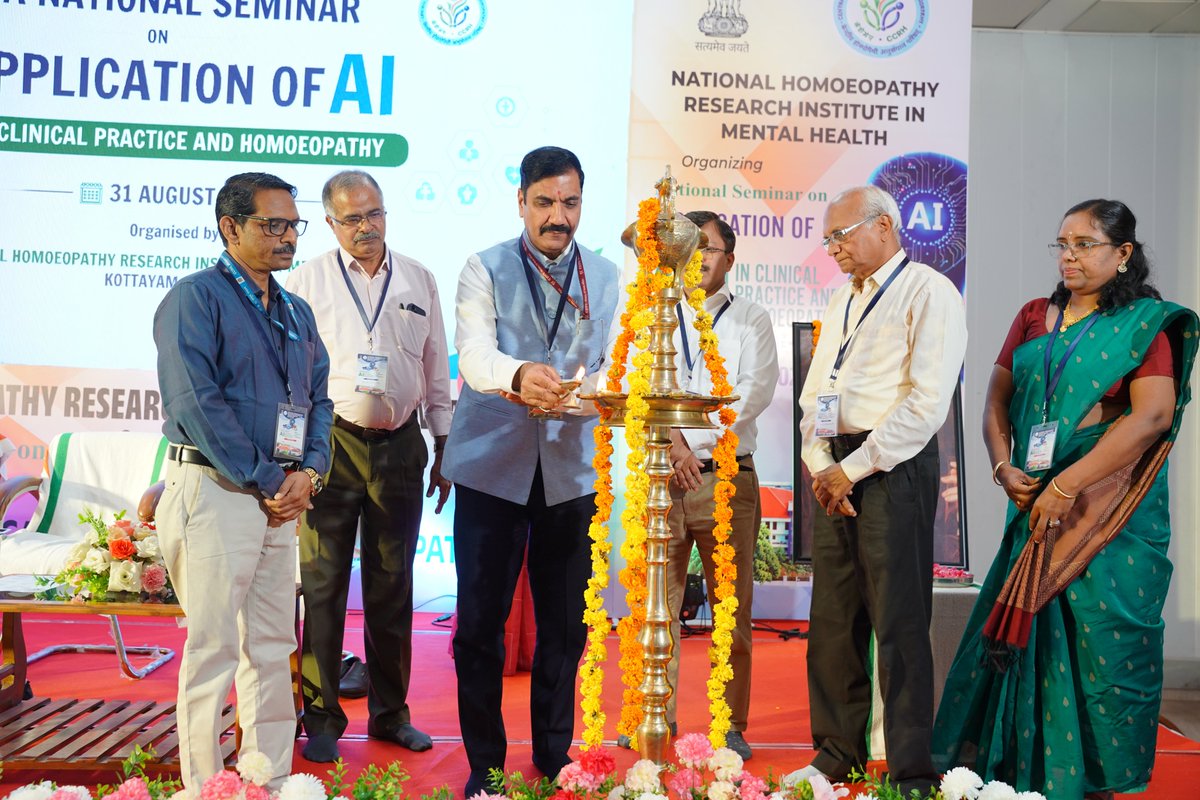
🌿🤖 National Seminar on “Application of Artificial Intelligence (AI) in Clinical Medicine and Homoeopathy” 🤖🌿
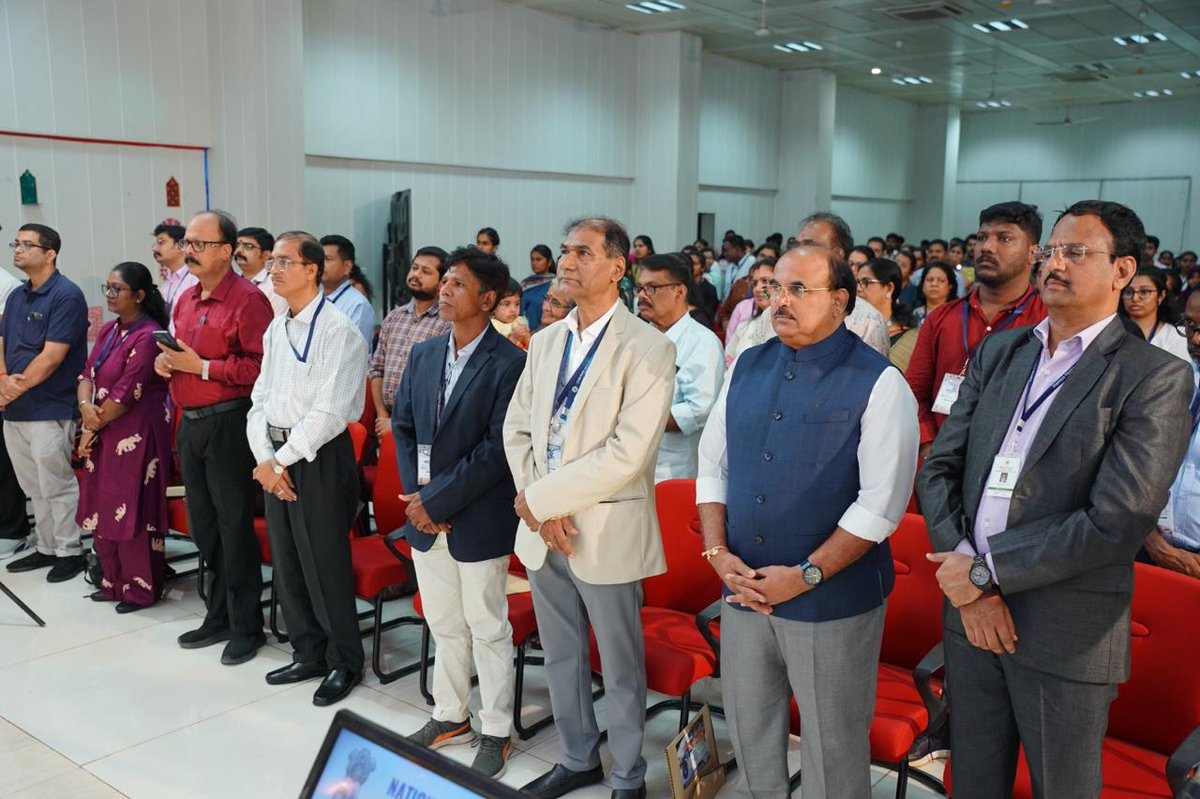
The National Homoeopathy Research Institute in Mental Health (NHRIMH), Kottayam, under the Central Council for Research in Homoeopathy (CCRH), Ministry of AYUSH, Government of India, organised a National Seminar on “Application of Artificial Intelligence (AI) in Clinical Medicine and Homoeopathy” on 31 August 2026 at the Auditorium of NHRIMH, Kottayam.
Held under the inspiring theme “Where Intelligence Meets Compassion”, the seminar brought together experts, academicians, researchers, clinicians, practitioners and students to deliberate on the emerging role of Artificial Intelligence in clinical practice, healthcare, research and Homoeopathy.
🌟 Special Address
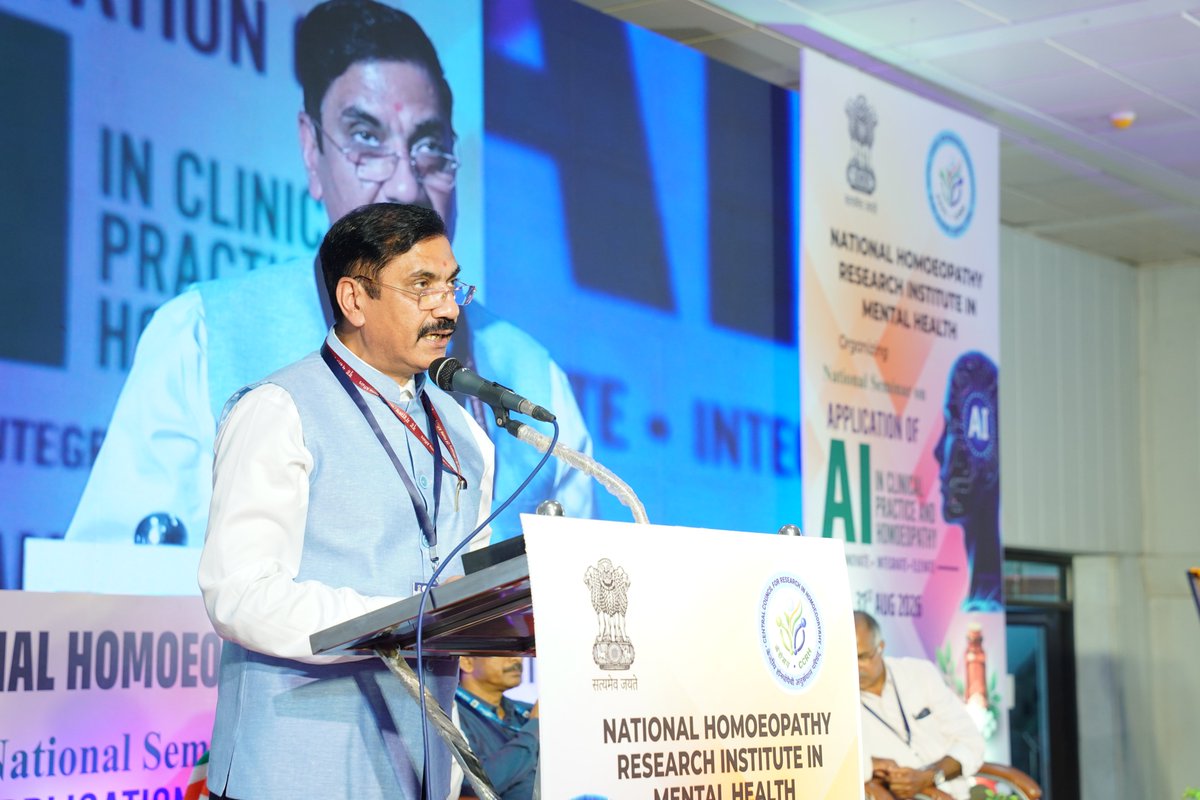
The programme was honoured by the special address of Shri Prataprao Ganpatrao Jadhav, Hon’ble Union Minister of State (Independent Charge), Ministry of AYUSH, and Minister of State, Ministry of Health and Family Welfare, who joined the programme online.
In his address, he highlighted the significance of the seminar in advancing discussions on the application of Artificial Intelligence in healthcare, with particular relevance to the field of Homoeopathy.
🎓 Inaugural Session
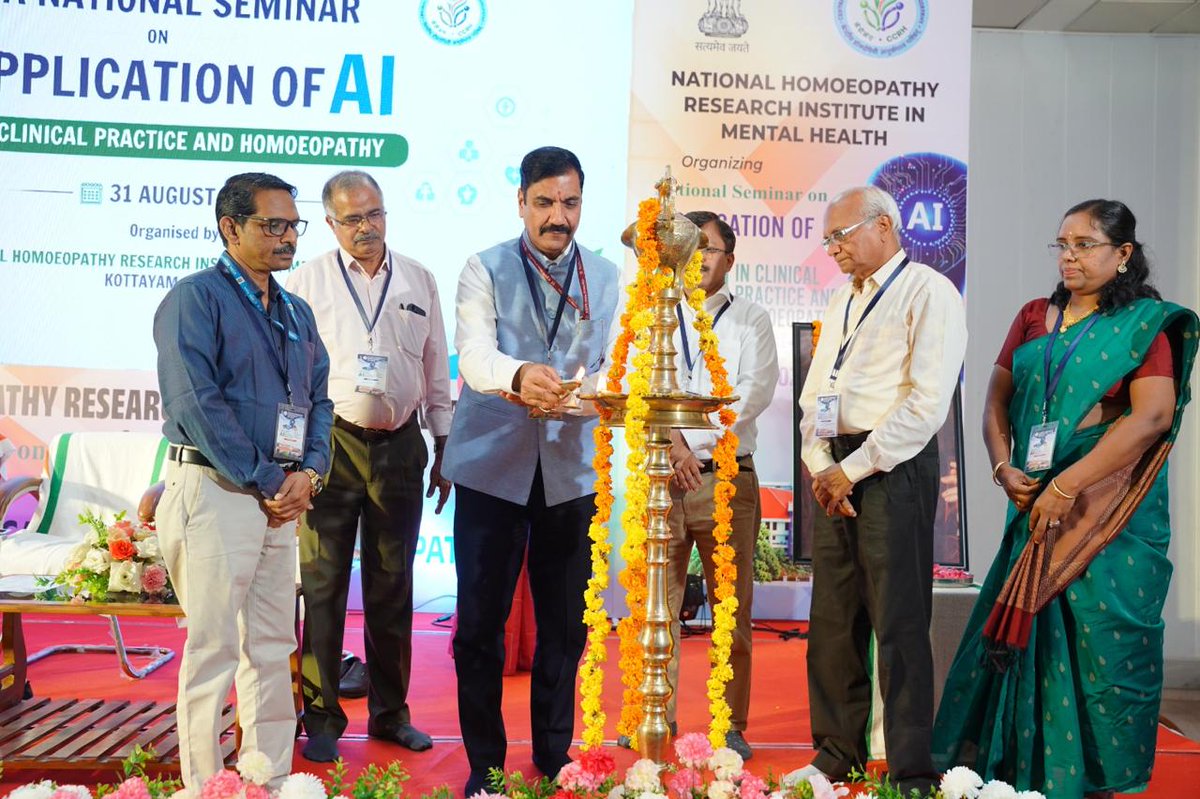
The inaugural session was addressed by Dr. Subash Kaushik, Director General, CCRH, who delivered the inaugural speech. Dr. K. C. Muraleedharan, Deputy Director General, CCRH, graced the occasion as the Guest of Honour.
Dr. Muraleedharan highlighted the potential of AI to enhance research productivity and contribute to increased scientific publications. At the same time, he emphasised the need for researchers to critically assess the credibility and reliability of data generated or accessed through AI-based tools, stressing the importance of scientific validation and critical appraisal.
In his inaugural address, Dr. Subash Kaushik emphasised the importance of researchers and academicians understanding both the scope of Artificial Intelligence and its ethical frameworks. He highlighted that awareness of AI’s capabilities as well as its ethical dimensions is essential for its responsible application in healthcare and research.
🤝 Strengthening Academic & Research Collaborations
An important highlight of the programme was the signing of Memoranda of Understanding (MoUs) with nine colleges to promote interdisciplinary academic exchanges in the field of psychiatry. These collaborations aim to facilitate academic interaction, knowledge and expertise sharing, and opportunities for interdisciplinary engagement in mental health and psychiatry.
An additional MoU with Sevabharathi, Ettumanoor, was also signed to facilitate interdisciplinary research and explore further areas of institutional collaboration.
🌏 Wider Participation
According to Dr. Debadatta Nayak, Assistant Director (Homoeopathy) and Officer-in-Charge, NHRIMH, the programme was enriched by the participation of representatives and participants from approximately 12 Homoeopathic Medical Colleges from across India, along with practitioners and faculty members from Kerala.
The diverse participation provided a valuable platform for academic interaction and exchange of perspectives on the evolving application of AI in healthcare and Homoeopathy.
✨ The seminar marks a meaningful step towards bringing together technology, scientific inquiry and compassionate healthcare, while exploring new possibilities for the future of Homoeopathy.
#NHRIMH #CCRH #MinistryOfAYUSH #NationalSeminar #ArtificialIntelligence #AIinHealthcare #AIandHomoeopathy #Homoeopathy #HomoeopathicResearch #HealthcareInnovation #InterdisciplinaryResearch #WhereIntelligenceMeetsCompassion
NHRIMH Kottayam Organises National Seminar on Responsible Use of Artificial Intelligence in Homoeopathy
Seminar explores AI-enabled clinical decision support, personalised care and ethical frameworks in Homoeopathic research
Posted On:
https://t.co/rr85d9eKxf
The National Homoeopathy Research Institute in Mental Health (NHRIMH), Kottayam, under the Central Council for Research in Homoeopathy (CCRH), Ministry of Ayush, Government of India, organised a National Seminar on “Application of Artificial Intelligence (AI) in Clinical Practice and Homoeopathy” on 31 August 2026 at the Auditorium of NHRIMH, Kottayam. The seminar was organised under the theme “Where Intelligence Meets Compassion”, bringing together experts, academicians, researchers, clinicians, practitioners and students to deliberate on the emerging role of AI in clinical practice and homoeopathic research.
The programme was honoured by the special address of Shri Prataprao Ganpatrao Jadhav, Hon’ble Union Minister of State (Independent Charge), Ministry of Ayush, and Minister of State, Ministry of Health and Family Welfare, who joined the programme online. In his address, he emphasized the importance of the national seminar in advancing discussions on the application of Artificial Intelligence in healthcare, with particular relevance to the field of Homoeopathy. The inaugural session was addressed by Dr. Subhash Kaushik, Director General, CCRH, who delivered the inaugural speech. Dr. K. C. Muraleedharan, Deputy Director General, CCRH, was the Guest of Honour. The programme was further enriched by the address of Dr. Janardhanan Nair, Former President of the Medical Assessment and Rating Board (MARB) under the National Commission for Homoeopathy (NCH) and Prof. (Dr.) Eswara Das, Chairman, Regional Scientific Advisory Committee, NHRIMH, Kottayam. The inaugural session also marked an important step towards strengthening interdisciplinary academic and research collaborations of NHRIMH, Kottayam.
In his inaugural address, Dr. Subash Kaushik, Director General, CCRH, stressed the importance of researchers and academicians being acquainted with the scope of Artificial Intelligence and its ethical frameworks. He emphasized that an understanding of both the capabilities and ethical dimensions of AI is essential for its responsible application in healthcare and research.
Dr. K. C. Muraleedharan, Deputy Director General, CCRH and Guest of Honour, observed that the integration of AI in research could boost the number of scientific publications. At the same time, he advised researchers to exercise caution regarding the credibility and reliability of data used with AI-based tools, underlining the importance of critical appraisal and scientific validation.
Memoranda of Understanding (MoUs) were signed with nine Homoeopathic Medical Colleges and Hospitals to promote interdisciplinary academic exchanges in the field of psychiatry. The collaborations are intended to facilitate academic interaction, exchange of knowledge and expertise, and opportunities for interdisciplinary engagement in mental health and psychiatry. An MoU was further signed with Sevabharathi, Ettumanoor, to facilitate interdisciplinary research and other possible areas of institutional collaboration.
Dr. Debadatta Nayak, Assistant Director (Homoeopathy) and Officer-in-Charge, NHRIMH, Kottayam, stated that the programme was enriched by the participation of representatives and participants from around 12 Homoeopathic Medical Colleges across India, along with practitioners and faculty members from Kerala. He highlighted that such participation provided a valuable platform for wider academic interaction and exchange of perspectives on the application of AI in healthcare and homoeopathy.
#moayush #ccrh #NHRIMHKottayam #SEMINAR #AI
📢 Final Programme Schedule Released!
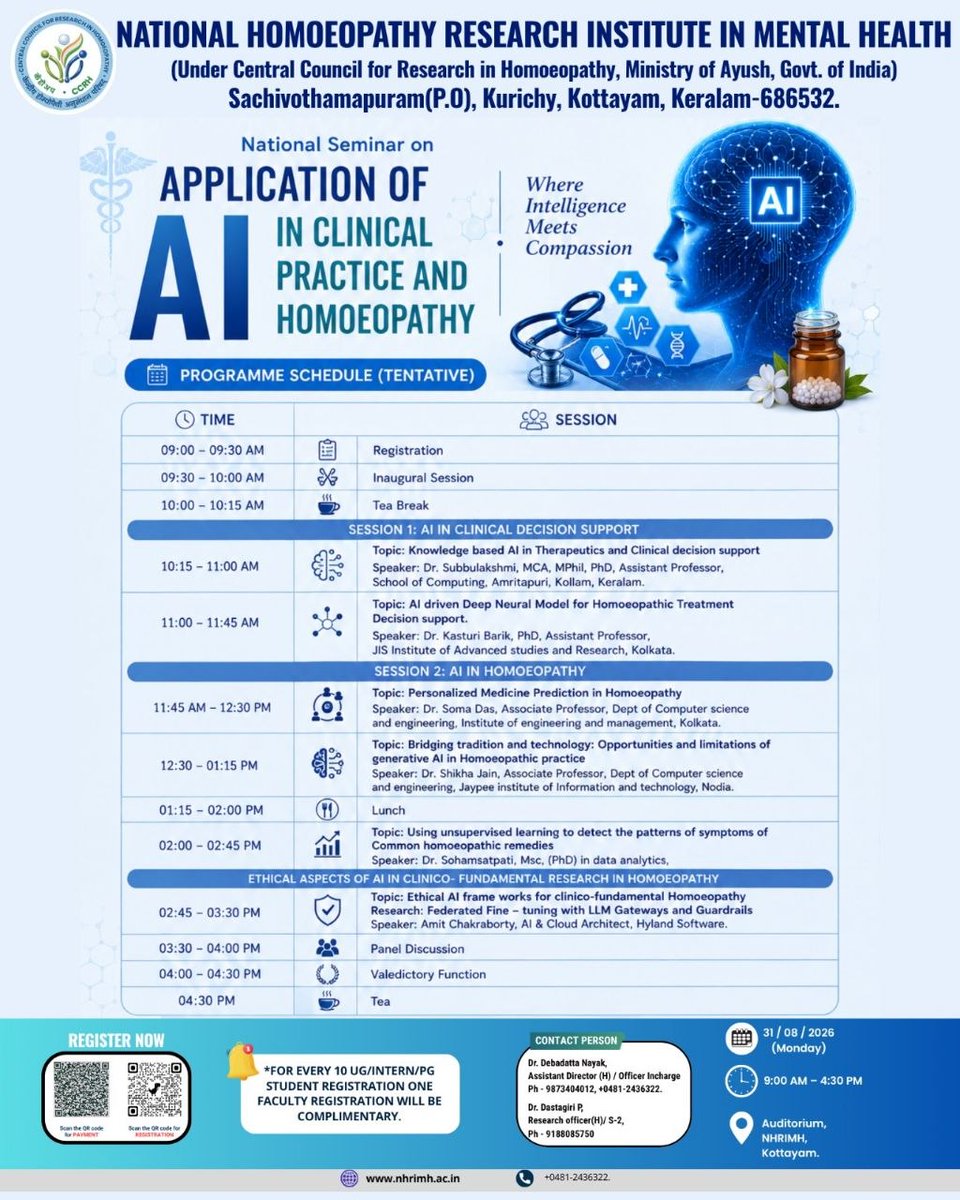
The National Seminar on “Application of AI in Clinical Practice and Homoeopathy”, being organised by the National Homoeopathy Research Institute in Mental Health (NHRIMH), Kottayam, is all set to bring together experts from Homoeopathy, Artificial Intelligence, Data Science, Computer Science and related fields.
The final programme features four insightful sessions covering the emerging applications, opportunities and ethical dimensions of AI in Homoeopathy.
🔹 Session 1: AI in Clinical Decision Support
Dr. Debadatta Nayak – Application of AI in Medicine and Homoeopathy – An Overview
Dr. Subbulakshmi, PhD – Knowledge-based AI in Therapeutics and Clinical Decision Support
Dr. Kasturi Barik, PhD – AI-driven Deep Neural Model for Homoeopathic Treatment Decision Support
🔹 Session 2: AI in Homoeopathy – I
Dr. Soma Das – Personalized Medicine Prediction in Homoeopathy
Dr. Shikha Jain – Bridging Tradition and Technology: Opportunities and Limitations of Generative AI in Homoeopathic Practice
🔹 Session 3: AI in Homoeopathy – II
Dr. Soham Satpati, MSc (PhD) – From Symptom Patterns to Decision Support: AI in Homoeopathic Practice
Mr. Pijush Barman – Synapse-Hom: A Neuro-symbolic, Agentic RAG Framework with Verifiable LLMs for Autonomous Classical Prescribing & Materia Medica Reasoning
🔹 Session 4: Ethical Aspects of AI in Clinico-Fundamental Research in Homoeopathy
Mr. Amit Chakraborty – Ethical AI Frameworks for Clinico-Fundamental Homoeopathy Research: Federated Fine-tuning with LLM Gateways and Guardrails
The seminar aims to foster meaningful dialogue on how AI can complement clinical decision-making, personalised care, research and evidence generation in Homoeopathy, while also addressing the ethical and responsible use of emerging technologies.
📍 Venue: Auditorium, NHRIMH, Kottayam
📅 31 August 2026 (Monday)
Advancing Homoeopathy with AI – Evidence, Ethics & Compassion 🤖🌿
📢 National Seminar | Application of AI in Clinical Practice and Homoeopathy
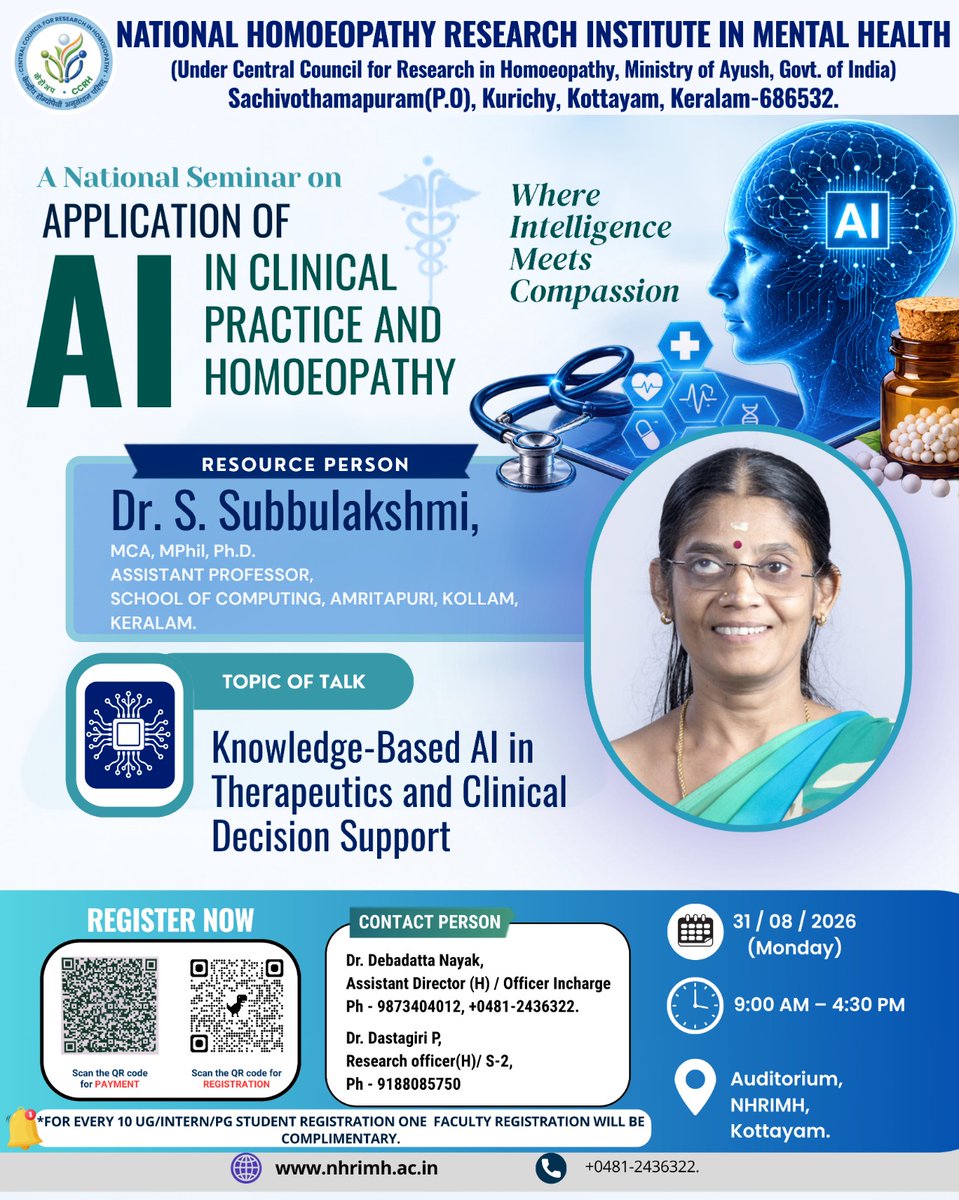
The National Homoeopathy Research Institute in Mental Health (NHRIMH), Kottayam, is organising a National Seminar on “Application of AI in Clinical Practice and Homoeopathy” on 31 August 2026.
🤖 Resource Person: Dr. Subbulakshmi, MCA, MPhil, PhD
Assistant Professor, School of Computing, Amritapuri, Kollam, Kerala
🎙️ Topic of Talk:
“Knowledge-Based AI in Therapeutics and Clinical Decision Support”
The session will explore the application of knowledge-based Artificial Intelligence in therapeutics and clinical decision support, highlighting its potential to support informed clinical decision-making and contribute to the advancement of Homoeopathic practice.
📅 31 August 2026 (Monday)
⏰ 9:00 AM – 4:30 PM
📍 Auditorium, NHRIMH, Kottayam
✨ Where Intelligence Meets Compassion
🔗 Register now and be part of this academic event!
#NHRIMH #CCRH #Homoeopathy #MinistryOfAYUSH #ArtificialIntelligence #AIinHealthcare #HomoeopathicResearch #ClinicalDecisionSupport
🤖 Programme Schedule Released!
The programme schedule is now out for the National Seminar on “Application of AI in Clinical Practice and Homoeopathy”, being organized at NHRIMH, Kottayam.
The seminar brings together experts from the fields of Artificial Intelligence, Computer Science, Data Analytics and Homoeopathy to explore the emerging possibilities of AI in healthcare and research.
🔹 Key topics & speakers
🧠 Knowledge-Based AI in Therapeutics and Clinical Decision Support
Dr. Subbulakshmi, MCA, MPhil, PhD, Assistant Professor, School of Computing, Amritapuri, Kollam, Kerala
🤖 AI-Driven Deep Neural Model for Homoeopathic Treatment Decision Support
Dr. Kasturi Barik, PhD, Assistant Professor, JIS Institute of Advanced Studies and Research, Kolkata
💻 Personalized Medicine Prediction in Homoeopathy
Dr. Soma Das, Associate Professor, Department of Computer Science and Engineering, Institute of Engineering and Management, Kolkatta
🔬 Bridging Tradition and Technology: Opportunities and Limitations of Generative AI in Homoeopathic Practice
Dr. Shikha Jain, Associate Professor, Department of Computer Science and Engineering, Jaypee Institute of Information Technology, Noida
📊 Using Unsupervised Learning to Detect Patterns of Symptoms of Common Homoeopathic Remedies
Dr. Sohamsatpati, MSc (PhD) in Data Analytics
🛡️ Ethical AI Frameworks for Clinico-Fundamental Homoeopathy Research: Federated Fine-Tuning with LLM Gateways and Guardrails
Amit Chakraborty, AI & Cloud Architect, Hyland Software
✨ A programme designed to explore where intelligence meets compassion in the future of Homoeopathic practice and research.
📌 31 August 2026 | NHRIMH, Kottayam
Register now and be part of this exciting academic dialogue on AI and Homoeopathy!
#ArtificialIntelligence #homoeopathy #nhrimh #CCRH #ministryofayush #AIinHealthcare #HomoeopathicResearch #HealthcareInnovation
Akhilesh Yadav is changing his colours to woo Brahmins.
Then: PDA meant Pichhda, Dalit, Alpsankhyak.
Now: the P in PDA stands for Pandit.
Beware of such politicians who change their colour just before election.
A vlogger's Kashmir experience raises serious questions.
He claims that the moment he mentions the Indian Army, PM Modi, or Yogi ji, Kashmiris turns hostile instantly.
He alleged that Kashmiris blamed the Army for the instability and accused it of having "bad intentions" towards women, instead of blaming the terrorists. When he protested, he was threatened.
At the Martand Sun Temple, locals lied and claimed it was destroyed by "lightning," not by Islamic invaders, and threatened him for recording the truth.
He also found a Shivling in a locked temple where no Jalabhishek was allowed.
He alleged that even a cop harassed him after hearing "Gorakhpur" and let him go only after taking a bribe.
झारखंड के आदिवासी इलाकों में चर्च की बढ़ती संख्या पर मेरे बयान से काफी हंगामा हुआ। अपना धर्म बदल चुके कई लोग इस बात से परेशान हैं कि मैने सिर्फ चर्च की बात की, मंदिरों की नहीं। चलिए, आज इस मुद्दे पर विस्तार से बात करते हैं।
झारखंड के अधिकतर गांवों में आदिवासी-मूलवासी एक साथ रहते हैं। हमारे गांवों में हजारों सालों से जाहेरस्थान/ सरना स्थल/ देशाउली/ मांझी थान है और सनातन समाज के मंदिर भी, जिनमें मूलवासी पूजा करते हैं। आदिवासी- मूलवासी दोनों समुदाय एक दूसरे के पूजा स्थलों में सिर झुकाते हैं, एक-दूसरे के पर्व - त्योहारों में शामिल होते हैं और दोनों सबकी आस्था का सम्मान करते हैं।
इसके अलावा दिउड़ी मंदिर, रंकिणी मंदिर जैसे कई मंदिर हैं, जहाँ आदिवासी समाज के पाहन पुजारी की भूमिका में होते हैं, और सनातनी लोग भी वहाँ पूजा करते हैंं। ठीक उसी प्रकार, हम भी उनके पर्व-त्योहारों में शामिल होते हैं। लेकिन एक दूसरे के धार्मिक स्थलों एवं परंपराओं का यह परस्पर सम्मान हमारी आस्था, हमारी जीवन शैली को कभी नहीं बदलता।
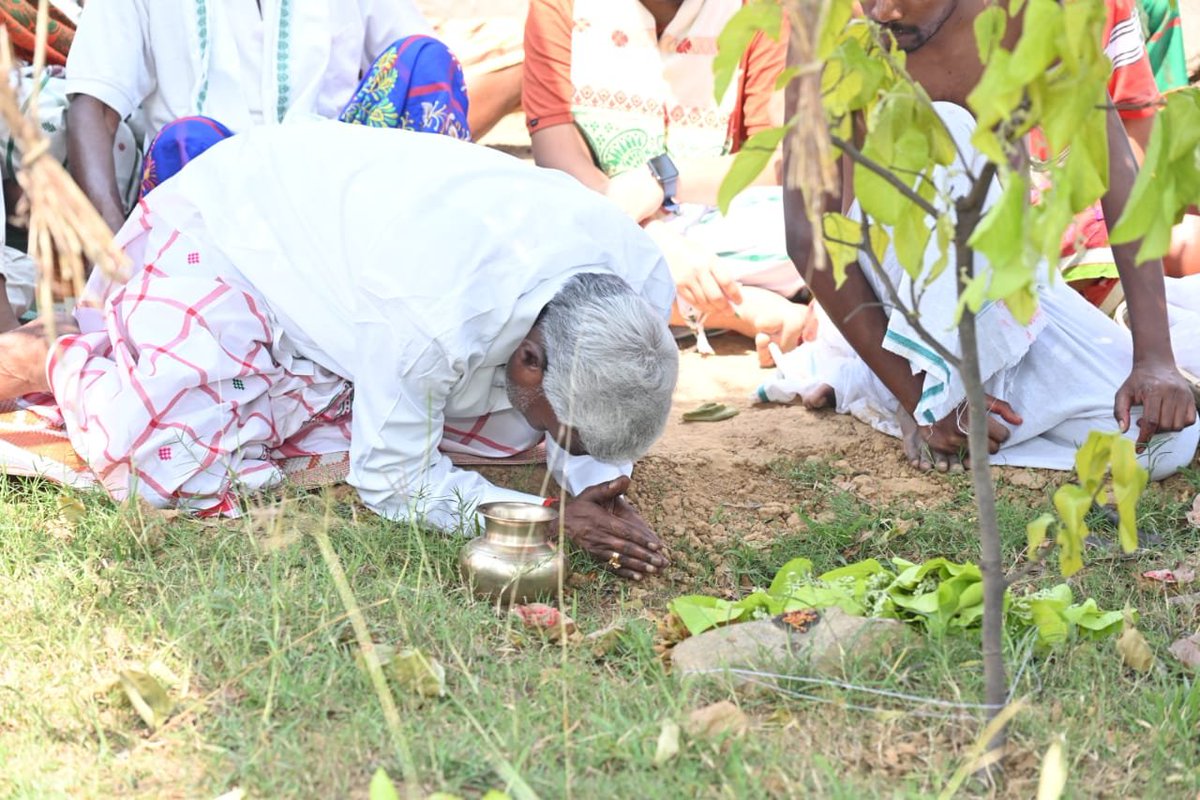
हम आदिवासी पेड़ के नीचे बैठ कर पूजा करने वाले लोग हैं, और जन्म से लेकर शादी-विवाह एवं मृत्यु तक, हमारी बिल्कुल स्पष्ट जीवनशैली है। बच्चे के जन्म, नामकरण, विवाह समेत जीवन के सभी महत्वपूर्ण पड़ावों पर, हमारी सामाजिक प्रक्रियाएं मांझी परगना/ नायके/ पाहन/ मानकी/ मुंडा/ पड़हा राजा आदि पूरी करवाते हैं। जीवन के हर महत्वपूर्ण पड़ाव पर हम जाहेरस्थान/ सरना स्थल/ देशाउली/ मांझी थान जाकर मरांग बुरु/ सिंगबोंगा की पूजा करते हैं।
हजारों सालों के इस सामाजिक सह-अस्तित्व में हम लोग एक-दूसरे के हर सुख-दुख के साथी बने, यथासंभव सहयोग किया, लेकिन उन्होंने कभी हमें हमारी आस्था या जीवनशैली बदलने के लिए मजबूर नहीं किया। अभी धर्मांतरण की रफ्तार देख कर लगता है कि अगर उन्होंने ऐसा किया होता, तो शायद हमारी संस्कृति बहुत पहले खत्म हो गई होती।
हजारों सालों के हमारे इतिहास में, आपको ऐसा कोई भी मूलवासी/ सनातनी नहीं मिलेगा, जिसने किसी मदद, सहायता या सहयोग के बदले, अथवा हमें लालच/ धमकी देकर हमारे लोगों का धर्म परिवर्तन करवाने की कोशिश की हो। वे कभी स्वयं को आदिवासी नहीं बताते। वे लोग आरक्षण समेत हमारे समाज को मिले अन्य अधिकारों को छीनने अथवा उसमें अतिक्रमण करने भी प्रयास नहीं करते, तो फिर उनसे कैसा बैर?
दूसरी तरफ, इस क्षेत्र में ईसाई मिशनरियों ने 1845 में धर्म प्रचार शुरू किया, लेकिन मात्र 180 वर्षों में इन्होंने हमारी परंपराओं एवं धार्मिक आस्था पर चोट पहुंचाई, आरक्षण पर कब्जा किया, भाषाओं/ लिपियों का विरोध किया तथा हमारे अस्तित्व को मिटाने की हर संभव कोशिश की। हमारे लाखों लोगों का धर्मांतरण कर के इन्होंने ऐसे हालात बना दिये हैं कि सिमडेगा समेत झारखंड के कई हिस्सों में हमारे जाहेरस्थानों/ सरना स्थलों पर ताला लग चुका है, क्योंकि वहाँ धर्मांतरण की वजह से पूजा करने वाला कोई नहीं बचा।
आदिवासी समाज की पहचान पारंपरिक जीवनशैली, विशिष्ट संस्कृति, भाषा, रीति-रिवाज एवं रूढ़िजन्य परम्पराओं से है, लेकिन ये लोग उसे मिटाने में लगे हुए हैं। ये लोग DNA की बात करते हैं, लेकिन यह नहीं बताते कि इन्हीं मिशनरियों की वजह से दुनिया के कई हिस्सों में आदिवासी संस्कृति विलुप्त हो गई।
लैटिन अमेरिका की अयोरेओ जनजाति, केन्या की संबुरु जनजाति, ब्राजील की वाई वाई जनजाति, फिजी और पैसिफिक आइलैंड्स की जनजातियां धर्मांतरण के बाद अपनी मूल संस्कृति को भूल चुकी हैं। उनके पारंपरिक रीति-रिवाज, त्योहार, भाषा, नृत्य, पूजा-पाठ और सामाजिक संरचनाएं खत्म कर दिए गए। आप खुल कर क्यों नहीं कहते कि भारत में भी आपका असली मकसद यही है?
धर्मांतरण कोई राजनैतिक मुद्दा नहीं, बल्कि हमारे समाज के अस्तित्व से जुड़ा मामला है। अगर धरती आबा भगवान बिरसा मुंडा, वीर सिदो कान्हू, वीर पोटो हो, वीर टाना भगत, वीर तेलंगा खड़िया एवं अन्य मार्गदर्शकों के दिखाए राह पर चलते हुए अगर हम लोग अपनी परंपराओं को नहीं बचाएंगे तो भविष्य में हमारे जाहेरस्थानों, सरना स्थलों, देशाउली आदि में पूजा करने वाला कोई नहीं बचेगा। हमारा अस्तित्व ही खत्म हो जायेगा। (Part 1/2)
Every single one of the points are a real problem.
But your understanding is broken, let me explain. :)
Norway has 55 lakh people. Total. That’s smaller than the population of Pune. Their entire country has fewer citizens than India’s 25 smallest cities individually. Norway also has 1.2 trillion dollars in sovereign wealth from oil reserves, accumulated over 50 years.
They have $250,000 per citizen sitting in the fund. India has roughly $3,400 per citizen in forex reserves.
Norway is what you get when a small population sits on top of one of the largest per-capita oil discoveries in human history.
The right comparison is other low-income, high-population, post-colonial democracies. Brazil. Indonesia. Nigeria. Bangladesh. Pakistan. Egypt. Mexico. South Africa. Vietnam. Philippines.
Compare on these and India isn’t doing badly. It’s doing better than most.
UPI is the world’s largest real-time payments system.
Aadhaar is the world’s largest biometric identity system.
We absorbed the global pandemic, the Ukraine war, the West Asia conflict, Trump’s tariffs, the Iran war, and a rupee fall without going into recession.
Most of those countries above did. Pakistan went to the IMF 24 times. Sri Lanka collapsed. Bangladesh is unstable. Egypt needed emergency Gulf bailouts. Argentina has 60% inflation. We stayed standing.
India is the only country in human history to add a trillion dollars of GDP every 18 months. We added our first trillion in 2007. Our second in 2017. Our third in 2024. Our fourth coming in 2026.
The problems you mentioned exist in every large, low-income, high-density country on earth.
Mexico City’s pollution is worse than Delhi’s.
Manila’s traffic is worse than Mumbai’s.
Lagos has worse road quality than Delhi.
Jakarta has worse air than Delhi.
Cairo has worse adulteration.
Karachi has more corruption.
Hanoi has higher pollution.
None of these countries are run by Modi. They’re all dealing with the same impossible math.
Industrialising a country of 145 crore people during a global energy transition, with limited natural resources, while keeping democracy intact, is the single hardest governance challenge in human history.
> China did it without democracy.
> South Korea did it with a population one-tenth our size.
> Japan did it with no major religious or linguistic diversity.
> Singapore did it with 50 lakh people total.
Nobody has done it at India’s scale, with our diversity, in democratic conditions.
So when someone asks “why hasn’t Modi built one city like Norway,” the answer is because building one Norway requires not having 144.5 crore other Indians to look after.
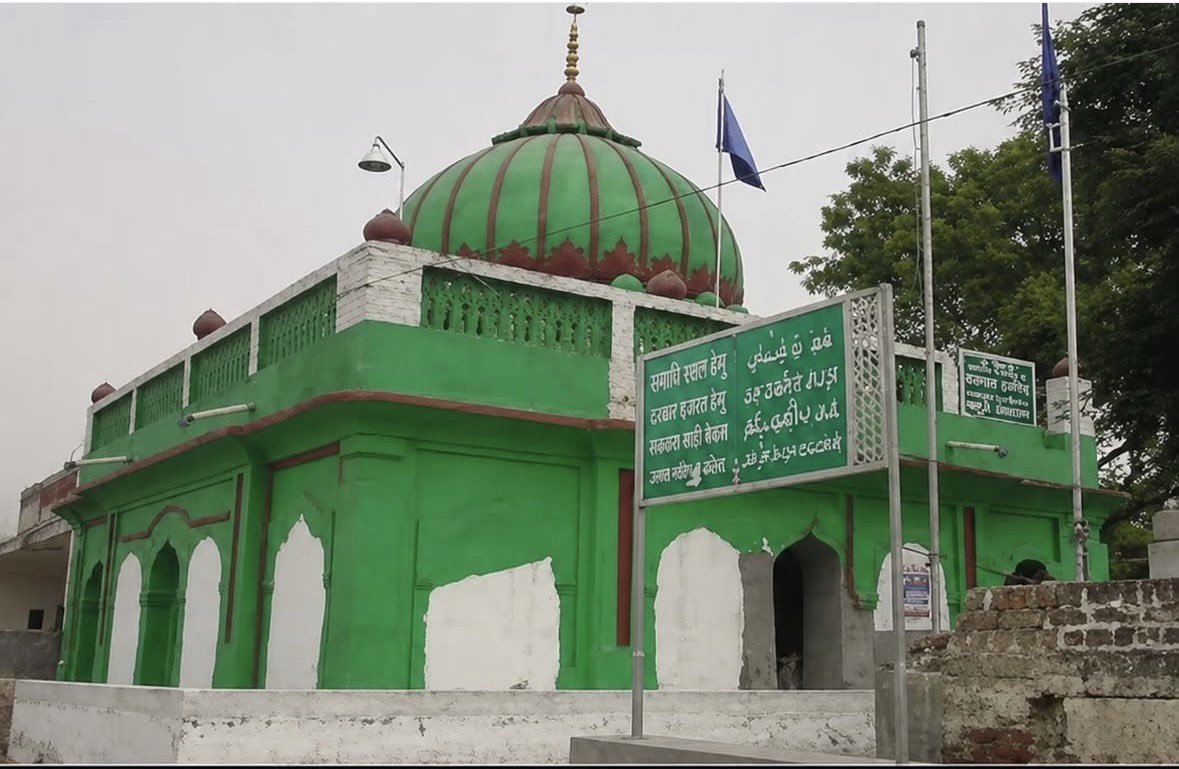
This is the Samadhi Sthal of King Hemchandra Vikramaditya- last major Hindu emperor to rule Delhi before the Mughals consolidated power.
He won 22 battles but lost the Second Battle of Panipat on 5 November 1556 to Akbar’s forces (led effectively by Bairam Khan).
Hemu was struck by an arrow in the eye, fell unconscious, was captured, and behe@ded
This property, more than 10 Acres in revenue records, which formed the Camp of Babur in 1526 during First Battle of Panipat and Camp of Akbar in 1556 during Second Battle of Panipat was with Haryana ASI till 1990.
This entire Hemu Samadhi Sthal of 10 acres was transferred by then CM Om Prakash Chautala in 1990 to ‘Wakf Board of Haryana’ whose Chairman, a Muslim MLA from Mewat area of Haryana allowed encroachments charging money from some people and allowed Pucca constructions.
This CM was the father of @AbhaySChautala . Gaali do MC ko
I most humbly request the Union not to be large-hearted after the win and forget this audacity. The Union must set an example of order.
Apart from this, every crime, especially the post-poll violence of 2021, should be investigated, and everyone responsible should be made to pay a heavy price.
Bengalis paid in blood for voting for the BJP in 2021. The least they deserve is for those responsible to be held accountable.
Latest Research Highlights from Nhrimh Kottayam
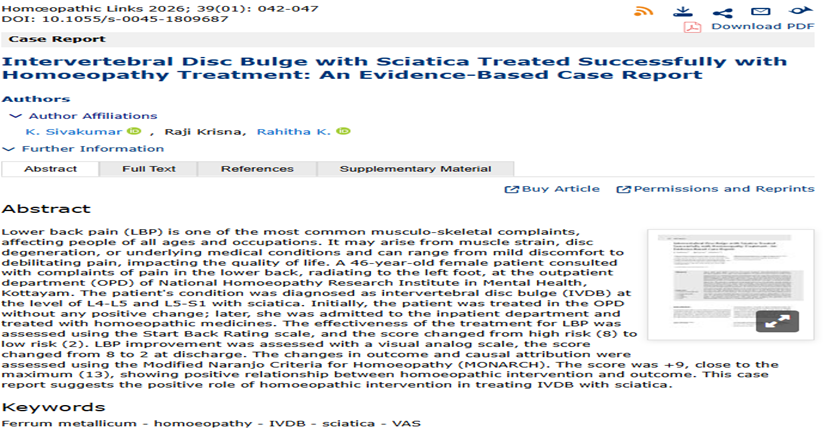
1.Managing Intervertebral Disc Bulge with Sciatica: A case report showing how homeopathy helped a patient with intervertebral disc bulge and sciatica.
By Dr Sivakumar Kothapalli, Dr Raji RC, Dr Rahitha K
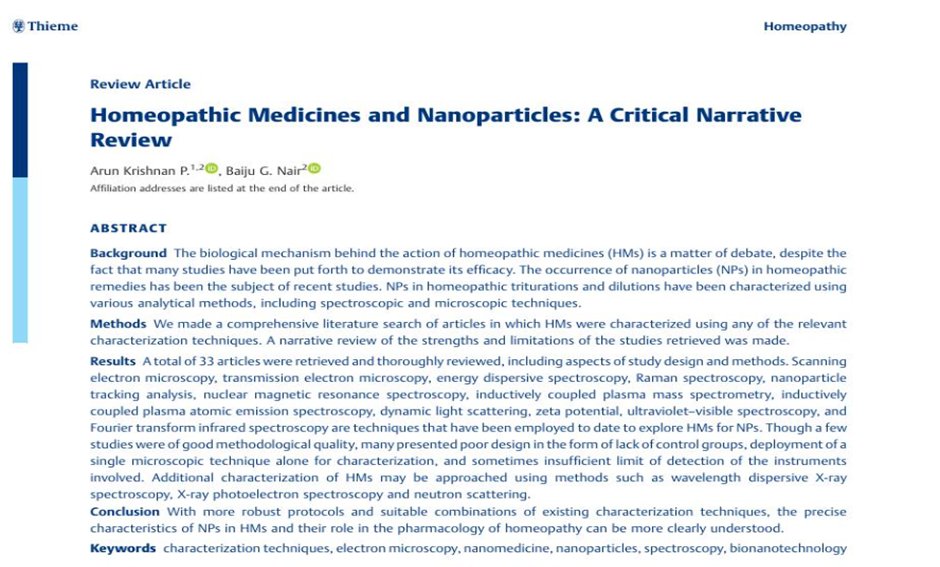
2. Homeopathic Medicines and Nanoparticles: A review explaining how modern research is exploring the presence of ultra-small particles in homeopathic remedies.
By Dr Arun Krishnan P, Dr Baiju G. Nair.
For reading the publications of Nhrimh Kottayam visit:
https://t.co/X6zTCAP6Z5
Tip: For better reading experience, please switch to Desktop View.
Let’s explore how evidence-based Homoeopathy is contributing to patient care and long-term wellbeing.