This is the best Zelda game.
You are allowed to have a personal favorite that isn't this one, but Link to the Past is one of the few perfect games ever made.
It ages like fine wine. It's pixel perfect graphics and wonderful soundtrack are timeless. It's gameplay is laser smooth.
In 40 years it will still be perfect.
Search your feelings. You know it to be true.
I GOT THE DOMAIN! I FINALLY GOT IT!!!!!!!!!!1 🥳🎉
Paint.NET is now at https://t.co/ZJTUII4bVG!
Well, it will be just as soon as I push all the buttons to migrate content and set up redirects from getpaint.net etc. For now it's just a "hey go here" redirect page.
"Aspire only makes sense if your whole stack is .NET."
I believed that too, until I wired up the open-source fullstackhero .net 10 starter kit a few months ago.
Now one command brings up a stack that is mostly not .NET, and all of it comes from a single AppHost.
Here is what spins up together:
A .NET 10 API.
Two React apps, an admin console and a dashboard, both TypeScript.
A small .NET console app that runs the database migrations and then exits.
Postgres, Redis, and MinIO for file storage, all as containers.
And a tiny shell script that creates the storage bucket before anything else is allowed to start.
The AppHost itself is a C# project, and that is the part that trips people up. They see C# and assume everything it runs has to be C# too. It doesn't.
For the React apps I just point Aspire at the folders and tell it to run them with npm. It handles the install and the dev server for me, no second terminal, no remembering which directory.
The API gets its Postgres, Redis, and storage details handed to it as environment variables, so there are no connection strings pasted into config by hand.
The migration app is set to wait for Postgres, run, and finish before the API is even allowed to boot, so the API never starts against a database that isn't ready.
The part that actually changed my day: all of it reports into one dashboard. One place for logs. One place for traces.
The same health checks for the React apps, the API, and the containers. I stopped juggling five terminals and a Docker window.
So yes, the AppHost is .NET. What it orchestrates is React, Postgres, Redis, object storage, and a shell script.
Different languages, different runtimes, one command, one dashboard.
If you skipped Aspire because your stack isn't pure .NET, that was never the requirement.
#aspire #dotnet #container
Ever chased a frontend bug with DevTools open, backend logs tailing, network requests in another tab, and no idea which error caused what?
In aspire 13.3, browser logs and network requests show up next to your backend logs, traces in the Aspire dashboard.
@aspiredotdev
Note: FusionCache adds an additional advantage over HybridCache: it broadcasts cache invalidations across all running instances via Redis pub/sub, so when one instance removes a cache entry, all other instances remove it from their local memory cache immediately. You can also use HybridCache as FusionCache as one liner in DI via a NuGet package.
The reason red means "up" on these emojis dates back to 1697 Osaka, Japan.
Rice merchants created the world's first futures exchange at the Dojima Rice Market. They needed to chart whether prices were rising or falling, so they built the candlestick chart, called 陰陽足 (yin-yang chart). Rising prices got a red line. Falling prices got blue. The logic came from Chinese philosophy: yang (rising energy, vitality, prosperity) was red. Yin (decline, withdrawal) was blue or black. Red didn't mean danger. Red meant good things are happening.
That convention locked in across Japanese finance for 328 years. The Tokyo Stock Exchange still displays gains in red today.
So when designers at KDDI and SoftBank, two Japanese telecom carriers, created the first chart emojis in 2005 and 2006, they did what any Japanese person would do: they made the up line red and the down line blue. They weren't designing for Americans. They were designing for Japanese phone users who'd grown up seeing red tickers on good days. It was so obvious to them it probably took zero discussion.
Then Unicode made it permanent. When the consortium standardized emoji in 2010, their proposal document literally cited those KDDI and SoftBank designs as the reference. Apple copied them for iPhone in 2012. Samsung in 2013. Google, Microsoft, everyone else followed. By 2018 every major vendor had converged on red = up, blue = down. Nobody revisited the color logic because the spec said to match the Japanese originals, and they did.
The reason your brain screams "this is wrong" is because the West maps red to danger and loss ("in the red"). The emoji follows an older system by about 250 years. And no one at Unicode, Apple, or Google has ever changed it, because the original Japanese designs are the canonical reference.
⚡️Forty is the age where a person finds out who they actually became.
By then, the body tells the truth. Money tells the truth. Marriage tells the truth. Kids tell the truth. Career tells the truth. Energy tells the truth. The fantasy version is dead.
Most people are not destroyed by bad luck. They are destroyed by fear, avoidance, and years of lying to themselves. Forty is when the bill shows up.
That is why it feels terrifying. Time is no longer theoretical. Parents start dying. Children need real provision. Weak habits become permanent damage. Mediocrity stops looking temporary and starts looking final.
Fear steals lives. People waste their strongest years hiding, delaying, coping, numbing, rationalizing, and pretending they still have endless time. Then forty arrives and reality becomes visible.
The clean truth is this.
Forty is terrifying because by then there is evidence.
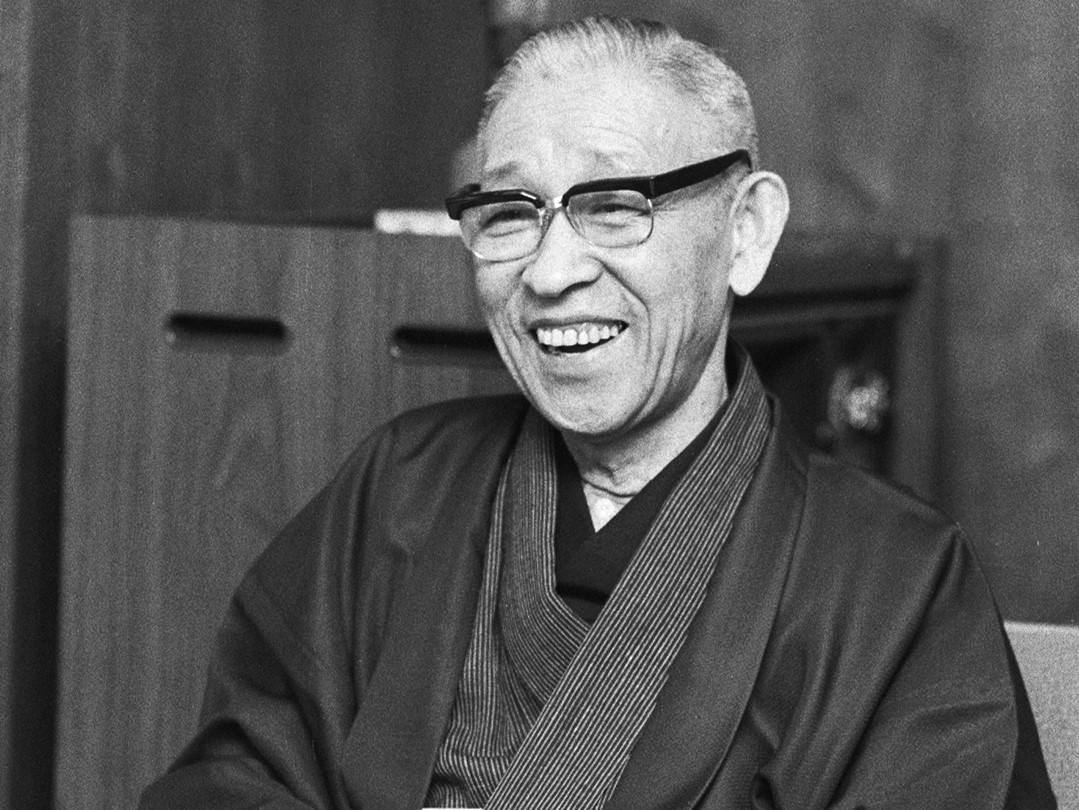
• be Konosuke Matsushita
• born into a wealthy Japanese family in 1894
• your father gambles the entire family fortune on the rice market and loses everything when you are 4 years old
• forced to drop out of school at age 9 to sweep floors in a bicycle shop just to survive
• you look around and realize electricity is the future, so you join the Osaka Electric Light Company and quickly become their youngest inspector
• at 22, you invent an improved, highly efficient light socket in your spare time
• you show it to your boss. He tells you it's useless and will never sell.
• most people would accept the rejection and stay at the safe corporate job
• you immediately quit, take your life savings of 100 yen, and start a company in your tiny dirt-floor apartment with your wife and teenage brother-in-law
• you nearly starve. You literally have to pawn your wife’s kimono just to buy food.
• finally, you get a hit with a two-way socket, but you notice a bigger problem: bicycle lamps in 1920s Japan use candles, which constantly blow out in the wind
• you engineer a bullet-shaped, battery-powered bicycle lamp that lasts for 40 hours
• you take it to the massive wholesalers. They laugh at you and refuse to stock it.
• you execute the ultimate asymmetric marketing hack: you completely bypass the gatekeepers
• you take the lamps directly to local bicycle shop owners, leave them in the stores for *free*, and tell them: "Turn it on. If it stays lit, pay me. If it dies, keep it."
• the lamps work perfectly. The public goes crazy. You have successfully hacked the distribution network.
• you formulate the "Water-Tap Philosophy": the stoic belief that an entrepreneur's duty is not just to make money, but to mass-produce goods until they are as cheap and abundant as tap water, eradicating poverty through sheer industrial scale
• WWII happens. The Allies dismantle your massive company and order you to be fired and purged from the industry.
• your own factory workers—who you treated with radical respect instead of viewing them as disposable cogs—literally protest the US military government
• your union petitions General Douglas MacArthur himself, demanding you be reinstated as CEO
• the US military is so confused by a labor union fighting *for* their corporate boss that they actually agree
• you rebuild from the ashes to create **Panasonic**
• live to 94, leaving behind a legacy built on the idea that business is a philosophical pursuit of human betterment
"If you make an honest mistake, I will forgive you. But if you compromise on our core values, I will fire you."
I have three sons. Here’s a bit of what I’ve tried to teach them... sometimes pedantically, usually by example. Sometimes imperfectly.
Summarized from a longer handwritten version.
Curious what you’d push back on as being outmoded or even counterproductive. With ASD, I'm not immune to blind spots, so feel free to clue me in!
Take out your AirPods when someone speaks to you.
↳ Muting doesn’t count—give full attention; at least one out, both for longer conversations.
No phones in locker rooms, movies, meals, or quiet public spaces.
↳ No scrolling, filming, or calls—cameras (and camera glasses) make people uneasy.
Using your phone = ignoring the person you’re with.
↳ Do it sparingly, if at all, depending on the situation.
Wipe down gym equipment. Rerack weights.
↳ Leave it better than you found it—put your toys away, pay it forward.
Return things better than you got them.
↳ Borrowed cars come back clean and full—no “normal wear” on others’ property.
Use headphones in public. No speaker audio—ever.
↳ Silence notifications; your noise shouldn’t leak into planes, trains, or waiting rooms.
Stand to greet people at a table (when practical).
↳ Acknowledge arrivals—same for guests joining your table or party.
Learn a proper handshake.
↳ Medium grip, full interlock—confidence without turning it into a contest.
Hold doors. Walk curbside.
↳ Help anyone who needs it—small protective gestures still matter.
Offer your seat to those who need it.
↳ Do it quietly—no virtue signaling, just awareness.
Listen more than you speak.
↳ Ask questions, remember details—don’t fill silence just to justify being there.
Your word is everything.
↳ Be precise and truthful—if you fail, give early notice and a real apology.
Use “please,” “thank you,” and names.
↳ Learn names when appropriate—“uh huh” isn’t courtesy.
Be direct. Vague texts waste time.
↳ Clarity beats ambiguity—details and alignment prevent most problems.
Apologize cleanly: specific, sincere, no excuses.
↳ Don’t confuse explanations with excuses—people care what you’ll do next.
Plan dates clearly.
↳ Offer to pay (or set expectations), and check they got home safe—no scorekeeping.
Consent always. No ambiguity.
↳ No means no, stop means stop—intoxicated people can’t consent.
Protect yourself.
↳ Assume fertility, know the stats—don’t gamble until trust and testing are real.
Send thank-yous.
↳ Texts are fine; handwritten notes for bigger things—keep cards and stamps handy.
Avoid heavy topics early.
↳ Sex, politics, religion, etc.—earn that ground first.
Dress slightly better than required. Better over than under.
↳ Clean, trimmed nails—basic grooming isn’t optional.
Keep your space and car in order.
↳ Start the day with one small win—discipline compounds.
Carry cash. Tip well when service is good.
↳ Know norms—be generous, especially to people who show up with effort.
Cough/sneeze into your elbow.
↳ Quietly and covered—basic hygiene still matters.
Don’t run in public unless necessary.
↳ Walk upright with purpose—act like you belong (even if you’re figuring it out).
Handle civic duties promptly.
↳ Things like Selective Service—simple responsibilities, no excuses.
Take your shot in life!
↳ You miss 100% you don’t take—applies to sports, work, life, mating, and everything else. I mean, check out your mom!
Terence Tao is the greatest living mathematician.
Fields Medal at 31. Solved problems that had been open for a century. Widely regarded as the sharpest analytical mind alive.
And he just told you the thing your entire career is built on is now worthless.
Tao: “AI has basically driven the cost of idea generation down to almost zero.”
For five hundred years, the idea was the prize.
The theory. The hypothesis. The flash of insight a physicist chased for twenty years in a lab before it landed.
That was the bottleneck. That was what tenure rewarded. That was what Nobel committees were looking for.
Gone.
A model can generate a thousand candidate theories for a scientific problem in an afternoon. Not noise. Not garbage. Plausible, structured, publishable-grade hypotheses.
A thousand of them. Before dinner.
The idea used to be the scarcest resource in any room.
Now it is the cheapest.
But Tao went somewhere most people are not ready to follow.
Tao: “Verification, validation, and assessing what ideas actually move the subject forward… that’s not something we know how to do at scale.”
Sit with that.
We automated creation.
We did not automate truth.
We can produce ten thousand explanations for a phenomenon.
We cannot tell you which ones are real.
That is not a gap. That is a chasm.
And it is the most important unsolved problem on Earth right now.
Tao: “Human reviewers… they’re already being overwhelmed actually.”
The entire scientific apparatus was built for a world where a single paper took months to produce.
Peer review. Journal boards. Consensus forged over years of replication and debate.
That infrastructure was never designed for what just hit it.
Journals are flooded. Reviewers are buried. The filters that separated signal from noise for decades were engineered for human-speed output.
They are now absorbing machine-speed volume.
And they are cracking under it.
Tao compared it to the internet.
The internet drove the cost of communication to zero. That did not produce clarity. It produced an ocean of noise with islands of signal buried somewhere inside.
AI just did the same thing to knowledge itself.
Infinite generation. Zero verification.
The person who can produce ideas has never mattered less.
The person who can prove which ideas are true has never mattered more.
That is the inversion nobody is processing.
Every company, every lab, every institution is racing to generate more. Faster models. Bigger outputs. More theories. More code. More content.
Nobody is building the system that tells you which of those outputs are actually correct.
And that is the only system that matters.
Whoever solves verification at scale does not win a market.
They become the filter that all of science, all of engineering, all of human discovery flows through.
The bottleneck of the last five hundred years was producing the answer.
The bottleneck of the next fifty is knowing whether the answer is real.
And right now, according to the greatest mathematician alive, we do not know how to do that at the speed the machines demand.
That is not a research problem.
That is the race beneath the race.
And almost nobody has entered it.