Director Hospital Neurology Service @ Cleveland Clinic Florida Comprehensive Stroke Center Director @ Cleveland Clinic Florida Vascular Neurology, Medical Educa
𝗗𝘂𝗮𝗹 𝗔𝗻𝘁𝗶𝘁𝗵𝗿𝗼𝗺𝗯𝗼𝘁𝗶𝗰 𝗧𝗵𝗲𝗿𝗮𝗽𝘆 — 𝗜𝘀 𝘁𝗵𝗲𝗿𝗲 𝗮 𝗿𝗼𝗹𝗲 𝗳𝗼𝗿 𝗟𝗼𝗻𝗴-𝘁𝗲𝗿𝗺 𝘂𝘀𝗲?
𝗗𝘂𝗮𝗹 𝗮𝗻𝘁𝗶𝘁𝗵𝗿𝗼𝗺𝗯𝗼𝘁𝗶𝗰 = 𝗔𝗻𝘁𝗶𝗽𝗹𝗮𝘁𝗲𝗹𝗲𝘁 + 𝗔𝗻𝘁𝗶𝗰𝗼𝗮𝗴𝘂𝗹𝗮𝗻𝘁
A common clinical question in stroke prevention:
Patient with AF on DOAC presents with lacunar or ICAD related stroke
👉 Should we keep him on 𝗹𝗼𝗻𝗴-𝘁𝗲𝗿𝗺 dual therapy for better prevention?
Recent clinical trials from both cardiology and neurology now give us clearer guidance:
⸻
𝗞𝗲𝘆 𝗿𝗲𝗰𝗲𝗻𝘁 𝘁𝗿𝗶𝗮𝗹𝘀:
🔹 𝗔𝗧𝗜𝗦-𝗡𝗩𝗔𝗙 (JAMA Neurology 2025)
AF + non-cardioembolic stroke (atherothrombotic, lacunar, ICAD)
➡️ DOAC alone is better than DOAC + antiplatelet
• Bleeding risk more than doubled with dual therapy (19% vs 8.6%)
🔹 𝗘𝗣𝗜𝗖-𝗖𝗔𝗗 (NEJM 2024)
AF + stable CAD
➡️ Edoxaban monotherapy was safer than Edoxaban + single antiplatelet
• Lower net adverse clinical events with monotherapy
• Major bleeding significantly reduced (4.7% vs 14.2%)
🔹 𝗔𝗤𝗨𝗔𝗧𝗜𝗖 (NEJM 2024)
AF + stable CAD
➡️ Anticoagulation alone was safer (trial stopped early due to higher bleeding with dual)
• Major bleeding markedly increased (10.2% vs 3.4%) with dual therapy
🔹 Parallel cardiology evidence (AFIRE, AUGUSTUS, others)
Consistent message: once coronary disease is stable, anticoagulation alone is safer.
𝗟𝗼𝗻𝗴-𝘁𝗲𝗿𝗺 𝗗𝘂𝗮𝗹 𝗔𝗻𝘁𝗶𝘁𝗵𝗿𝗼𝗺𝗯𝗼𝘁𝗶𝗰𝘀 = 𝟮–𝟯× 𝗥𝗶𝘀𝗸 𝗼𝗳 𝗠𝗮𝗷𝗼𝗿 𝗕𝗹𝗲𝗲𝗱𝗶𝗻𝗴
⸻
𝗜𝗺𝗽𝗼𝗿𝘁𝗮𝗻𝘁 𝗰𝗹𝗶𝗻𝗶𝗰𝗮𝗹 𝗰𝗼𝗻𝘁𝗲𝘅𝘁:
🔸 𝗦𝗵𝗼𝗿𝘁-𝘁𝗲𝗿𝗺 dual therapy is be appropriate for:
• Recent stent (cardiac, carotid, intracranial), Acute coronary syndrome
• Highly selected cases with acute ICAD-related stroke and concurrent AF (individualized, time-limited)
🔸 For 𝗟𝗼𝗻𝗴-𝘁𝗲𝗿𝗺, evidence increasingly supports moving away from chronic antiplatelet + anticoagulation, because of markedly increased bleeding risk.
⸻
𝗕𝗼𝘁𝘁𝗼𝗺 𝗹𝗶𝗻𝗲:
⚠️ Chronic dual antithrombotic therapy (anti-platelet + anticoagulation) — or prolonged DAPT — should be avoided unless there is a strong, clearly documented indication.
Thoughtful de-escalation is often the safest strategy for both brain and heart.
#Stroke #StrokePrevention #AtrialFibrillation #AntithromboticTherapy #Neurology #VascularNeurology #CardioNeurology #EvidenceBasedMedicine #ClinicalTrials #PatientSafety
𝗪𝗵𝗶𝗰𝗵 𝗽𝗮𝘁𝗶𝗲𝗻𝘁𝘀 𝘄𝗶𝘁𝗵 𝗮𝘀𝘆𝗺𝗽𝘁𝗼𝗺𝗮𝘁𝗶𝗰 𝗜𝗖𝗔 𝘀𝘁𝗲𝗻𝗼𝘀𝗶𝘀 𝘀𝗵𝗼𝘂𝗹𝗱 𝗴𝗲𝘁 𝗮 𝘀𝘁𝗲𝗻𝘁?
This is the real question after CREST-2.
Carotid stenting should be selective, focused on higher-risk patients.
𝟭️⃣ 𝗛𝗶𝗴𝗵-𝗿𝗶𝘀𝗸 𝗽𝗹𝗮𝗾𝘂𝗲 𝗳𝗲𝗮𝘁𝘂𝗿𝗲𝘀
•Ulcerated plaque
•Intraplaque hemorrhage
•Microembolic signals on TCD
•Silent ipsilateral embolic infarcts on MRI
•Rapid progression despite optimal medical therapy
𝟮️⃣ 𝗣𝗮𝘁𝗶𝗲𝗻𝘁-𝗿𝗲𝗹𝗮𝘁𝗲𝗱 𝗳𝗮𝗰𝘁𝗼𝗿𝘀
•Reasonable life expectancy (>5–10 years)
•Few competing comorbidities
•Failure or intolerance of medical therapy (e.g., refractory BP control, statin intolerance)
𝟯️⃣ 𝗣𝗿𝗼𝗰𝗲𝗱𝘂𝗿𝗲-𝗿𝗲𝗹𝗮𝘁𝗲𝗱 𝗳𝗮𝗰𝘁𝗼𝗿𝘀
•Expected peri-procedural stroke/death risk <2–3%
•High-volume centers with experienced operators and transparent outcomes
𝗕𝗼𝘁𝘁𝗼𝗺 𝗹𝗶𝗻𝗲:
After CREST-2, the question is no longer “stent or not?” — it’s “who will benefit most?”
#Stroke #Neurology #VascularNeurology #CarotidStenosis #CREST2 #CAS #TCAR #MedTwitter #NeuroTwitter #EBM
@elonmusk@elonmusk Why do you forget that you’re an immigrant, when you came to US, you were not a billionaire, you were a poor immigrant who was inspired and committed for a better life.
𝗖𝗥𝗘𝗦𝗧-𝟮 — 𝗪𝗵𝗮𝘁 𝗖𝗹𝗶𝗻𝗶𝗰𝗶𝗮𝗻𝘀 𝗦𝗵𝗼𝘂𝗹𝗱 𝗞𝗻𝗼𝘄?
The debate around asymptomatic ICA stenosis continues, from ECST2 to CREST2.
𝗦𝘁𝘂𝗱𝘆 𝗯𝗼𝘁𝘁𝗼𝗺 𝗹𝗶𝗻𝗲:
In patients with asymptomatic ICA stenosis ≥70%, 4-year stroke risk was 𝟮.𝟴% with stenting + intensive medical therapy vs 𝟲.𝟬% with medical therapy alone – an absolute risk reduction of ~0.8% per year.
CEA did not show a statistically significant benefit over medical therapy alone in this population.
𝙎𝙤… 𝙎𝙝𝙤𝙪𝙡𝙙 𝙬𝙚 𝙨𝙩𝙚𝙣𝙩 𝙚𝙫𝙚𝙧𝙮 𝙥𝙖𝙩𝙞𝙚𝙣𝙩 𝙬𝙞𝙩𝙝 𝙖𝙨𝙮𝙢𝙥𝙩𝙤𝙢𝙖𝙩𝙞𝙘 ≥70% 𝙄𝘾𝘼 𝙨𝙩𝙚𝙣𝙤𝙨𝙞𝙨?
𝗧𝗵𝗲 𝗮𝗻𝘀𝘄𝗲𝗿 𝗶𝘀: 𝗡𝗼, 𝗻𝗼𝘁 𝗲𝘃𝗲𝗿𝘆 𝗼𝗻𝗲
𝗞𝗲𝘆 𝗰𝗮𝘃𝗲𝗮𝘁𝘀:
1️⃣ 𝗡𝗡𝗧 𝗶𝘀 𝟯𝟭.
We need to treat 31 asymptomatic patients with stenting to prevent 1 stroke over 4 years. That’s a modest effect size.
2️⃣ 𝗩𝗲𝗿𝘆 𝗹𝗼𝘄 𝗽𝗲𝗿𝗶𝗽𝗿𝗼𝗰𝗲𝗱𝘂𝗿𝗮𝗹 𝗿𝗶𝘀𝗸 𝗶𝗻 𝗖𝗥𝗘𝗦𝗧-𝟮.
Periprocedural stroke rate was 𝟭.𝟯% for stenting – lower than what many centers report. This was achieved with:
- Strict operator credentialing and training, and
- Ongoing site monitoring; centers with rising complication rates were reviewed and could be restricted.
3️⃣ 𝗟𝗼𝗰𝗮𝗹 𝗰𝗼𝗺𝗽𝗹𝗶𝗰𝗮𝘁𝗶𝗼𝗻 𝗿𝗮𝘁𝗲𝘀 𝗺𝗮𝘁𝘁𝗲𝗿.
If your institution’s periprocedural stroke rate ≈𝟯%, the small absolute benefit is essentially washed out.
If it’s >𝟰%, you may be causing net harm in asymptomatic patients.
4️⃣ 𝗠𝗲𝗱𝗶𝗰𝗮𝗹 𝗺𝗮𝗻𝗮𝗴𝗲𝗺𝗲𝗻𝘁 𝗵𝗮𝘀 𝗶𝗺𝗽𝗿𝗼𝘃𝗲𝗱.
In ACAS (1990s), the 5-year ipsilateral stroke risk on medical therapy was ≈11%.
In CREST-2, with modern intensive therapy, the 4-year risk fell to ≈6%.
5️⃣ 𝗔𝘀𝘆𝗺𝗽𝘁𝗼𝗺𝗮𝘁𝗶𝗰 ≠ 𝘀𝘆𝗺𝗽𝘁𝗼𝗺𝗮𝘁𝗶𝗰.
Not all asymptomatic disease pose very high stroke risk like symptomatic ones.
Without intervention, stroke risk in NASCET (symptomatic ≥70%) was 26% over 2 years, compared to 11% over 5 years in ACAS/ACST (asymptomatic ≥60%) in the same era.
𝗦𝗼, 𝘄𝗵𝗮𝘁 𝘀𝗵𝗼𝘂𝗹𝗱 𝘄𝗲 𝗱𝗼 𝗶𝗻 𝗽𝗿𝗮𝗰𝘁𝗶𝗰𝗲?
🔸𝗖𝗼𝗻𝘀𝗶𝗱𝗲𝗿 𝘀𝘁𝗲𝗻𝘁𝗶𝗻𝗴 for selected asymptomatic patients with ≥70% stenosis, especially those with high-risk features, and good life expectancy.
🔸𝗟𝗶𝗺𝗶𝘁 𝗽𝗿𝗼𝗰𝗲𝗱𝘂𝗿𝗲𝘀 𝘁𝗼 𝗵𝗶𝗴𝗵-𝘃𝗼𝗹𝘂𝗺𝗲 𝘁𝗲𝗿𝘁𝗶𝗮𝗿𝘆 𝗰𝗲𝗻𝘁𝗲𝗿𝘀 with documented low complication rates.
🔸𝗠𝗼𝗻𝗶𝘁𝗼𝗿 𝘆𝗼𝘂𝗿 𝗼𝘄𝗻 𝗻𝘂𝗺𝗯𝗲𝗿𝘀: periprocedural stroke/death should be <2–3% for asymptomatic cases.
👉𝗧𝗵𝗶𝗻𝗸 𝘁𝘄𝗶𝗰𝗲 before intervening in low-risk asymptomatic patients, or those with limited life expectancy.
👉And for every patient, intensive medical management is non-negotiable: LDL <70, SBP <130, diabetes control, smoking cessation, exercise, weight management.
#Stroke #VascularNeurology #CarotidStenosis #CREST2 #NeuroTwitter #MedTwitter #ClinicalTrials #EBM #VascularSurgery
✨ 𝗧𝗵𝗲 𝗡𝗲𝘂𝗿𝗼𝗹𝗼𝗴𝗶𝗰𝗮𝗹 𝗘𝘅𝗮𝗺 𝗶𝘀 𝗶𝗻𝘁𝗿𝗶𝗴𝘂𝗶𝗻𝗴.
When we teach the neurological exam, few things capture learners’ attention like 𝗿𝗲𝗳𝗹𝗲𝘅𝗲𝘀 — and none more so than the 𝗽𝗹𝗮𝗻𝘁𝗮𝗿 𝗿𝗲𝘀𝗽𝗼𝗻𝘀𝗲.
The story of the 𝗕𝗮𝗯𝗶𝗻𝘀𝗸𝗶 𝘀𝗶𝗴𝗻 — and the many ways it can be elicited — always fascinates students.
In the late 19th century, neurologists struggled to differentiate organic paralysis from functional or hysterical weakness.There were no MRIs, no labs — only the exam.
𝗕𝗮𝗯𝗶𝗻𝘀𝗸𝗶 noticed something curious in 1896 while examining a patient with hemiplegia:
👉 Stroking the sole of the foot caused the big toe to extend upward rather than flex downward — a pattern consistent across patients with corticospinal tract lesions.
💡 𝗥𝗲𝘃𝗼𝗹𝘂𝘁𝗶𝗼𝗻𝗮𝗿𝘆: A single reflex that spoke for the integrity of the entire corticospinal tract.
A few years later, his student Oppenheim described a variant of the same reflex. Over time, many others followed — each variant earning its own eponym.
𝗖𝗹𝗮𝘀𝘀𝗶𝗰 𝗮𝗻𝗱 𝗮𝗹𝘁𝗲𝗿𝗻𝗮𝘁𝗶𝘃𝗲 𝗺𝗲𝘁𝗵𝗼𝗱𝘀 to elicit an 𝗲𝘅𝘁𝗲𝗻𝘀𝗼𝗿 𝗽𝗹𝗮𝗻𝘁𝗮𝗿 𝗿𝗲𝘀𝗽𝗼𝗻𝘀𝗲 👣
① 𝗕𝗮𝗯𝗶𝗻𝘀𝗸𝗶 – Scratch the lateral sole → across the ball of the foot
② 𝗖𝗵𝗮𝗱𝗱𝗼𝗰𝗸 – Stroke below the lateral malleolus
③ 𝗢𝗽𝗽𝗲𝗻𝗵𝗲𝗶𝗺 – Knuckle down the tibial crest
④ 𝗚𝗼𝗿𝗱𝗼𝗻 – Firmly squeeze the calf muscles
⑤ 𝗦𝗰𝗵𝗮𝗲𝗳𝗲𝗿 – Compress the Achilles tendon
⑥ 𝗚𝗼𝗻𝗱𝗮 – Flex and suddenly release the 4th toe
⑦ 𝗧𝗵𝗿𝗼𝗰𝗸𝗺𝗼𝗿𝘁𝗼𝗻 – Stroke the dorsum of the foot from the base of the great toe
⑧ 𝗕𝗶𝗻𝗴 – Lightly prick the dorsum or sole with a pin
⑨ 𝗣𝗶𝗼𝘁𝗿𝗼𝘄𝘀𝗸𝗶 – Tap the tibialis anterior tendon
⑩ 𝗦𝘁𝗿𝘂̈𝗺𝗽𝗲𝗹𝗹 – Ask the patient to flex the knee against resistance
⑪ 𝗠𝗮𝗿𝗶𝗲–𝗙𝗼𝗶𝘅 – Flex the knee and ankle quickly
⑫ 𝗠𝗼𝗻𝗶𝘇 – Apply pressure over the external malleolus
⑬ 𝗠𝗲𝗻𝗱𝗲𝗹–𝗕𝗲𝗰𝗵𝘁𝗲𝗿𝗲𝘄 – Percuss the dorsum of the foot
⑭ 𝗥𝗼𝘀𝘀𝗼𝗹𝗶𝗺𝗼 – Tap the ball of the toes (often positive in pyramidal tract lesions)
💡 𝗧𝗲𝗮𝗰𝗵𝗶𝗻𝗴 𝗣𝗲𝗮𝗿𝗹:
There are many ways — but 𝗕𝗮𝗯𝗶𝗻𝘀𝗸𝗶 and 𝗢𝗽𝗽𝗲𝗻𝗵𝗲𝗶𝗺 remain the most useful and reproducible in practice.
Because in 𝗻𝗲𝘂𝗿𝗼𝗹𝗼𝗴𝘆, even a single toe movement can be 𝘁𝗵𝗲 𝗰𝗹𝘂𝗲 𝘁𝗼 𝘁𝗵𝗲 𝗽𝘂𝘇𝘇𝗹𝗲. 🧩
#Neurology #ClinicalExam #Reflexes #NeuroEducation #Babinski #NeurologyResidents #NeuroPearls #MedicalEducation #UpperMotorNeuron #BedsideNeurology
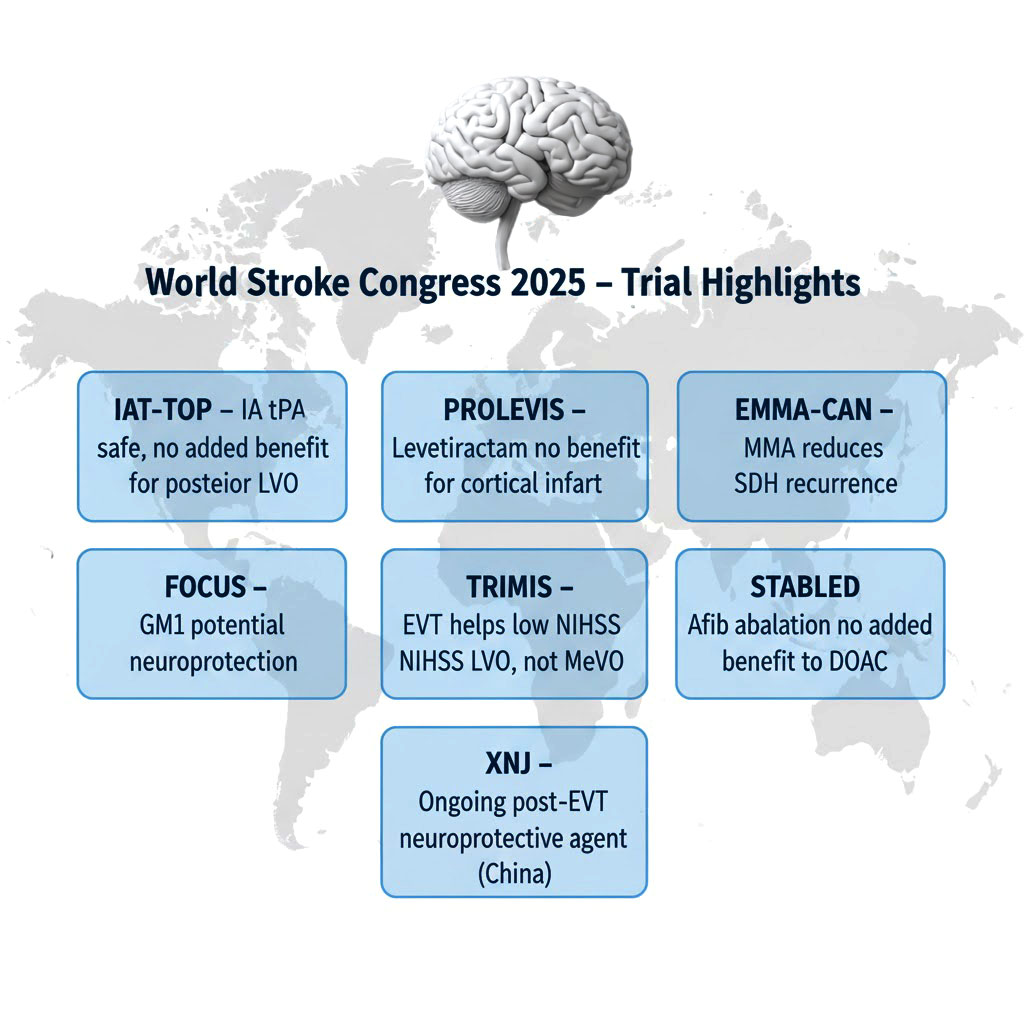
🧠 𝗪𝗼𝗿𝗹𝗱 𝗦𝘁𝗿𝗼𝗸𝗲 𝗖𝗼𝗻𝗴𝗿𝗲𝘀𝘀 (𝗪𝗦𝗖) – 𝗧𝗿𝗶𝗮𝗹 𝗨𝗽𝗱𝗮𝘁𝗲 #𝟮
🔹 𝗜𝗔𝗧-𝗧𝗢𝗣 𝗧𝗿𝗶𝗮𝗹
Intra-arterial tPA for posterior-circulation LVO after successful thrombectomy
💡 𝗕𝗼𝘁𝘁𝗼𝗺 𝗹𝗶𝗻𝗲: IA tPA is safe after posterior-circulation thrombectomy but shows no added benefit.
🔹 𝗘𝗠𝗠𝗔-𝗖𝗔𝗡
MMA embolization + surgery for chronic SDH
𝗥𝗮𝗱𝗶𝗼𝗴𝗿𝗮𝗽𝗵𝗶𝗰 𝗿𝗲𝗰𝘂𝗿𝗿𝗲𝗻𝗰𝗲: 𝟭𝟰% 𝘃𝘀 𝟰𝟵.𝟱%
𝗦𝘆𝗺𝗽𝘁𝗼𝗺𝗮𝘁𝗶𝗰 𝗿𝗲𝗰𝘂𝗿𝗿𝗲𝗻𝗰𝗲: 𝟰.𝟯% 𝘃𝘀 𝟮𝟴%
💡 𝗕𝗼𝘁𝘁𝗼𝗺 𝗹𝗶𝗻𝗲: MMA embolization continues to show strong benefit in reducing SDH recurrence.
🔹 𝗙𝗢𝗖𝗨𝗦 𝗧𝗿𝗶𝗮𝗹
Ganglioside GM1 (100 mg × 14 days) for AIS < 24 h
𝟵𝟬-𝗱𝗮𝘆 𝗺𝗥𝗦 𝟬–𝟮: 𝟲𝟳.𝟲% 𝘃𝘀 𝟱𝟳.𝟱% (OR 1.5)
💡 This may be the first drug to show neuroprotective potential in acute stroke — pending further confirmation.
🔹 𝗧𝗥𝗜𝗠𝗜𝗦
EVT for mild ischemic stroke (NIHSS < 6)
𝗟𝗩𝗢 + 𝗠𝗲𝗩𝗢: overall no difference
𝗟𝗩𝗢 𝗼𝗻𝗹𝘆: better outcomes with EVT
𝗠𝗲𝗩𝗢/𝗗𝗶𝗩𝗢: no benefit, higher sICH
💡 𝗕𝗼𝘁𝘁𝗼𝗺 𝗹𝗶𝗻𝗲: EVT helps in low-NIHSS LVO, but not in MeVO/DiVO.
🔹 𝗦𝗧𝗔𝗕𝗟𝗘𝗗
Atrial-fibrillation ablation in patients on Edoxaban after stroke
💡 𝗕𝗼𝘁𝘁𝗼𝗺 𝗹𝗶𝗻𝗲: No additional stroke-prevention benefit from adding ablation to DOAC therapy.
🔹 𝗫𝗜𝗡𝗚𝗡𝗔𝗢𝗝𝗜𝗡𝗚 (𝗫𝗡𝗝)
Traditional Chinese medicine for AIS post-EVT
🧪 𝗢𝗻𝗴𝗼𝗶𝗻𝗴 𝘁𝗿𝗶𝗮𝗹 – evaluating safety and efficacy after EVT.
🔹 𝗗𝗢𝗡𝗘-𝗦𝗬𝗠𝗣𝗟𝗘
EVT up to 72 h for anterior-circulation LVO
💡 𝗦𝘁𝗶𝗹𝗹 𝗲𝗻𝗿𝗼𝗹𝗹𝗶𝗻𝗴.
🔹 𝗣𝗥𝗢𝗟𝗘𝗩𝗜𝗦
Levetiracetam for cortical ischemic stroke
💡 𝗕𝗼𝘁𝘁𝗼𝗺 𝗹𝗶𝗻𝗲: No evidence to support empirical AED use for cortical ischemic stroke.
#Stroke #WSC2025 #Neurology #ClinicalTrials #NeuroIntervention #VascularNeurology #NeuroIntervention #NeuroCriticalCare #NeuroTrials #StrokeResearch #StrokeCare #IschemicStroke
#HemorrhagicStroke #Thrombectomy #Thrombolysis #TNK #tPA #EVT #Neuroprotection #ClinicalTrials
#EvidenceBasedMedicine #RandomizedTrials #MMAEmbolization
✨ 𝗪𝗵𝗼 𝘀𝗮𝗶𝗱 𝘀𝘁𝘂𝗱𝘆𝗶𝗻𝗴 𝗻𝗲𝘂𝗿𝗼𝗹𝗼𝗴𝘆 𝗰𝗮𝗻’𝘁 𝗯𝗲 𝗳𝘂𝗻?
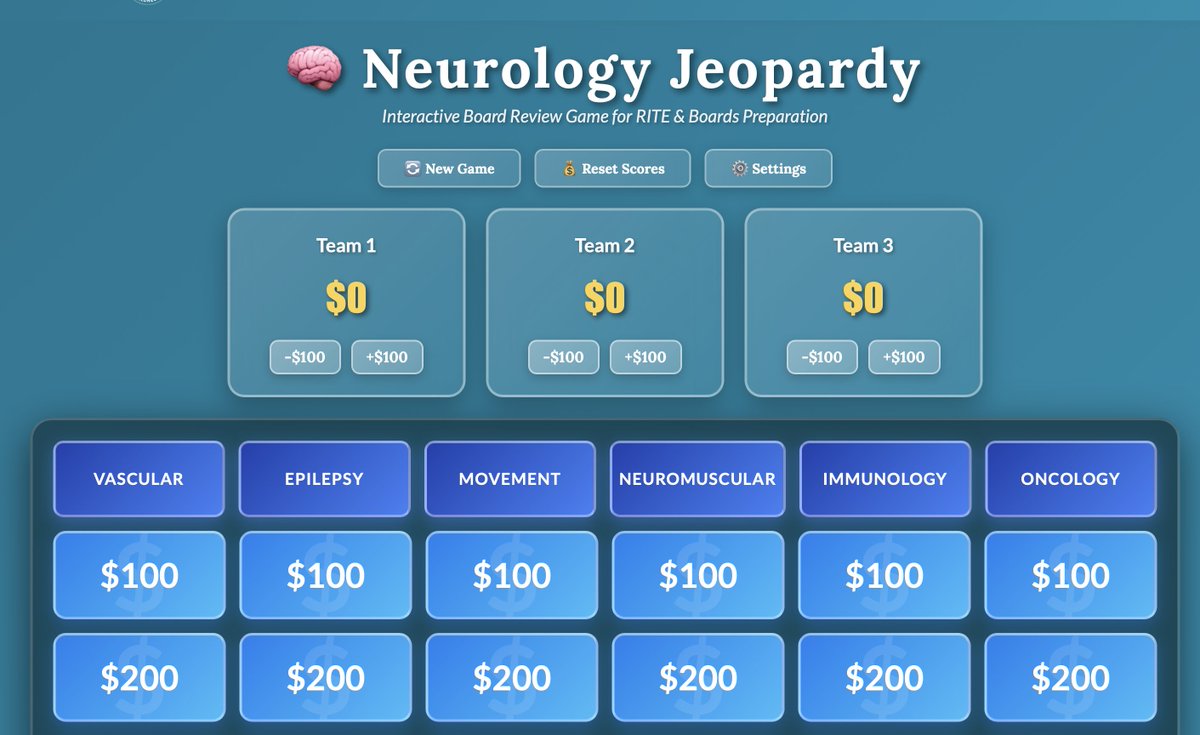
Now you actually can — 𝗛𝗶𝗴𝗵𝗬𝗶𝗲𝗹𝗱 𝗡𝗲𝘂𝗿𝗼 𝗝𝗲𝗼𝗽𝗮𝗿𝗱𝘆! 🎯
A Jeopardy-style learning game that turns studying for the RITE and Neurology Boards into something engaging, fast-paced, and fun.
𝗦𝗲𝘁 𝗶𝘁 𝘂𝗽 𝗳𝗼𝗿 𝘆𝗼𝘂𝗿 𝘁𝗲𝗮𝗺, 𝗮𝗻𝗱 𝗰𝗵𝗮𝗹𝗹𝗲𝗻𝗴𝗲 𝘆𝗼𝘂𝗿𝘀𝗲𝗹𝗳:
🟡 Stroke
🟡 Epilepsy
🟡 Movement disorders
🟡 Neuroimmunology
🟡 Headache
🟡 Child Neurology
🟡 Neuroimmunology
🟡 Neuro-pharmacology
🟡 Neuroanatomy
Go ahead, give it a try — and see if you can beat your own score
🎮 https://t.co/k2h9hMiQKh
𝗕𝗲𝗰𝗮𝘂𝘀𝗲 𝗹𝗲𝗮𝗿𝗻𝗶𝗻𝗴 𝗻𝗲𝘂𝗿𝗼𝗹𝗼𝗴𝘆 𝗱𝗼𝗲𝘀𝗻’𝘁 𝗵𝗮𝘃𝗲 𝘁𝗼 𝗯𝗲 𝗯𝗼𝗿𝗶𝗻𝗴.
#Neurology #MedicalEducation #RITE #BoardReview #NeuroJeopardy #ResidencyLife #HighYieldLearning #NeuroEducation #MedicalTraining
✨ 𝗪𝗵𝗼 𝘀𝗮𝗶𝗱 𝘀𝘁𝘂𝗱𝘆𝗶𝗻𝗴 𝗻𝗲𝘂𝗿𝗼𝗹𝗼𝗴𝘆 𝗰𝗮𝗻’𝘁 𝗯𝗲 𝗳𝘂𝗻?
Now you actually can — 𝗛𝗶𝗴𝗵𝗬𝗶𝗲𝗹𝗱 𝗡𝗲𝘂𝗿𝗼 𝗝𝗲𝗼𝗽𝗮𝗿𝗱𝘆! 🎯
A Jeopardy-style learning game that turns studying for the RITE and Neurology Boards into something engaging, fast-paced, and fun.
𝗦𝗲𝘁 𝗶𝘁 𝘂𝗽 𝗳𝗼𝗿 𝘆𝗼𝘂𝗿 𝘁𝗲𝗮𝗺, 𝗮𝗻𝗱 𝗰𝗵𝗮𝗹𝗹𝗲𝗻𝗴𝗲 𝘆𝗼𝘂𝗿𝘀𝗲𝗹𝗳:
🟡 Stroke
🟡 Epilepsy
🟡 Movement disorders
🟡 Neuroimmunology
🟡 Headache
🟡 Child Neurology
🟡 Neuroimmunology
🟡 Neuro-pharmacology
🟡 Neuroanatomy
Go ahead, give it a try — and see if you can beat your own score
🎮 https://t.co/k2h9hMiQKh
𝗕𝗲𝗰𝗮𝘂𝘀𝗲 𝗹𝗲𝗮𝗿𝗻𝗶𝗻𝗴 𝗻𝗲𝘂𝗿𝗼𝗹𝗼𝗴𝘆 𝗱𝗼𝗲𝘀𝗻’𝘁 𝗵𝗮𝘃𝗲 𝘁𝗼 𝗯𝗲 𝗯𝗼𝗿𝗶𝗻𝗴.
🧠 𝗗𝗼 𝘆𝗼𝘂 𝘁𝗵𝗶𝗻𝗸 𝗶𝘁’𝘀 𝗮 𝗰𝗮𝘂𝘀𝗮𝗹 𝗿𝗲𝗹𝗮𝘁𝗶𝗼𝗻𝘀𝗵𝗶𝗽 𝗼𝗿 𝗷𝘂𝘀𝘁 𝗮𝗻 𝗮𝘀𝘀𝗼𝗰𝗶𝗮𝘁𝗶𝗼𝗻?
🦷 𝗦𝘁𝗿𝗼𝗸𝗲 𝗮𝗻𝗱 𝘁𝗲𝗲𝘁𝗵 𝗵𝗲𝗮𝗹𝘁𝗵 — 𝗮 𝗻𝗲𝘄 𝗮𝗻𝗱 𝗶𝗻𝘁𝗲𝗿𝗲𝘀𝘁𝗶𝗻𝗴 𝗳𝗶𝗻𝗱𝗶𝗻𝗴.
A new Neurology® Open Access study found that people with both gum disease and cavities had an 86% higher risk of stroke compared with those with healthy mouths.
🩸 Poor oral health was also linked to a 36% higher risk of heart attacks and other cardiovascular events.
🦷 Regular dental visits were associated with 81% lower odds of having both gum disease and cavities.
But here’s the real question:
Is oral inflammation causing vascular disease — or do people who neglect oral care tend to neglect other aspects of health as well?
https://t.co/mCDFf0tfwF
#Neurology #Stroke #OralHealth #BrainHealth #VascularNeurology #EvidenceBasedMedicine #Dentistry #Prevention #AAN #NeuroResearch
𝐁𝐞𝐲𝐨𝐧𝐝 𝟐𝟒 𝐇𝐨𝐮𝐫𝐬: 𝐓𝐞𝐧𝐞𝐜𝐭𝐞𝐩𝐥𝐚𝐬𝐞 𝐏𝐮𝐬𝐡𝐞𝐬 𝐭𝐡𝐞 𝐂𝐥𝐨𝐜𝐤 𝐅𝐮𝐫𝐭𝐡𝐞𝐫
Last month we asked: “Are we there yet?”
Now — the answer may be closer than ever.
📊 𝐓𝐍𝐊 𝟒.𝟓–𝟐𝟒𝐡 𝐌𝐞𝐭𝐚-𝐀𝐧𝐚𝐥𝐲𝐬𝐢𝐬 (𝟐𝟎𝟐𝟔)
🧩 1,278 patients across 4 RCTs
🧭 Imaging-based selection (DWI-FLAIR mismatch or CT/MR perfusion)
Results:
• 𝗘𝘅𝗰𝗲𝗹𝗹𝗲𝗻𝘁 𝗼𝘂𝘁𝗰𝗼𝗺𝗲 (mRS 0–1 @ 90 d): 35.1 % vs 28.9 % (𝗢𝗥 1.34, p = 0.02)
• 𝗥𝗲𝗰𝗮𝗻𝗮𝗹𝗶𝘇𝗮𝘁𝗶𝗼𝗻: 46.6 % vs 28.4 % (𝗢𝗥 3.30, p = 0.001)
• 𝗡𝗼 𝗶𝗻𝗰𝗿𝗲𝗮𝘀𝗲 𝗶𝗻 𝘀𝗬𝗠𝗣 𝗜𝗖𝗛 𝗼𝗿 𝗺𝗼𝗿𝘁𝗮𝗹𝗶𝘁𝘆
• 𝗕𝗲𝗻𝗲𝗳𝗶𝘁 𝗴𝗿𝗲𝗮𝘁𝗲𝗿 𝘄𝗵𝗲𝗻 𝗘𝗩𝗧 𝗻𝗼𝘁 𝗮𝘃𝗮𝗶𝗹𝗮𝗯𝗹𝗲
💬 𝐈𝐧𝐭𝐞𝐫𝐩𝐫𝐞𝐭𝐚𝐭𝐢𝐨𝐧:
IV 𝗧𝗲𝗻𝗲𝗰𝘁𝗲𝗽𝗹𝗮𝘀𝗲 up to 𝟮𝟰 𝗵𝗼𝘂𝗿𝘀 after onset appears safe and effective with imaging guidance.
💡 𝐂𝐥𝐢𝐧𝐢𝐜𝐚𝐥 𝐏𝐞𝐚𝐫𝐥:
From 3 → 4.5 → 9 → 24 hours — 𝘁𝗵𝗿𝗼𝗺𝗯𝗼𝗹𝘆𝘀𝗶𝘀 is no longer about 𝘁𝗶𝗺𝗲, but about 𝘁𝗶𝘀𝘀𝘂𝗲.
🩺 𝐁𝐨𝐭𝐭𝐨𝐦 𝐋𝐢𝐧𝐞:
The line keeps moving — and that’s good for stroke patients.
Tenecteplase continues to stretch the window without increasing risk.
#Stroke #Thrombolysis #TNK #LateWindow #VascularNeurology #Tenecteplase #IVT #NeuroTrials #EvidenceBasedMedicine
🧠 𝐖𝐨𝐮𝐥𝐝 𝐘𝐨𝐮 𝐏𝐥𝐞𝐚𝐬𝐞 𝐏𝐮𝐭 𝐎𝐧 𝐘𝐨𝐮𝐫 𝐌𝐢𝐠𝐫𝐚𝐢𝐧𝐞 𝐆𝐥𝐚𝐬𝐬𝐞𝐬 ??
Have you heard the parable of the 𝐛𝐥𝐢𝐧𝐝 𝐦𝐞𝐧 𝐝𝐞𝐬𝐜𝐫𝐢𝐛𝐢𝐧𝐠 𝐚𝐧 𝐞𝐥𝐞𝐩𝐡𝐚𝐧𝐭?
Each touches a different part — one feels the leg and says it’s a tree, another the trunk and says it’s a snake, another the tail and calls it a rope.
Each is partly right, but all are missing the bigger picture.
𝐌𝐢𝐠𝐫𝐚𝐢𝐧𝐞 𝐜𝐚𝐧 𝐛𝐞 𝐭𝐡𝐚𝐭 𝐞𝐥𝐞𝐩𝐡𝐚𝐧𝐭.
A 𝐦𝐢𝐠𝐫𝐚𝐢𝐧𝐞 𝐩𝐚𝐭𝐢𝐞𝐧𝐭 presented with 𝐚𝐫𝐦 𝐭𝐢𝐧𝐠𝐥𝐢𝐧𝐠 𝐭𝐡𝐞𝐧 𝐧𝐮𝐦𝐛𝐧𝐞𝐬𝐬 and was called 𝐓𝐈𝐀/𝐌𝐑𝐈–𝐧𝐞𝐠𝐚𝐭𝐢𝐯𝐞 𝐬𝐭𝐫𝐨𝐤𝐞.
Then presented to cardiology with 𝐜𝐡𝐞𝐬𝐭 𝐩𝐚𝐢𝐧 and was diagnosed with 𝐚𝐧𝐠𝐢𝐨𝐠𝐫𝐚𝐩𝐡𝐲–𝐧𝐞𝐠𝐚𝐭𝐢𝐯𝐞 𝐜𝐨𝐫𝐨𝐧𝐚𝐫𝐲 𝐝𝐢𝐬𝐞𝐚𝐬𝐞.
Then presented to GI with 𝐢𝐧𝐭𝐞𝐫𝐦𝐢𝐭𝐭𝐞𝐧𝐭 𝐚𝐛𝐝𝐨𝐦𝐢𝐧𝐚𝐥 𝐩𝐚𝐢𝐧, 𝐝𝐢𝐚𝐫𝐫𝐡𝐞𝐚/𝐜𝐨𝐧𝐬𝐭𝐢𝐩𝐚𝐭𝐢𝐨𝐧 and was told it is 𝐈𝐁𝐒.
Then presented to primary care with 𝐟𝐥𝐚𝐬𝐡𝐞𝐬 𝐨𝐟 𝐥𝐢𝐠𝐡𝐭 𝐟𝐨𝐥𝐥𝐨𝐰𝐞𝐝 𝐛𝐲 𝐭𝐫𝐚𝐧𝐬𝐢𝐞𝐧𝐭 𝐯𝐢𝐬𝐢𝐨𝐧 𝐥𝐨𝐬𝐬 and was diagnosed with 𝐚𝐦𝐚𝐮𝐫𝐨𝐬𝐢𝐬 𝐟𝐮𝐠𝐚𝐱.
From time to time, we see patients who have undergone 𝐞𝐱𝐡𝐚𝐮𝐬𝐭𝐢𝐯𝐞 𝐰𝐨𝐫𝐤𝐮𝐩𝐬 — 𝐂𝐓𝐬, 𝐌𝐑𝐈𝐬, 𝐞𝐧𝐝𝐨𝐬𝐜𝐨𝐩𝐢𝐞𝐬, 𝐜𝐚𝐫𝐝𝐢𝐚𝐜 𝐭𝐞𝐬𝐭𝐬 — 𝐚𝐥𝐥 𝐧𝐞𝐠𝐚𝐭𝐢𝐯𝐞.
But if you put on your “𝐦𝐢𝐠𝐫𝐚𝐢𝐧𝐞 𝐠𝐥𝐚𝐬𝐬𝐞𝐬,” the diagnosis becomes clear in seconds.
I still remember when 𝐃𝐫. 𝐃𝐚𝐯𝐢𝐝 𝐋𝐞𝐞 𝐆𝐨𝐫𝐝𝐨𝐧 once helped me put on those 𝐦𝐢𝐠𝐫𝐚𝐢𝐧𝐞 𝐠𝐥𝐚𝐬𝐬𝐞𝐬 👓 — it completely changed how I see these patients.
𝐌𝐢𝐠𝐫𝐚𝐢𝐧𝐞 𝐢𝐬 𝐦𝐨𝐫𝐞 𝐭𝐡𝐚𝐧 𝐚 𝐡𝐞𝐚𝐝𝐚𝐜𝐡𝐞 — 𝐢𝐭’𝐬 𝐚 𝐧𝐞𝐮𝐫𝐨𝐯𝐚𝐬𝐜𝐮𝐥𝐚𝐫 𝐝𝐢𝐬𝐨𝐫𝐝𝐞𝐫 𝐰𝐢𝐭𝐡 𝐬𝐞𝐧𝐬𝐨𝐫𝐲, 𝐚𝐮𝐭𝐨𝐧𝐨𝐦𝐢𝐜, 𝐚𝐧𝐝 𝐬𝐲𝐬𝐭𝐞𝐦𝐢𝐜 𝐞𝐱𝐩𝐫𝐞𝐬𝐬𝐢𝐨𝐧𝐬.
Sometimes, recognizing the 𝐰𝐡𝐨𝐥𝐞 𝐞𝐥𝐞𝐩𝐡𝐚𝐧𝐭 changes everything.
#Neurology #Headache #Migraine #ClinicalReasoning #Neuroeducation #Stroke #Neurovascular #MedicalEducation #CME