(He/him, asexual) Junior professor at Uni-Bremen and Academy Fellow at UHelsinki. Phenotypic plasticity/climate change/urban evolution/temperature/Lepidoptera.
Take a look at our new paper on how the evolution of seasonal plasticity associated with climate change can vary between life stages, tested by recreating experiments from 35 years ago on Speckled Wood butterflies: https://t.co/AxXnSKC9tn @Ecology_Letters
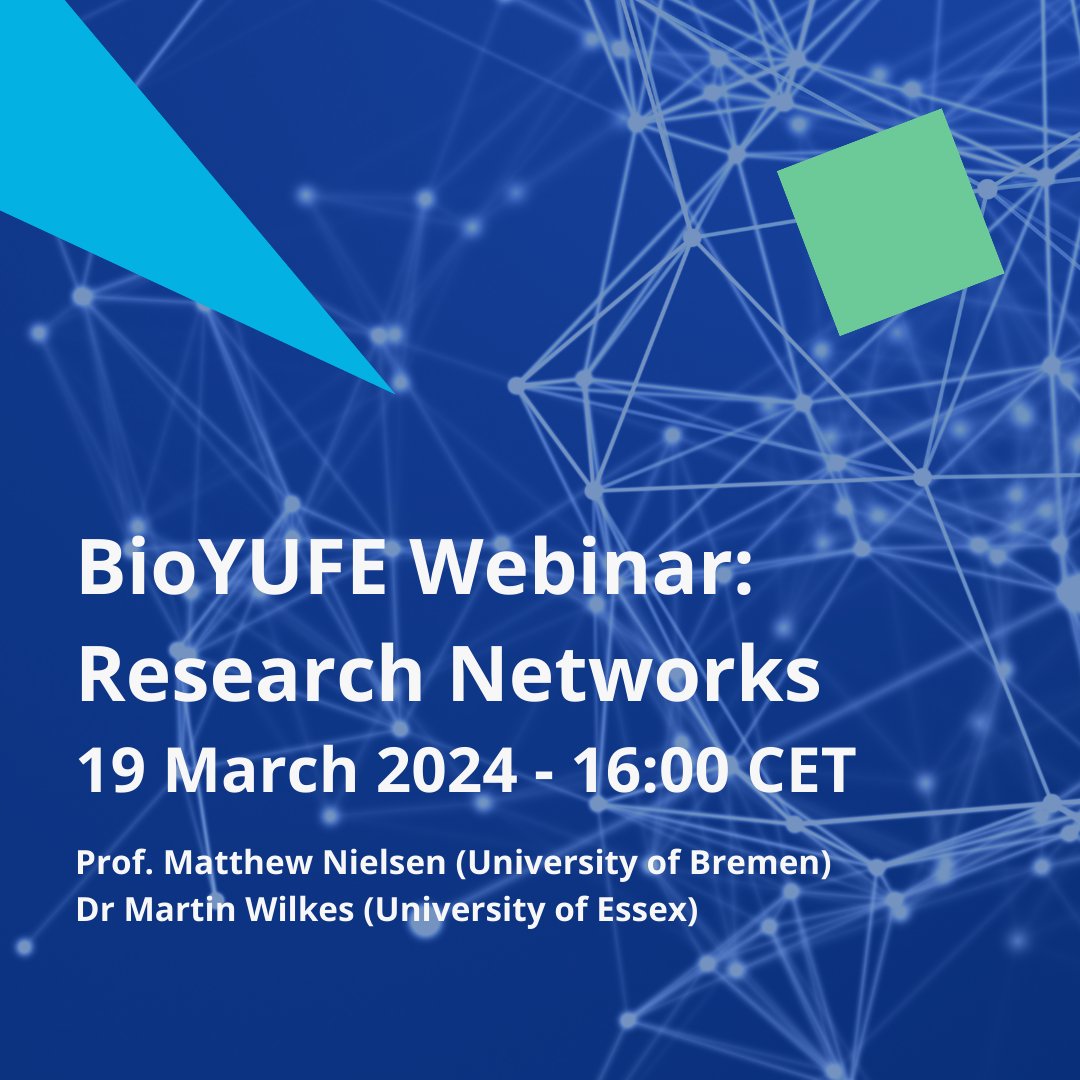
🎯Join Matthew Nielsen (@drmatterpillar ) and Martin Wilkes (@wilkesma ) for a webinar on Research Networks: 19 March 2024, 16-17:30h CET
💡Register here: https://t.co/NYBsQJdDTB
@Liz_C_Miller I don't know, but my guess is not much. From my own experience the 3 page statement is easier to write though. I agree with @AndersonEvolve that the room for more pictures is helpful.
We're hiring again! #TenureTrack Curator/Professor Butterflies & moths. Special interest in those studying global change, popbio, ecology, evolution, invasives, development. Starting salary up to $105,000 USD Application review 1/5/24. Please Repost! @FloridaMuseum#McGuireCenter
I only just realized that my Helsinki email address in the job posting is incorrect. If you have questions, please contact me at the Bremen email address. (In my defense, this advertisement was first written before I actually had a Helsinki email.)
With @Marjo__S and @PauliinaRautio, I have an open PhD position for a project combining urban evolution of butterflies and science education research @helsinkiuni. https://t.co/6z82jHnZtx
With @Marjo__S and @PauliinaRautio, I have an open PhD position for a project combining urban evolution of butterflies and science education research @helsinkiuni. https://t.co/6z82jHnZtx
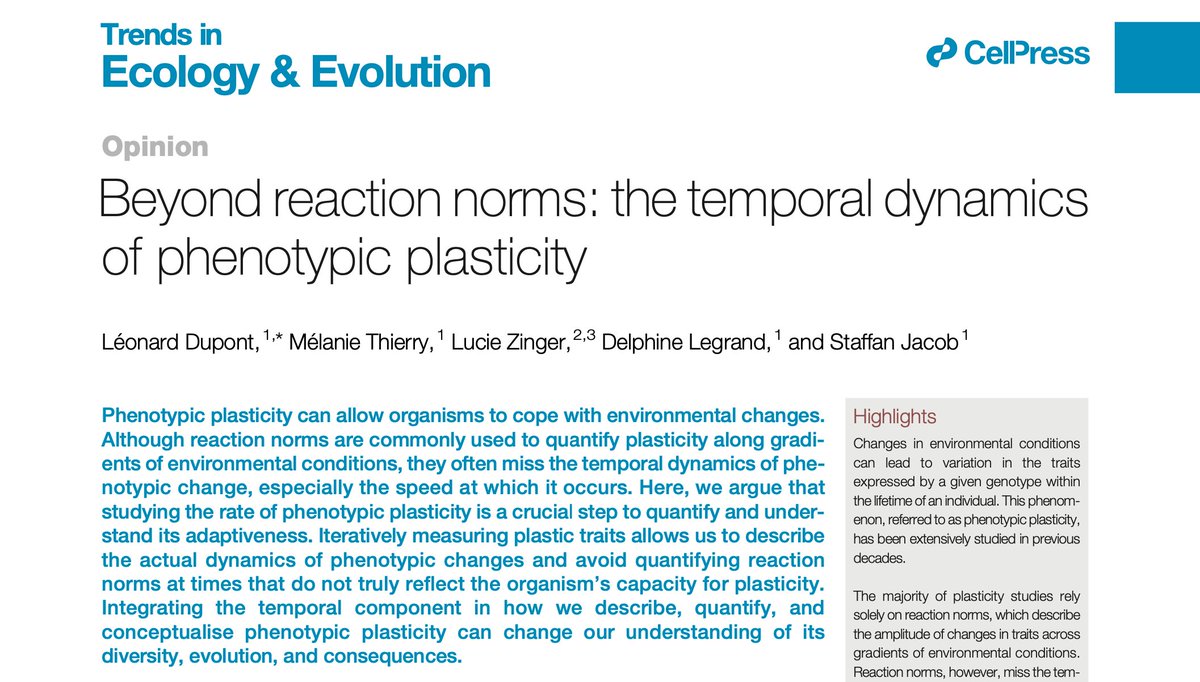
It's great to see some high-quality writing about the importance of time for phenotypic plasticity. This is a really important feature of plasticity that gets almost no attention.
Just out in @Trends_Ecol_Evo: we need to go beyond reaction norms alone, integrating the temporal dynamics of phenotypic plasticity! Amazing discussions and work these last 2 years to end up with this! 🤩
For my own research on phenotypic mismatches, I usually deal with plasticity that can only happen during a single developmental transition (e.g., diapause that only begins at pupation). This is yet a different kind of temporal dynamic.
With @Marjo__S and @PauliinaRautio, I have an open PhD position for a project combining urban evolution of butterflies and science education research @helsinkiuni. https://t.co/6z82jHnZtx
The project will work with local schools to test whether evolutionary changes in the life history and plasticity of urban butterflies are adaptive. It will also explore the potential of classroom research projects and urban evolution as teaching tools.
On the train to Prague for #BoB2023. First time for international rail travel and so far it's really nice! Super excited to spend a week nerding out about butterflies.
As a side note, this was my first attempt at a preregistered study (https://t.co/vUj8prWAE8) and possibly among the first published preregistered empirical studies in our field.
But, unsurprisingly, not everything went according to plan, and we discuss that in the paper.
Take a look at our new paper on how the evolution of seasonal plasticity associated with climate change can vary between life stages, tested by recreating experiments from 35 years ago on Speckled Wood butterflies: https://t.co/AxXnSKC9tn @Ecology_Letters
The difference could be tied to the different phenology of these populations (one has one generation per year, the other two), but that will take further research to understand!