|| Passionate Anchor,Educator,Writer ||
Akashavani,MIB Govt of India
Masters in English, Translation Study
Ph.D in English,
D.litt(University of California)
@माननीय राजस्व मंत्री @HemantMeenaBJP जी क्या आप राजस्व मंडल में कार्यरत अतिरिक्त प्रशासनिक अधिकारी (लिपिक संवर्ग) हवासिंह जाट पर कार्रवाई करेंगे जो सदैव नशे में चूर, आकंठ भ्रष्टाचारी ,डेस्क पर रिश्वत लेनदेन करता है । दे�� के अन्नदाता जो राजस्व न्यायालय में न्याय की चाह में आते हैं ,उनके न्यायिक प्रकरणों का वास्तविक स्वरूप, निर्णय बिगड़ाने का सौदागर है । यह व्यक्ति on duty भी गायब रहता है इसके खिलाफ सैकड़ों शिकायतें दर्ज हैं । तबादला सीजन में इसे भी सही नसीहत नजाकत के साथ मिलनी चाहिए । क्या आप तात्कालिक संज्ञान लेंगे ? @RajCMO @PMOIndia @ChouhanShivraj @crchaudharymos @svoruganti1466
@माननीय राजस्व मंत्री @HemantMeenaBJP जी क्या आ�� राजस्व मंडल में कार्यरत अतिरिक्त प्रशासनिक अधिकारी (लिपिक संवर्ग) हवासिंह जाट पर कार्रवाई करेंगे जो सदैव नशे में चूर, आकंठ भ्रष्टाचारी ,डेस्क पर रिश्वत लेनदेन करता है । देश के अन्नदाता जो राजस्व न्यायालय में न्याय की चाह में आते हैं ,उनके न्यायिक प्रकरणों का वास्तविक स्वरूप, निर्णय बिगड़ाने का सौदागर है । यह व्यक्ति on duty भी गायब रहता है इसके खिलाफ सैकड़ों शिकायतें दर्ज हैं । तबादला सीजन मे��� इसे भी सही नसीहत नजाकत के साथ मिलनी चाहिए । क्या आप तात्कालिक संज्ञान लेंगे ? @RajCMO @PMOIndia @ChouhanShivraj @crchaudharymos @svoruganti1466
General M.M. Naravane’s New Book: A Valuable Contribution to Military Literature and National Discourse
The publication of former Chief of the Indian Army General Manoj Mukund Naravane’s book The Curious and the Classified: Unearthing Military Myths and Mysteries, brought out by Rupa Publications, is a significant moment in India’s military and intellectual landscape. Written by an officer who spent more than four decades serving the nation with distinction, the book reflects the depth of experience, institutional understanding, and strategic insight of a professional soldier who has witnessed the complexities of national security from the closest quarters.
General Naravane belongs to that rare category of military leaders whose careers have been defined by discipline, integrity, and commitment to constitutional values. As the former Chief of the Army Staff, he carried the immense responsibility of safeguarding India’s territorial integrity during a period marked by complex security challenges. His writings, therefore, deserve to be examined through the lens of professional experience rather than temporary controversies or political interpretations.
The earlier debate surrounding his proposed memoir created considerable public discussion. However, the true worth of any book should be judged by its intellectual merit, factual accuracy, and contribution to public understanding. A responsible military leader understands the delicate balance between transparency and confidentiality, and General Naravane’s approach reflects the traditions of a professional army where national interest remains paramount.
This book is not merely a collection of military anecdotes; it is an analytical exploration of the lesser-known dimensions of India’s defence history, military culture, traditions, and strategic thinking. It attempts to bridge the gap between the armed forces and civilian society by explaining the realities, myths, and mysteries associated with military life. Such works are important because a strong democracy requires informed citizens who understand both the sacrifices of its soldiers and the complexities of national defence.
General Naravane’s contribution extends beyond the battlefield. Through his writing, he continues his service to the nation by preserving institutional memory and sharing valuable lessons of leadership, courage, and decision-making. His book represents the voice of a seasoned professional who has observed history not from a distance but from within the command structure of one of the world’s largest armies.
In an era where public discourse is often influenced by instant opinions and political narratives, a thoughtful military publication by an experienced Army chief provides an opportunity for mature reflection. The book should be appreciated as an important addition to contemporary military literature and as a testimony to the enduring spirit of service, professionalism, and intellectual curiosity that defines India’s armed forces. Congratulations @ManojNaravane Sir
"सुप्रीम कोर्ट में घटित यह घटना निश्चित रूप से पीड़ादायक और चिंताजनक है, लेकिन जिस प्रकार माननीय न्यायाधीशों ने धैर्य, संयम और उदारता का परिचय दिया, वह भारतीय न्याय परंपरा की गरिमा के अनुरूप है। न्यायपालिका की महानता केवल कठोर निर्णयों में नहीं, बल्कि अपने विशाल हृद�� और सहनशील दृष्टिकोण में भी निहित होती है। सर्वोच्च न्यायालय का कंधा इतना मजबूत होना चाहिए कि वह समाज के आक्रोश, पीड़ा और असंतोष को भी धैर्यपूर्वक सुन सके।
लेकिन इस घटना को केवल एक व्यक्ति या एक क्षण की प्रतिक्रिया तक सीमित करके नहीं देखा जा सकता। इसके पीछे उस व्यापक निराशा को समझना आवश्यक है जो आज आम नागरिकों के मन में शासन व्यवस्था और न्याय प्रणाली को लेकर धीरे-धीरे बढ़ रही है। जब किसी नागरिक के अधिकारों का उल्लंघन होता है, जब बिना उचित प्रक्रिया के किसी का घर गिरा दिया जाता है, जब शक्ति के दुरुपयोग के आरोप सामने आते हैं और जवाबदेही सुनिश्चित नहीं होती, तब लोकतंत्र की आत्मा कमजोर होती है।
न्यायालय आम नागरिक के लिए अंतिम उम्मीद का द्वार है। लेकिन यदि वही नागरिक न्याय पाने की यात्रा में ��्वयं को उपेक्षित, विलंबित या निराश महसूस करने लगे, तो यह लोकतांत्रिक व्यवस्था के लिए गंभीर संकेत है। न्यायपालिका की निष्पक्षता और स्वतंत्रता पर विश्वास बनाए रखना केवल अदालतों की नहीं, बल्कि पूरे शासन तंत्र की जिम्मेदारी है।
आज आवश्यकता है कि न्याय व्यवस्था अपनी उदारता के साथ-साथ अपनी प्रभावशीलता और विश्वसनीयता को भी और मजबूत करे। प्रशासनिक संस्थाओं में जवाबदेही बढ़े, सत्ता का प्रयोग स���विधान की मर्यादाओं के भीतर हो और प्रत्येक नागरिक को यह भरोसा रहे कि कानून सबके लिए समान है।
क्योंकि लोकतंत्र में न्यायालय केवल एक भवन नहीं होता, वह करोड़ों लोगों की अंतिम आशा का प्रतीक होता है। उम्मीद की आखिरी मंजिल यदि न्यायालय ही है, तो उस मंजिल की मजबूती, निष्पक्षता और विश्वसनीयता बनाए रखना ही समाज में बढ़ती हताशा का सबसे बड़ा उपचार है।"
@navinjournalist
"ज्ञान की राजधानी में जल संकट: विकास के दावों पर एक गंभीर प्रश्नचिह्न"
राजस्थान की प्रतिष्ठित और प्रदेश की एकमात्र केंद्रीय विश्वविद्यालय, Central University of Rajasthan में जल संकट के कारण शिक्षण व्यवस्था को ऑनलाइन मोड में संचालित करने का निर्णय केवल एक प्रशासनिक आदेश नहीं, बल्कि प्रदेश की आधारभूत सुविधाओं की वास्तविक स्थिति का आईना है। विश्वविद्यालय के आदेश में भारतीय मौसम विभाग के पूर्वानुमान, संभावित अल्पवृष्टि और जल संसाधनों के विवेकपूर्ण प्रबंधन का हवाला देते हुए 15 जुलाई से 14 अगस्त 2026 तक कक्षाओं को ऑनलाइन संचालित करने की बात कही गई है।
यह स्थिति कई गंभीर सवाल खड़े करती है। एक केंद्रीय विश्वविद्यालय, जो राष्ट्रीय महत्व की संस्था होती है, वहां छ��त्रों के लिए पर्याप्त पेयजल और मूलभूत सुविधाओं की व्यवस्था सुनिश्चित करना संबंधित प्रशासन और सरकार की प्राथमिक जिम्मेदारी होनी चाहिए। यदि उच्च शिक्षा के ऐसे प्रतिष्ठित संस्थान में जल उपलब्धता एक चुनौती बन जाती है और नए हॉस्टल प्रवेश तक स्थगित करने पड़ते हैं, तो यह केवल पानी की कमी नहीं बल्कि नियोजन और दूरदर्शिता की कमी को भी दर्शाता है।
शिक्षक घर से ऑनलाइन कक्षाएं लें और विद्यार्थी परिसर की शैक्षणिक जीवंतता से वंचित रहें—यह आपातकालीन समाधान तो हो सकता है, लेकिन स्थायी व्यवस्था का विकल्प नहीं। विश्वविद्यालय केवल कक्षाओं का भवन नहीं होता; वह संवाद, शोध, प्रयोग, पुस्तकालय, प्रयोगशालाओं और छात्र जीवन की ऊर्जा से निर्मित एक जीवंत परिसर होता है।
राजस्थान जैसे जल-संकटग्रस्त राज्य में जल प्रबंधन कोई नया विषय नहीं है। लेकिन जब एक केंद्रीय विश्वविद्यालय जैसी संस्था भी इससे प्रभावित होती है, तो यह प्रश्न स���वाभाविक रूप से उठता है कि वर्षों से किए जा रहे जल संरक्षण और आधारभूत विकास के दावे जमीन पर कितने प्रभावी हैं।
सरकार और संबंधित विभागों को इसे आलोचना के रूप में नहीं बल्कि चेतावनी के रूप में लेना चाहिए। शिक्षा के मंदिरों में जल, बिजली और अन्य मूलभूत सुविधाओं की निर्बाध उपलब्धता सुनिश्चित करना किसी भी कल्याणकारी शासन की पहली जिम्मेदारी होनी चाहिए। वरना "विश्वगुरु" बनने की आकांक्षा और जमीनी हकीकत के बीच का अंतर और अधिक स्पष्ट होता जाएगा।
@gssjodhpur @dpradhanbjp @OnlineKanhaiya @PMOIndia @RajCMO
भरतपुर में रूबी ने, अपने पति सुरेन्द्र की हत्या करके, बाथरूम में गाड़ कर, ऊपर टाईल्स लगवा दी, रोजाना उसी बाथरूम में नहाती थी, कल पुलिस ने लाश निकाली है…
@PoliceRajasthan
"भारतीय संविधान के संशोधन :
संविधान की प्रस्तावना से लेकर भारत के संवैधानिक विकास की एक जीवंत यात्रा"
26 नवम्बर 1949 को अंगीकृत और 26 जनवरी 1950 से प्रभावी भारतीय संविधान केवल एक विधिक दस्तावेज नहीं, बल्कि भारत की लोकतांत्रिक आत्मा का घोषणापत्र है। इसकी प्रस्तावना—"हम भारत के लोग..."—सामाजिक, आर्थिक और राजनीतिक न्याय; विचार, अभिव्यक्ति, विश्वास, धर्म एवं उपासना की स्वतंत्रता; अवसर की समानता तथा व्यक्ति की गरिमा एवं राष्ट्र की एकता-अखंडता सुनिश्चित करने का संकल्प व्यक्त करती है। यही प्रस्तावना संविधान की आत्मा है और संविधान संशोधन उसी आत्मा को समयानुकूल बनाए रखने का माध्यम।
भारत का संविधान विश्व का सबसे विस्तृत लिखित संविधान है। बदलती सामाजिक, आर्थिक, राजनीतिक एवं तकनीकी परिस्थितियों के अनुरूप इसे समय-समय पर संशोधित किया गया। अब तक 106 संविधान संशोधन अधिनियम पारित हो चुके हैं, जिन्होंने भारतीय लोकतंत्र को अधिक समावेशी, उत्तरदायी और सशक्त बनाया है।
प्रथम संविधान संशोधन अधिनियम, 1951 ने अभिव्यक्ति की स्वतंत्रता पर युक्तिसंगत प्रतिबंधों की व्यवस्था की तथा भूमि सुधारों को न्यायिक चुनौती से संरक्षण प्रदान किया। इसके पश्चात सातवें संशोधन (1956) ने राज्यों के पुनर्गठन के माध्यम से भारतीय संघ की प्रशासनिक संरचना को नया स्वरूप दिया।
वर्ष 1976 का 42वाँ संविधान संशोधन भारतीय संवैधानिक इतिहास का सबसे व्यापक संशोधन माना जाता है। इसे "मिनी संविधान" कहा जाता है। इसी संशोधन द्वारा प्रस्तावना में "समाजवादी", "पंथनिरपेक्ष" तथा "राष्ट्र की अखंडता" शब्द जो��़े गए। साथ ही मौलिक कर्तव्यों को भी संविधान में सम्मिलित किया गया। यद्यपि आपातकालीन परिस्थितियों में पारित होने के कारण इसकी व्यापक आलोचना भी हुई।
1978 का 44वाँ संशोधन लोकतंत्र की पुनर्स्थापना का प्रतीक बना। इसने आपातकालीन शक्तियों को सीमित किया, नागरिक स्वतंत्रताओं को पुनः सुदृढ़ किया तथा संपत्ति के अधिकार को मौलिक अधिकार से हटाकर संवैधानिक अधिकार बनाया। इसे भारतीय लोकतंत्र की आत्मशुद्धि का उदाहरण माना जाता है।
1988 के 61वें संशोधन द्वारा मतदान की आयु 21 वर्ष से घटाकर 18 वर्ष कर दी गई, जिससे करोड़ों युवाओं को लोकतांत्रिक प्रक्रिया में भागीदारी का अवसर मिला। 73वें और 74वें संशोधन (1992) ने पंचायती राज संस्थाओं एवं नगरीय निकायों को संवैधानिक दर्जा देकर लोकतंत्र को गाँव-गाँव और शहर-शहर तक पहुँचाया। यह गांधीजी के ग्राम स्वराज के स्वप्न को संवैधानिक आधार देने वाला ऐतिहासिक कदम था।
86वें संविधान संशोधन (2002) ने 6 से 14 वर्ष तक के प्रत्येक बच्चे के लिए शिक्षा को मौलिक अधिकार घोषित किया। शिक्षा का अधिकार अधिनियम, 2009 इसी संशोधन की व्यावहारिक परिणति है, जिसने शिक्षा को सामाजिक न्याय का सबसे प्रभावी साधन बनाया।
103वें संविधान संशोधन (2019) द्वारा आर्थिक रूप से कमजोर वर्गों (EWS) के लिए 10 प्रतिशत आरक्षण की व्यवस्था की गई, जिससे सामाजिक न्याय की अवधारणा को आर्थिक आधार तक विस्तारित किया गया। वहीं 101वें संशोधन (2016) ने वस्तु एवं सेवा कर (GST) लागू कर पूरे देश को एकीकृत अप्रत्यक्ष कर व्यवस्था प्रदान की, जिसे स्वतंत्र भारत के सबसे बड़े आर्थिक सुधारों में गिना जाता है।
संविधान संशोधन केवल विधायी परिवर्तन नहीं होते; वे राष्ट्र की बदलती आवश्यकताओं, लोकतांत्रिक आकांक्षाओं और सामाजिक चेतना के दर्पण होते हैं। किंतु यह भी उतना ही सत्य है कि संशोधन संविधान की मूल संरचना (Basic Structure) को प्रभावित नहीं कर सकते। सर्वोच्च न्यायालय ने केशवानंद भारती बनाम केरल राज्य (1973) के ऐतिहासिक निर्णय में इस सिद्धांत को स्थापित कर संविधान की आत्मा की रक्षा सुनिश्चित की।
आज जब भारत विश्व की सबसे बड़ी लोकतांत्रिक शक्ति के रूप में उभर रहा है, तब संविधान और उसके संशोधनों का अध्ययन केवल विधि के विद्यार्थियों के लिए ही नहीं, बल्कि प्र��्येक जागरूक नागरिक के लिए आवश्यक है। संविधान की प्रस्तावना हमें आदर्श देती है, मूल अधिकार हमें स्वतंत्रता प्रदान करते हैं, नीति-निर्देशक तत्व शासन को दिशा देते हैं और संविधान संशोधन इन सभी को समय की आवश्यकताओं के अनुरूप जीवंत बनाए रखते हैं।
भारतीय संविधान की सबसे बड़ी शक्ति उसकी परिवर्तनशीलता और स्थायित्व के बीच स्थापित अद्भुत संतुलन है। यही कारण है कि सात दशकों से अधिक समय बीत जाने के बाद भी यह दस्तावेज़ भारत की लोकतांत्रिक यात्रा का सबसे विश्वसनीय पथप्रदर्शक बना हुआ है। संविधान केवल शासन का आधार नहीं, बल्कि भारत की राष्ट्रीय चेतना, लोकतांत्रिक संस्कृति और समावेशी भविष्य का शाश्वत संकल्प है।
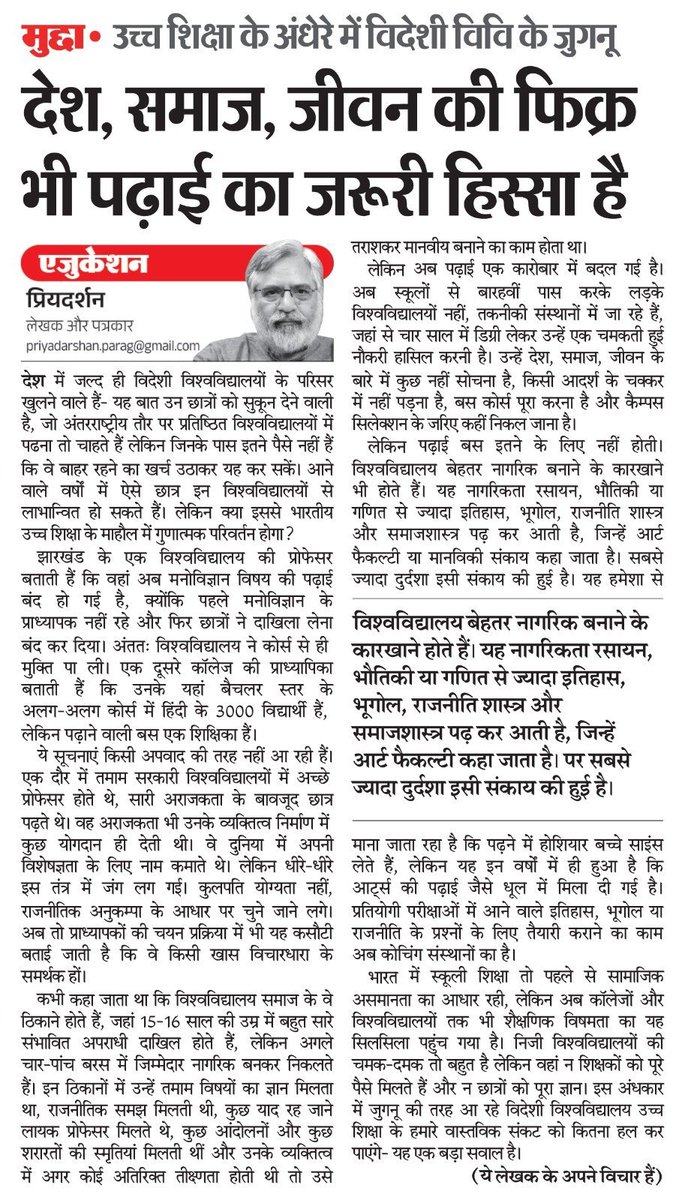
The true purpose of higher education extends far beyond securing lucrative employment; it is fundamentally about cultivating enlightened, ethical, and socially responsible citizens. In an era where universities are increasingly perceived as gateways to corporate careers, the author laments the gradual erosion of the humanities and social sciences, disciplines that nurture empathy, critical reasoning, historical consciousness, and democratic values. For the youth, the message is unequivocal: professional excellence must be complemented by moral integrity, civic responsibility, and an enduring commitment to nation-building. Women, empowered through education, should emerge not merely as economically independent individuals but as influential leaders, informed decision-makers, and catalysts of social transformation. For tribal and other marginalized communities, education must become an instrument of dignity, inclusion, and empowerment while preserving their cultural identity, indigenous wisdom, and constitutional rights. Equally, society at large must recognize that a nation cannot attain sustainable progress through technical proficiency alone; it requires citizens who possess compassion, constitutional literacy, social sensitivity, and an unwavering sense of collective responsibility. Universities must therefore reclaim their historic role as crucibles of intellectual freedom, ethical inquiry, and democratic discourse rather than functioning solely as placement centres. When education neglects history, political science, sociology, philosophy, literature, and civic engagement, it risks producing technically competent professionals who remain detached from the realities of inequality, justice, environmental stewardship, and national development. Ultimately, the article underscores that the measure of an educational system lies not in the salaries its graduates command but in the character they embody, the values they uphold, and the transformative contributions they make to society. A truly educated individual is one who harmonizes knowledge with wisdom, ambition with compassion, and personal success with an enduring commitment to the welfare of humanity. Perfectly said sir... @priyadarshanp
The Gut: Our Second Brain
Modern science describes the gut as our "second brain" because it constantly communicates with the brain through nerves, hormones, immune signals, and trillions of beneficial microbes. A healthy gut not only improves digestion but also influences mood, memory, immunity, sleep, and emotional well-being. Stress and unhealthy eating habits can disturb this delicate gut-brain connection, leading to digestive problems, anxiety, and poor overall health. Maintaining a balanced diet rich in fibre, fermented foods, proper hydration, regular exercise, adequate sleep, and effective stress management helps preserve a healthy gut. Thus, caring for our gut is not merely about digestion—it is a cornerstone of both physical vitality and mental wellness.
लोक सेवा आयोगों की नियुक्तियाँ: राजनीतिक अनुग्रह नहीं, संवैधानिक उत्तरदायित्व--
राज्य लोक सेवा आयोगों के अध्यक्ष एवं सदस्यों की नियुक्तियाँ किसी भी लोकतांत्रिक शासन व्यवस्था की संस्थागत विश्वसनीयता की सबसे कठोर परीक्षा होती हैं। राजस्थान लोक सेवा आयोग (RPSC) जैसे आयोग केवल भर्ती एजेंसियाँ नहीं हैं, बल्कि वे संविधान द्वारा स्थापित ऐसी स्वतंत्र संस्थाएँ हैं जिनके निर्णय प्रशासनिक व्यवस्था की गुणवत्ता और लाखों युवाओं के भविष्य का ���िर्धारण करते हैं। अतः इन पदों पर नियुक्ति किसी राजनीतिक अनुकंपा, वैचारिक निष्ठा अथवा व्यक्तिगत समीकरण का प्रतिफल नहीं, बल्कि गहन Internal Deliberation (आंतरिक मंथन), वस्तुनिष्ठ परीक्षण और उत्कृष्ट सार्वजनिक जीवन का स्वाभाविक निष्कर्ष होनी चाहिए।
विगत दो-तीन दशकों में भारतीय राजनीति के निरंतर बदलते परिदृश्य और सत्ता परिवर्तन के साथ यह सार्वजनिक धारणा निरंतर प्रबल हुई है कि अनेक संवैधानिक संस्थाओं में नियुक्तियों पर राजनीतिक प्रभाव, पक्षपात, कृपापात्रता तथा सत्ता-समर्थित झुकाव का प्रभाव बढ़ा है। यह प्रवृत्ति किसी एक राजनीतिक दल तक सीमित नहीं रही, बल्कि समय-समय पर विभिन्न सरकारों के कार्यकाल में अलग-अलग रूपों में दिखाई दी है। ऐसी स्थिति लोकतंत्र की संस्थागत निष्पक्षता पर प्रश्नचिह्न लगाती है और सबसे अधिक आघात उन प्रतिभाशाली युवाओं के विश्वास पर करती है, जो अपनी योग्यता और परिश्रम के बल पर अवसर प्राप्त करना चाहते हैं।
सरकारों का यह संवैधानिक दायित्�� है कि नियुक्ति प्रक्रिया को ��ाजनीतिक प्रभाव से पूर्णतः मुक्त रखते हुए व्यापक संस्थागत विमर्श के माध्यम से संचालित किया जाए। प्रत्येक संभावित अभ्यर्थी का मूल्यांकन केवल उसकी वरिष्ठता से नहीं, बल्कि उसकी शैक्षणिक उत्कृष्टता, प्रशासनिक दक्षता, नैतिक निष्कलंकता, संवैधानिक समझ, निर्णय क्षमता, बौद्धिक परिपक्वता तथा सार्वजनिक जीवन में अर्जित निष्पक्ष प्रतिष्ठा के आधार पर किया जाना चाहिए। किसी भी प्रकार का राजनीतिक प��रतिफल, वैचारिक प्रतिबद्धता या व्यक्तिगत निकटता चयन का आधार नहीं बननी चाहिए।
लोक सेवा आयोगों की स्वतंत्रता केवल संवैधानिक प्रावधानों से सुरक्षित नहीं रहती; उसकी वास्तविक रक्षा उन व्यक्तियों से होती है जो इन संस्थाओं का नेतृत्व करते हैं। यदि नेतृत्व ही राजनीतिक अपेक्षाओं से संचालित होगा, तो आयोगों की निष्पक्षता, पारदर्शिता और जनविश्वास धीरे-धीरे क्षीण हो जाएंगे। इसके विपरीत यदि नियुक��तियाँ केवल योग्यता, सत्यनिष्ठा और संस्थागत उत्कृष्टता के सर्वोच्च मानकों पर आधारित हों, तो यही आयोग सुशासन, प्रशासनिक दक्षता और लोकतांत्रिक मर्यादा के सबसे विश्वसनीय प्रतीक बन सकते हैं।
आज आवश्यकता केवल नियुक्तियाँ करने क�� नहीं, बल्कि लोकतांत्रिक संस्थाओं की खोती हुई विश्वसनीयता को पुनर्स्थापित करने की है। सरकारों को यह सिद्ध करना होगा कि संवैधानिक संस्थाएँ सत्ता की परिधि नहीं, बल्कि संविधान की आत्मा हैं। जब तक नियुक्तियों की प्रक्रिया राजनीतिक अनुग्रह से ऊपर उठकर पूर्णतः निष्पक्ष, पारदर्शी और योग्यता-आधारित नहीं होगी, तब तक प्रशासनिक उत्कृष्टता और समान अवसर का संवैधानिक वादा अधूरा ही रहेगा। @PMOIndia
@RajCMO@RPSC1 @Article19_India @rashtrapatibhvn @BagadeHaribhau
आरपीएससी में कर्नल केसरी सिंह की नियुक्ति: प्रक्रिया या मनमानी :
राजस्थान उच्च न्यायालय ने आरपीएससी सदस्य पद पर लेफ्टिनेंट कर्नल केसरी सिंह की नियुक्ति को लेकर महत्वपूर्ण आदेश जारी किया है। एक्टिंग चीफ जस्टिस एसपी शर्मा की खंडपीठ ने मुख्य सचिव, कार्मिक सचिव, आरपीएससी सचिव और केसरी सिंह से जवाब तलब किया।
अदालत ने सख्ती से पूछा — “नियुक्ति” शब्द का प्रयोग होने के बाद प्रक्रिया क्या अपनाई गई? क्या कोई चयन प्रक्रिया हुई या यह मात्र सत्ता की इच्छा थी?सुभाष सिहाग की जनहित याचिका में आरोप है कि केसरी सिंह के चयन का कोई ठोस आधार नहीं था। याचिका में यह भी उल्लेख किया गया कि मुख्यमंत्री स्वयं मान चुके हैं कि इस नियुक्ति में गलती हुई। सेना की सेवा सराहनीय है, किंतु आरपीएससी जैसे संवैधानिक निकाय में सदस्य नियुक्ति के लिए संवैधानिक प्रावधानों, योग्यता और पूर्ण पारदर्शिता अनिवार्य है। पुरानी विवादास्पद वीडियो ने भी इस नियुक्ति को घेरा।यह मामला केवल एक पद की नियुक्ति नहीं, बल्कि लाखों युवाओं के भविष्य, भर्ती प्रक्रिया की निष्पक्षता और संस्थागत विश्वसनीयता का सवाल है। न्यायपालिका की इस सक्रिय भूमिका से उम्मीद है कि संवैधानिक मूल्य मजबूत होंगे। यदि प्रक्रिया का उल्लंघन साबित होता है, तो नियुक्ति रद्द होना चाहिए।पारदर्शिता और जवाबदेही ही लोकतंत्र की मजबूती है। अदालत का अंतिम फैसला न केवल इस मा��ले को निपटाएगा, बल्कि भविष्य में सत्ता की मनमानी पर लगाम भी लगाएगा । @RPSC1
@manphoolsaran7
@faujdar_arvind @mithleshjaimini @8PMnoCM @PMOIndia
@rashtrapatibhavan
#ProfessorManojKumarJha The Intellectual Livewire of India's Democratic-Conscience--
when democratic discourse is increasingly overshadowed by political spectacle, Professor Manoj Kumar Jha stands as one of the most intellectually compelling voices in contemporary Indian politics. More than a parliamentarian, he represents the rare confluence of scholarship, constitutional morality, literary refinement, and principled statesmanship. His transition from the world of academia to the Rajya Sabha was not merely a political advancement but the natural progression of a public intellectual committed to enriching India's democratic imagination. As an eminent academic before entering Parliament, Professor Jha brought with him an extraordinary command over political theory, constitutional jurisprudence, history, economics, sociology, and public policy, rendering his parliamentary interventions models of intellectual rigour rather than partisan rhetoric. His speeches, distinguished by eloquence, philosophical depth, and analytical precision, have consistently elevated legislative debates on federalism, social justice, institutional autonomy, educational reform, unemployment, agrarian concerns, and civil liberties, earning admiration far beyond ideological affiliations.
Equally noteworthy is his contribution to Bihar's evolving political discourse, where he has persistently advocated educational empowerment, inclusive development, constitutional governance, and the dignity of marginalised communities, thereby shifting public attention from transient electoral arithmetic to the enduring principles of democratic citizenship. Beyond Parliament, his essays, lectures, and acclaimed work In Praise of Coalition Politics and Other Essays in Indian Democracy reflect a profound engagement with the intersections of polity, economy, society, culture, and constitutional ethics. The volume eloquently argues that coalition politics is not a democratic compulsion but a natural expression of India's civilisational plurality and federal character, reaffirming the indispensable values of dialogue, accommodation, and institutional resilience.
Professor Jha's influence increasingly transcends national boundaries, with his parliamentary interventions and intellectual engagements being appreciated by scholars, policymakers, and members of the Indian diaspora as exemplary illustrations of reasoned democratic deliberation. What distinguishes him most profoundly is his unwavering conviction that politics must remain accountable to ideas, scholarship, and constitutional morality rather than expediency or populist fervour. In an age marked by ideological polarisation and diminishing civility, he has emerged as the intellectual livewire of Indian politics, demonstrating that true leadership is measured not merely by electoral success but by the capacity to illuminate public consciousness with wisdom, integrity, and reason. Professor Manoj Kumar Jha thus belongs to that distinguished fraternity of scholar-statesmen whose enduring contribution lies in dignifying India's parliamentary democracy and reaffirming the timeless proposition that ideas, articulated with intellectual honesty and ethical purpose, remain the most enduring architects of a nation's destiny.
Respected @manojkjhadu sir,we the people of india salute you. @ShashiTharoor@VTankha@NobelPrize
पिता का संघर्ष : मौन त्याग की अमर गाथा
माँ का वात्सल्य जीवन को स्नेह, ममता और अपनत्व से भर देता है, वहीं पिता का संघर्ष परिव���र की नींव को दृढ़ता प्रदान करता है। पिता प्रायः अपनी भावनाओं को शब्दों में व्यक्त नहीं करते, बल्कि अपने अथक परिश्रम, त्याग और उत्तरदायित्व के माध्यम से प्रेम का परिचय देते हैं।
एक पिता अपने परिवार की आवश्यकताओं की पूर्ति के लिए दिन-रात कठिन परिश्रम करता है। वह अपनी इच्छाओं का त्याग कर बच्चों के उज्ज्वल भविष्य का निर्माण करता है। अनेक बार उसकी पीड़ा, थकान और चिंताएँ उसके चेहरे पर नहीं, बल्क��� उसके मौन में छिपी होती हैं। परिवार के प्रत्येक सदस्य की खुशियों के लिए वह स��वयं अनेक कठिनाइयों का सामना करता है।
यद्यपि माँ का प्रेम और पिता का संघर्ष दोनों ही जीवन के लिए समान रूप से अनमोल हैं, फिर भी पिता का त्याग अक्सर कम दिखाई देता है, क्योंकि वह उसे कभी प्रदर्शित नहीं करते। उनका जीवन इस सत्य का प्रमाण है कि वास्तविक प्रेम शब्दों से नहीं, बल्कि कर्म और उत्तरदायित्व से व्यक्त होता है।
इसलिए प्रत्येक संतान का यह कर्तव्य है कि वह माता-पिता दोनों के प्रेम, त्याग और स��घर्ष का सम्मान करे, क्योंकि इन्हीं के संयुक्त प्रयासों से जीवन सफल और सार्थक बनता है।
@sahitya_tak @sahityasrijan
Arcadia Imperilled: Why the World's Picnic Destinations Demand a New Doctrine of Public Safety
Nature has, since antiquity, served as humanity's most sublime sanctuary. Verdant forests, cascading waterfalls, tranquil lakes, majestic mountains, and serpentine rivers have long symbolised repose, reflection, and ecological harmony. Yet these idyllic landscapes, once celebrated as havens of tranquillity, are increasingly metamorphosing into arenas of preventable tragedy. Across the globe, the alarming proliferation of fatal accidents at picnic destinations has exposed a profound disjunction between the magnificence of nature and the inadequacy of contemporary governance.
Every year, innumerable visitors perish or sustain grievous injuries owing to drownings, flash floods, landslides, cliff falls, boating mishaps, overcrowding, and deficient infrastructure. Such calamities are habitually dismissed as the inexorable caprice of nature. In reality, many are the foreseeable consequences of administrative complacency, regulatory laxity, and institutional negligence. Nature merely obeys immutable scientific laws; it is governance that frequently fails to anticipate foreseeable risks.
The crisis is exacerbated by rampant environmental degradation. Unregulated tourism, indiscriminate construction, deforestation, plastic pollution, and climate change have rendered numerous recreational destinations ecologically fragile and increasingly hazardous. The pursuit of commercial gain has too often eclipsed the imperatives of environmental stewardship and public safety, thereby transforming ecological treasures into zones of escalating vulnerability.
The constitutional and legal obligations of governments are unequivocal. In India, Article 21 of the Constitution, as expansively interpreted by the judiciary, guarantees not merely existence but the right to live with dignity and safety. Article 48A obliges the State to protect and improve the environment, while Article 51A(g) enjoins every citizen to preserve forests, rivers, lakes, and wildlife as part of their Fundamental Duties. These constitutional provisions collectively establish that environmental conservation and public safety are inseparable components of responsible governance.
International jurisprudence reinforces these obligations. The Universal Declaration of Human Rights recognises the inherent right to life and security of person, while the Sendai Framework for Disaster Risk Reduction advocates proactive hazard assessment, resilient infrastructure, and scientific disaster preparedness. Likewise, the United Nations Sustainable Development Goals underscore that sustainable tourism cannot flourish in the absence of ecological integrity and effective risk management.
Accordingly, every recognised picnic destination should be governed by rigorous safety standards: scientific hazard mapping, structural audits, regulated visitor capacity, multilingual warning signage, trained lifeguards and rescue personnel, emergency medical facilities, real-time weather surveillance, and periodic disaster preparedness drills. These measures are not administrative luxuries but indispensable legal and ethical obligations. Where public authorities or private operators disregard such duties, accountability—whether civil, administrative, or criminal—must follow with uncompromising rigour.
Ultimately, the preservation of picnic destinations transcends the domain of tourism policy. It is a litmus test of civilisation itself. A society that celebrates the splendour of its landscapes while remaining indifferent to preventable loss of human life betrays a grave moral contradiction. The true measure of enlightened governance lies not merely in attracting visitors to nature's magnificence, but in ensuring that every visitor returns home safely. Protecting nature and human life is not an act of benevolence; it is a constitutional mandate, a legal imperative, and an enduring moral responsibility. @VTankha@RahulGandhi
From Planning to Prosperity: P.C. Mahalanobis and the Statistical Foundations of Modern India
#NationalStatisticsDay
"A nation that cannot measure itself cannot meaningfully govern itself." This profound truth found its most visionary exponent in Professor Prasanta Chandra Mahalanobis (1893–1972), the architect of India's statistical revolution. Every year, on 29 June, India commemorates National Statistics Day in honour of his birth anniversary, paying tribute to a scholar whose pioneering work transformed statistics from an academic discipline into the bedrock of democratic governance and national development.
When India emerged from the shadows of colonial rule in 1947, it inherited an economy scarred by poverty, food insecurity, illiteracy, and industrial stagnation. Political independence alone was insufficient; economic emancipation required scientific planning. Mahalanobis recognized that policies devoid of credible data were merely conjectures dressed as governance. His enduring contribution was the conviction that statistics must precede strategy.
The establishment of the Indian Statistical Institute (ISI) in 1931 and the subsequent creation of the National Sample Survey (NSS) revolutionized India's capacity to understand itself. Rather than relying on intuition or fragmented administrative records, Mahalanobis introduced scientifically designed sample surveys capable of producing reliable national estimates. This innovation democratized data collection while significantly reducing costs, making India a global pioneer in statistical methodology.
His intellectual influence reached its zenith during the Second Five-Year Plan (1956–1961) through the celebrated Mahalanobis Model. Rooted in long-term developmental economics, the model advocated substantial investment in heavy industries and capital goods, believing that industrial self-reliance would eventually generate sustained economic growth. Steel plants, engineering industries, machine-building enterprises, and public-sector institutions became symbols of an ambitious developmental state seeking to transform an agrarian economy into an industrial powerhouse.
Yet Mahalanobis never viewed industrialization in isolation. He understood that India lived in its villages, and therefore rural transformation demanded empirical understanding rather than political rhetoric. Agricultural sample surveys, land-use statistics, crop forecasting, and demographic analysis enabled governments to design irrigation projects, expand rural infrastructure, improve agricultural productivity, and later facilitate the Green Revolution. Reliable statistics became indispensable for poverty estimation, rural employment programmes, food distribution systems, and developmental interventions across India's vast countryside.
The Five-Year Plans themselves were unprecedented exercises in evidence-based governance. Statistical indicators shaped investment priorities, monitored developmental outcomes, and measured national progress. In effect, Mahalanobis institutionalized a culture wherein governance became accountable to measurable realities rather than ideological assertions.
Today, as India enters the era of Artificial Intelligence, digital governance, and data-driven public policy, Mahalanobis's philosophy resonates with renewed urgency. AI algorithms, predictive analytics, digital censuses, and administrative databases derive their legitimacy only from the integrity, representativeness, and quality of the underlying statistics.
Modern initiatives such as digital public infrastructure, socio-economic surveys, health databases, agricultural monitoring, and evidence-based policymaking continue to embody the statistical architecture he envisioned over seven decades ago. India's aspiration to become a developed nation (Viksit Bharat) depends not merely upon economic ambition but upon robust statistical institutions capable of informing rational decision-making.
@ShashiTharoor@Davos@wef
Citizenship Without Certainty: A Constitutional Conundrum in the World's Largest Democracy
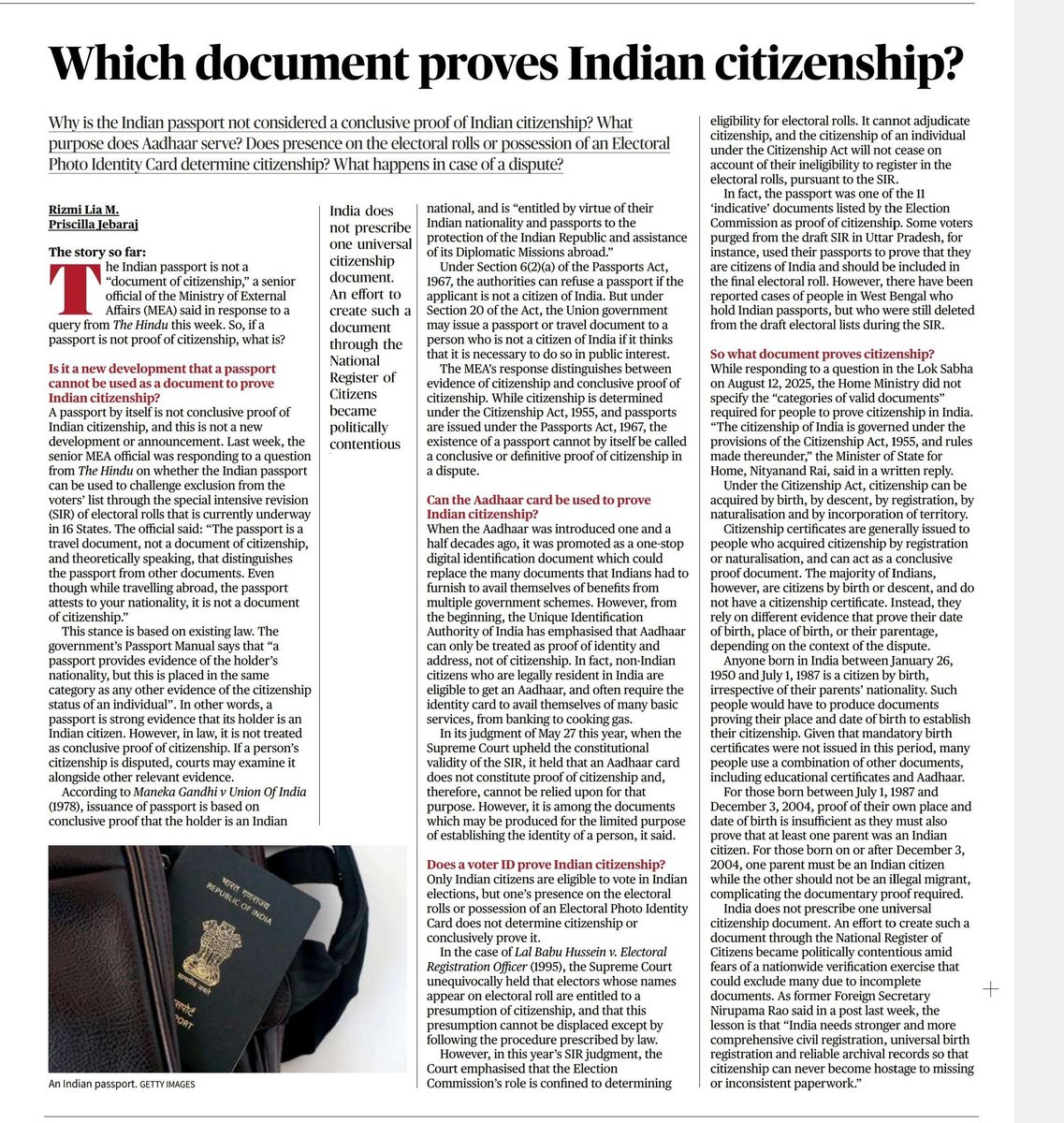
The recent debate surrounding the evidentiary value of an Indian passport has exposed a constitutional paradox that ought to concern every citizen of the Republic. If a passport, Aadhaar card, Electoral Photo Identity Card, driving licence, or PAN card cannot individually establish Indian citizenship conclusively, one is compelled to ask a profoundly unsettling question: What, then, constitutes the definitive proof of belonging to the Indian nation?
The Constitution of India, through Articles 5 to 11, entrusts Parliament with the legislative authority to regulate citizenship, culminating in the enactment of the Citizenship Act, 1955. Yet, despite this elaborate statutory framework, India remarkably lacks a universally recognised documentary instrument capable of conclusively establishing citizenship in every legal circumstance. Such ambiguity transforms what should be a constitutional certainty into an administrative enigma.
The explanation recently highlighted in the public domain—that a passport is merely a travel document issued under the Passports Act, 1967, Aadhaar is only proof of identity under the Aadhaar Act, 2016, and electoral rolls merely indicate voting eligibility—reveals an uncomfortable reality. Each document performs an independent statutory function, yet none is endowed with absolute evidentiary supremacy regarding citizenship. Consequently, the ordinary citizen is left between the devil and the deep blue sea, compelled to rely upon a constellation of documents instead of a single authoritative credential.
This uncertainty assumes greater constitutional significance because citizenship is the fountainhead of democratic participation and fundamental rights. It is citizenship that unlocks the guarantees embodied in Articles 14, 15, 16, 19, 21, and 32 of the Constitution. Equally important is distinguishing Indian citizens from Overseas Citizens of India (OCI). Despite its nomenclature, OCI status does not confer dual citizenship or political rights; it merely grants specified immigration and economic privileges under the Citizenship Act. OCI cardholders remain ineligible to vote, contest elections, or occupy constitutional offices, reaffirming that citizenship and overseas affiliation are legally distinct concepts.
The predicament, therefore, is not merely procedural; it is constitutional. A Republic governed by the Rule of Law, an integral facet of the Constitution's Basic Structure, cannot afford to leave its citizens wandering through a legal labyrinth in search of documentary certainty. Administrative opacity should never become the handmaiden of constitutional insecurity.
The Union Government must now rise above interpretative ambiguity. Parliament should consider establishing a coherent statutory framework identifying the evidentiary hierarchy of citizenship documents, while the Executive ought to issue an authoritative clarification through the Press Information Bureau. Such an initiative would neither alter the Citizenship Act nor diminish judicial authority; rather, it would reinforce the principles of legal certainty, transparency, and constitutional accountability.
In a mature constitutional democracy, citizenship must never become a riddle wrapped in bureaucratic obscurity. The State owes its citizens not only rights but also clarity. Constitutional identity cannot remain hostage to documentary ambiguity, for certainty in citizenship is the very cornerstone upon which democratic legitimacy ultimately rests.
@sansad_tv