AP/CP Pathologist @KingsCollegeLon Trained @MayoClinicPath @Yalepathology @NU_pathology | Digital Pathology | AI in Medicine | Sharing real diagnostic cases
ESOPHAGEAL CANCER AT 24. DID THE STORY BEGIN AT 10?
Recently, we encountered a 24-year-old with esophageal adenocarcinoma, extensive high-grade dysplasia and Barrett’s-type changes.
An extraordinary diagnosis at this age!
But one question keeps bothering me.
What if chronic reflux had started when he was only 10?
We don’t know his childhood history. But imagine a severely obese child suffering from persistent reflux for years.
Who follows that child?
Do pediatric gastroenterology services have sufficient capacity?
Is upper GI endoscopy accessible and covered when clinically indicated?
Are we recognizing warning symptoms early enough?
Not every child with reflux needs endoscopy. Most will never develop cancer.
But persistent reflux should never be ignored simply because the patient is young.
Cancer diagnosed at 24 may raise questions about healthcare opportunities missed years earlier.
#GERD #BarrettsEsophagus #EsophagealCancer #ChildhoodObesity #PublicHealth
A national lab rule re-run on 9 million results fit most labs. For three labs, it barely fit.
England built one acute kidney injury warning algorithm into every lab system. Researchers re-ran it centrally on 9,096,667 creatinine results from 29 labs.
Agreement with each lab's own alerts was 0.97 to 0.98 in most, and as low as 0.17 to 0.23 in three. Local edits and suppression had changed the output.
Pooled lab data is only as good as each lab's build, so before you compare labs, ask where the rule was changed.
#LabQuality #ClinicalInformatics #AcuteKidneyInjury
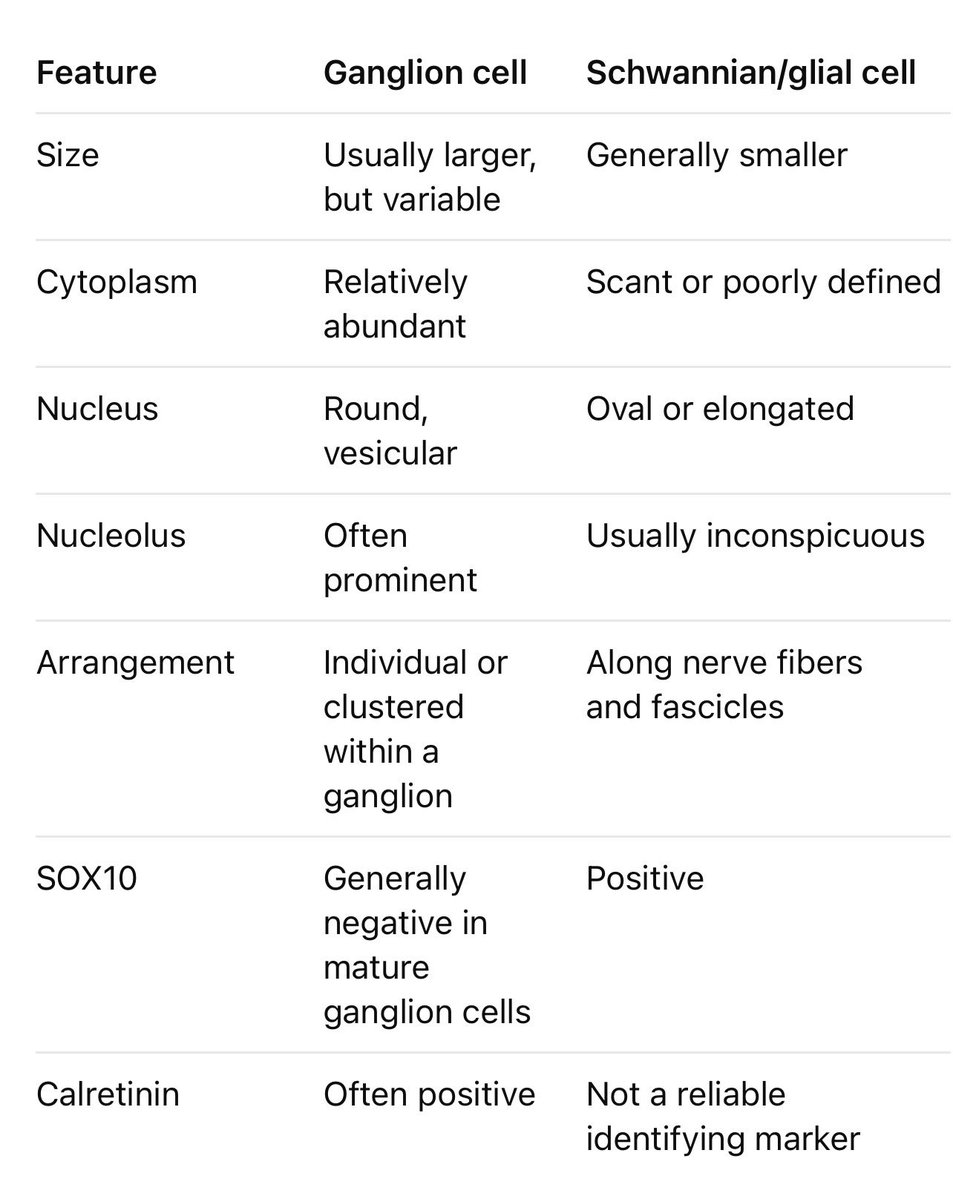
GANGLION CELL OR SCHWANN CELL? ONE MISTAKE CAN CHANGE A CHILD’S DIAGNOSIS!
In #HirschsprungDisease, not every stained cell is a ganglion cell!
Ganglion cells: Larger neuronal bodies, vesicular nuclei, prominent nucleoli and abundant cytoplasm.
Schwannian cells: Small, elongated nuclei, scant cytoplasm, associated with nerve bundles.
The immunostain trap:
• Calretinin: Highlights many ganglion cells and intrinsic mucosal nerve fibers.
• SOX10/S100: Highlight Schwannian/glial elements—not proof of ganglion cells.
• HuC/D: Helps identify neuronal cell bodies.
The golden rule: A positive stain is NOT a diagnosis. Morphology + location + immunophenotype matter!
#Pathology #PediatricPathology
Everyone asks if the AI was accurate. Ask what it could not see.
In a structured test of a consumer AI health tool on 960 responses, its errors peaked at the extremes: 35% in nonurgent cases and 48% in emergencies.
When family members in the scenario played down the symptoms, its advice shifted toward less urgent care in edge cases, with an odds ratio of 11.7.
A tool that only hears the story inherits the story's blind spots.
#AIHealthcare #ClinicalAI #PatientSafety
"It wasn't hemolyzed when I sent it" may well be true.
In a lab thread about a nurse who redrew three times, all hemolyzed, that line was the top comment.
Hemolysis can start after the needle: in the pneumatic tube, in a long wait before spinning, in rough handling.
Where to look:
• collection time against receipt time
• the transport route
• how long the tube waited before the centrifuge
The timestamps usually know.
#LabQuality #PreanalyticalErrors #PatientSafety
If an AI writes the preliminary report, does a pathologist still have to look at the slide?
A lab worker asked this online after a pathologist at another site signed out biopsies without seeing the slides. One reply: "An extremely relevant question in the age of AI."
Others pointed to inspections: a qualified pathologist signs out the case, with peer review behind it.
My answer: a signature means someone looked. An AI preliminary report can change the order of the work, not who is responsible for it.
#AIInPathology #HumanOversight #PatientSafetyFirst
61.2% of request forms had no contact number. So who gets the critical value?
In a study of 2,550 forms, 151 critical results came with incomplete ward information, and 19.9% of those were never phoned.
Picture the night tech holding a potassium of 6.4, a form that says only "Ward 4," and no name to ask for.
The lab cannot call faster than the form allows, so every order needs a reachable name and number.
#CriticalResults #PatientSafety #LabMedicine
ONE RARE OVARIAN TUMOR. TWO DIFFERENT DIAGNOSES. WHICH ONE IS RIGHT?
A 34-year-old woman with an 8 cm ovarian mass.
Initially diagnosed as Sertoli–Leydig cell tumor.
International pathology review later favored juvenile granulosa cell tumor (JGCT).
But this was NO textbook JGCT!
Under the microscope, TWO striking patterns:
Solid, densely cellular lobules with irregular follicles, variable-sized cystic spaces and eosinophilic secretions.
Loose spindle-cell, fibrovascular and thecomatous-appearing areas, with focal tubular-like structures mimicking Sertoli–Leydig differentiation.
Even the immunostains were confusing, showing unexpected heterogeneous staining patterns!
Yet no convincing separate Sertoli–Leydig component was identified in our reviewed sections.
THE PATHOLOGY PEARL:
Two morphological patterns do NOT necessarily mean two different tumors.
Juvenile granulosa cell tumors can have many faces.
And distinguishing these rare tumors matters—because diagnosis influences staging, treatment decisions, fertility preservation and long-term follow-up.
Sometimes morphology must solve the mystery that immunohistochemistry creates.
#Pathology #OvarianTumor #GranulosaCellTumor #Histopathology
The most trusted call a nurse ever got from the lab: "I dropped your sample."
In a nursing thread with more than 3,500 upvotes, that was the top comment. A lab tech called to say the tube was dropped and spilled, and the nurse respected the truth far more than any excuse.
In our hospital, tubes travel through the pneumatic system in dedicated lab capsules, and a misrouted or late capsule can still ruin a specimen.
Trust grows when the lab says where a failure happened, even when the answer is the lab.
#TransparencyBuildsTrust #LabLife #PatientSafety
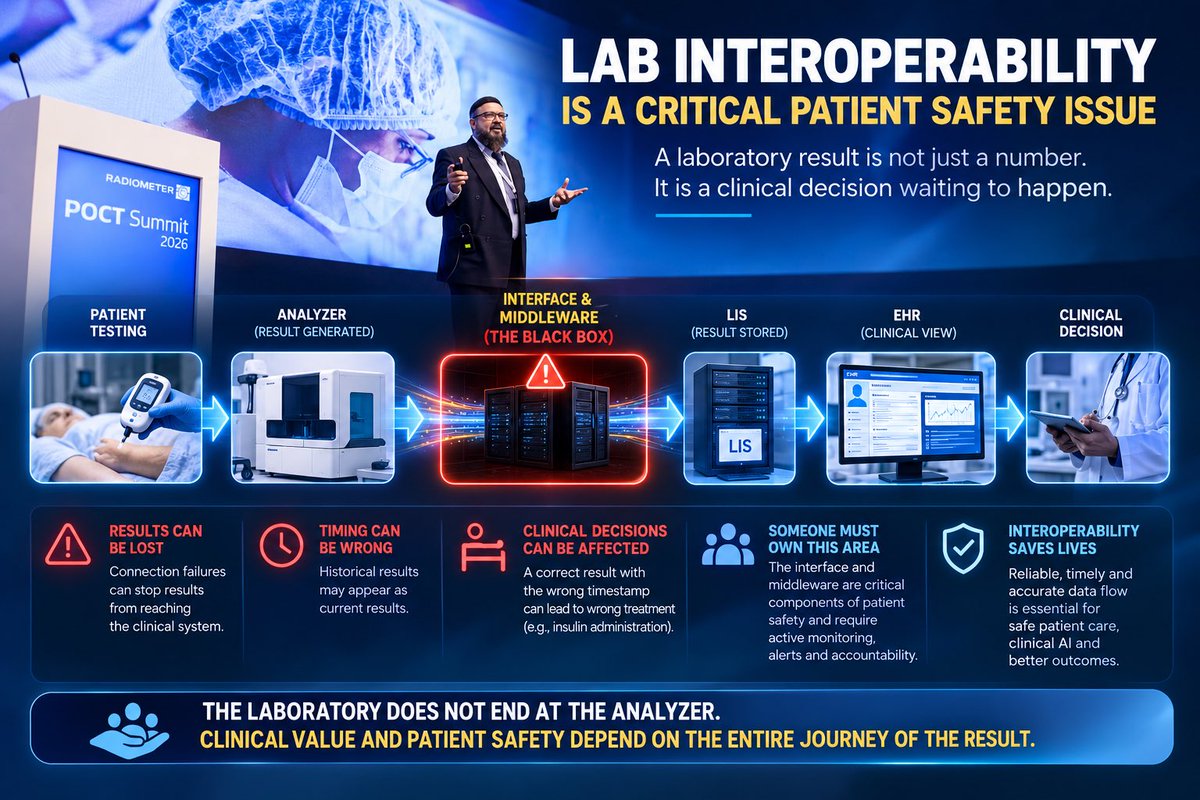
CAN INTEROPERABILITY KILL A PATIENT?
A glucometer. A network failure. 48 hours of missing results. One dangerous insulin decision.
This is a REAL patient safety story.
At a major hospital, bedside glucometers continued testing normally, but a disrupted TCP/IP interface silently stopped transmitting results.
For TWO DAYS, glucose results accumulated.
Then IT restarted the connection.
Suddenly, 48 hours of historical results flooded into the clinical system — appearing with current timestamps!
An old HIGH glucose result was mistaken for a new one.
Additional insulin was administered.
Emergency glucose treatment was needed to protect the patient.
The analyzer was RIGHT.
The result was RIGHT.
The timing was WRONG.
And that changed everything.
We spend millions on analyzers, middleware, LIS and AI.
But who owns the invisible journey between the analyzer and the clinician?
A correct result delivered at the wrong time can become a dangerous result.
This is why I’m writing my upcoming book:
LAB BLACK BOXES
Real stories. Hidden interfaces. Middleware failures. Patient safety. Practical solutions.
It’s time to OPEN THE BLACK BOXES!
Because there is no trustworthy clinical AI without trustworthy interoperability.
#LabBlackBoxes #PatientSafety #Interoperability #LaboratoryMedicine #POCT #HealthcareAI
Your first mistake in the lab is a map, not a verdict.
A blood bank tech posted online after being called into the QA office over a workup from the week before: an AB patient with an extra reaction on the reverse A cells. "I'm so embarrassed."
A miss in the lab usually passes several steps before anyone sees it: the bench, the review, the second check. Each of those steps is a place to fix.
My rule: replace blame with a process fix within 24 hours, and share the change.
#LabQualityImprovement #BloodBankSafety #LaboratoryLeadership
Can a pyogenic granuloma really grow on a vocal cord?
That was the whole question behind this second-opinion request.
A 35-year-old man with a progressive change in his voice. A lesion on the true vocal cord. The original diagnosis: pyogenic granuloma.
Under the microscope it was classic: lobules of thin-walled capillaries, edematous stroma, no dysplasia.
It is rare in that place, yet the vocal cord's constant vibration and rich small vessels make it fertile ground for this reactive lesion.
#RareMedicalCases #VoiceDisorders #DiagnosticPathology
The diagnosis was right. The location was what needed a second look.
What happens to a CK of 97,000 before anyone sees it:
• the analyzer flags it above its measuring range
• the sample is diluted, run again, and the result multiplied back
• if it is still too high, it is diluted again, up to a limit the lab director set
• beyond that limit, the report says "greater than," never a guessed number
One story shared online had exactly this: a CK of about 97,000 after a boxing camp, diluted three times before the lab could report it.
Every step takes time, and none of it is the lab being slow.
#BehindTheLabResults #CreatineKinase #LabMedicine
HIRSCHSPRUNG DISEASE: ONE WRONG BIOPSY. ONE WRONG DIAGNOSIS. A CHILD’S FUTURE AT STAKE.
Where to biopsy? How deep? Where are the ganglion cells?
5 critical pathology pearls:
Biopsy ≥2 cm above the dentate line.
Adequate SUBMUCOSA is essential.
Muscularis mucosae alone is NOT enough.
Muscularis propria is NOT routinely required.
H&E + calretinin; S100/SOX10 can highlight nerves.
The dilemma? Proving that ganglion cells are ABSENT.
In Hirschsprung disease, biopsy adequacy is patient safety.
#HirschsprungDisease #Pathology
AI is only as clinically intelligent as the data we feed it.
When a consumer AI health tool was tested on 960 cases, it sent 52% of true emergencies to a check within 24 to 48 hours instead of the emergency department.
Among them was diabetic ketoacidosis, a condition defined by glucose, ketones and blood acidity.
Those are numbers a typed description of symptoms does not contain.
#AIInHealthcare #PatientSafety #LaboratoryMedicine
In 1,000 women co-tested in our lab, 72% of the HPV genotype-positive cases carried only non-16/18 high-risk types.
Only 28% had HPV 16 or 18.
Yet most screening and vaccine conversations start, and often end, with 16 and 18.
Local data should shape who we screen and how we explain the result.
#HPVAwareness #CervicalCancerScreening #LaboratoryMedicine
Everyone checks the diagnosis. Few check whose tissue it is.
One study did what most labs never do: it tested almost 13,000 prostate biopsies to confirm the tissue belonged to the patient on the label.
0.26% were complete switches between patients.
Another 0.67% contained tissue from a second patient.
None had been suspected beforehand.
A correct reading of the wrong patient's tissue is still a wrong diagnosis.
#RightDiagnosisWrongPatient #PatientSafety #SpecimenIdentification #Pathology