One of the most important mistakes we can make, is to give an AV nodal blocker to a patient in AF with WPW. This is usually distinguished by the irregularly wide and narrow complexes, as some pass through the AV node and others through the accessory pathway. If we block the AVN then all complexes will travel down the accessory pathway. The result may be unresuscitable VF. In the case of a short acting medication such as Adenosine, we may be able to cardiovert the patient, however it will not be possible with a long acting drug such as Amiodarone. Procainamide is the drug of choice in AF with WPW, as it preferentially blocks the accessory pathway. My choice is DC Cardioversion. #emergencymedicine #ecg #criticalcare #medicaleducation#resuscitation #medicalconference #emergencyroom #wpw
A simple way to diagnose Saddle-Back BRUGADA Syndrome....Just calculate the beta angle.
💡Brugada is a Na channel abnormality that can lead to polymorphic VT. When the arrhythmia stops, its called syncope, when it continues, it's cardiac arrest.
For more emergency medicine knowledge and tips follow us @emcoreshow_ or join us at one of our 2026 international conferences, or Cardiac Bootcamps.
#emergencymedicine #ecg #criticalcare #medicaleducation#resuscitation #medicalconference #emergencyroom#brugada #brugadasyndrome
How to not miss Hyperkalaemia on an ECG showing WCT.
This ECG was a VT mimic Key takeaway was:
💡To be VT it must be faster than 120 beats per minute (unless the patient is on a rate slowing drug) AND it should be wider than 120ms, but not too wide.
For more emergency medicine knowledge and tips join us at one of our 2026 international conferences, or Cardiac Bootcamps.
#emergencymedicine #ecg #criticalcare #medicaleducation #resuscitation #medicalconference #emergencyroom
We need to think about perfusion when we think about shock. This case illustrates it. It doesn’t have to be sepsis, it just needs to be hypoperfusion. #emergencymedicine#shock
How do you remove nasal foreign bodies in kids. This little device( no interest to declare) I’ve found to be very useful. I wouldn’t use it in the ear if you don’t have a clear view of the tympanic membrane. #emergencymedicine
How do you treat hyperkalaemia? There’s a bit of confusion out there with recent studies challenging what we’ve been doing. We also know that the evidence for much of what we do is not great. The ECG has been used as a predictor of severity but it doesn’t always show changes. I’ve written these studies up on EMMastery. I’ll be speaking about this topic a lot at EMCORE. #emergencymedicine #resuscitation
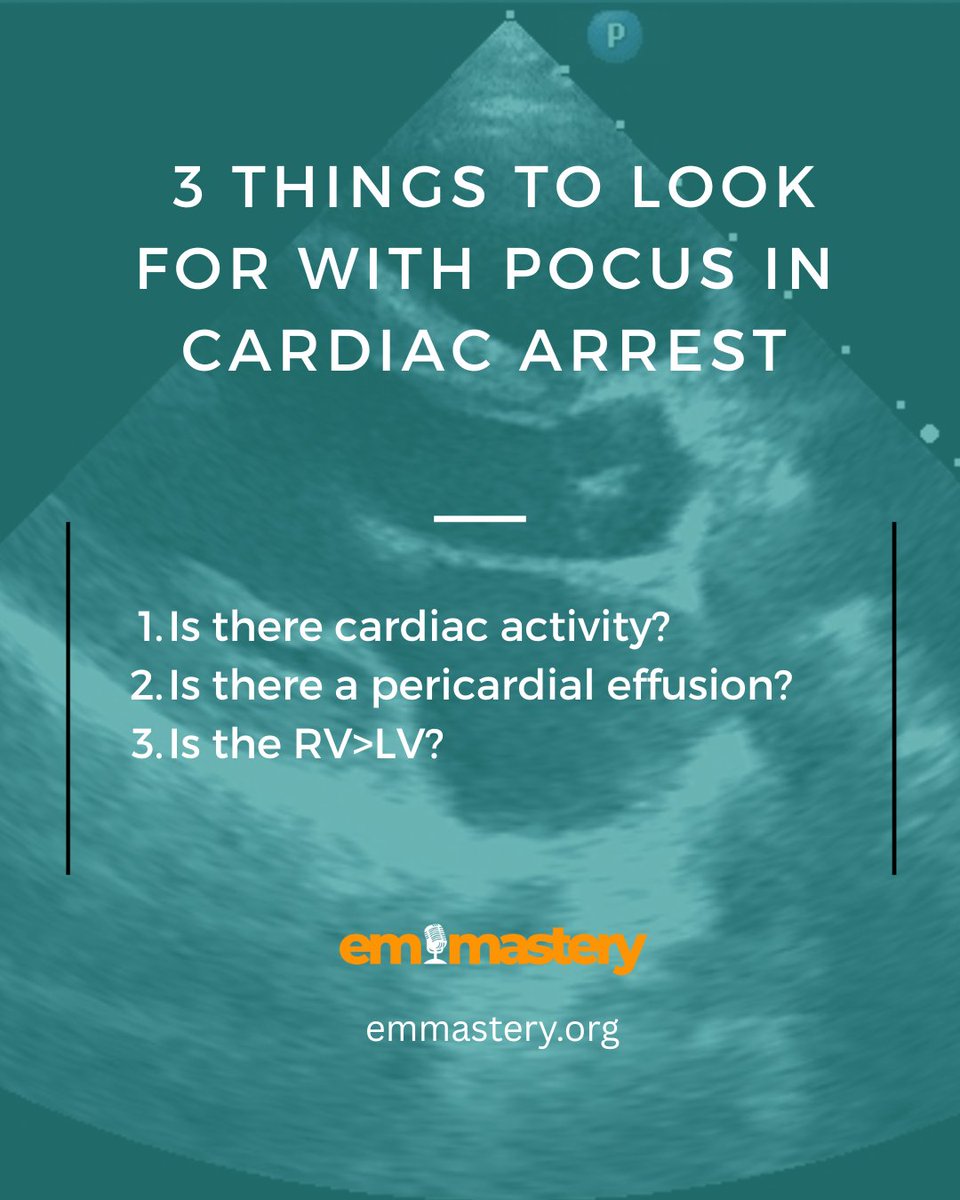
Do you use POCUS in Cardiac Arrest? We’re using it on various levels. We can use it to identify reversible causes such as pericardial tamponade. We can use it to confirm asystole or ‘PEA’ because we know that a significant number of patients with these diagnoses actually have coordinated cardiac motion. My favourite way to use it, is to place the vascular probe in the femoral region and find the artery and vein during compressions. The probe then stays on. During rhythm checks we can then clearly see if there is femoral artery pulsation which equates to output. It also allows us to sink an arterial line after the third cycle and target a diastolic blood pressure of 25-35 mm Hg. Prof Paul Middleton takes us over the use of POCUS to improve outcomes in cardiac arrest at EMCORE. #resuscitation #emergencymedicine
EMCORE London in 2026 is at the historic Royal Institution, home to the BBC Christmas Lectures and some of the most famous scientists of the last 200+ years. Faraday spoke in 1800 on electromagnetism, Thomson spoke about the concept of the electron. In 2026 leaders in Trauma, in Resuscitation, Cardiology, Paediatrics and all things Emergency Medicine, will update, teach and inspire you. Join us June 15-17. https://t.co/2m3agtabbH #emergencymedicine #emcoreconferences
Non-contiguous lead STEMI. How many examples do you know. One is the ‘South African Flag’ Sign and here we discuss the Aslanger pattern for inferior infarction https://t.co/dU1VMcw3BQ #stemi#emergencymedicine
I've just put this short (14 minute) podcast on EM Mastery. The comatose, Post ROSC patient following an OHCA, is well known to us in the Emergency Department.
We should manage these patients through distinct phases of:
Intitial Stabilisation
Optimisation
Diagnosis
As per accepted approaches, airway is seen as the first area to manage in the initial stabilisation. I disagree with this and would argue that haemodynamics are the most important first part of stabilisation. Hypotension leads to secondary injury and rearrest.
We discuss:
Blood Pressure Targets and the evidence behind them.
In which patients might we target higher blood pressures?
How do we attain those higher blood pressures?
The argument of NIBP vs IAP.
hashtag#emergencymedicine hashtag#ohca hashtag#ROSC hashtag#cardiacarrest hashtag#resuscitation
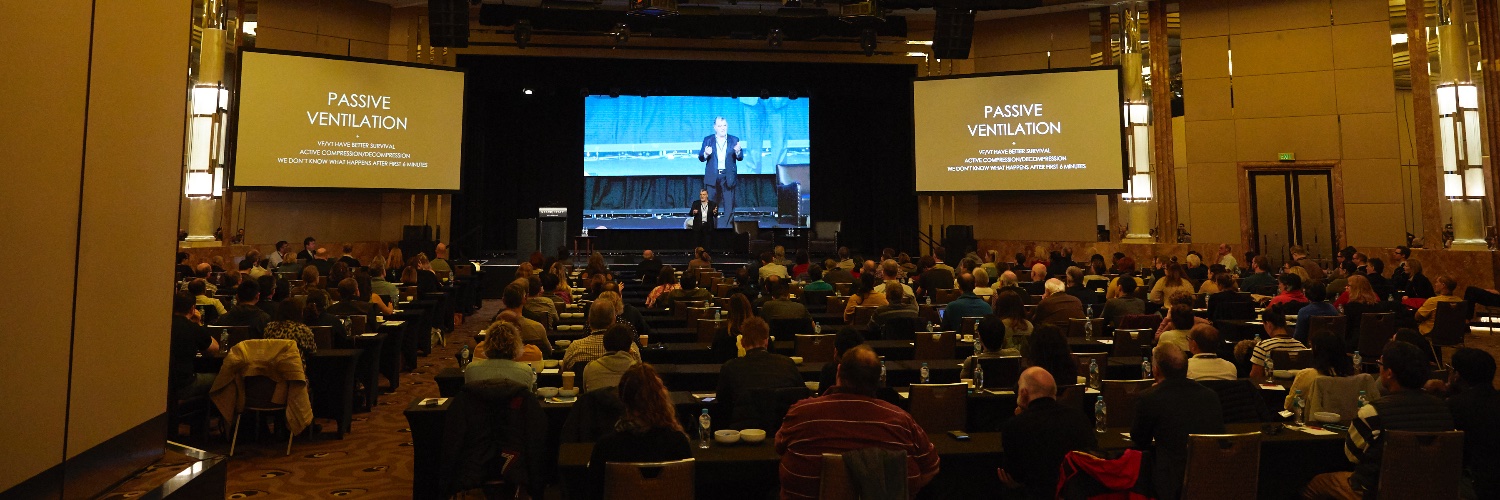
If you’re at ICEM 2025 this year. Come by the Resuscitation, Trauma and Critical Care stream from 1.45 -3.05, on the 27th oh May, where the presentations are on Traumatised Airway, Optimising practice in Geriatric Trauma Care and I have the pleasure of presenting on ROSC: Now What? Come and say ‘hi’. It should be a great Conference. A stack of other Aussies there. Some great topics at this conference. I’ll even wear a proper collared shirt.
https://t.co/HNn5aZ7iqZ
Thankyou to everyone who is coming. This will be an amazing conference, with world leaders speaking. We will hear from International Emergency Physisicians, Directors of Trauma. Director of NHS, Chair of the Committee of Chiefs Military Medical Services NATO and so many more. You will be amazed. EMCORE London 2026 to be announced soon. #emergencymedicine #emcoreconferences
EMCORE Sydney 2025 was a great conference full of learning. Here are just a little of what was covered.
1.POCUS in CARDIAC ARREST
Ask 3 questions in cardiac POCUS, to simplify everything:
Is there cardiac activity?
Is there a pericardial effusion?
Is RV > LV?
Use the COACHRED approach in resuscitation:......
2. THE COMATOSE PATIENT POST ROSC
During the initial resuscitation our goal is to detect output. Post ROSC, our goal is to monitor, measure and control everything......
Ischaemic injury occurs early in resuscitation, ....we just don’t know which patients will have good survival.
In the post ROSC comatose patient, we should aim for the following:
Blood Pressure:.....
Oxygenation and Ventilation.....
Temperature Control.....
Seizures.....
3. RESUSCITATION
Femoral doppler sensitivity for pulses, superior to palpation. 95% vs 54%.
ETCO2 to detect output, use whole waveform not just the number.
Adrenaline should not be given early in shockable rhythms
Stacked shocks still have a place if don't delay chest compressions.
Precordial thump is for monitored pulseless VT (Not VF), if no defibrillator .....
Bicarbonate in resuscitation may allow adrenaline to give ROSC, but not neurologically intact patients.
4. ANAPHYLAXIS......
5. TOXIC SHOCK SYNDROME (TSS)
Think of it in shock out of proportion to the infectious process.
Can be menstrual or non-menstrual. Staph vs Strep presents with....
6. MEDICAL CLEARANCE OF MENTAL HEALTH PATIENTS.......
7. PAIN MANAGEMENT IN CHILDREN.....
Poorly measured and under-treated, Multifactorial and is difficult to differentiate from anxiety and distress.
Consider age, cognitive capacity, developmental stage, behaviour of caregivers, the environment ...... Apply the appropriate Pain Scales for different ages:.....
Beware codeine in children ....Poor metabolisers may metabolise only up to 15%.....Ultra rapid metabolisers may metabolise .....
8. INTUSSUSCEPTION
Abdominal pain in children that resolves can still be intussusception.
Intussusception can occur in 3 locations: Ileo-colic, Ileo-ileal, Colo-Colic
We looked at what is involved In an air enema, .......
9. VENTILATING THE CRITICALLY ILL PATIENT
4 cases: worked through ventilator settings: Volume/ Pressure Modes.....
10.BIG BLEEDS IN LITTLE KIDS.......
11.PERSONALITY DISORDERS.......
12. THE NEW AUSTRALIAN ACS GUIDELINES
Prof Louise Cullen, one of the authors, took us through the ACS guidelines and new ECG classifications (video on EM Mastery):.......
13. SEPTIC ARTHRITIS
Blood results don’t really help us, as there are no safe cut-offs to rule it out.
eg WCC elevated +ve LR 1.4.....
In prosthetic joints, the following should be considered positive.....
14. HYPERTHERMIA.....
15. DEXMEDETOMIDINE IN PAEDIATRIC PROCEDURES
Centrally acting alpha-2 agonist,
Reduces sympathetic activity
Minimal respiratory depression.......
16. SCAPE.....
Read all the points on the Resus Blog
EMCORE Sydney 2025 was a great conference full of learning. Here are just a little of what was covered.
1.POCUS in CARDIAC ARREST
Ask 3 questions in cardiac POCUS, to simplify everything:
Is there cardiac activity?
Is there a pericardial effusion?
Is RV > LV?
Use the COACHRED approach in resuscitation:......
2. THE COMATOSE PATIENT POST ROSC
During the initial resuscitation our goal is to detect output. Post ROSC, our goal is to monitor, measure and control everything......
Ischaemic injury occurs early in resuscitation, ....we just don’t know which patients will have good survival.
In the post ROSC comatose patient, we should aim for the following:
Blood Pressure:.....
Oxygenation and Ventilation.....
Temperature Control.....
Seizures.....
3. RESUSCITATION
Femoral doppler sensitivity for pulses, superior to palpation. 95% vs 54%.
ETCO2 to detect output, use whole waveform not just the number.
Adrenaline should not be given early in shockable rhythms
Stacked shocks still have a place if don't delay chest compressions.
Precordial thump is for monitored pulseless VT (Not VF), if no defibrillator .....
Bicarbonate in resuscitation may allow adrenaline to give ROSC, but not neurologically intact patients.
4. ANAPHYLAXIS......
5. TOXIC SHOCK SYNDROME (TSS)
Think of it in shock out of proportion to the infectious process.
Can be menstrual or non-menstrual. Staph vs Strep presents with....
6. MEDICAL CLEARANCE OF MENTAL HEALTH PATIENTS.......
7. PAIN MANAGEMENT IN CHILDREN.....
Poorly measured and under-treated, Multifactorial and is difficult to differentiate from anxiety and distress.
Consider age, cognitive capacity, developmental stage, behaviour of caregivers, the environment ...... Apply the appropriate Pain Scales for different ages:.....
Beware codeine in children ....Poor metabolisers may metabolise only up to 15%.....Ultra rapid metabolisers may metabolise .....
8. INTUSSUSCEPTION
Abdominal pain in children that resolves can still be intussusception.
Intussusception can occur in 3 locations: Ileo-colic, Ileo-ileal, Colo-Colic
We looked at what is involved In an air enema, .......
9. VENTILATING THE CRITICALLY ILL PATIENT
4 cases: worked through ventilator settings: Volume/ Pressure Modes.....
10.BIG BLEEDS IN LITTLE KIDS.......
11.PERSONALITY DISORDERS.......
12. THE NEW AUSTRALIAN ACS GUIDELINES
Prof Louise Cullen, one of the authors, took us through the ACS guidelines and new ECG classifications (video on EM Mastery):.......
13. SEPTIC ARTHRITIS
Blood results don’t really help us, as there are no safe cut-offs to rule it out.
eg WCC elevated +ve LR 1.4.....
In prosthetic joints, the following should be considered positive.....
14. HYPERTHERMIA.....
15. DEXMEDETOMIDINE IN PAEDIATRIC PROCEDURES
Centrally acting alpha-2 agonist,
Reduces sympathetic activity
Minimal respiratory depression.......
16. SCAPE.....
Read all the points on the Resus Blog https://t.co/OOVX9gHUmC
🧠 Syncopal episode? Here’s how to break it down.
From cardiac red flags to benign causes—get a structured approach that works fast.
Review it here 👉 https://t.co/OF5f0Ig6hK
#Syncope#EmergencyMedicine#ClinicalSkills#FOAMed
POCUS during cardiac arrest can change everything! The Focused Echocardiographic Evaluation in Life support (FEEL) study showed that 38% of patients with asystole on ECG, and 58% of patients in PEA, had coordinated cardiac motion associated with increased survival.
#resuscitation #emergencymedicine #pocus
I recently reviewed this interesting paper on resuscitative hysterostomy. Resuscitative Hysterotomy, previously known as perimortem caesarean section, is performed in patients of > 20 weeks gestation, in cardiac arrest, with no immediate response to resuscitation. Our goal is aortocaval compression release by delivering the uterus, thus improving the chances of survival.
The aetiology of in-hospital versus out-of-hospital cardiac arrest differs, with up to a quarter of inhospital cardiac arrests being due to complications of obstetric anaesthesia and are potentially far more reversible.
This study looked at maternal and neonatal survival rates following resuscitative hysterostomy, with some surprising results.
The Verdict
This study found a low maternal rate of survival(contrary to previous studies) from resuscitative hysterotomy and a higher rate of neonatal survival, even following prolonged resuscitation. Specific variables lead to increased neonatal survival. Will this change your practice given the higher rate of neonatal survival? It will change mine, given that we will never have an RCT on this. Read the deep dive at https://t.co/28xPsPzp6h #emergencymedicine #resuscitation #resuscitativehysterostomy