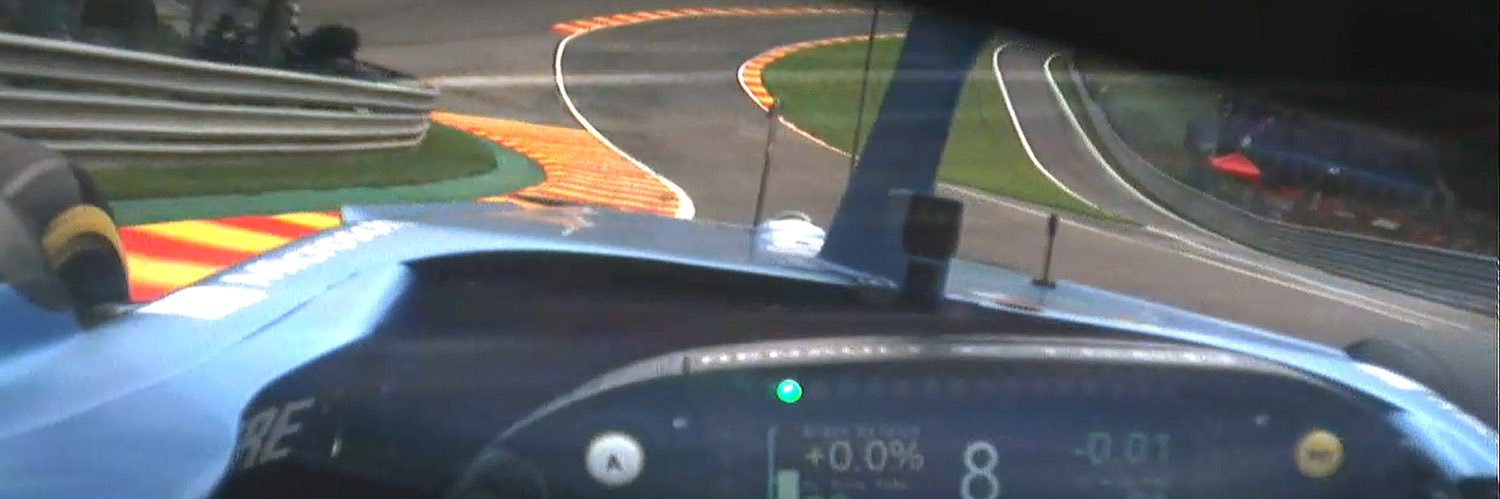
Marasca backs Ruben Dias for putting Porto coach Francesco in his place.
Marasca: “how many time did you see me or my guys stand up from the bench ? Zero”
"I was so excited" to exonerate Lindsay Clancy says a juror. The harpies on the Clancy trial jury are lashing out at the one juror who stood in their way because "he had the hardest time getting off the fact that Lindsay viciously killed her children"
Woo boy. We are cooked.
PSG have 7 different Ballon d'Or nominees who played less than 50% of league minutes:
Kvara: 48.3%
Hakimi: 44.9%
Neves: 42.1%
Mendes: 41%
Ruiz: 37%
Dembéle: 34.7%
Marquinhos: 34.4%
Ver deputados a abandonar a audiência ao ministro, que nem ouvem as respostas às suas próprias perguntas, é mais um episódio da degradação da dignidade da função que ocupam e da instituição democrática que representam.
Acho que não valorizamos o suficiente aquilo que defende o PCP ao mesmo tempo que valorizamos demasiado aquilo que defendem algumas figuras públicas. Veja-se a Carolina: Valoriza imenso a opinião de Seinfeld sobre a 🇵🇸 mas ignora a visão do PCP sobre as maiores ditaduras do mundo
Ninguna sorpresa. Esto es, precisamente, lo que se ha buscado con cada nueva ley de educación.
Menos exigencia, menos contenido, menos lectura y menos estudio.
Educação: Portugal recua quase 20 anos e UK melhora no PISA. Porquê?
🇬🇧 Focaram-se nos conhecimentos e exigência; e levaram a a séria a recuperação da pandemia.
🇵🇹 nós nos *skills* e *facilitismo*. E claro, estas crianças tinham 10 anos na pandemia..os resultados estão aqui:
Educação: Portugal recua quase 20 anos e UK melhora no PISA. Porquê?
🇬🇧 Focaram-se nos conhecimentos e exigência; e levaram a a séria a recuperação da pandemia.
🇵🇹 nós nos *skills* e *facilitismo*. E claro, estas crianças tinham 10 anos na pandemia..os resultados estão aqui:
#OECDPISA results are out today!
The participating Chinese jurisdictions, Chinese Taipei, Singapore, Japan, Korea, Estonia and the United Kingdom are among the top-performing systems across science, reading and mathematics.
🔗 https://t.co/OtcLqsN2yi
(Apenas teoria que alguém podia fazer a experiência) quanto é que será relacionado com redes sociais e quanto tempo passa o mundo ocidental viciado nela? É que sinto que aumentou uma certa falta de sentido crítico nos estudantes. Para além de uma mudança na forma de ensino…
WORRYING TRENDS IN PISA SCORES
The latest PISA (Programme for International Student Assessment) results are out.
PISA is a landmark program and the most comprehensive assessment of students across the word and its results provide invaluable information about the trends and performance of national education systems.
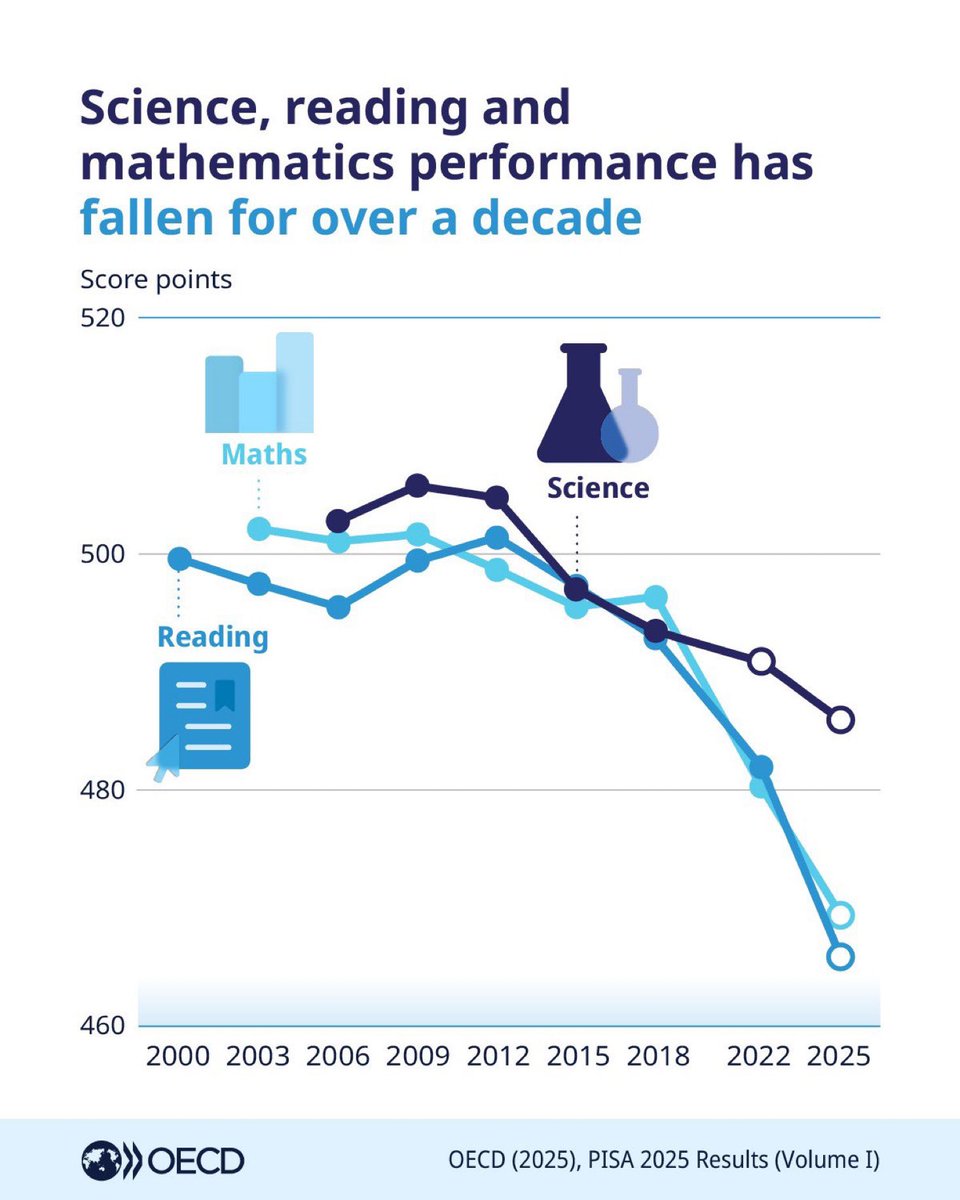
The latest global results are not very encouraging: after the steep decline in student performance in 2022, which took place during the pandemic, there is yet another large decline in scores in most countries (see the graphs below).
The largest decline in performance occurred in Reading. Perhaps not too surprising, given that “digital distractions” became all pervasive.
As Andreas Schleicher (director of the OECD Education directorate) mentions: “A large share of students struggled on reading tasks involving longer texts, requiring higher-order cognitive skills… At the same time, all students are more likely to “read in haste”, at least some of the time.”
Remember: these trends are happening for several years, preceded the pandemic, and, of course, the advent and diffusion of Artificial Intelligence.
If nothing is done, AI will likely reinforce these trends, even though students might obtain better results when they can use AI tools in their exams.
These are trends that should worry us all and are a call for action for policymakers. The next few years will be crucial to revert these worrying trends.
@OECD@OECDEduSkills@SchleicherOECD
WORRYING TRENDS IN PISA SCORES
The latest PISA (Programme for International Student Assessment) results are out.
PISA is a landmark program and the most comprehensive assessment of students across the word and its results provide invaluable information about the trends and performance of national education systems.
The latest global results are not very encouraging: after the steep decline in student performance in 2022, which took place during the pandemic, there is yet another large decline in scores in most countries (see the graphs below).
The largest decline in performance occurred in Reading. Perhaps not too surprising, given that “digital distractions” became all pervasive.
As Andreas Schleicher (director of the OECD Education directorate) mentions: “A large share of students struggled on reading tasks involving longer texts, requiring higher-order cognitive skills… At the same time, all students are more likely to “read in haste”, at least some of the time.”
Remember: these trends are happening for several years, preceded the pandemic, and, of course, the advent and diffusion of Artificial Intelligence.
If nothing is done, AI will likely reinforce these trends, even though students might obtain better results when they can use AI tools in their exams.
These are trends that should worry us all and are a call for action for policymakers. The next few years will be crucial to revert these worrying trends.
@OECD@OECDEduSkills@SchleicherOECD