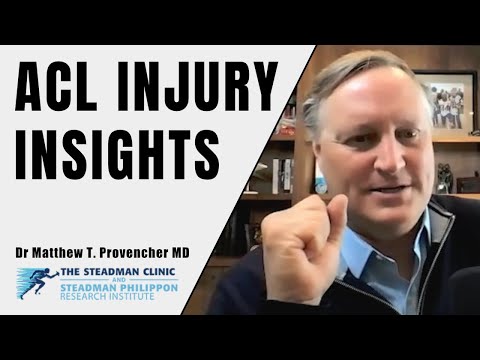
#ACL injuries often require surgery because the ligament lacks the blood supply to heal naturally. Dr. Provencher explains why many active patients opt for reconstruction to regain full function & return to their favorite activities. Read the full insight: https://t.co/RVVrNDhybD
Suspect a #tibialplateau#fracture?
Do not wait. Significant swelling can lead to serious complications. From bracing, to surgical stabilization with rods and plates, expert care is the best way to protect your long term knee health. Full details here: https://t.co/p3yWlbhI11
A #tibialplateau#fracture is not always obvious at first glance. Symptoms may include:
• Pain below knee after trauma
• Swelling + stiffness
• Difficulty walking
• Possible neurovascular concern in severe injuries
Early imaging matters. https://t.co/6p1GC6XHkt
Why do athletes redislocate after a “successful” #Bankart repair? Anatomy can be restored, but elite sport demands more. Contact + overhead loads can expose subtle residual instability. True success = labrum + capsule + bone + neuromuscular control. https://t.co/BXwnpAgk5S
If you’re undergoing #meniscustransplantation, expect a phased recovery:
• Early protection (brace ~6 weeks)
• Controlled weight bearing
• Progressive strengthening
• Sport-specific return only when cleared
There are no shortcuts through biology. https://t.co/fbaIvmSx3I
#Frozenshoulder has 3 phases:
🔹 Freezing → pain + stiffness
🔹 Frozen → stiffness without much pain
🔹 Thawing → slow return of motion
It can take up to 2 years, but it does improve. Learn more 👉 https://t.co/HJqoIE11nz #shoulderpain#shoulderinjury#sportsmedicine
The military taught Dr. Provencher that leadership is service.
Medicine reinforced it.
This #MemorialDay, he honors the men & women who embodied both and made the ultimate sacrifice for others. Their courage continues to inspire his leadership, his care for patients & his life.
#Cartilage loss isn’t binary, it’s time-dependent biology. Early injury is a window to stabilize progression, restore load distribution/delay degeneration. Miss that window & treatment shifts from restoration → compensation → replacement. Timing matters. https://t.co/y2qT2OndZq
40 years of physical labor. Two #rotatorcuff tears. One failed repair.
Told nothing more could be done...twice.
A second opinion changed the trajectory.
Revision arthroscopic repair + rehab restored full range of motion. https://t.co/2vdT5NosCZ #patientstory
Why does #ACLinjury change how an athlete moves? Dr. Provencher explains the ligament’s stabilizing role and walks through what happens after functional instability is diagnosed including key principles guiding treatment and rehab progression. https://t.co/dWDvWdEYkT #kneeinjury
Dr Provencher would like to congratulate his co-authors for their fantastic work on this study: Ivan Wong, Marco Adriani, Sarah Remedios, Phob Ganokroj, Nate Dickinson, Annalise Peebles, Ryan Whalen, Stephanie Eble, Justin Arner, Toufic Jildeh, Liam Peebles, and Anthony Romeo!
Advancing the science of shoulder instability!
Dr. Provencher and his team were recently honored with the 2026 Stephen S. Burkhart Shoulder Innovation Research Award from the @AANAORG
He is honored for his research “DTA for Recurrent Shoulder Instability: Comparison of Open Fresh vs. Arthroscopic Frozen Grafts,”highlighting critical differences in graft strategy and surgical approach for recurrent instability.
Are certain populations more at risk for #clavicle#fractures? Yes! Contact athletes (especially males, ~3x higher risk), adolescents with developing bone density, and older adults with age-related bone loss. Even lower-energy trauma can cause injury. https://t.co/f6Xpc0wn1a
Many assume they can push through pain and “bounce back.” In reality, #ACL, labral, and #rotatorcuff injuries build over time. Biggest mistakes: ignoring instability, rushing return, masking pain. Respect load or risk failure. Checkout the podcast ➡️ https://t.co/hcBhL58Y3S
Most #biceps#tendonitis cases recover without surgery using rest, therapy, and anti-inflammatory care. Surgery is for severe or persistent symptoms. Common procedures: biceps tenodesis (repositions tendon) or tenotomy (releases it). https://t.co/CSoWaXO0bN
A posterior cruciate ligament tear typically presents with swelling, pain, and stiffness in the knee right after injury. Some patients also notice difficulty moving the joint and a feeling that the knee isn’t stable during walking. https://t.co/aw6nG5klOt #kneehealth#kneeinjury
#KneeReplacement isn’t the only option. Modern orthopedic treatments for #osteoarthritis can help reduce pain and delay or prevent total knee replacement, especially in younger, active patients aiming to stay mobile and active. https://t.co/uSIUkoXUp1