@Capacitylaw Entirely sensible and in keeping with the general thrust of Mental capacity and indeed mental health) assessments and interventions I.e. multifactorial
@DrLadeSmith :
"We are actually measured against our bed occupancy and our length of stay - we are not actually measured on whether or not we get people well"
#Nottinghaminquiry
From one of our members in response to criticisms of the parents of Valdo Calocane #NottinghamInquiry:
“I have a loved one with an ongoing serious mental illness. I am also a carer representative at the Royal College of Psychiatrists and manage a UK support group…
@nuwandiss@hundredfamilies@lennycornwall there was no intention to downplay the horror that occurred in Nottingham
Having said that I wonder if there has been research done on CMHT/AOT records of people using the word kill or similar … who actually go on to do so…
@hundredfamilies@lennycornwall@nuwandiss Notwithstanding the important points being made… I submit that given the 20% prevalence of common mental disorders (over 10 million in the uk *NHS England statistic) 100-120 MH homicides IS rare… Unfortunate but rare..
@nuwandiss@Capacitylaw@MentalHealthCop
I can understand the police getting it wrong …it’s not their area of expertise….
What bothers me is front line mental health professionals using “capacity” repeatedly and erroneously….
Confirmed: Schizophrenia’s “voices” are the brain mishearing its own thoughts.
For decades, neuroscientists have theorized that the "voices" heard by individuals with schizophrenia stem from the brain mistaking its own inner dialogue for external sounds. A groundbreaking study from the University of New South Wales has now provided direct evidence supporting this hypothesis through brainwave analysis.
Using electroencephalography (EEG) to monitor the brain’s electrical activity, researchers examined how individuals process their internal speech. Typically, when we speak—aloud or silently—the brain anticipates the sound of our voice and temporarily suppresses activity in the auditory cortex, the area responsible for processing external sounds, to differentiate self-generated thoughts from external stimuli.
However, in people experiencing auditory hallucinations, this predictive mechanism malfunctions. The study involved 142 participants, including those with schizophrenia who recently experienced hallucinations, others with the condition but no recent hallucinations, and a control group without a diagnosis.
Participants were instructed to mentally say “bah” or “bih” while hearing these sounds through headphones. In those who heard voices, a striking pattern emerged: their brains showed heightened activity in the auditory cortex when their imagined speech matched the external sound, rather than suppressing it as expected. This suggests the brain was processing internal thoughts as if they were external voices.
This sensory misclassification sheds light on why hallucinated voices feel vividly real, revealing them as a neurological error rather than mere imagination. The findings not only deepen our understanding of schizophrenia but also pave the way for earlier detection of psychosis, potentially enabling more timely and effective treatments.
["Corollary Discharge Dysfunction to Inner Speech and its Relationship to Auditory Verbal Hallucinations in Patients with Schizophrenia Spectrum Disorders." Schizophrenia Bulletin, 21 October 2025]
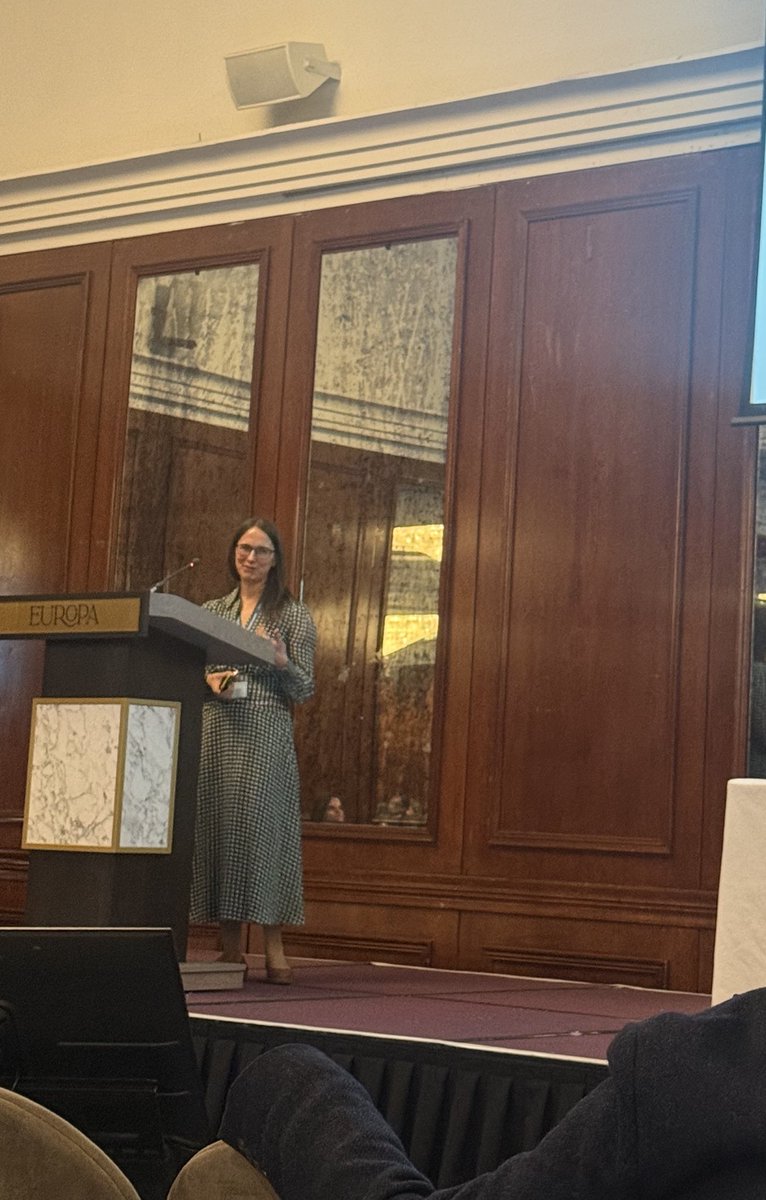
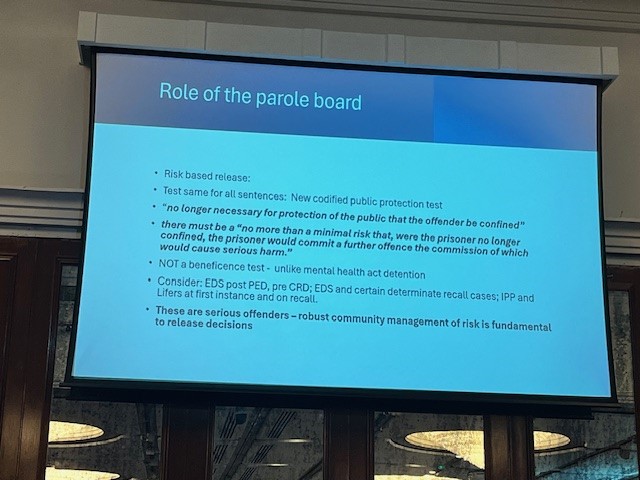
30 yrs after my first posting in forensic psychiatry with him, it was a privilege to listen to
@KevinMu62271410 at the @rcpsychForensic
conference speaking on the interface between psychiatrists and the parole board. Unafraid, clear & succinct- enduring traits worth emulating.
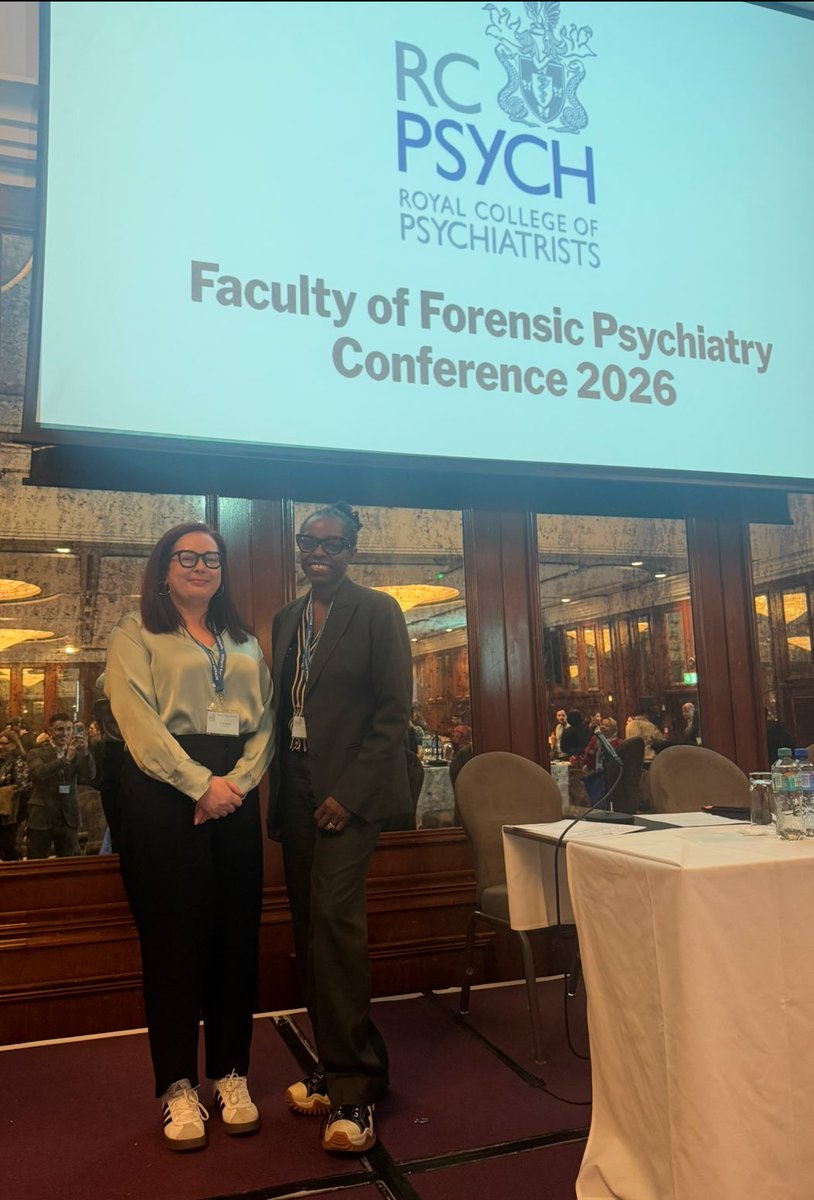
Dr Hannah Cappleman discusses inquest support for psychiatrists, sharing local and national work being undertaken. Importance of both practical and emotional support highlighted and need for inquest supervisor roles and training #rcpsychforensic26
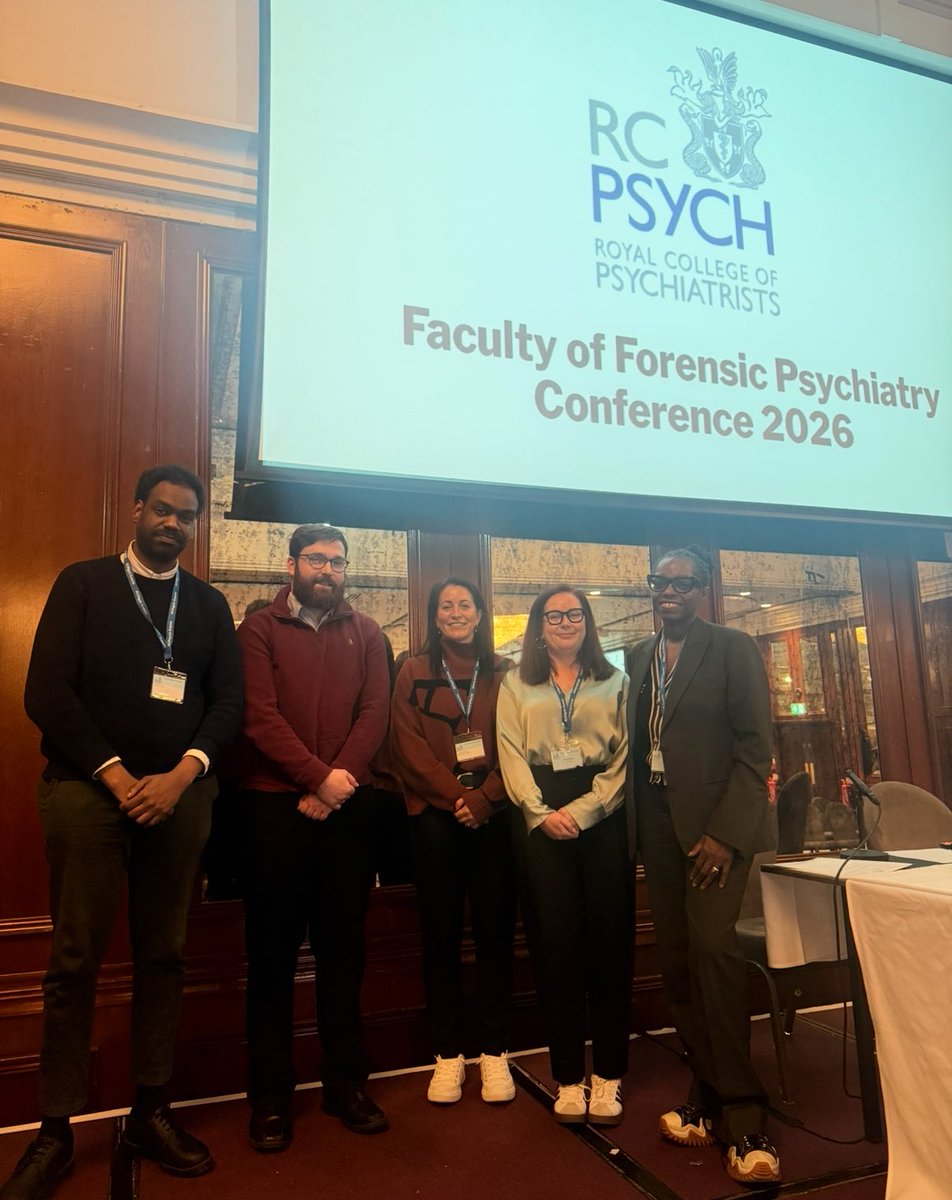
Excellent feedback from the medical student essay presentations by Quinn Collins, Saadi Karim Robinson, Maliha Shakir, and Abbey Venables covering risk, ethics, rights and liberty. A remarkable achievement and contribution to the academic programme by all #rcpsychforensic26
Congratulations to all resident doctors selected to present their research at the conference. The judges noted that the future of academic forensic psychiatry is bright.
Special mention to Dr Carol Norton for winning the research prize! #rcpsychforensic26
Now we are hearing from Dr Gwen Adshead discussing the importance of keeping a relational focus in forensic psychiatry… with implications for patient recovery, engagement in care, trust, relational security and violence risk #rcpsychforensic26
The Faculty have recently added several forensic psychiatry ebooks to the College Library.
Did you know the Library has a collection of over 30,000 ebooks available to all members via RCPsych OpenAthens accounts? https://t.co/zngQ6yhXcx








![Rainmaker1973's tweet photo. Confirmed: Schizophrenia’s “voices” are the brain mishearing its own thoughts.
For decades, neuroscientists have theorized that the "voices" heard by individuals with schizophrenia stem from the brain mistaking its own inner dialogue for external sounds. A groundbreaking study from the University of New South Wales has now provided direct evidence supporting this hypothesis through brainwave analysis.
Using electroencephalography (EEG) to monitor the brain’s electrical activity, researchers examined how individuals process their internal speech. Typically, when we speak—aloud or silently—the brain anticipates the sound of our voice and temporarily suppresses activity in the auditory cortex, the area responsible for processing external sounds, to differentiate self-generated thoughts from external stimuli.
However, in people experiencing auditory hallucinations, this predictive mechanism malfunctions. The study involved 142 participants, including those with schizophrenia who recently experienced hallucinations, others with the condition but no recent hallucinations, and a control group without a diagnosis.
Participants were instructed to mentally say “bah” or “bih” while hearing these sounds through headphones. In those who heard voices, a striking pattern emerged: their brains showed heightened activity in the auditory cortex when their imagined speech matched the external sound, rather than suppressing it as expected. This suggests the brain was processing internal thoughts as if they were external voices.
This sensory misclassification sheds light on why hallucinated voices feel vividly real, revealing them as a neurological error rather than mere imagination. The findings not only deepen our understanding of schizophrenia but also pave the way for earlier detection of psychosis, potentially enabling more timely and effective treatments.
["Corollary Discharge Dysfunction to Inner Speech and its Relationship to Auditory Verbal Hallucinations in Patients with Schizophrenia Spectrum Disorders." Schizophrenia Bulletin, 21 October 2025]](https://pbs.twimg.com/media/HEKi1jmaIAIyDXv.png)