We've made the decision to wind down Huxe.
The team is moving on to new things, and we won't be continuing development of the product.
What this means for you:
Today May 21st: We're removing Huxe from the App Store and Play Store. If you have the app installed, it will continue to work for the next 7 days.
May 28th: Service ends. If you have the app installed, it won’t uninstall automatically, but the features will stop working at 10AM Pacific Time, and audio will cease to play.
May 29th: All user data will be securely and permanently deleted from our systems.
The fact that you used it, told friends about it, sent us your suggestions and your ideas, made it feel like we built it together.
Thank you for everything.
-The Huxe Team
This is a technical term from RFT that I think deserves a plain-language explanation, because it describes something that causes a great deal of quiet suffering, especially in people who are high-achieving and outwardly successful.
Pliance is behavior that's controlled by the approval or disapproval of others, rather than by your own values or the direct consequences of what you're doing. In other words, you're doing it because someone important to you expects it, or would be upset if you didn't, not because it actually matters to you. The behavior might look purposeful from the outside; internally, it tends to feel hollow.
A common example: a therapist who chose the profession partly because it was what their family respected, rather than because they genuinely wanted to do it, may find years later that even client breakthroughs don't feel satisfying. The motivation was built on pliance, on doing what earned approval, and that foundation doesn't sustain meaning over time.
🦔A researcher invented a fake eye condition called bixonimania, uploaded two obviously fraudulent papers about it to an academic server, and watched major AI systems present it as real medicine within weeks.
The fake papers thanked Starfleet Academy, cited funding from the Professor Sideshow Bob Foundation and the University of Fellowship of the Ring, and stated mid-paper that the entire thing was made up. Google's Gemini told users it was caused by blue light. Perplexity cited its prevalence at one in 90,000 people.
ChatGPT advised users whether their symptoms matched. The fake research was then cited in a peer-reviewed journal that only retracted it after Nature contacted the publisher.
My Take
The researcher made the papers as obviously fake as possible on purpose. The AI systems didn't catch it. Neither did the human researchers who cited it in real journals, which means people are feeding AI-generated references into their work without reading what they're actually citing.
I've covered the FDA using AI for drug review, the NYC hospital CEO ready to replace radiologists, and ChatGPT Health launching this year. All of that is happening in the same environment where a condition funded by a Simpsons character and endorsed by the crew of the Enterprise was being presented as emerging medical consensus. The people making these deployment decisions seem to believe the pipeline from research to AI to patient is more supervised than it actually is. This experiment suggests it isn't supervised much at all.
Hedgie🤗
https://t.co/8Kg8FOrgHW
Paciente me dizendo agora que foi comprar Haloperidol para o filho (síndrome de tourrete, só responde a Haloperidol mesmo) e na farmácia disseram que foi descontinuado!
Alguém já tinha ouvido falar dessa medicação ser descontinuada?
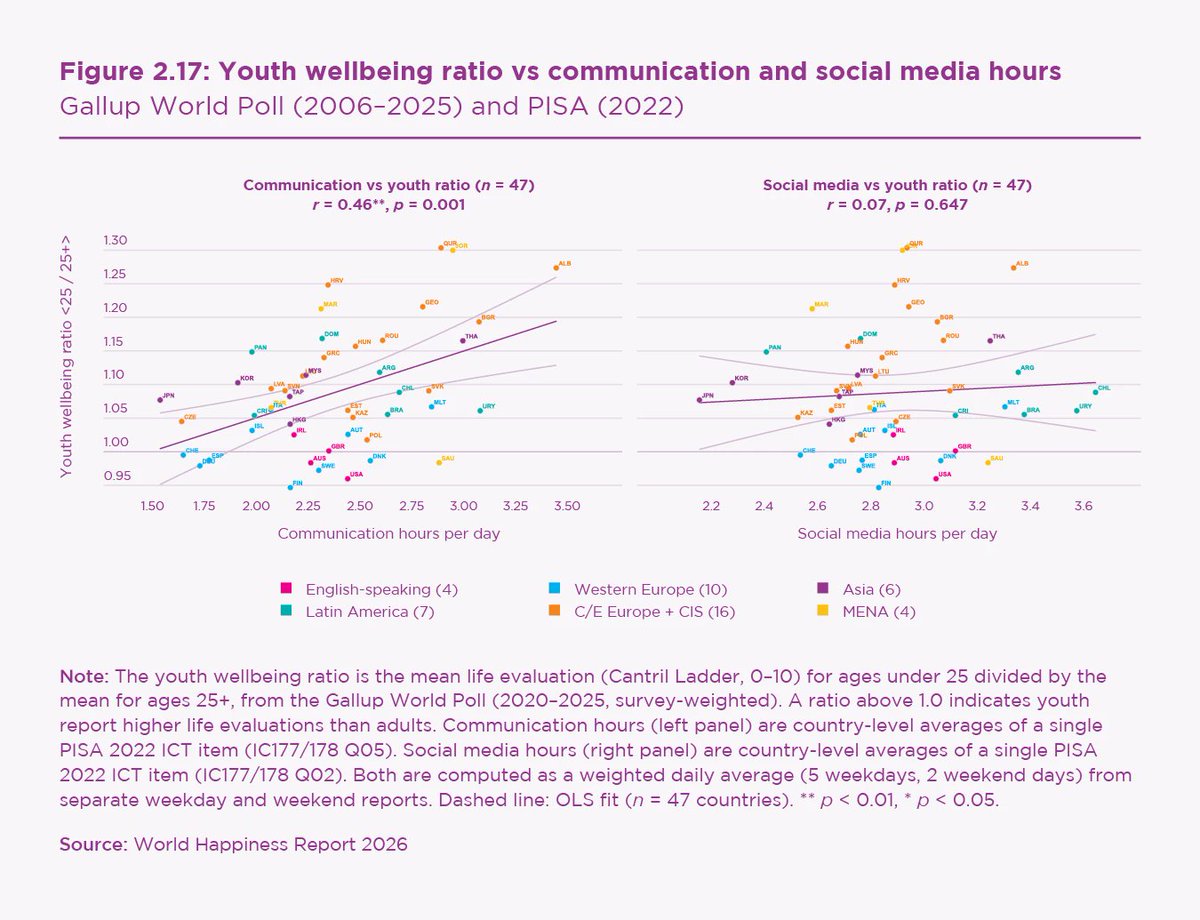
O World Happiness Report achou uma relação significativa entre satisfação com a vida e horas de comunicação, mas NÃO ENCONTROU relação significativa entre uso de redes sociais e felicidade entre jovens (traduzido).
No entanto, nas conclusões insistem no papel das redes sociais 🤡
World Happiness Report finds "a significant *positive* cross-country relationship between communication hours and life satisfaction (r = 0.46, p = .001)…*no* significant relationship between social media use and the relative happiness of the young" #smma https://t.co/Y3BigEomtR
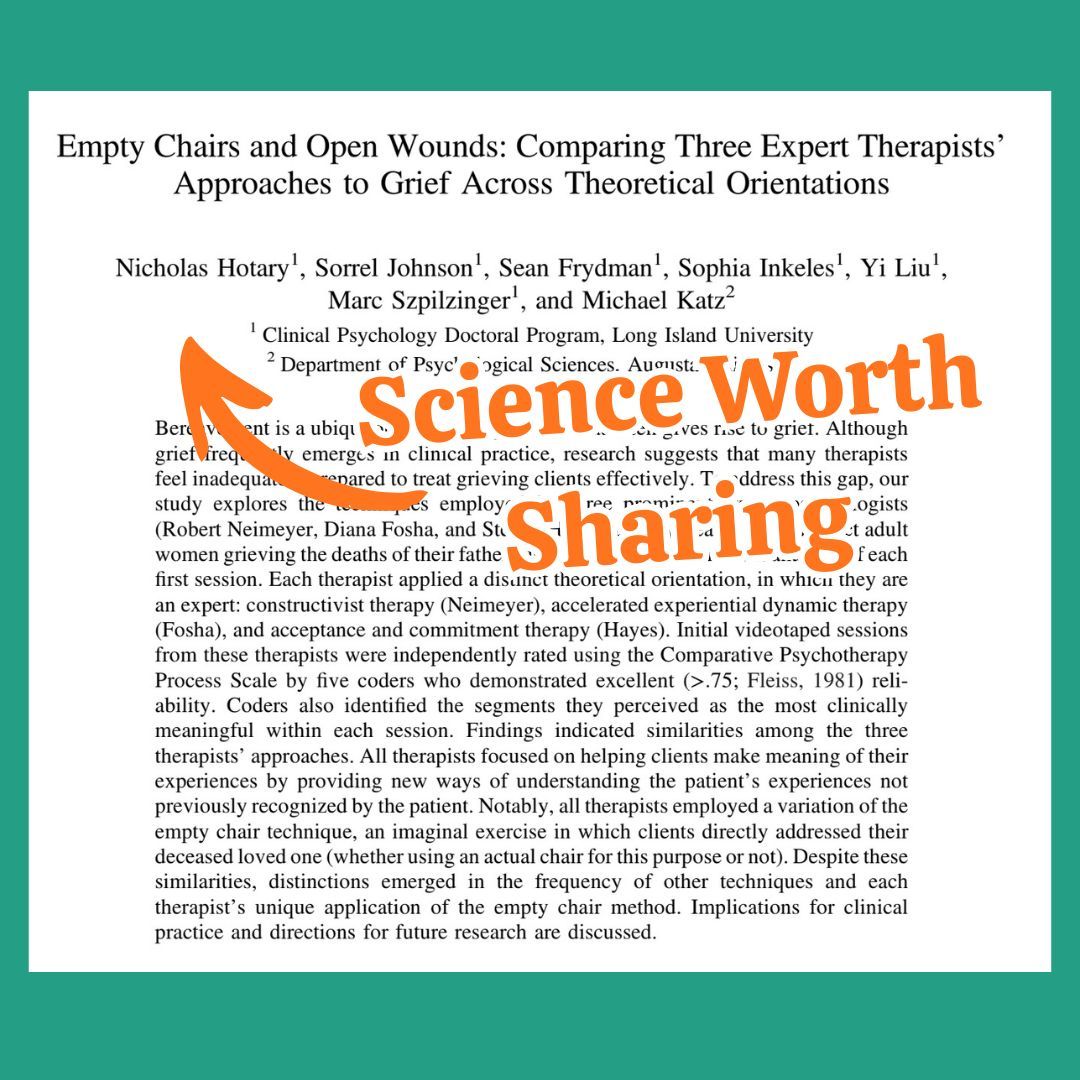
A new study analyzed my first session with a grieving client alongside sessions by Robert Neimeyer and Diana Fosha. Three therapists, three different orientations, all treating grief.
What they found surprised almost no one who knows the history: we were more alike than different. All three of us helped clients make new meaning of their experience. All three used some version of the empty chair technique.
The methods looked different on the surface. The underlying humanity didn't. ACT has unexpected allies everywhere. This paper shows it in a way I find genuinely moving.
You can read the full article here: https://t.co/gqu7VMDBeO
#psychologicalflexibility
#ACT
#ACTtherapy
Conversation with man sitting next to me at tech conference:
Him: You’re a psychologist? That's tough ... AI is coming for your job real quick.
Me: I know that’s the goal, but I think it’d be a real shame. How can we fix our real-life relationships if we don’t work through things with an actual human?
Him: You don’t need an actual human. AI is already *better* than an actual human. Why wouldn’t anyone want that?
Me: Well, they’re doing some pretty crazy things with VR porn right now. So in a few years I guess there’ll be no need for real sex anymore either. Are you excited for that?
Him: Oh come on, that’s different. Real sex actually does require another human.
Me: But it will be “better” than an actual human. Why wouldn’t anyone want that?
Him:
Me:
Him: F*ck.
Me: Exactly.
"About 24% of autistic children in our study met, or were at risk of meeting, the criteria for profound autism. This is similar to the proportion of children internationally" https://t.co/dIGpon1QUp Y'know I think profound autism is catching on. Bravo.
@chrisaikenmd Is it possible to predict the number of deaths due to weight gain and related problems? Not that I disagree that clozapine should be prescribed more, but just curious, and couldn't read the paper yet
- Autismo não é sinônimo de deficiência intelectual.
- DI é uma comorbidade frequente, mas não universal, dentro de um espectro extremamente heterogêneo.
Claro que existem TEA com altas habilidades e superdotação, mas isso é assunto para um outro fio...
Quando a gente reduz autismo a DI, a gente erra dos dois lados:
1. invisibiliza quem tem TEA + DI, que precisa de suporte intenso e
2. ignora o sofrimento de quem tem TEA e QI médio/alto, mas enfrenta barreiras enormes na escola, no trabalho e nas relações.