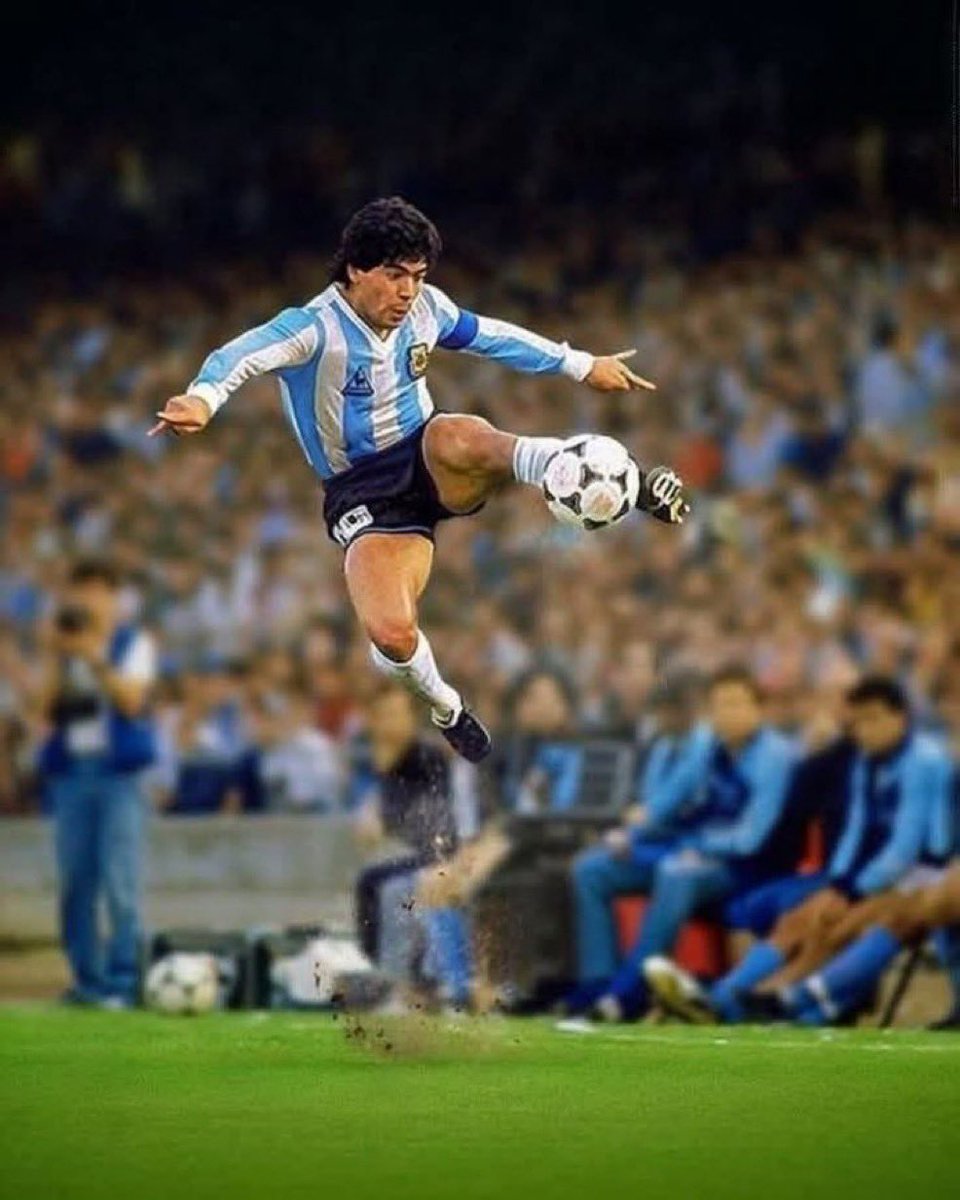
@WanderValero@futnostalgico y del mundo amigo,ningun mortal se le acerco su prime como dicen los chicos hoy fue inalcanzable, no lo podian parar su actuacion en el 86 fue sublime nunca visto en un mundial.
The night Diego Maradona won the 1986 World Cup, one of the first people he wanted to speak to was his mother.
After leading Argentina national football team to victory against West Germany national football team in the final at Estadio Azteca, Maradona was overwhelmed with emotion. Millions saw the captain lifting the trophy, but behind the celebrations was a son thinking about home.
Maradona often spoke about how much his mother, Doña Tota, meant to him. He grew up in poverty in Villa Fiorito, and his parents sacrificed everything so he could play football. When Argentina became world champions, he reportedly called his mother and cried on the phone, telling her that everything they suffered for had finally been worth it.
For Maradona, that moment was bigger than football. It was about repaying his family for years of struggle. He once said that making his mother happy meant more to him than fame or money. Even after becoming the most famous footballer on earth, he still spoke like the boy from the neighborhood who only wanted his parents to be proud.
That call became part of the legend of Maradona because it showed the human side of a man the world often saw as untouchable. Amid the noise of the stadium, the cameras, and the celebrations, Diego’s mind went back to his mother.
La influencia del entrenador en un partido es menor que la que tiene facilitando contextos en el entrenamiento que luego se plasmarán compitiendo. Por ello, sobreactuar en el banquillo puede tener que ver más con ego y no autocontrol que con una significativa ayuda al futbolista.
Horst Wein, formador de formadores: “El fútbol está todo por inventar. Empieza con la cabeza, pasa por el corazón y termina con los pies. Pero se olvida con la juventud que cualquier acción empieza con la percepción. Quien sabe mucho, ve muchas cosas; es importante dejar a los niños ver el juego y no continuar con el crimen de presentar el juego de los adultos a los niños. La competición formativa debe ser como sus zapatos: a su perfecta medida. En todas las asignaturas de la vida, un niño empieza de lo más fácil a lo más complicado. Pero hemos tenido demasiada gente que ha limitado el potencial innato; porque los niños nacen de una forma inteligente, pero tenemos instructores que han estrangulado capacidades imprescindibles para triunfar en la vida y en el fútbol, como la imaginación, la fantasía y la creatividad”.