New manuscript alert!
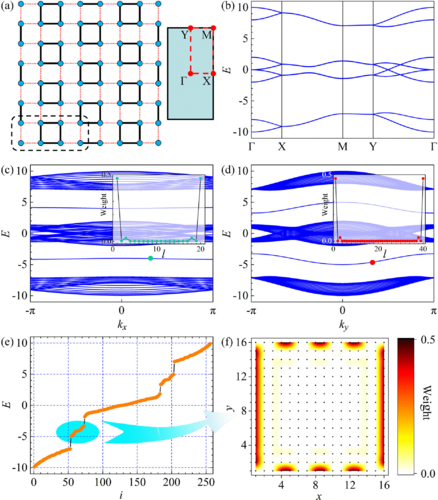
Quantum emitter in a plasmonic field: an orientation generalised model, by Harini Hapuarachchi, me, and @quantschmant
Here I was happy to add my expertise in numerical solution of differential equations to Harini's fantastic work.
https://t.co/Che9sCzvE0
The AIP would like to express their deep concerns that the leadership of the University of Technology Sydney has temporarily suspended enrolments into the Physics major in the Bachelor of Science.
Our Open Letter to the UTS VC is available to read here: https://t.co/ENePC6I5uz
@geerlingguy Blur of static images can be solved by deconvolution. If the kernel is known it's easier, but if not it can be estimated. Providing more data (like dragging in your example) can be used as constraint. Blur then pixelate would be better but still crackable. Best just to mask it.
@MichMarthaler Sounds ripe for a recursive optimization of its optimization problem. Just iteratively optimize your optimizer until it's optimal at optimizing!
I'm really glad to see this great work by @quantschmant 's team get published in PRX Quantum. These notes have been built through years of computational physics work.
It's also interesting to see how the arxi version got shaped into something that fits into PRX Quantum's shape.
Tutorial: A pedagogical hands-on guide to quantum master equations and their numerical implementations, tailored to newcomers interested in interdisciplinary research. @RMIT
https://t.co/4Y2orEqFKl
@timgould_scienc I wonder if you might be computing something similar to the matrix sign function https://t.co/NhicTDJlYf as I would suppose that the matrix sign would satisfy the properties of orthogonal matrices and you're just finding it in a "fun" way.
I've been looking forward to reading this for a while! This work was always fascinating during my time at HQS, I'm excited to see how it develops further.
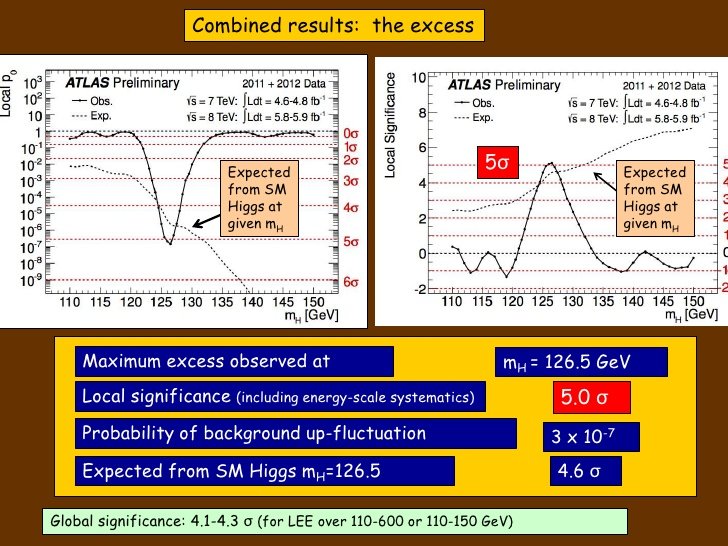
Whether this new superconductor turns out to be valid or invalid rests upon the reproducibility of the results, not whether the author used Excel vs. PgfPlots to generate the figures. For those who have forgotten, I suggest that you review CERN's announcement of the Higgs Boson.
Hey, I'm not that bad.
Anyway... super excited to see this. I still have my copy of Jared's master equations' notes from undergrad. So I'm glad to see Francesco, Jared and Harini update, expand, and mordernize them for free on arxiv.
@hollykrieger For the purposes of this survey please identify your age, sex, and ethnicity. Oh also your height, weight, gender, hair/eye colour, religion, sexual orientation, marital status, degree, faculty, zodiac sign and the last three digits of your credit card. This survey is anonymous.
I'm super excited to share some of the latest work I got to be a part of at @HeiQuSim, with lead author Juha Leppäkangas, on using noisy qubits as a resource for simulation of open systems on quantum computers. I see huge potential for this method. Enjoy!
https://t.co/L5rLWydLrg
We have developed the first general theory to explain and predict nitrogen vacancy-plasmonic nanoparticle interactions in diamond.
Led by @quantschmant, this @RMIT work will equip experimentalists (like @spin_hall_FX) to achieve even better results!
https://t.co/sOdvIiBvev
A new collaboration between HQS Quantum Simulations and Exciton Science's RMIT members aims to solve the resonant transfer model and improve the efficiency of organic solar cells.
https://t.co/GRBUB0NhlC
@HeiQuSim @quantschmant @ResearchRMIT#excitonscience
“When you're faced with career decisions, it's important to imagine what could go wrong, but you should also think about what it could cost you if you let the opportunity pass and missed it.”— Iris Schwenk, Co-Founder and COO of @HeiQuSim.
#womenintech
https://t.co/DSDUgFcUMs