Anthropic's $81B run rate vs OpenAI's $50B is mostly accounting. Anthropic counts gross spend through cloud partners. OpenAI counts only its net share. Same activity, different definitions. Q3 revenue is cleaner: Anthropic $17B, OpenAI ~$10B. Anthropic is ahead. Not by $31B.
The IPO raises up to $64B. The compute commitments are $895B. The public market is being asked to fund a buildout that dwarfs the raise. The bet is that the revenue run rate keeps compounding fast enough to cover it.
Our initial public offering: https://t.co/Ah4BkI2loD
Legal disclaimer: Anthropic has filed a registration statement (including a prospectus) with the SEC for the offering to which this communication relates. Before you invest, you should read the prospectus in that registration statement (available at: https://t.co/Z44axxzf9b) and other documents Anthropic has filed with the SEC for more complete information about Anthropic and this offering. You may get these documents for free by visiting EDGAR on the SEC Web site at https://t.co/94ojsWZTKi. Alternatively, copies of the preliminary prospectus may be obtained from: Goldman Sachs & Co. LLC, Attention: Prospectus Department, 200 West Street, New York, NY 10282, by telephone at (866) 471-2526, or by email at [email protected]; or Morgan Stanley & Co. LLC, Attention: Prospectus Department, 180 Varick Street, 2nd Floor, New York, NY 10014.
The securities may not be sold, nor may offers to buy be accepted, prior to the time the registration statement becomes effective. This post is not an offer to sell, or a solicitation of an offer to buy, the securities in any jurisdiction where the offer or sale is not permitted.
$0.10 per million tokens for a decision model changes the math. When structured judgment costs almost nothing, the scarce input is not the decision. It is the data, the framing, and the workflow around it. Google is pricing the model to own the decision layer.
Introducing Gemini Decision 1, our new frontier decision model in the Gemini API.
It is $0.10 per 1M input tokens with no additional cost. With support for image, audio, video, and PDF natively, 256K context window, & 1K questions.
You can try it for free in the API!
TSMC is buying its own customers. The board approved up to $500M in Anthropic IPO shares and $500M in OpenAI preferred stock. Anthropic's S-1 flags TSMC chip supply as a concentration risk. Now the foundry owns a piece of the buyers. The supply chain is becoming the cap table.
Anthropic's IPO is a compute company going public. $895B in commitments backs a $1T valuation. Google and Nvidia are in a $26B private placement at the IPO price. The supply chain is now the cap table. The model is the product. The compute is the business.
ChatGPT just became a storefront for 1.2B weekly users. The agent answers the customer, so the business that shows up best in the agent's answer wins the sale. Discovery is moving from search results to agent answers.
Now in beta: Businesses in ChatGPT.
Claim your business, manage your information, and get insights on how people engage with you.
Eligible businesses can also build a Business Agent to answer customers’ questions and help them explore what you offer.
https://t.co/N2GEZX0mFT
The model was the product. Now the surface is. Claude is moving into the spreadsheet and the whiteboard, the two places where work actually gets planned and tracked. Whoever owns the surface owns the workflow, and the workflow is stickier than any model lead.
Starting to roll out today: Claude Whiteboards, Claude Sheets and Claude Data.
Think a plan through on a board, build a tracker in a sheet, and tell a story with your data.
AI gross profit is extremely top-heavy:
Apps 40% Neoclouds 28% Inference 24%
→ Top 3 layers take 92% of the margin.
Power + data centers get almost nothing.
The real opportunity is owning the app layer (or integrating up).
@ttunguz https://t.co/TuVLXYgtY8
The roadshow is the first time a frontier lab has to defend its economics in public. $895B in compute commitments behind a $1T valuation makes this a referendum on who pays for compute, and post-listing the monetization pressure only hardens.
Anthropic has launched the roadshow for its proposed initial public offering: https://t.co/FhVRVuWN9X
Legal disclaimer: A registration statement relating to these securities has been filed with the SEC but has not yet become effective. These securities may not be sold, nor may offers to buy be accepted, prior to the time the registration statement becomes effective. This post does not constitute an offer to sell or the solicitation of an offer to buy these securities, nor shall there be any sale of these securities in any state or jurisdiction in which such offer, solicitation or sale would be unlawful prior to registration or qualification under the securities laws of any such state or jurisdiction.
Build vs buy is the wrong frame. The Figma CFO got me running four options: build, buy, partner, invest. Most teams stop at the first two. The last two decide who keeps the upside. Partner rents distribution. Invest buys a stake in it. The question is where the value compounds.
The headline is a new model. The real story is the rewrite: xAI dumped JAX/SGLang and rebuilt its RL and inference stack in C/C++ from scratch. When the framework is the bottleneck, the model work waits. The operating model is where the lead compounds.
https://t.co/hdXDv0azHG
We have dumped JAX/SGLang and rewritten the entire RL and inference stack from scratch in C/C++, which took some extra time.
Training (aka pre-training) is done. Lot of cleanup was needed on the SFT data to get that mostly right. Now, 4.8 is in RL and the evals are starting to climb. We will do a soft rollout to Bot users later this week and see how it goes.
Grok 4.8 will bear no resemblance to 4.7 (thankfully). It is not yet incredible, but, this time, the foundations are built right, so I expect it to evolve to be something special.
The price is the story, not the model. Carbon launches at $2/$10 per million tokens through Nov 30, then doubles to $4/$20. Google is buying 20 days of developer adoption before the real price kicks in, and the lock-in happens before the bill arrives.
Gemini 4 Carbon is rolling out today. It’s built for sustained, long-horizon tasks, reasoning deeply through complex software engineering, cybersecurity, and scientific discovery.
Coming globally via the Gemini API in @GoogleAIStudio and Gemini for business, and for Ultra subscribers in @antigravity, the @GeminiApp, and AI Mode in Search.
Good list. But the setup is the easy part. I worked on an agent-driven development rollout for 10,000+ builders, and the repos were never the bottleneck. The operating model was: what gets reviewed, what gets automated, who decides.
This is f*cking gold, Anthropic, Garry Tan and Addy Osmani put their Claude Code setups on GitHub for free and people still prompt from zero
7 free repos from people who actually ship with AI agents:
-> skills (by anthropics) https://t.co/Itbxfvo860
the official skills repo from Anthropic, plus the spec to write your own
-> superpowers (by obra) https://t.co/XFihPggEAT
a skills framework that makes your agent brainstorm, plan, test and review before it writes code
-> gstack (by garrytan) https://t.co/Pq37mIk3Do
Garry Tan’s toolkit with 23+ slash commands from planning to release
-> agent skills (by addyosmani) https://t.co/tJ9VLOIWiQ
Addy Osmani’s skills for each stage: define, plan, build, verify, review, ship
-> skills (by mattpocock) https://t.co/JNSV9AHWrV
Matt Pocock’s personal pack of 20 skills, copy it and edit it for your stack
-> agentmemory (by rohitg00) https://t.co/9JfwDrGDQn
persistent memory shared across Claude Code, Cursor, Gemini CLI and Codex
-> ccusage (by ryoppippi) https://t.co/wKCjA4Kbqb
shows tokens and cost from your local Claude Code logs, so you see where the money goes
your agent is only as good as the setup you give it
copy theirs and make it yours
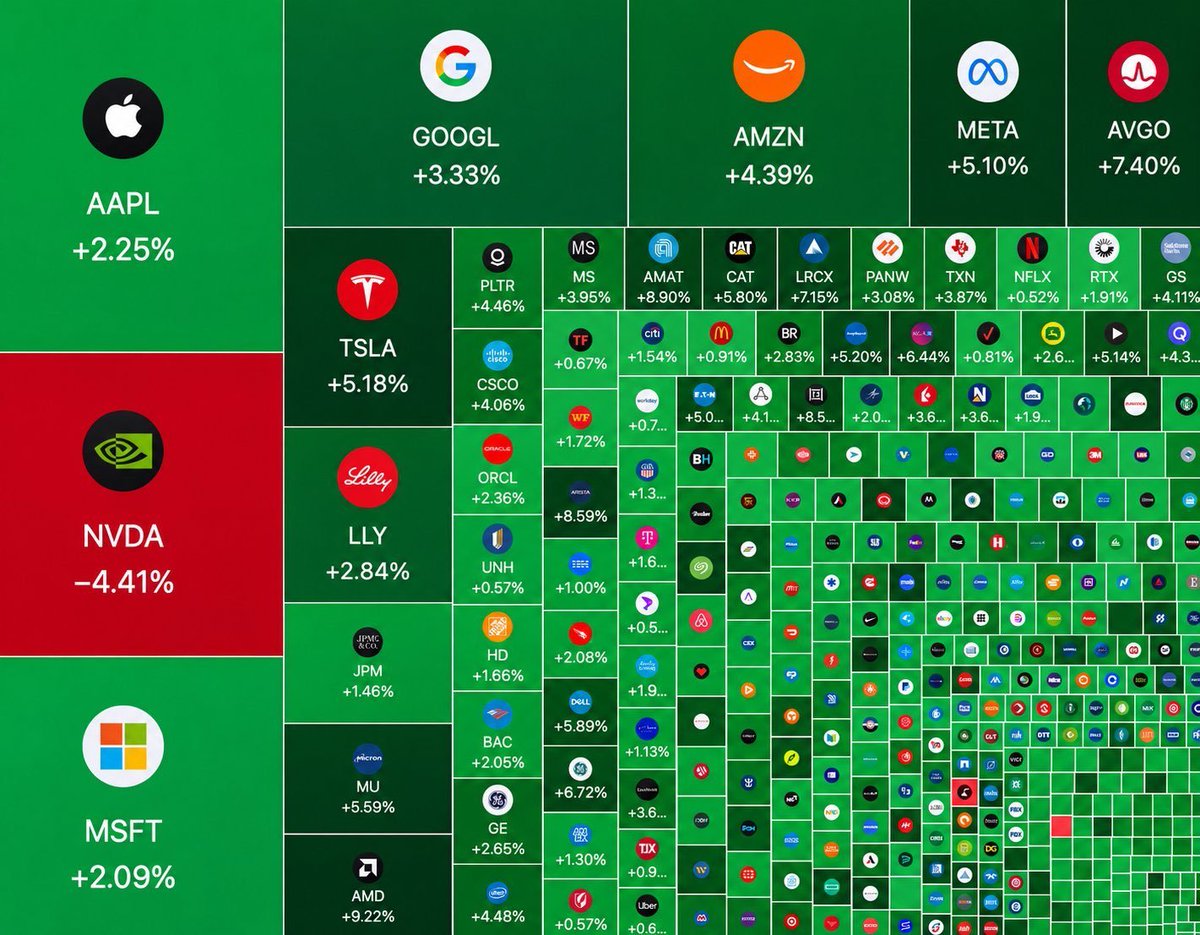
NVDA down 4.41% while the rest of the Mag 7 was green, a day after its board opened a probe into Jensen Huang. When the AI trade is one company and the company is one person, that is key-person risk priced in real time.
Almost all of these AI Transformation players are chasing the Fortune 500. The other big gap is the other end: millions of small businesses with no deployment arm calling on them. That is where transformation is still an open market.
I mapped 67 companies doing AI transformation.
Labs, Big-3, AI-consultants, Palantir alumni, YC startups, company brains and agent platforms.
7 things I learned:
Agent-driven development rollout for 10,000+ builders taught me the models were the easy part. The hard part was the operating model: who decides, what gets automated, where the margin moves. Buy the model, keep the old operating model, and the ROI doesn't show up.
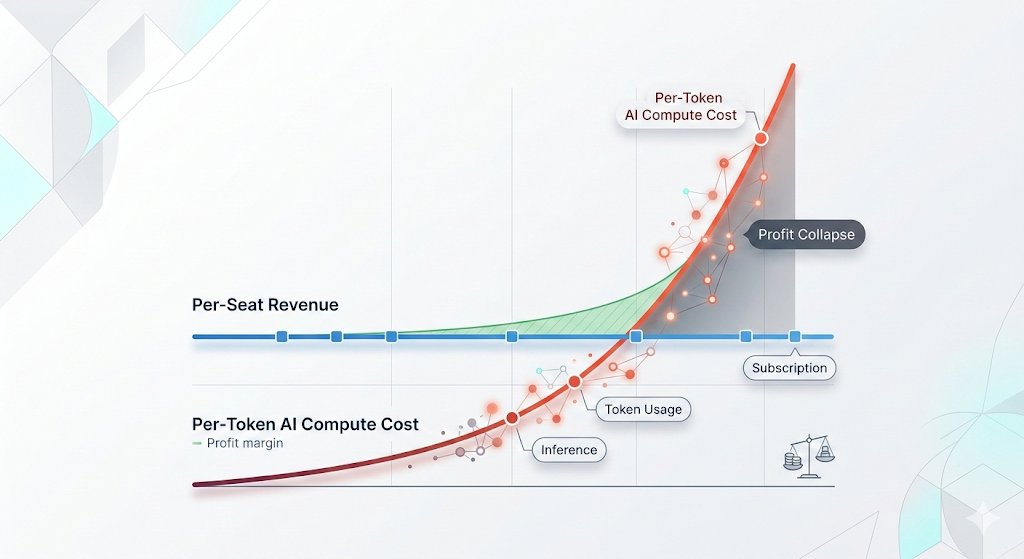
🦔Microsoft canceled its internal Claude Code licenses this week after token-based billing made the cost untenable, even for a company with effectively infinite cloud resources. Uber's CTO sent an internal memo warning the company burned through its entire 2026 AI budget in just four months. American AI software prices have jumped 20% to 37%, and GitHub (owned by Microsoft) is dropping flat-rate plans for usage-based billing across its products.
My Take
The AI subsidy era is ending in real time. The same company that put $13 billion into OpenAI and built the Azure infrastructure powering most of Anthropic's compute just looked at the bill from a competitor's coding tool and decided it was not worth paying. That is not a productivity failure on Anthropic's end. Token-based pricing is forcing every enterprise customer to confront the actual cost of running these models at scale, and the number turns out to be far higher than the flat-rate experiments suggested.
This ties directly to my Gemini Flash post yesterday. Anthropic, OpenAI, and Google all raised effective prices in the last six months. Enterprises that built workflows assuming AI costs would keep falling are now watching annual budgets evaporate in months. Two outcomes look likely from here. Either enterprises scale back AI usage to fit budgets, which slows the revenue ramp the labs need to justify their valuations ahead of IPOs, or the labs cut prices and absorb the losses, which makes the unit economics worse at exactly the wrong moment. Both paths land in the same place, the numbers stop working, and somebody has to take the writedown.
Hedgie🤗