Anti-histamines don't work that well because they're only anti-histamine.
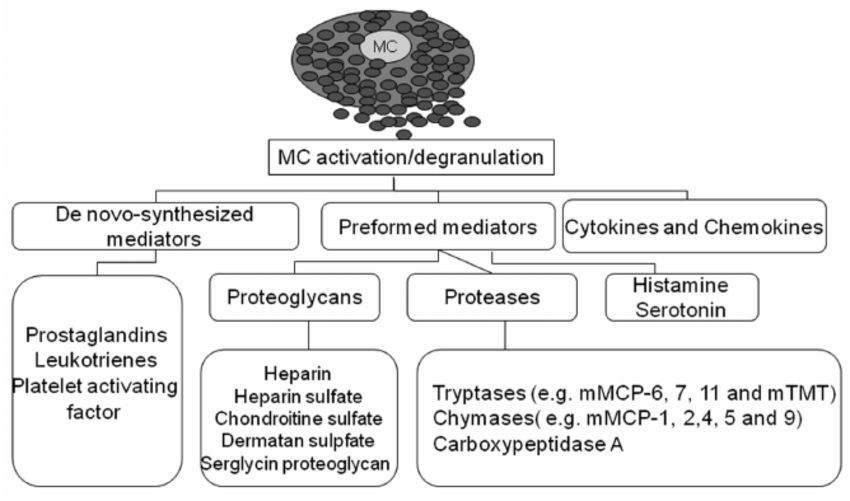
Mast cells have 200+ mediators. Histamine, prostaglandins, and leukotrienes are the biggest culprits.
You need to prevent them, alongside others, from being released higher up.
Quercetin, l-theanine, boswellia, luteolin, BSO, lactoferrin (lowers IgE), chamomile, sunlight exposure (if tolerable), mitigate nnEMFs, elimination diet, and heal the gut to lower endotoxins/immune dysreguation.
To clear histamine, you need methyl groups from folate (originally from serine), methionine, or choline/betaine, with supporting nutrients being vitamin B1, B2, B3, B5, B6, B12, magnesium, zinc, glycine, and vitamin A for HNMT. You also need vitamin B6 and copper for DAO. You need niacin (NAD+) for ALDH, and you need riboflavin for MAO, which also clears serotonin.
To prevent prostaglandin synthesis, prioritize O3/O6 balance, avoid seed oils at all costs, and leverage natural COX inhibitors like turmeric, black seed oil, and ginger — in isolated compounds, extracts, or whole-food forms.
For leukotrienes, leverage boswellia for its 5-LOX inhibition. Black seed oil also has 5-LOX inhibition, blocks H1 receptors, inhibits COX + NF-κB inhibitor, and stabilizes mast cells. Anything that lowers NF-kB plays a large role in lowering mast cell degranulation. It also makes NAD+ which supports mitochondria bioenergetics and histamine clearance.
Adaptogenic herbs like rhodiola, ginseng, or skullcap help with excess cortisol/adrenaline. Passionflower and mangolia bark are fantastic for GABA, lowering CRH, and having anti-histamine properties.
Usual suspects like taurine, magnesium, and vitamin C/E should be leveraged.
Micronized palmitoylethanolamide (PEA) also inhibits mast cell degranulation through a different node, being PPAR-alpha activation.
Bromelain, which is found in pineapple, has mast cell stabilizing effects. It may be best to supplement this directly if you have reactions from pineapples (see HistaminX below).
If histamine reactions get out of hand, leverage Ketotifen in the short-term.
All of these compounds have further unique effects beyond what's mentioned.
A simple stack would be:
- L-theanine (600-1000mg/day)
- Magnesium (500-1000mg/day)
- Passionflower + chamomile + ginger teas
- Black seed oil (1-2 tsp/tbsp)
- Lactoferrin (250mg 2x/day)
- Micronized PEA (600mg/day)
- Boswellia phytosome (350mg, 1-2x/day)
- HistaminX by Seeking Health is also good on top
Glycine counteracts the pro-aging effects of excess methionine, a major component of muscle meat.
It's able to do this through the GNMT enzyme - which absorbs extra methyl groups from methionine.
Those extra methyl groups otherwise alter global gene expression, disrupting several health promoting processes.
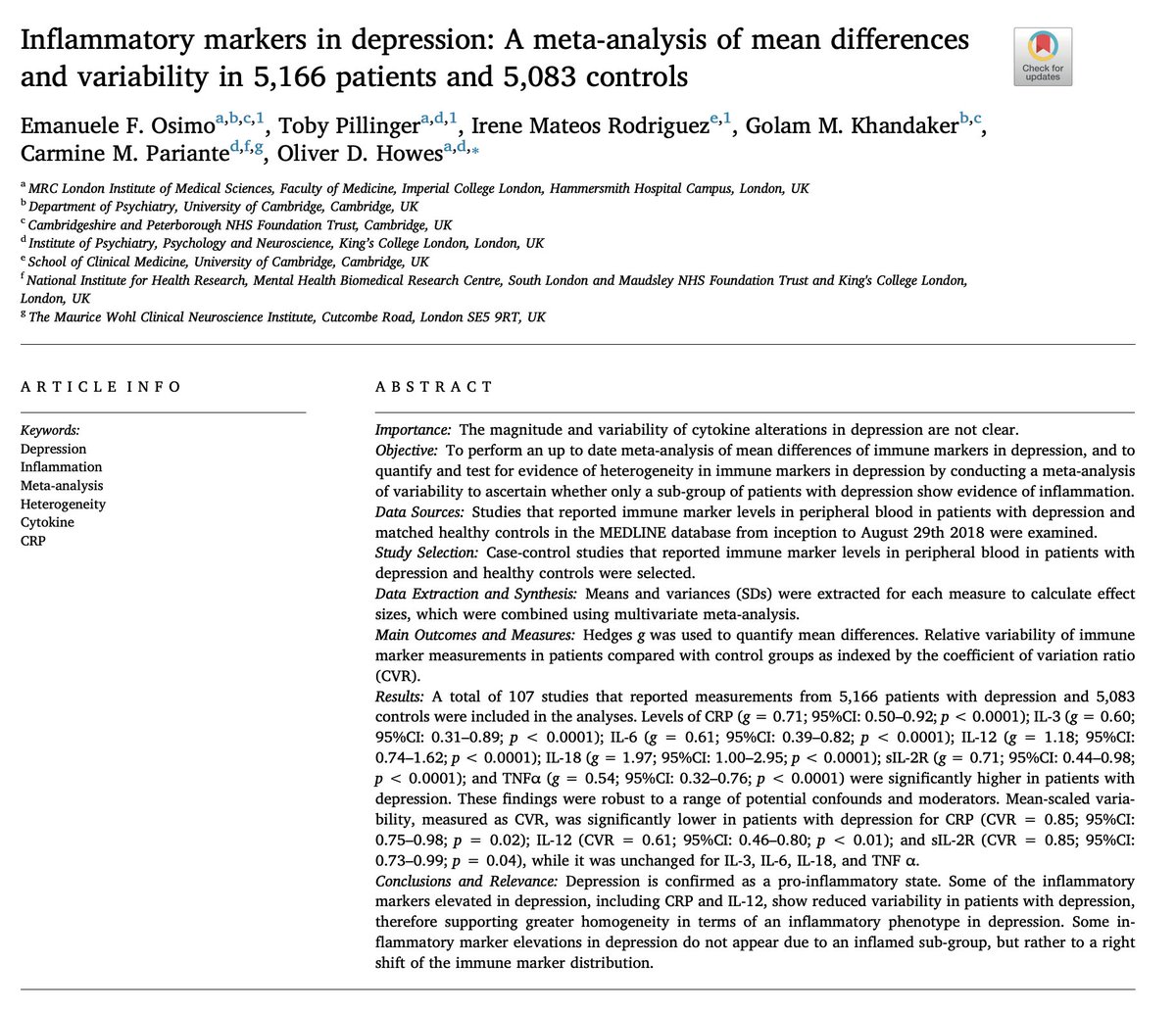
Depression is inflammation in disguise.
Inflammatory markers are higher across the board, sometimes by 2-3X, in depressed people.
Anti-inflammatories:
• Aspirin
• Taurine
• Pregnenolone/progesterone
• Red light
• Glycine
etc
should be explored.
Higher meat intake was associated with less cognitive decline and lower dementia risk in APOE e4 carriers, a group at higher risk of Alzheimer's disease and dementia.
Those who ate ~2 servings of meat per day had a better 10-year cognitive trajectory and a 55% lower dementia risk compared to people eating less than a half a serving per day.
That pattern wasn't seen in the non-APOE e4 carriers and was NOT observed for processed meat. Unprocessed red meat alone was also linked to lower dementia risk in APOE e4 carriers.
My take is not “everyone should eat more meat.”
But a few servings per day of unprocessed meat (as observed in this study) is perfectly healthy for most people.
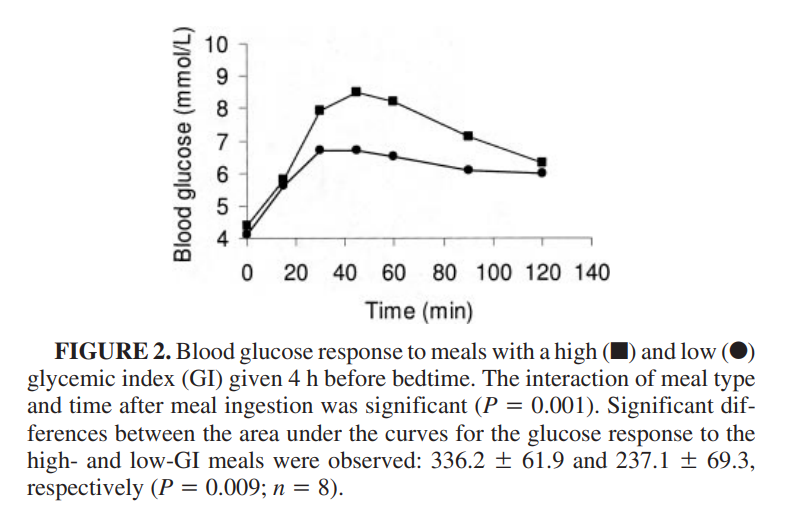
Incluir carbohidratos en la cena ayuda a conciliar el sueño al elevar la insulina, que hace que los músculos absorban los otros aminoácidos grandes, reduciendo así su competencia en la sangre y favoreciendo la entrada de triptófano al cerebro, donde se convierte en serotonina y posteriormente en melatonina.
Saffron is effective for ADHD - according to recent review.
In fact, some trials show it as being as effective as standard drugs (methylphenidate). Saffron hits a ton of core processes:
◇ Improves blood flow to the brain
◇ Antioxidant effects
◇ Natural SNRI; increases serotonin and norepinephrine signaling
◇ Boosts BDNF production (CREB activation)
◇ Reduces neuroinflammation and microglial overactivation
◇ Increases acetylcholine availability
◇ Mild MAOI activity
◇ NMDA antagonist and GABA agonist effects
◇ Supports dopamine synthesis
Your muscle rebuilds in about three months. Your tendons and cartilage take roughly a year and a half. Your bone, up to two years. Adding 40 grams of whey daily for two weeks doesn't change any of those timelines.
That's the finding from a study published last month in the American Journal of Clinical Nutrition. The team measured rebuild rates across more than a dozen knee tissues in living older adults using a safe heavy-water tracer. Half the participants kept their habitual diet. Half added 40 grams of whey daily for 14 days. At the end, the rebuild rates of every tissue were the same in both groups.
Muscle rebuilt at about 1.2 percent per day. At that rate, your quadriceps theoretically turn over in roughly three months. The patellar tendon, the femoral cartilage, and the menisci all rebuilt at 0.18 to 0.21 percent per day, putting their full-pool turnover at roughly 1.3 to 1.5 years. Bone rebuilt at 0.12 to 0.21 percent per day across five sites, with the slowest taking up to 2.3 years for a complete cycle.
It does not say protein doesn't build connective tissue. It does. Every tissue in your body depends on dietary amino acids as substrate. What the study shows is that for these older adults on their normal diets, adding 40 grams of whey on top for two weeks did not accelerate the rebuild rate of any tissue measured.
Protein supplementation is a tool for closing intake gaps and for hitting the per-meal threshold that maximizes muscle protein synthesis after training. It's effective at those goals.
Cartilage damage from running mileage, tendon overuse injuries, bone density loss in postmenopausal women, ACL rehabilitation timelines: none of these can be hurried with whey.
The reality is that your body runs many tissue clocks at very different speeds. Muscle is the fast one. Most of what we call "tissue building" outside of muscle takes 1 to 2 years per cycle, not days.
Muscle responds to protein on a short timescale. Everything else responds on a long one. The two are not interchangeable.
citation:
Houtvast et al., Am J Clin Nutr, 2026
Intelligence is associated with high glutamate levels and accelerated brain glucose metabolism
Intelligent people tend to have high nutritional demand, greater blood glucose fluctuations, and a tendency toward overstimulation/anxiety
Supply must meet demand for optimal function
The more I learn about nutrition, the more I realize that many completely neglect the importance of micronutrients on biochemistry, thus health. Most don't truly grasp the understanding and complexity of biochemical pathways, and their associated nutrient cofactors.
Below is a map of the known human metabolic pathways, every single step requires a nutrient cofactor of some kind. Being low in even one micronutrient can lead to negative effects, being low in multiple can be devastating. They all influence each other, like a web where you pull on one thread and the whole thing will shift.
Ice cream is actually one of the healthiest foods in existence, judging by a multitude of recent research articles.
There was a very highly publicized article that came out in 2018 out of Harvard.
It was for a student's dissertation, he found that ice cream was inversely associated with heart disease.
The nutrition department and the student himself tried repeatedly to "make the association go away" with different analysis, and checking his work.
But it didn't.
Not only was ice cream reported as beneficial,
it was actually one of the most beneficial dairy products analyzed.
With up to a 12% reduction in heart disease risk for having >2 servings of ice cream per week.
This wasn't the first study to find benefits of ice cream, and it also wasn't the last.
In a 2013 meta analysis of studies, they also found a protective effect of ice cream on diabetes.
You can see the bias against ice cream, as they don't even mention it in the main page.
That's despite ice cream showing one of the BEST results of any food studied for diabetes risk.
Another study from 2014 showed the same thing.
Again, this is a meta analysis, not just one study. They are pooling together all of the studies on ice cream and diabetes and still finding this.
The best result of any dairy food studied - here with a 32% reduction in diabetes risk.
The bias against ice cream is very strong in these studies.
A 2016 study once again showing the same benefit of ice cream for diabetes risk.
They say that the study above (Chen et al) showed "attenuated association" once diet collection information was stopped after hypertension or high cholesterol diagnosis.
They argue that this means that the association is invalid.
But not only did they not try to dismiss any other food studied like this, but this is just objectively not true (see above - there still was an association).
They also buried their results on ice cream in the supplementary tables so it didn't even make the paper.
That's probably because they didn't like the fact that once again, ice cream intake was inversely and strongly associated with diabetes risk.
So you really can't argue that there was some kind of agenda in favor of ice cream here.
More recent studies show the same thing.
A 2019 paper again showed a lower risk of diabetes with increased ice cream consumption.
And again, they put this information at the very end in the supplementary tables to try to hide it.
Finally, the most recent study in 2024 showed the STRONGEST association for ice cream's protective effect on diabetes.
There was a linear dose response.
That means more ice cream = less diabetes, straight up.
In fact, there was a 50% reduction in risk for having one serving per day.
Which, as you could guess by this point, was the greatest risk reduction of any dairy food studied.
Why would ice cream actually be good for you?
My main guess is the unique protective fats in dairy, that are abundant in ice cream.
◇ C15
◇ C17
◇ CLA
◇ TVA
◇ TPA
are fats almost exclusively in dairy fat, and all have unique effects.
◇ Mitochondrial enhancing
◇ Anti-inflammatory
◇ Anti-thrombotic
◇ Lipid lowering
◇ Fat burning
◇ Cancer preventing
I've covered these all at length in other content.
Of course, this is all observational.
This is simply seeing what people eat and then seeing what happens to them. It's not an experiment. That is definitely a limitation.
However, when you see the same association, consistently, across decades, regardless of analysis and confounding adjustment, you probably have something real.
This is not to say everyone should go and immediately pound gallons of ice cream for invincibility.
But... it does mean having reasonable amounts of ice cream is likely good for you.
Depression is inflammation in disguise.
Inflammatory markers are higher across the board, sometimes by 2-3X, in depressed people.
Anti-inflammatories:
• Aspirin
• Taurine
• Pregnenolone/progesterone
• Red light
• Glycine
etc
should be explored.
It supports the HPA axis, regulates LH, and increases testosterone via Leydig cell support.
· Taurine enhances hypothalamic-pituitary communication, modulating GnRH pulses and normalizing feedback loops that control LH and FSH secretion.
· In the testes, taurine stimulates Leydig cells to produce more testosterone, likely through antioxidant protection and improved mitochondrial bioenergetics.
· It improves autophagy while suppressing apoptosis in testicular tissue — preserving fertility even under oxidative load (e.g., EMFs, toxins, heavy metals).
Nassim Taleb: you don't need to predict the future. You need an option on it.
Thales got mocked for being a poor philosopher, so he put tiny deposits on every olive press in town before the harvest - nothing lost if he was wrong, a fortune if he was right.
"The opposite of fragile isn't robust. It's something that wants disorder - you write 'please mishandle' on the box."
"Jump 10 meters and you die. Jump one meter ten times and nothing happens. That's fragility."
"Convexity matters a lot more than knowledge - you can guess worse than random and still come out ahead."
bookmark and watch it today - an hour on fat tails, antifragility, and how to position so randomness pays you ↓
N-Acetylcysteine (NAC) substantially improves ADHD in clinical trial.
When giving out NAC at high doses, they saw a clear benefit.
At 2.4 g/day there were drops in ADHD scores within a few months.
At 4.8 g, improvements in nearly a month.
This study was done in people with the autoimmune condition Lupus.