For me, deep-sea fishing has been infrequent but instructive. Success requires patience, persistence, and prayer.
As we begin this new year and make resolutions to improve things in our lives, these three requisites for successful fishing can help us.
un día como hoy pero de 1899 nacía el mejor poeta y escritor de todos los tiempos en Argentina, una suerte y una fortuna el azar extraño que nos dió esta maravilla: Borges
This story is immensely touching and is going massively viral in China. It's also a pretty good soft signal that China is taking warming ties with the U.S. sincerely.
This lady 👇 is called Yin Yuzhen (殷玉珍) and she lives in a place called Jǐngbèitáng (井背塘) in Inner Mongolia - deep in the heart of the Mu Us (毛乌素) Desert, a place whose name literally translates from Mongolian as "bad (lacking) water".
In 1985, aged 19, she and her husband were really desperate by the encroaching desert: sandstorms would seal their door shut overnight and literally threaten to bury them alive. She was crying every day and considered ending her life.
However, her defiant spirit prevailed and she decided to fight the desert, saying she'd "rather die planting trees than let the sand bully me to death" (宁可种树累死,也不让沙子欺负死)
In 1986, they traded the family's most valuable possession - a sheep - for 600 tree seedlings. Fewer than 10 survived, but they saw hope. Her husband Bái Wànxiáng (白万祥) took manual labor jobs and asked for tree seedlings instead of wages.
In 1999, Yin Yuzhen's story made it into national news on CCTV. An American named Ronald Sakolsky - originally from Pittsburgh, Pennsylvania - who was teaching English as a foreign instructor at Luoyang Foreign Language School (洛阳外国语学校) in Henan province, was deeply moved. He immediately started sending emails to multiple American organizations to raise $5,000 for her.
The $5,000 was sent through a Beijing-based foundation. In the video 👇, Yin Yuzhen recalls receiving it: "I had never seen that much money in my life - it scared me half to death." She spent every cent on higher-quality seedlings than she'd ever been able to afford.
Shortly after, Sakolsky traveled to the Mu Us desert in person. He found her out in the sand, planting. Seeing green where he'd expected only desert, he kept saying "impossible, impossible."
With Sakolsky's $5,000 alone, Yin Yuzhen planted 50,000 seedlings which have now become a forest. Over her entire life, since the 1980s, her life's work stands at over two million trees planted, transforming almost 50 km² (roughly 80% of Manhattan) of desert into green land.
Yin Yuzhen was awarded the 全国劳模 (National Model Worker), one of China's highest civilian honors.
Seeing her video titled 寻找赛考斯 ("Searching for Sakolsky") and the incredible impact it was having on Chinese social media, journalists from Inner Mongolia's Benteng Media (奔腾融媒) tracked Sakolsky down by going to the Luoyang No. 2 Foreign Language Academy and finding the Headmaster Bai Fan, who was Sakolsky's former colleague.
Bai Fan connected with Sakolsky by phone on the spot, shot on video by the journalists (my 2nd video 👇), inviting him back to China to see what his $5,000 became.
This was 2 days ago on May 17th so you can bet that a Sakolsky visit to China will be arranged soon and that this will be one of the biggest pieces of US-China public diplomacy this year.
Now this story coming out and being amplified right after Trump's visit is of course no coincidence, we shouldn't be naive: what better way to translate the warmth from the visit than letting a desert grandmother in a red headscarf tell the internet she's looking for her American friend?
That doesn't make the story any less real or any less touching. In fact this story is the perfect reminder that countries don't have friends, but people do. And when countries remember this, deserts turn green.
Quienes no leen, nunca entenderán lo que se siente encontrar una frase tan perfecta que tienes que cerrar el libro un momento, sonreír como un idiota y quedarte en silencio antes de seguir leyendo
«Cuando esta bella granadina, ardiendo en llamas celestiales, le decía a su amante: “Hazme mujer tuya, y llévame; si tu libre; yo libre; si tu cautivo, yo cautiva”».
Juan Montalvo, Geometría Moral
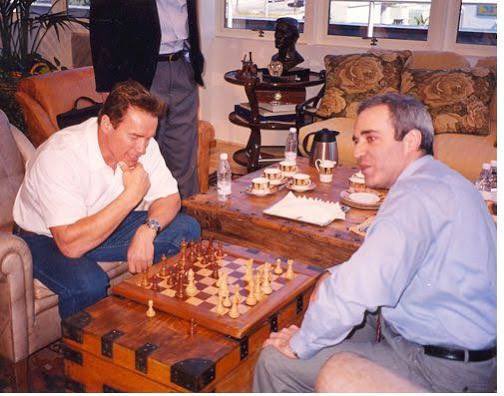
It’s International Chess Day, and if chess is good enough for Harry Potter, Captain Kirk, the Terminator, and iconic Bond villain Kronsteen, why don’t *you* play?!
«Arquero» o «portero», «cancha» o «campo», «penalti» o «penal», «portería» o «arco», «gambetear» o «regatear», «botas» o «botines»…
Con toda su diversidad dentro de la unidad, hoy pase lo que pase la lengua española consigue otra victoria mundial.
¡Enhorabuena, hispanohablantes!
Argentina es la parte de la latinidad que los latinos odian.
Porque Argentina se la cree, se crece, mira a otros por encima del hombro, y al latino le enseñaron a agachar la cabeza, a aceptar la humillación como humildad.
The Myth of “Love Learning”
People often ask me how to get better at chess. My answer is almost the opposite of what people expect.
You don’t have to love learning.
In fact, if you wait until you love the process, you’ll probably never become very good.
We romanticize improvement. We imagine great players waking up excited to study endgames, analyze losses, or memorize opening lines. Sometimes that’s true. Most of the time it isn’t.
Improvement is often boring.
The difference between an amateur and a professional isn’t that the professional enjoys every minute. It’s that they keep going when they don’t.
People say children are fearless learners. I’m not so sure.
Children quit things constantly. Piano. Swimming. Languages. Football. Chess. They usually continue only because someone else insists they do. Parents. Teachers. Coaches.
Discipline often comes before passion, not after.
The same is true for adults.
We tell people to “follow your curiosity.” That’s wonderful advice if curiosity happens to last. Usually it doesn’t.
Every meaningful skill has a point where curiosity runs out and routine takes over.
That’s where improvement actually begins.
Chess certainly did not always feel like play to me.
There were tournaments where the last thing I wanted to do after six hours of defending a miserable endgame was analyze another five hours.
There were openings I studied not because they fascinated me, but because my opponents forced me to.
There were positions I analyzed simply because they were objectively important.
Not because they were fun.
Because they needed to be done.
People often criticize schools for asking the wrong questions.
But there’s another side to that story.
If everyone only studied the questions they found interesting, most people would develop huge blind spots.
Sometimes someone else knows what you need to learn before you do.
Nobody is naturally curious about tax law before becoming an accountant. Or anatomy before becoming a surgeon. Or rook endings before losing enough of them.
External structure isn’t always the enemy of learning.
Often it’s the bridge that gets you to the point where genuine curiosity develops.
The biggest obstacle isn’t fear of looking stupid.
It’s our addiction to doing only what feels rewarding today.
Modern life gives us endless opportunities to switch the moment something becomes difficult.
A new opening.
A new productivity system.
A new app.
A new hobby.
Very few people simply keep doing the same useful thing for years.
That’s the superpower.
So when people ask how to improve at chess, I don’t tell them to fall in love with learning.
Love helps.
Curiosity helps.
Being willing to fail helps.
But none of those are reliable.
Build habits that survive the days when none of those feelings are there.
Because mastery isn’t built on motivation.
It’s built on showing up after motivation has left the room.
Los sudamericanos podremos ser racistas, clasistas, xenófobos, borrachos, escandalosos, tercermundistas, conflictivos, pobres, venir de familias disfuncionales, vivir peleando entre nosotros... pero jamás pondremos a una selección europea por encima de una sudamericana.
HISTORIAAAAAAAAAAAAAAAAAAAAAAAAAAAAAAAAAAAAAAAAAAAAAAAAAAAAAAAAAAAAAAAA
Ecuador es la CUARTA selección americana que derrota a Alemania en la Copa del Mundo, tras Brasil, Argentina y México.
Ecuador está matemáticamente clasificada para los 1/16.
Toda esa gente que ha llenado los estadios en los que ha jugado Ecuador se merecía esta enorme alegría.
Toda esa gente que siempre confió se merecía esta enorme alegría.
Toda esa gente que remó a favor y no en contra se merecía esta alegría.
Y tú, cenizo que mataste a esta selección, aparca el odio y súbete a la marea amarilla que está más viva que nunca. Ya habrá tiempo para destruirlo todo cuando acabe el sueño.
❤️🇪🇨
Acabamos de presenciar historia pura del fútbol sudamericano.
Ecuador vence a Alemania y clasifica a ronda final del Mundial.
Remontando un 0-1 en contra y dominando a Alemania en varias partes del partido.
Tenían que ganar y ganaron. Así se juegan este tipo de partidos. DE PIE ANTE ECUADOR🇪🇨