This is Elon telling you the future.
A mass driver is basically a giant electromagnetic catapult. You build a track on the Moon, run current through superconducting coils, and yeet payloads into space at 5,300 mph. No fuel. No rocket engines. Just electricity.
Gerard O'Neill built the first working prototype at MIT in 1976. The tech is 50 years old. The economics are what changed.
Here's the math:
Falcon 9 costs $2,720/kg to low Earth orbit. Starship targets $100/kg once fully reusable. A lunar mass driver, powered by solar and running continuously with zero propellant? The Space Studies Institute estimated $1 per pound back in 1979. Updated for modern superconductors and solar efficiency, we're talking single digits per kilogram.
The Moon has over 1 million metric tons of helium-3 (worth $2,000 to $20 million per kg on Earth). Titanium. Aluminum. Iron. Silicon. Rare earths. Water ice at the poles.
So what's the timeline?
Artemis III lands astronauts at the lunar south pole around 2027-2028. SpaceX wants a permanent base by early 2030s. NASA has plans for a 100-kilowatt nuclear reactor on the surface by 2030. China is racing to build their own lunar station by 2035.
Once you have power and people, a mass driver is just construction. O'Neill's original designs called for a track a few kilometers long. A 160-meter track can reach escape velocity at high g-forces. Modern estimates suggest 12 tons of equipment landed over 20 years could bootstrap a self-expanding lunar industry.
The realistic timeline? First operational mass driver by 2045-2050. Maybe faster if the space race with China heats up.
And here's the part nobody's pricing:
A functioning lunar mass driver can throw 600,000 tons of material per year into cislunar space at near-zero marginal cost. That's O'Neill's 1979 estimate with conservative tech.
At that point, the supply curve for critical resources inverts. You stop asking "how much does it cost to lift this from Earth?" You start asking "can we mine it on the Moon?"
Mining on the Moon, with 1/6th gravity and no atmosphere, gets cheaper every year as robotics and AI improve. Launching from the Moon gets cheaper as solar panels improve. The cost curves only go one direction.
Elon's "money becomes irrelevant" framing sounds crazy until you think about what happens when energy and raw materials both approach zero marginal cost. Every economic system ever built assumes scarcity of stuff. A mass driver breaks that assumption for anything you can make from lunar regolith.
This is why Starship matters as a bootstrap mechanism. You need cheap Earth-to-Moon transport to build the infrastructure that eventually makes rockets obsolete for bulk cargo.
Rockets get you to the Moon. The Moon gets you everywhere else.
And Elon just told you that's the plan.
@LendingTree sold the crap out of my contact information. Including SS number. Getting hammered by companies trying to bypass them. Not a good look. No response so far. #lendingtree
Write your "perfect description" today.
This is not your complex personas or company mission. It's your simple easy to consume and understand description of your company. Best suited for your business profiles, employee onboarding, and general synchrony across all assets.
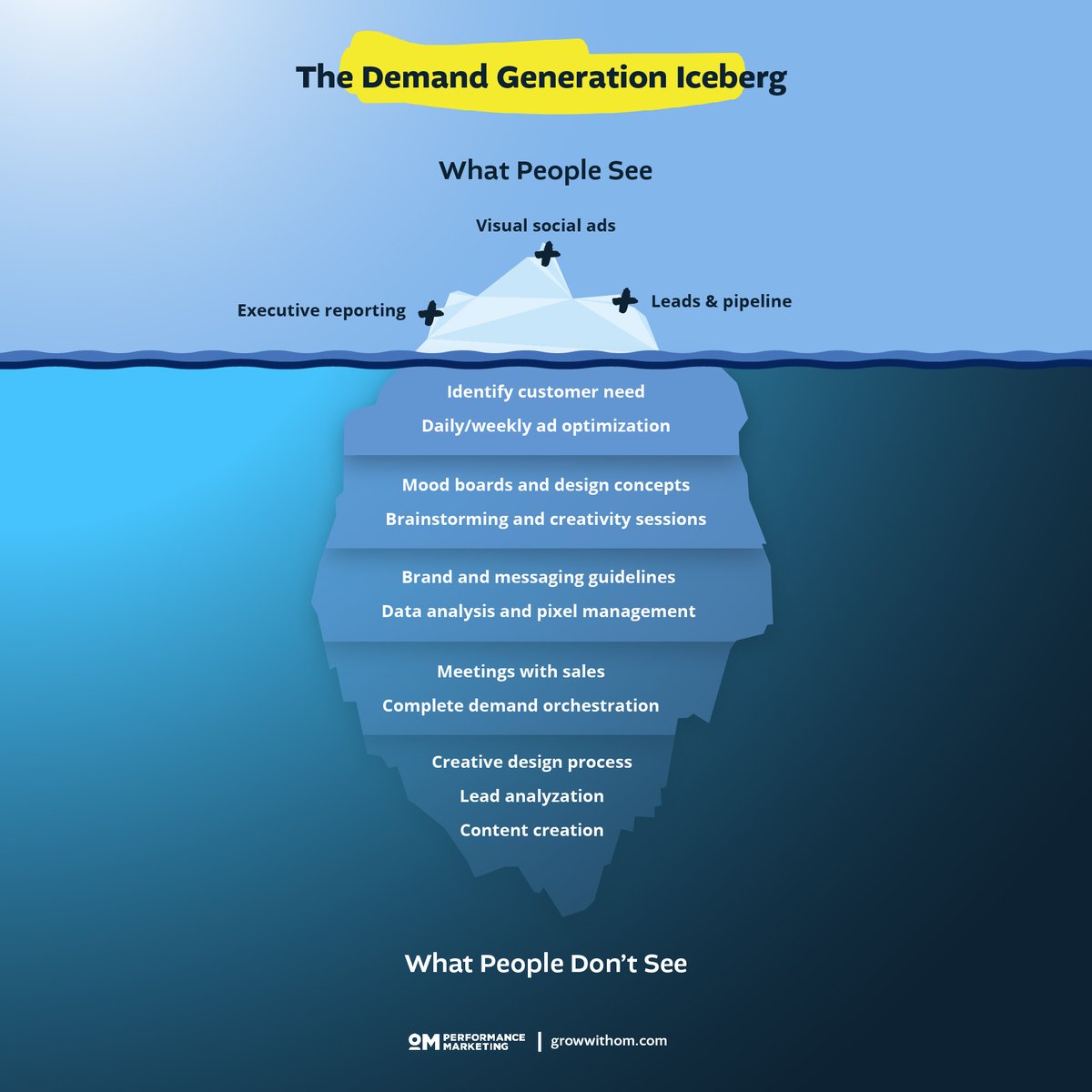
Your "digital basics" is one of the simplest, yet most overlocked components on a demand system, and will empower your strategy for years to come.
#GWOM 1.0
Intention makes marketing easy. Focus on the long game, and realize that data is powerful but if we try and measure everything, the analysis paralysis will get you first. Execute with intention, the results will follow.
Intention makes marketing easy. Focus on the long game, and realize that data is powerful but if we try and measure everything, the analysis paralysis will get you first. Execute with intention, the results will quickly begin to stand out.