United States Army Captain James H. Fields of Caddo, Texas, was awarded the Medal of Honor for his extraordinary actions on September 27, 1944, near Rechicourt, France.
Fields Graduated from Mirabeau Lamar High School in Houston, Texas, in 1939. He attended the University of Oklahoma until he was drafted into the U.S. Army in February 1942.
On September 27, 1944, he led the first platoon of Company A, located on top of Hill 265 near Rechicourt, France, for a counterattack on enemy positions the next morning. When he heard German voices that night, he told his platoon to dig in. In the morning, his platoon became pinned down by withering crossfire from two machine guns and the threat of a German tank. During the battle, half of the platoon became casualties. Calls over the radio to his unit's anti-tank officer went unanswered. Some of Fields' men wished to surrender because of the hopeless situation, and he replied, "I would rather die than surrender." In the ensuing battle, he instructed his only medic not to move; no sooner had he had given the order, the medic abandoned his position and was shot dead. Fields picked up a pistol to attempt to save the medic and, while doing so, was shot through the face, knocking out several teeth and almost severing his tongue. Undeterred, Fields obtained some gauze and wedged it in his mouth to limit the bleeding. He then picked up a .30 caliber machine gun and, firing from the hip, was able to silence both enemy machine guns. He then began giving orders for a counterattack. The men regained their courage and were able to repel the enemy. Fields refused to be evacuated until he reported his position and the enemy's strength.
James H. Fields was the first person decorated in the field with the Medal of Honor by General George S. Patton Jr. and was promoted to captain.
After the war, he was an independent oil operator. Fields is buried in the Houston National Cemetary in Houston, Texas.
#WeRememberThem
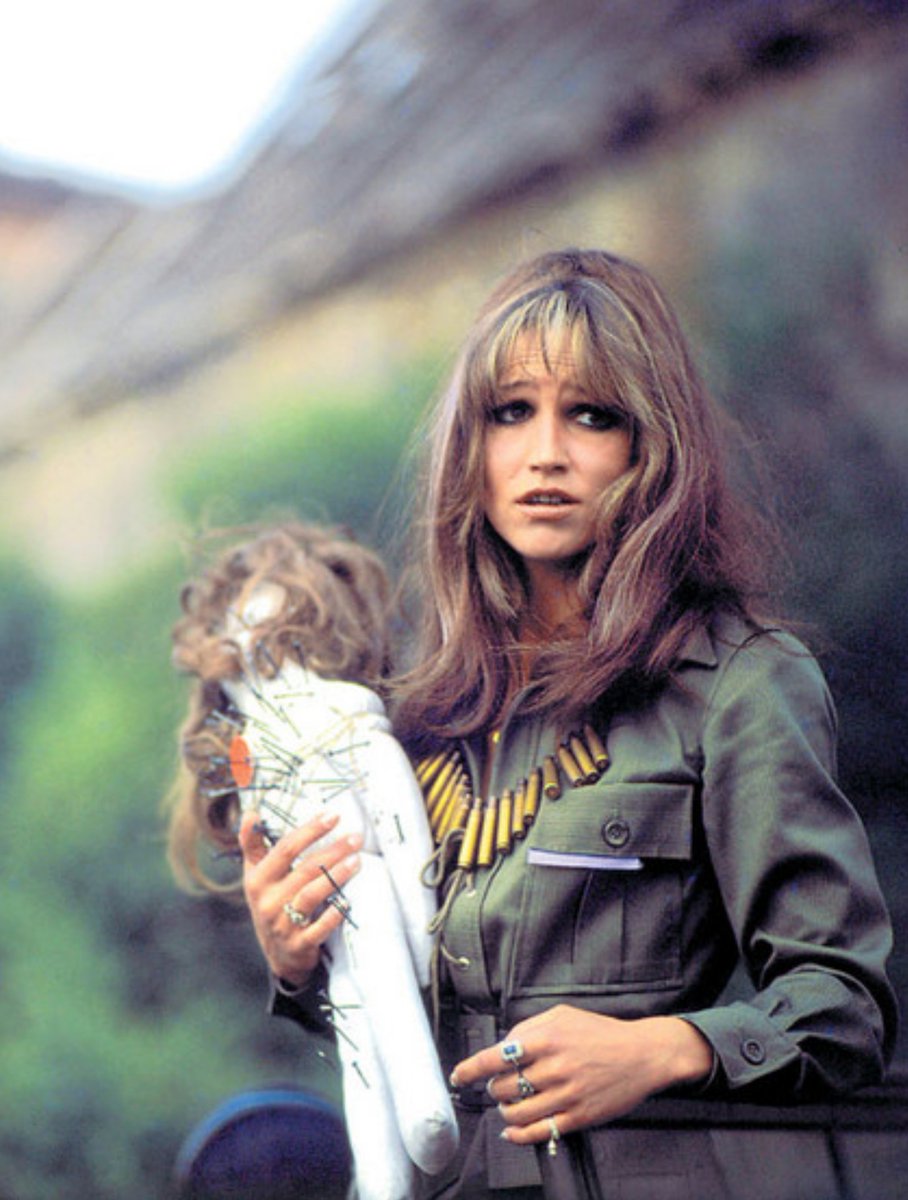
In February 1970, the Czechoslovak communist government officially banned iconic pop singer Marta Kubišová from performing and utilized falsified photomontages to destroy her reputation and silence her...
On November 21, 1989, a banned singer stepped onto a balcony overlooking Wenceslas Square. Below her, more than two hundred thousand citizens packed the cobblestones, demanding an end to communist rule. For nearly two decades, the Czechoslovak regime had systematically erased Marta Kubišová from national life, confiscating her records, purging her voice from broadcast archives, and forcing her into menial labor. In August 1968, her ballad "Prayer for Marta" had become the nation's sacred hymn of defiance when Soviet tanks crushed the Prague Spring. Now, as the crowd jingled brass keys in the afternoon chill, she stepped to the microphone and began to sing a cappella. The voice that a police state had spent twenty years trying to silence had returned to herald its collapse.
The song was born in the darkest hours of national catastrophe. In the summer of 1968, Czechoslovakia was alive with the political blossoming of the Prague Spring under Alexander Dubček, and Kubišová was the country's most celebrated pop star. Fronting the sensational trio Golden Kids alongside Václav Neckář and Helena Vondráčková, she had just won the Golden Nightingale award as the nation’s favorite female singer. But in the early hours of August 21, half a million Warsaw Pact troops and thousands of Soviet tanks invaded to crush the reforms. Amid the grief, composer Jindřich Brabec and lyricist Petr Rada rushed an unfinished song to the Czechoslovak Radio studios in Prague. On August 23, while Soviet armored vehicles patrolled the streets outside, Kubišová stepped into the recording booth. Borrowing a phrase from seventeenth-century philosopher Jan Amos Komenský—"The government of your matters shall return to you, o people"—the song, "Prayer for Marta," captured the soul of a traumatized nation. Broadcast over clandestine radio transmitters, it became the unofficial anthem of unarmed resistance.
When Gustáv Husák assumed power to enforce Soviet-mandated "normalization," the regime set out to silence every symbol of the Prague Spring. While other artists compromised with censors to protect their careers, Kubišová refused to recant her opposition to the occupation. In 1969, the public defiantly voted her the Golden Nightingale once again, forcing embarrassed officials to hand her the trophy in private. To destroy her without creating a political martyr, the secret police, the StB, engineered a venomous smear campaign. In early 1970, state managers circulated forged pornographic photomontages displaying her face spliced onto nude bodies, falsely accusing her of moral depravity to justify revoking her performance license. Demonstrating extraordinary courage, Kubišová sued the state concert agency for defamation and won, proving the photographs were crude fakes. The legal victory meant nothing to the party. In February 1970, authorities permanently barred her from all public performances, melted down her vinyl records, and erased her tapes from state archives.
#archaeohistories
Aristides de Sousa Mendes was a Portuguese diplomat who saved an estimated 30,000 refugees—including about 10,000 Jews from Nazi terror during WWII. Driven by his moral conscience and religious convictions, Sousa Mendes chose to disobey his government. He even helped refugees cross the border into Spain when officials tried to block them...
In the sweltering summer of 1940, thousands of desperate families flooded the streets of Bordeaux, France. German troops were advancing rapidly from north, and parents clutched their sleeping children close, waiting on the sidewalks for a miracle in form of a paper visa.
Without that single official stamp, an entire population faced the risk of immediate capture and death. With it, families could cross the border into neutral Portugal and find safety.
Standing between those desperate souls and total destruction was a wealthy, high-ranking diplomat: Aristides de Sousa Mendes. He served as Portugal’s Consul General in Bordeaux, was raising fourteen children with his wife, and served his country with absolute dedication. Yet, rules of his profession suddenly demanded a ruthless cruelty.
Portuguese dictator, Salazar, had issued a strict order to all foreign consulates known as "Circular 14." The document explicitly mandated that diplomats deny asylum to anyone seeking it, specifically targeting Jewish families and stateless refugees.
Among those waiting in line was Rabbi Chaim Kruger, a courageous leader who had already survived a harrowing escape from Poland. Disturbed by the suffering he witnessed outside his window, Aristides invited the rabbi inside and offered him safe passage for his immediate family. But the rabbi shook his head and refused to abandon the crowd. "I cannot accept a visa only for my family while thousands of my brothers and sisters are left behind to die," the rabbi said.
Those words tore at Aristides’ soul. Deeply shaken, consul retreated to his private quarters, remaining shut away for three agonizing days. He neither ate nor slept, torn between the desire to save thousands of innocent lives and the certainty that he would ruin his own family's future.
Had he chosen to disobey the government, he would have lost his career, his prestige and his financial security. On the morning of June 17, he emerged from the room with his hair now streaked with gray and a clear goal in mind.
He went straight to his office and issued an extraordinary order to his staff. "From now on, I will grant visas to everyone," Aristides told his stunned aides. "Nationality, race, and religion no longer matter. I would rather stand with God against man than with man against God."
What followed was a relentless rescue operation driven by pure compassion. Aristides, his wife Angelina, his older children, and Rabbi Kruger worked ceaselessly, day and night. They stamped every passport presented to them at the fastest speed humanly possible.
When government agents were sent to bring him home, Aristides went personally to the border crossings with Spain. He physically accompanied the refugees past the gates, boldly feigning official authority so the guards would let the crowd pass safely.
The retaliation against him was total and ruthless. Upon his return home, Salazar stripped him of his title, revoked his pension, and forbade him from practicing law. His children were barred from attending university or finding employment. The family lost everything and ended up having to eat at a local soup kitchen—the very same charitable service Aristides had helped fund for arriving refugees. His beloved family estate was seized by creditors and fell into ruin.
Aristides died in 1954 wearing a borrowed suit; in the eyes of his government, he was buried as a pauper. Yet, he never regretted choosing human life over personal wealth. Before he died, he left his children one final lesson:
"I could not have acted otherwise; therefore, I accept with love everything that has happened to me."
#archaeohistories
Stunning archival footage of the first tests of the Lancia Delta S4 Group B prototype in 1984 at the Circuito del Parco La Mandria in Turin. That’s how a true monster was born! 💀 🔥
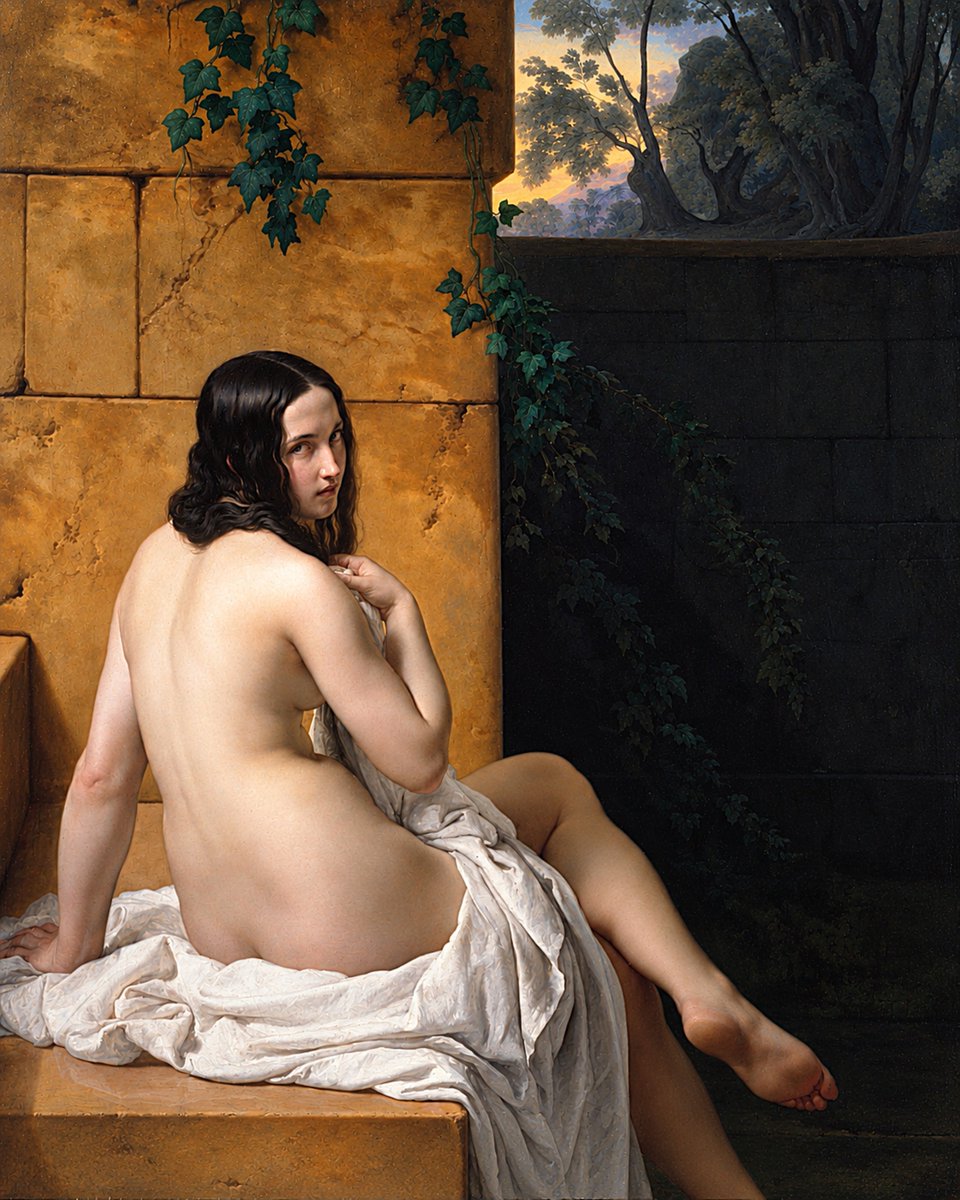
"Hope Comforting Love in Despair"
original oil painting on canvas
Hope (Elpis) shelters Love after the ills of Pandora’s jar have already escaped. The landscape’s dark hills and remaining fruit mark isolation alongside a last trace of sweetness. The painting thus shows Hope staying with Love in despair.
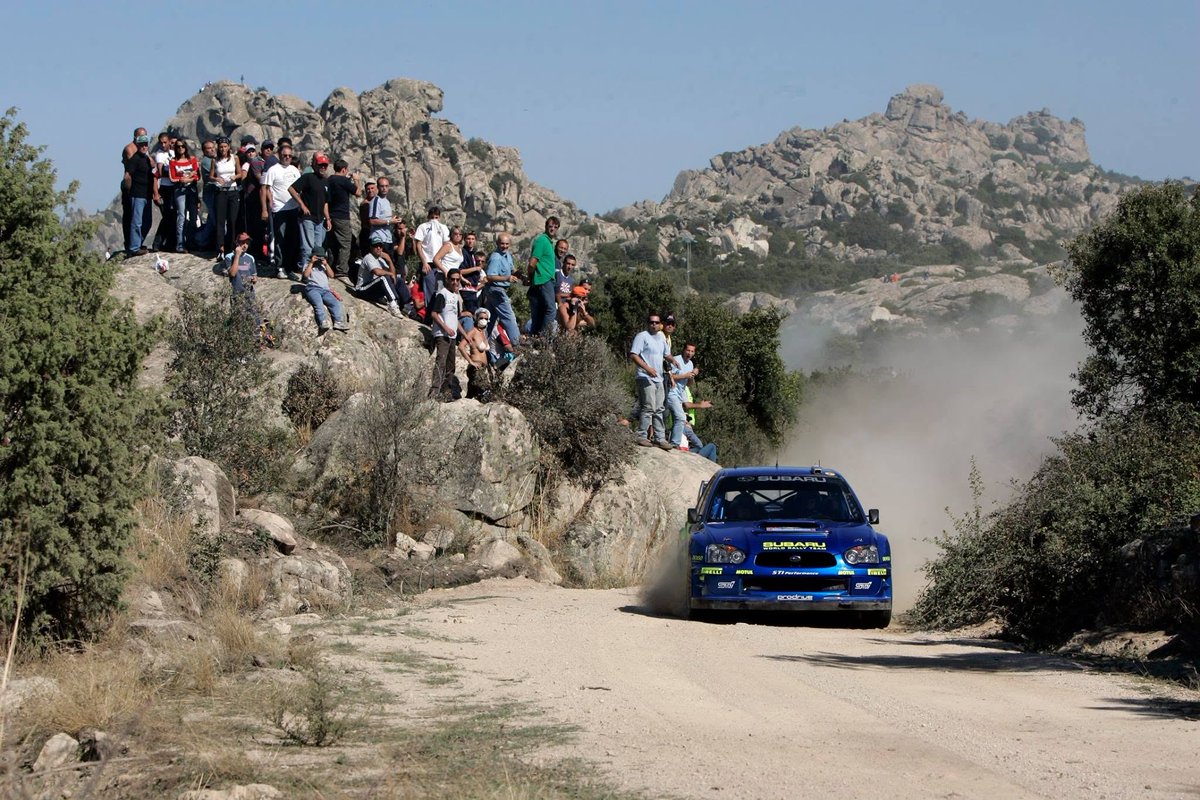
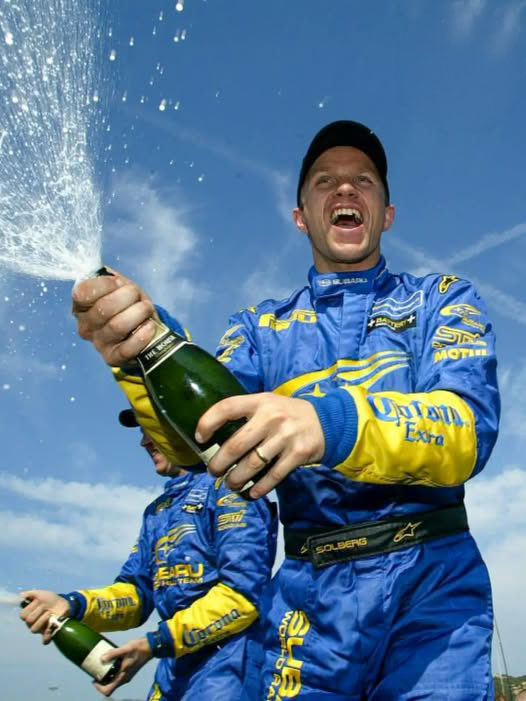
It’s the surprise early WRC finale next week at @Rally_d_Italia 🇮🇹 and with 3 drivers still in the title fight it’s going to be an exciting week I’m sure!
It’s a rally I always loved on such a beautiful island - and I am also proud to be the winner of the first ever edition of the rally back in 2004! 🏆
1990: Donnelly‘s horrific crash
#OnThisDay 28 September, Martin Donnelly‘s short but promising career came to a devastating end when he crashed his Lotus during practice for the 1990 Spanish Grand Prix. He hit a barrier at 140 mph, causing his car to disintegrate and leaving him thrown onto the track, still strapped into his seat. Onlookers initially feared he had been killed. Medical assistance took three minutes to arrive, and he was stabilised after an hour, then airlifted to the hospital with severe head injuries and broken legs. Donnelly endured a long recovery, suffering from kidney failure and facing the potential loss of his right leg. Although he eventually recovered, he never raced in F1 again.
#f1 #formula1