Reimaginando y apasionado por el futuro de nuestros niños y niñas colombianos. Pediatra, Fellow AAP, becario ICCPfizer 2014 y Dana-Farber. Opiniones personales
¡Es tiempo de quitarse los disfraces! Y enseñarle a tu hijo a emocionarse! Un pequeño artículo para revivir nuestras emociones. #crianzaconsciente#nuestrosniñosprimero
@alejo_sanmo Yo no estoy de acuerdo. Si ahora los niños se tienen que levantar entre 4:30 y 5:30 no me imagino levantándose entre 3:30 y 4:30 hora real. Ahora bien la cronobiología existe por algo!
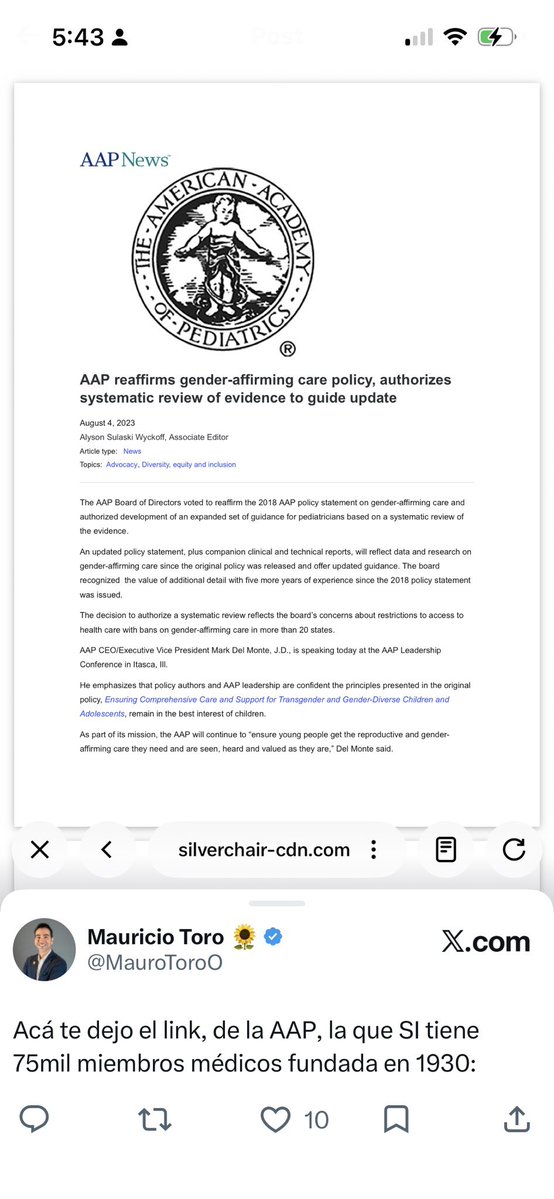
@MauroToroO@CarolBordaA Afortunadamente los feligreses y miembros de las AAP no somos bobos. NO dice lo que Ud afirma y colegas de la AAP (te corregimos) corroboran en que no hay un position statement por la AAP. Mentirosito si no.
@MauroToroO@CarolBordaA Eso es FALSO. La AAP y no APP como dices solo dice que se debe revisar la evidencia disponible y revisiones sistemáticas sin sacar ninguna guía ni recomendación al respecto. NO mientas mauricio y mucho menos adoptes banderas que no te mereces llevar!
Research shows playing in the dirt isn't just fun — it's critical to health.
And studies show it transforms children's immune systems in just 28 days.
A groundbreaking experiment in Finland replaced gravel and asphalt in nursery playgrounds with patches of forest floor, complete with mosses, leaf litter, and wild undergrowth.
The results were staggering: within just 28 days, children who played in these rewilded yards developed more diverse skin and gut microbiomes along with higher levels of regulatory T-cells. This suggests that the biodiversity hypothesis—the idea that our sterile urban environments are linked to rising allergy and autoimmune rates—is a tangible reality we can change by simply reintroducing nature's microbial network to our daily lives.
This shift from aesthetic gardening to functional micro-biodiversity is the driving force behind modern rewilding efforts. Whether you manage a sprawling backyard or a small city balcony, introducing native leaf litter, moss, and living substrates serves as a direct investment in human health. By replacing sterile surfaces like gravel or rubber with living ones, we are doing more than creating wildlife corridors; we are rebuilding the microbial foundation essential for human resilience. Embracing natural complexity—dirt and all—is a foundational step toward a healthier future for both our families and the planet.
source: Roslund, A. S., Puhakka, R., Grönroos, M., Nurminen, N., Oikarinen, S., Gazali, A. M., ... & Sinkkonen, A. (2020). Biodiversity intervention enhances immune regulation and health-associated commensal microbiota among daycare children. Science Advances.