You have reached the end!
Thank you for reading!
I hope this thread was able to add 1% value to your life 🙏🏻
If you want to see similar content then:
— Like and retweet the first tweet
— Follow me @mindphilosophy4
A grandmother in Tarrant, Alabama, was caught trying to steal eggs from a Dollar General to feed her hungry family after two days without food.
She had only $1.25 but needed more for a carton. Instead of arresting her, Officer William Stacy bought her the eggs and asked her not to shoplift again. The moment was caught on video and went viral.
The community responded with two truckloads of donated groceries delivered to her home.
10 years ago I herniated a disc in my back.
- Pain
- Sciatica
- Inability to train
But now I deadlift over 220kgs.
Here are the 4 Simple Exercises I used to get my back strong and pain free:
= Thread =
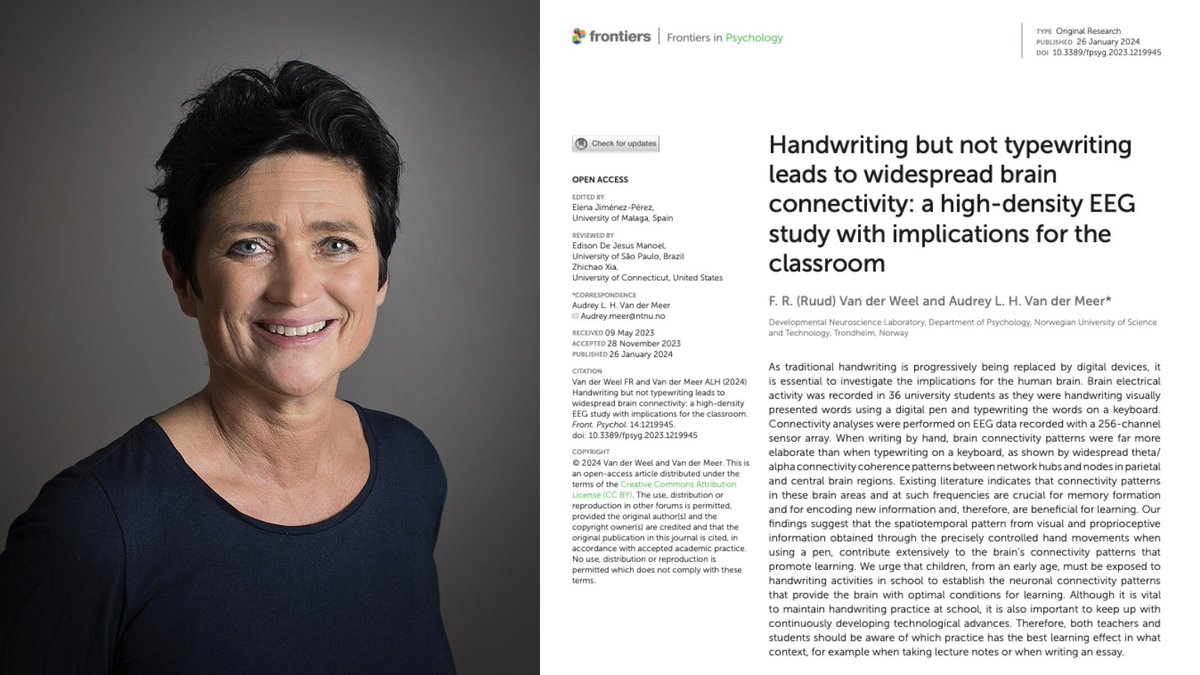
A Norwegian neuroscientist spent 20 years proving that the act of writing by hand changes the human brain in ways typing physically cannot, and almost nobody outside her field has read the paper.
Her name is Audrey van der Meer.
She runs a brain research lab in Trondheim, and the paper that closed the argument was published in 2024 in a journal called Frontiers in Psychology. The finding is brutal enough that it should have changed every classroom on Earth.
The experiment was simple. She recruited 36 university students and put each one in a cap with 256 sensors pressed against their scalp to record brain activity. Words flashed on a screen one at a time.
Sometimes the students wrote the word by hand on a touchscreen using a digital pen, and sometimes they typed the same word on a keyboard. Every neural response was recorded for the full five seconds the word stayed on screen.
Then her team looked at the part of the data most researchers had ignored for years, which is how different parts of the brain were communicating with each other during the task.
When the students wrote by hand, the brain lit up everywhere at once.
The regions responsible for memory, sensory integration, and the encoding of new information were all firing together in a coordinated pattern that spread across the entire cortex. The whole network was awake and connected.
When the same students typed the same word, that pattern collapsed almost completely.
Most of the brain went quiet, and the connections between regions that had been alive seconds earlier were nowhere to be found on the EEG.
Same word, same brain, same person, and two completely different neurological events.
The reason turned out to be something nobody had really paid attention to before her work. Writing by hand is not one motion but a sequence of thousands of tiny micro-movements coordinated with your eyes in real time, where each letter is a different shape that requires the brain to solve a slightly different spatial problem.
Your fingers, wrist, vision, and the parts of your brain that track position in space are all working together to produce one letter, then the next, then the next.
Typing throws all of that away. Every key on a keyboard requires the exact same finger motion regardless of which letter you are pressing, which means the brain has almost nothing to integrate and almost no problem to solve.
Van der Meer said it plainly in her interviews.
Pressing the same key with the same finger over and over does not stimulate the brain in any meaningful way, and she pointed out something that should scare every parent who handed their kid an iPad.
Children who learn to read and write on tablets often cannot tell letters like b and d apart, because they have never physically felt with their bodies what it takes to actually produce those letters on a page.
A decade before her, two researchers at Princeton ran the same fight using a completely different method and ended up at the same answer. Pam Mueller and Daniel Oppenheimer tested 327 students across three experiments, where half took notes on laptops with the internet disabled and half took notes by hand, before testing everyone on what they actually understood from the lectures they had watched.
The handwriting group won by a wide margin on every question that required real understanding rather than surface recall.
The reason was hiding in the transcripts of what the two groups had actually written down.
The laptop students typed almost word for word, capturing more total content but processing almost none of it as they went, while the handwriting students physically could not write fast enough to transcribe a lecture in real time, which forced them to listen carefully, decide what actually mattered, and put it in their own words on the page.
That single act of choosing what to keep was the learning itself, and the keyboard had quietly skipped the choosing and skipped the learning along with it.
Two studies. Two countries. Same answer.
Handwriting makes the brain work. Typing lets it coast.
Every note you have ever typed instead of written went into your brain through a thinner pipe. Every meeting, every book highlight, every idea you captured on your phone instead of on paper was processed at half depth.
You did not forget those things because your memory is bad. You forgot them because typing never woke the part of the brain that would have made them stick.
The fix is the thing your grandmother already knew.
Pick up a pen. Write the thing down. The slower road is the faster one.
What are your thoughts on this list?
Dr. Vonda Wright brings up a lot of interesting + helpful points.
If you enjoyed this thread, consider giving it a repost:
BEST YOUTUBE CHANNELS TO GET FIT WITHOUT A GYM:
1. Bodyweight Training → Calisthenics Movement
2. Home Workouts → FitnessBlender
3. Yoga for Beginners → Yoga With Adriene
4. Mobility and Flexibility → Tom Merrick
5. HIIT Training → Sydney Cummings Houdyshell
6. Street Workout → Hannibal For King
7. Running and Cardio → Global Triathlon Network
8. Nutrition Basics → Jeff Nippard
9. Fat Loss Science → Renaissance Periodization
10. Beginner Strength → Athlean X
11. Stretching and Recovery → Bob and Brad
12. Mental and Physical Balance → Movement by David
13. Functional Fitness → THENX
14. Female Fitness → Heather Robertson
15. Sports Science → Squat University
16. Habit Building Around Fitness → Thomas DeLauer
17. Long Term Athletic Development → Knees Over Toes Guy
18. Pilates at Home → Move With Nicole
19. Senior Fitness → HASfit
20. Kids and Family Fitness → Cosmic Kids Yoga
21. Martial Arts at Home → Howcast Martial Arts
22. Jump Rope Training → Jump Rope Dudes
23. Dance Fitness → The Fitness Marshall
24. Swimming Technique → Swim University
25. Cycling at Home → Global Cycling Network
26. Mindful Movement → Boho Beautiful
27. Posture Correction → Upright Health
28. Core Strength → Caroline Girvan
29. Parkour Basics → Storror
30. Boxing at Home → FightTips
31. Breathwork and Recovery → Wim Hof Method
32. Injury Prevention → Physical Therapy Video
33. Meal Prep for Fitness → Remington James
34. Sleep and Recovery Science → Andrew Huberman Clips
35. Outdoor Fitness → Hybrid Calisthenics
36. Body Recomposition → Greg Doucette
37. Intermittent Fasting → Jason Fung Lectures
38. Mental Fitness and Discipline → David Goggins Clips
39. Gymnastics Basics → GMB Fitness
40. Foam Rolling and Myofascial Release → The Ready State
41. Resistance Bands Training → Anabolic Aliens
42. Postpartum Fitness → Mama Lion Strong
43. Hiking and Outdoor Conditioning → Andrew Skurka
44. Sports Specific Training → Overtime Athletes
45. Hormone and Metabolism Health → Rhonda Patrick Clips
46. Plant Based Fitness → Simnett Nutrition
47. Weight Loss Mindset → Jordan Syatt
48. Balance and Coordination → GMB Elements
49. Cold Exposure and Fitness → Morozko Forge Clips
50. Complete Beginner Fitness Guide → Natacha Océane
You sit 5+ hours a day.
Your lower back is screaming by 3pm.
After 17 years coaching executives and surgeons, here are 5 exercises I prescribe to reverse desk damage in under 10 minutes:
= Thread =
In his 20s he trained for looks. Heavy weight. Maximum size. No structure.
At 54 he trains for longevity.
His words: "I just wish I would've listened to the people who were trying to give me this kind of advice 20 years ago."
If you die without a plan...
- The government takes 40% in tax
- Probate court costs $100k+
- Your kids get the scraps
If you love your family, here's every document you need to protect them:
(from a CPA & father of two)
1) Emergency Access List
This should include:
-> All bank account numbers
-> Investment account logins
-> Life insurance policies
-> 401k/IRA beneficiaries
-> Safe deposit box location
-> Password manager master code
Keep a digital & physical version for safety...
And make sure your spouse has access.
2) Legal Documents
-> Will (name guardians for kids)
-> Durable Power of Attorney
-> Healthcare Power of Attorney
-> Living Will/Healthcare Directive
Setting all of this up costs about $500...
($1,500 with an attorney)
But without them, the state decides everything.
3) Money Protection
Your family will need time to mourn.
Make sure they can do it without going broke:
-> Term life insurance (10x income)
-> Emergency fund (6-12 mo in a HYSA)
-> Retirement accounts with spouse access
4) The "First 48 Hours" Sheet
Write down clear instructions for your family:
Call this attorney: [Name/Number]
Call this CPA: [Name/Number]
File life insurance claim here: [Details]
Don't touch investments for 6 months
All bills are on autopay from [Account]
Grief destroys decision making.
This protects them.
5) Business Owner Addition
If you have a business, set up:
-> Buy sell agreements
-> Key person insurance
-> Business succession plan
-> Separate LLC owned by trust
If your company can't survive without you...
It's a 9-5 with extra steps.
6) Trust Setup
A proper trust can save your family $400k+ in probate costs.
But 90% of them are set up wrong:
-> Assets never get transferred in
-> Beneficiaries aren't updated
-> Pour-over will is missing
Here's how to fix that:
"Bulletproof" Trust System:
1) Revocable Living Trust
-> Avoids probate completely
-> Keeps finances private
-> Protects kids' inheritance
2) Pour-Over Will
-> Catches forgotten assets
3) Guardian Designation
-> Who raises your kids
-> How they get paid
Setting this up takes a weekend...
But ignoring it could cost your family everything.
So start before you're ready...
Because no one plans on dying.
Hope this helps!
Share with your spouse if you want to set this up...
And follow me for more 🤝🏻
Fun fact:
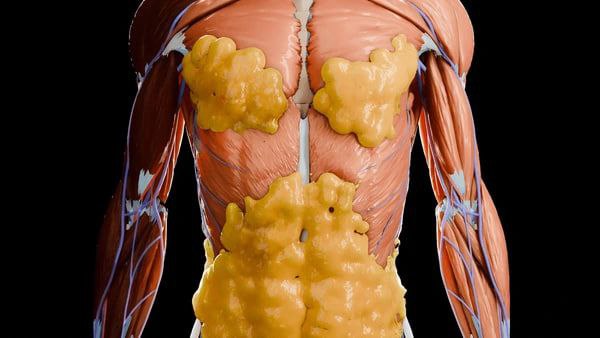
Cardio doesn't burn fat.
With 6 years of experience, this is what I would do to lose +20 pounds of belly fat.
~Save this and do what really works to lose fat~
If this felt uncomfortably accurate, you can white-knuckle another year, or fix the root.
You’ll learn why stress snaps back, how to spot hidden loops, and how to reset your system for real.
Join: https://t.co/nuLrEVIvTY
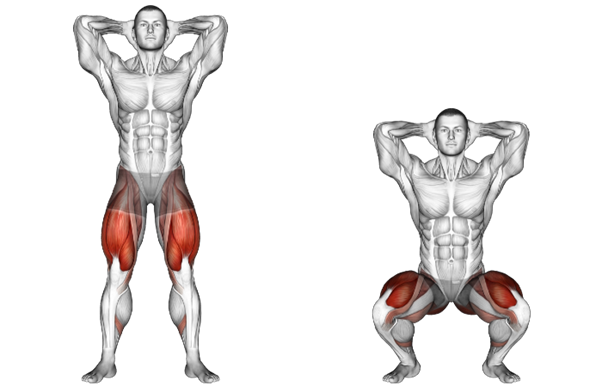
Ten squats every 45 minutes = 10,000 steps.
A study from the University of Texas found that doing just 10 squats every hour can actually control blood sugar better than going for a full 30-minute walk.
When you sit all day, your blood sugar spikes, your circulation slows, and your biggest muscles - your legs and glutes - basically switch off.
But 10 squats wakes everything up instantly.
Your leg muscles pull glucose out of your bloodstream, your circulation improves, and your metabolism switches back on.
That’s why these micro-bursts of movement deliver such powerful benefits.
In fact, research shows that ten squats every 45 minutes can give you similar cardiometabolic benefits to hitting 10,000 steps per day.
This strengthens your heart, keeps your joints moving, and prevents the dangerous blood sugar spikes that lead to insulin resistance.
So even if you don’t have time for long walks or full workouts, stand up…
Do 10 squats every 45 minutes and watch what happens to your energy, strength, and metabolic health.
Cortisol is aging you faster than junk food.
Wrinkles, sleep loss, poor recovery, low libido.
Here are 8 natural ways to reduce high cortisol and stay young🧵
1. Saunas