The Trump administration reportedly stepped in to cancel a meeting between New York City Mayor Zohran Mamdani's office and Iran.
"It is unconscionable that a New York City official would even consider meeting with the Iranian Ambassador to the U.N., a man who consistently works to undermine U.S. interests and whitewash his regime's crimes against the United States, our allies, and Iran's own citizens," State Department official said.
The State Department said a senior official in Mamdani's office planned to speak with an Iranian ambassador as the US and Iran resumed military strikes over the weekend.
Sad news. I broke up with my girlfriend Lorraine because I was seeing another girl named Claire Lee.
But the good news is that I can see Claire Lee now Lorraine is gone
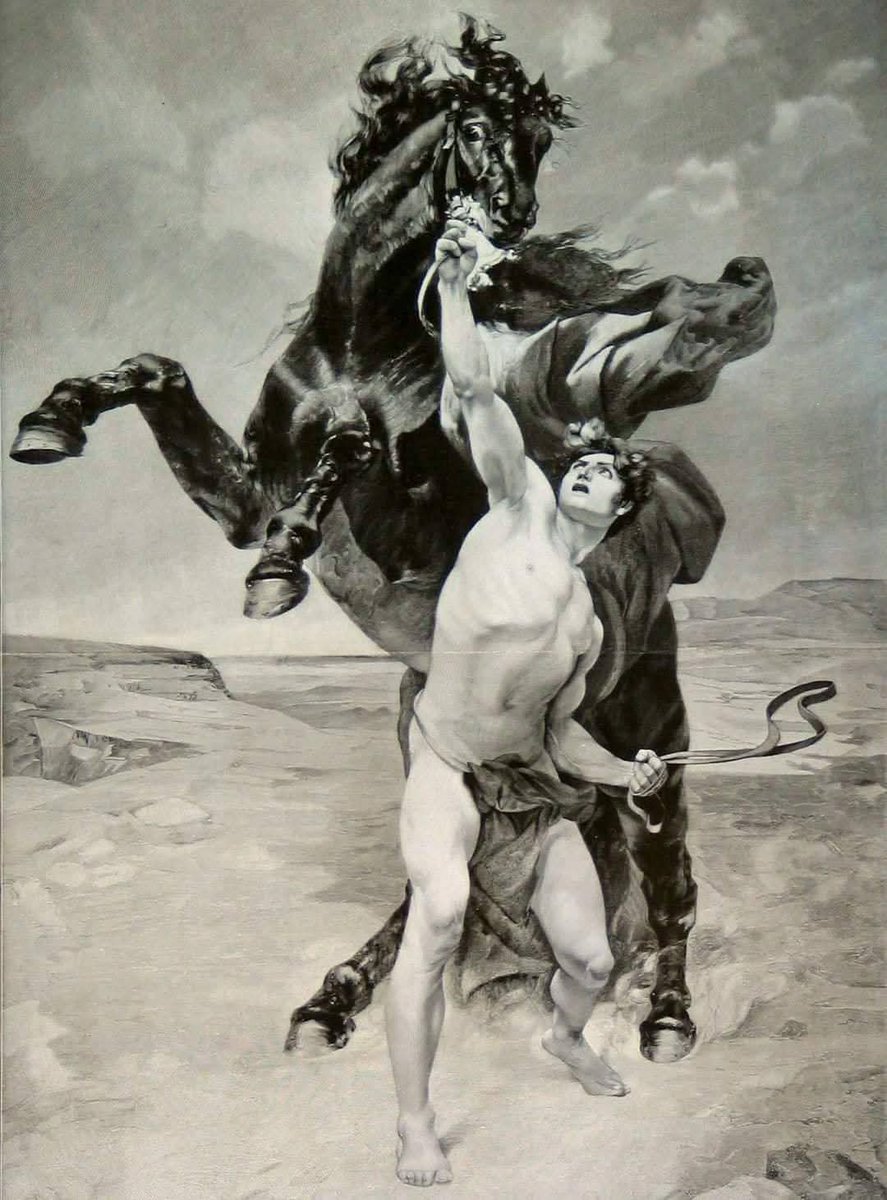
Bucephalus (355-326 BC)
The most famous legendary war horse of antiquity, owned by Alexander the Great. He accompanied Alexander the Great on his campaigns from Macedonia to India. He died after the Battle of the Hydaspes in northern India and was buried in Bucephalus. Bucephalus is a city founded by Alexander the Great in memory of Bucephalus, located in present-day Pakistan and called Jhelum.
According to Plutarch, Bucephalus was one of the horses brought to Macedonia from Thessaly for training...
In 344 BC, Philoneicus, a horse trader, offered it to King Philip for sale. When the horse was presented to Philip, it became restless and could not be controlled, so Philip abandoned the purchase. However, Alexander, then 13 years old, offered the horse the chance to train it. Realizing the horse was restless because it was afraid of its own shadow, Alexander turned its head toward the sun, preventing the horse from seeing its own shadow, thus calming it.
According to Plutarch, Philip told his son, "Go seek another land, my son. This one is too small for you."
Alexander, who showed Bucephalus affection and affection, earned his loyalty and forged a strong bond between him and Bucephalus.
When Bucephalus was stolen by thieves in the city of Sadrakarta, Alexander warned the locals that the horse must be returned or the settlement would be razed to the ground. The thieves then returned the horse. Instead of punishing the thieves, Alexander rewarded them and allowed them to return.
Bucephalus, one of the legendary horses of the ancient world, has also inspired artists. The Louvre Museum houses a special exhibition of paintings of Alexander and Bucephalus. In the 2004 film "Alexander the Great," Bucephalus was portrayed by a Friesian horse. Bucephalus is also the name of a fantastical horse in the film The Adventures of Baron Munchausen.
Depicted as a long-maned, black, courageous, and massive-headed animal, Bucephalus has been the subject of numerous mythological tales, even being exalted above Pegasus in some myths. One myth mentions a Delphic oracle telling Philip that whoever succeeded in riding this horse would rule the world.
#archaeohistories
Elon Musk: Everything is solar power. The rest is noise.
“The sun is about 99.8% of the mass of the solar system. Jupiter's about 0.1% and everything else is in the remaining 0.1%, and we are much less than 0.1%.
So, if you burnt all of the mass of the solar system, then the total energy produced by the sun would still round up to 100%. If you just burnt Earth, the whole planet, and burnt Jupiter, which is very big and quite challenging to burn, turn Jupiter into a thermonuclear reactor, the sun is 99.8% of the mass of the solar system and everything else is in the miscellaneous category. Basically, no matter what you do, total energy produced in our solar system rounds up to 100% from the sun. You could even throw another Jupiter in, so we're going to snag a Jupiter from somewhere else, you could teleport two more Jupiters into our solar system, burn them, and the sun would still round up to 100%. As long as you're at 99.6%, you're still rounding up to 100%. Maybe that gives some perspective of why solar is really the thing that matters.
And, as soon as you start thinking about things at a grander scale, like Kardashev Scale 2 civilizations, it becomes very, very obvious. I'm not saying anything that's new, by the way. Anyone who studies physics has known this for a very long time. In fact, Kardashev, a Russian physicist who came up with this idea, I think, in the 1960s, just as a way to classify civilizations, where Kardashev Scale 1 would be, you've harnessed most of the energy of the planet, Kardashev Scale 2, you've harnessed most of the energy of your sun, Kardashev 3, you've harnessed most of the energy of a galaxy.
Now we're only about 1% or a few percent of Kardashev Scale 1 right now, optimistically. But as soon as you go to Kardashev Scale 2, where you're talking about the power of the sun, then you're really just saying everything is solar power and the rest is in the noise. Like, the sun produces about a billion times, or call it well over a billion times more energy than everything on Earth combined.”
All-In Podcast, October 31, 2025
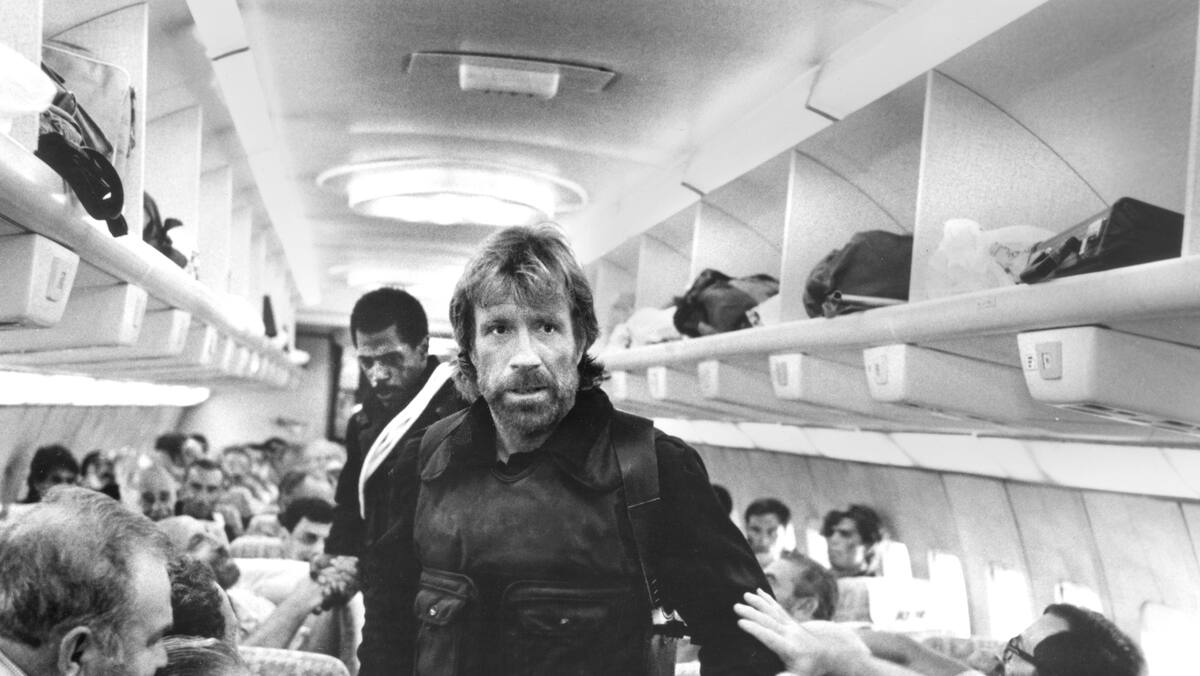
I'm on a plane and the lunch choices are: white meat chicken or German
sausage.
Unfortunately, I'm seated in the last
row.
I'm hoping for the breast, but preparing for the wurst.