I get a tad political on this account. If you’re here because of my misc replies, I suggest not following me if you mind the edginess and niche political takes.
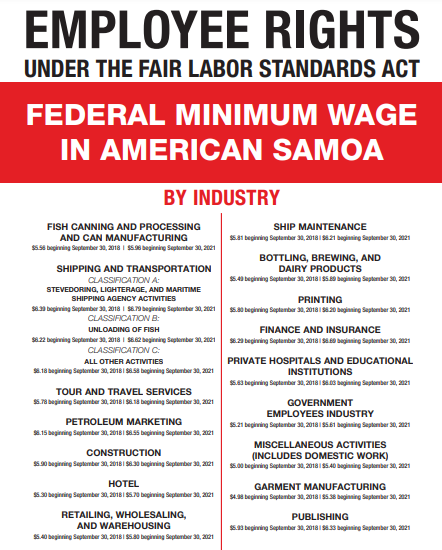
In 2007 Congress ordered American Samoa’s minimum wage to rise by 50 cents an hour every year until it matched the federal level. The territory’s economy was small, export-dependent and built around low-wage tuna canning. The increases tested what happens when a wage floor is imposed far above local productivity.
American Samoa’s two canneries employed a large share of the private workforce at wages well below the mainland rate. They competed with plants in Thailand and elsewhere where labour costs were a fraction of even the old Samoan level. The mandated rises quickly narrowed that gap. By 2009 one of the two canneries had closed and shifted production elsewhere. GAO data show tuna-canning employment fell 55 percent between 2009 and 2010; overall employment in the territory dropped 14–19 percent in the surrounding years. Employers reported layoffs, hiring freezes and cost-cutting, and attributed most of those actions largely to the wage increases.
Workers who remained employed received higher hourly pay. Average inflation-adjusted earnings across the economy, however, declined, because fewer people were working and hours were cut. The surviving cannery continued under pressure; subsequent minimum wage increases were later delayed precisely because the economic damage had become clear. The industry that had provided the main source of private employment and export earnings contracted sharply.
The episode illustrates the standard adverse effects of a minimum wage set above the market rate in a low-productivity setting. Employers face higher labour costs they cannot fully pass on in competitive export markets, so they reduce employment, automate, or relocate. Those who lose jobs forgo the lower wage they previously earned; those who keep jobs gain, but the net effect on total earnings and employment is almost always negative. Raising the legal floor for wages does not raise the value of work. The real minimum wage is still zero.