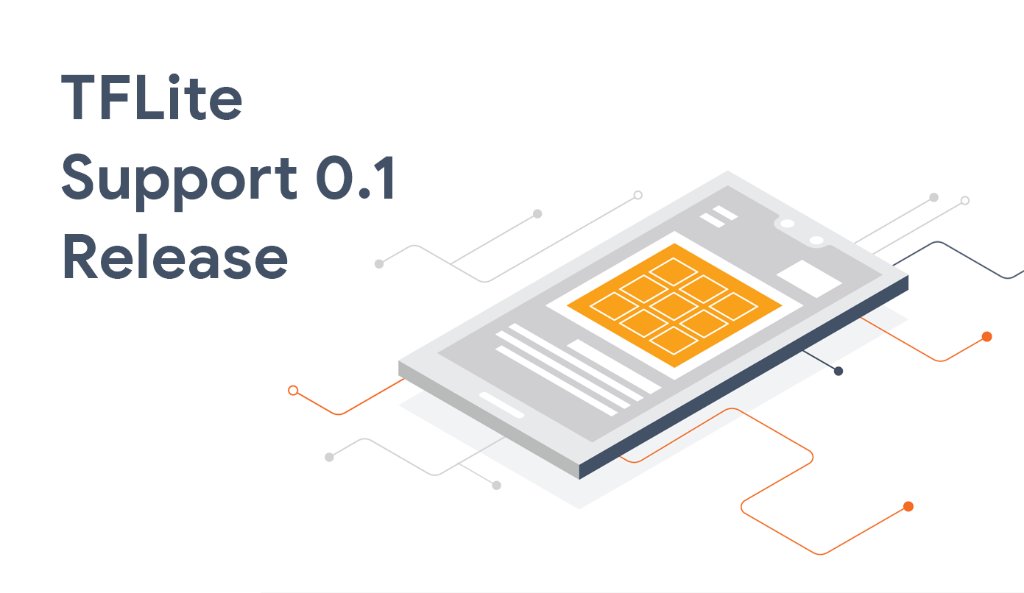
🌟 The first release (0.1) of TFLite Support!
Check out this toolkit that makes deploying TFLite models on mobile devices much easier. It works cross-platform with Java, Python, C++, and Swift APIs.
Read more here → https://t.co/2iKAJcVr4E
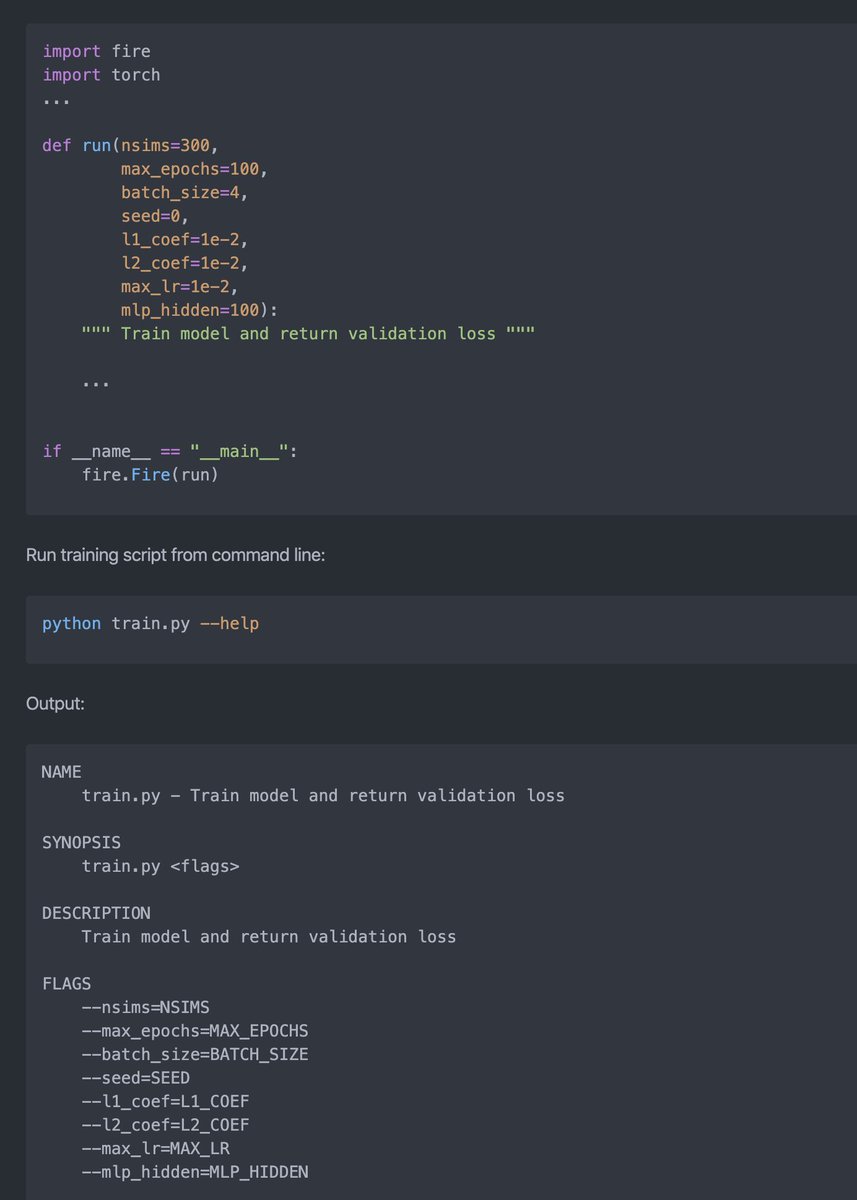
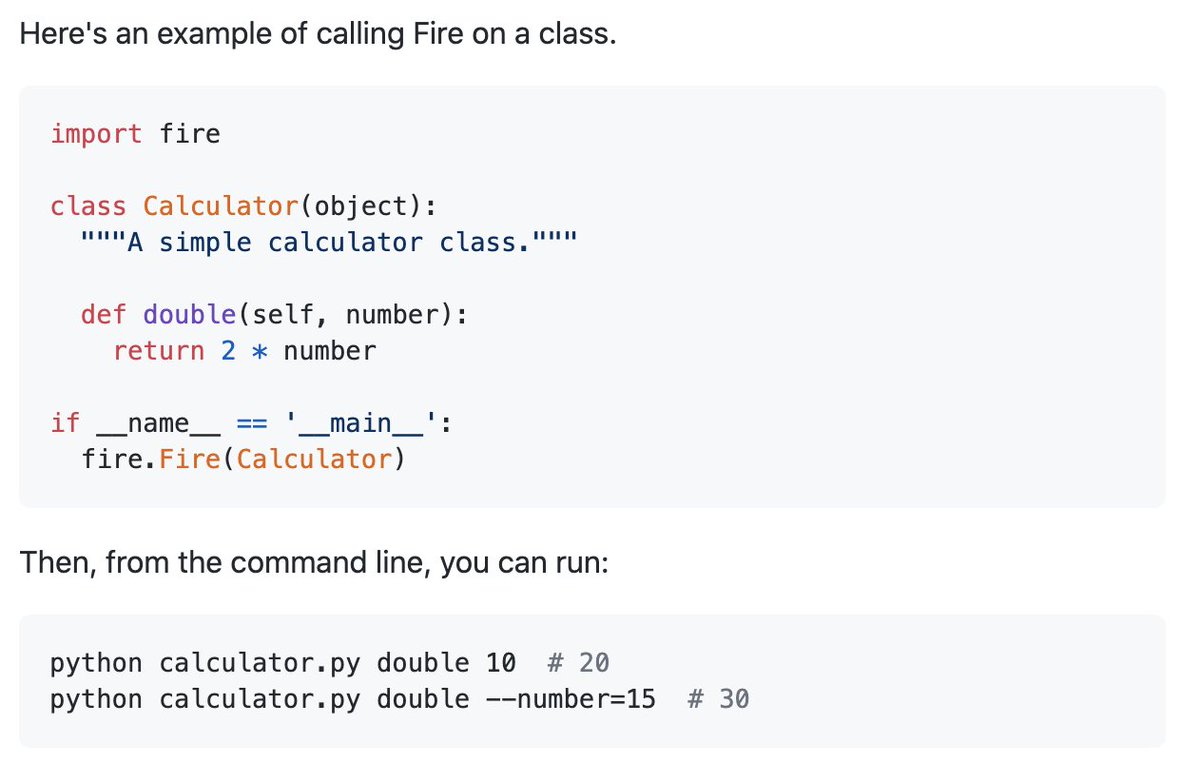
Just learned about Python Fire, and wish I had heard about it years ago. Seems like an amazing library for productivity!
Fire turns any Python object—function, class, etc—into a command line interface:
Gone are the days of argparse.ArgumentParser and sys.argv...
Are you neuro phd/postdoc in a Swiss university?
Are you motivated to organise and shape events for like-minded neuro-ERC folks?
If yes PM us, we are looking to get our team growing with volunteers! 💗🧠(please RT 🙏)
🏆 Trending post of the day is Test-Time Data Augmentation by @dufourp83 - how to properly implement test-time image data augmentation in a production environment with limited computational resources.
https://t.co/9U5dwCXO9J
✨New tutorial is out ✨
Learn how to use test-time data augmentation (TTA) to improve predictions in a production environment with limited computational resources.
Experiment yourself with the @GoogleColab notebook with #keras and #tensorflow!
https://t.co/prkuXsMetX
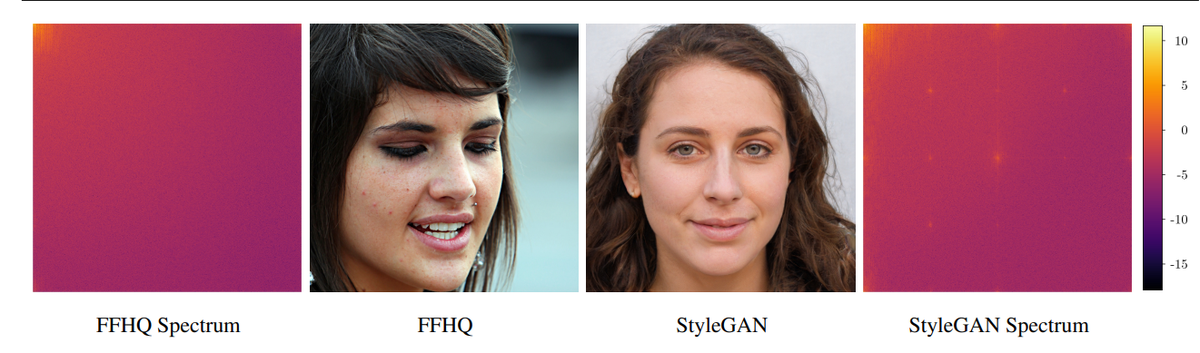
Detecting deep-fake images is essential as they are increasingly weaponized. New research by @thorstenholz group show that using frequency analysis and deep-learning allows to detect deep-fakes generated with popular techniques reliably https://t.co/sAd8yLCVAU #DeepLearning#ai
New work in #ECCV2020 learning to reconstruct a morphable shape, texture, and viewpoint from an image collection without 3D ground truth *and* 2D keypoints, allowing us to explore new categories like shoes!
Congrats to @goelshbhm!
https://t.co/9fX482cgtp
https://t.co/bIL3RNJweC
New tutorial is out! ✨
Train a #DeepLearning classifier on CIFAR-10 and compare the performance with and without data augmentation.
Experiment for yourself with the @GoogleColab notebook!
https://t.co/X908II6jwS
Data augmentation is a powerful tool in #DeepLearning and important to master.
But what if the augmentation function you want to use does not exist yet?
Learn how to define your own in the @GoogleColab tutorial!
https://t.co/AxEjV46FJr
AutoKeras 1.0.4 is released! Important bug fixes and performance improvements has been made. Thank all the contributors! See detailed release notes below.
https://t.co/en2iq5LAfK
When you train a #DeepLearning model in #Keras, what parameters should you use for image data augmentation?
Find a visual exploration in the blog post and experiment for yourself on @GoogleColab!
https://t.co/FyHE2xuiTQ
✨Big News!✨
I started a #DeepLearning blog to share my knowledge!
Find concise, short tutorials on everything #AI and #MachineLearning.
Experimenting is key when learning, so all tutorials come with a @GoogleColab notebook!
https://t.co/LeR4XNcZ2c
@DeepMind lectures could be interesting for you if you're getting into #DeepLearning! Especially the more advanced lectures: generative and unsupervised methods, and #ResponsibleAI
https://t.co/nCV6CgEqt1
Bringing a #MachineLearning model to production is always hard. The slides by Luigiu Patruno neatly explain why.
#mlops https://t.co/WbVobI4w9c via @SlideShare
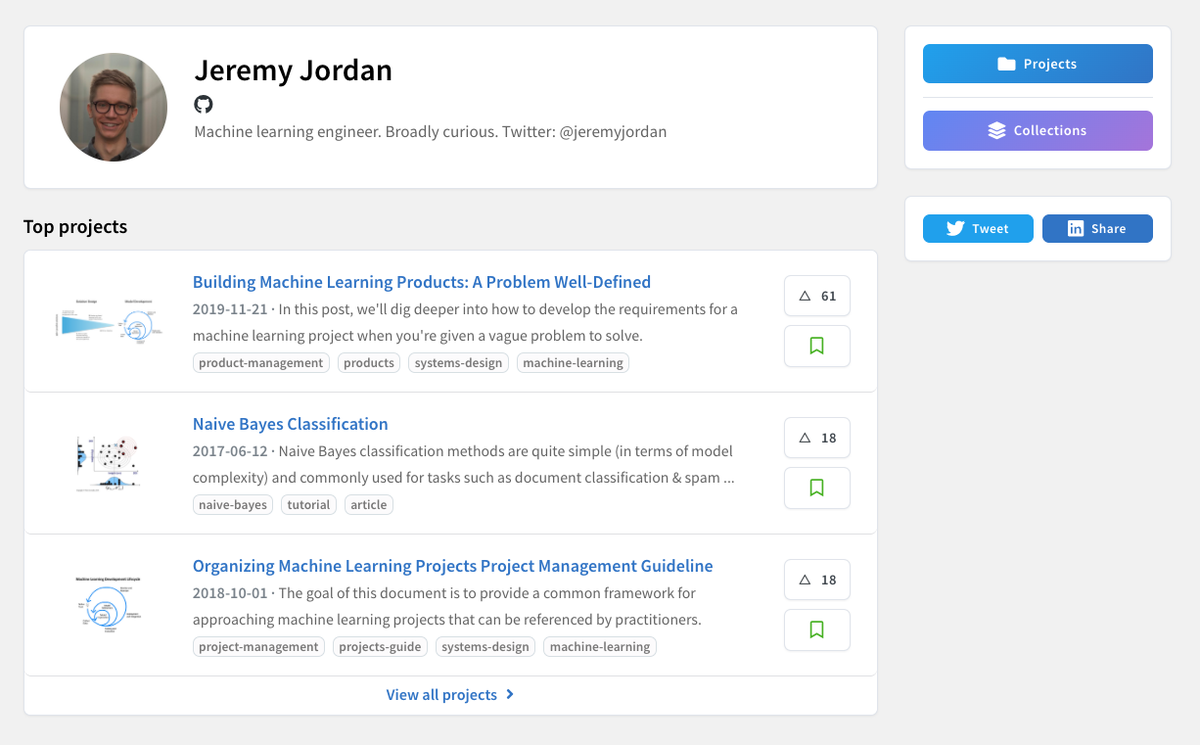
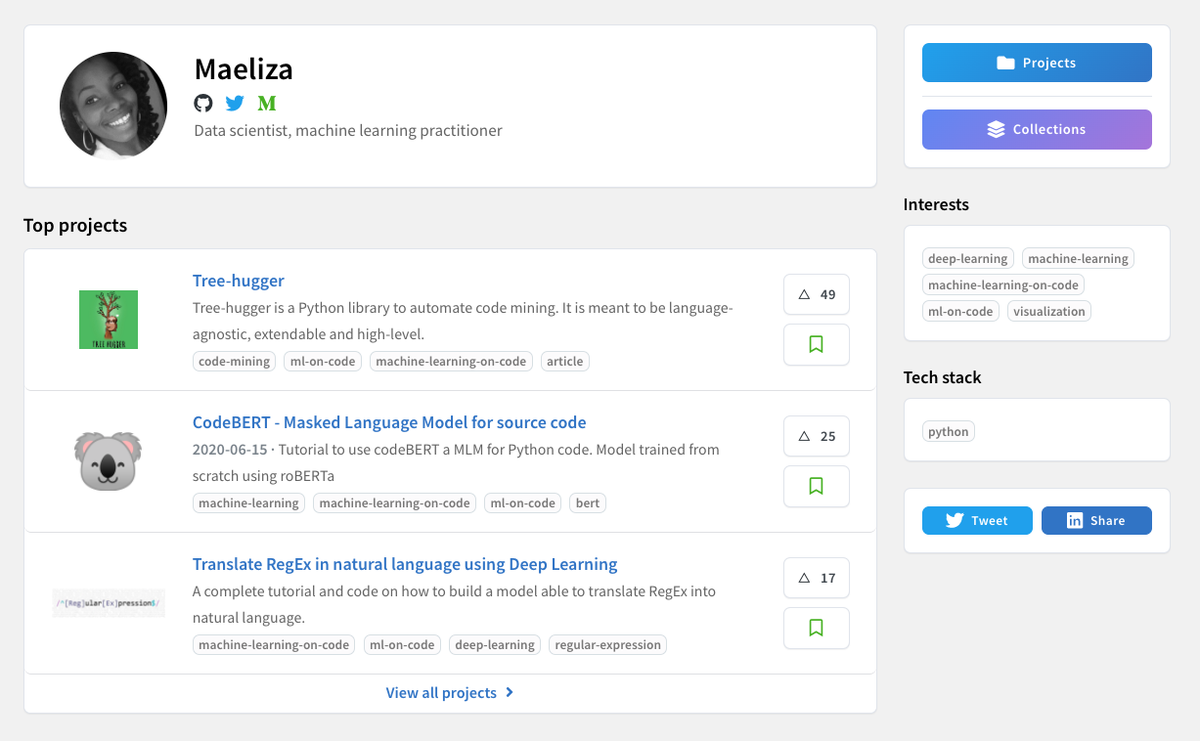
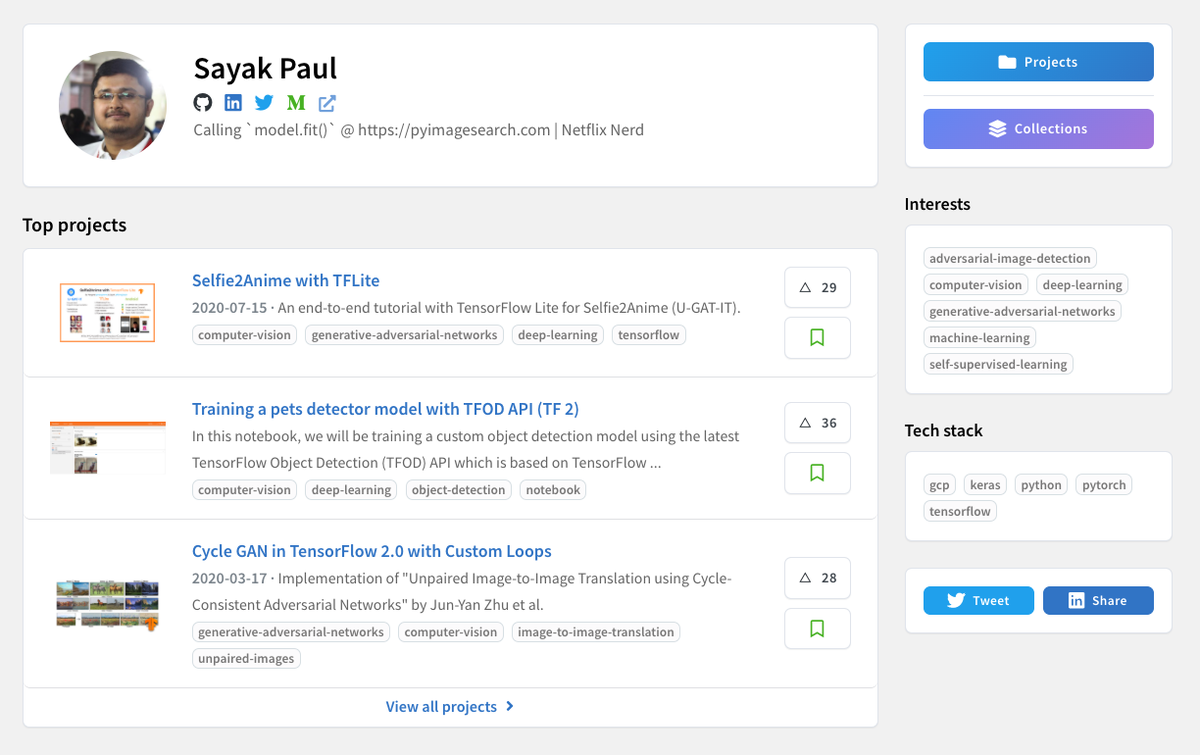
👶 We are 4 months old today! 1.9K projects, 3K DAU, 5K MAU, 1.7K Slack (50K messages) & growing!
But what's MOST important to us is that the community has been building & we've become a place to showcase it! Check out a sample of the different kinds of portfolios 🔥
⬇️ Thread
There is a lot to wrap your head around in LSTMs🤯. One way of thinking that helped me a lot is the 'conveyor belt' metaphor of the cell state 🧑🏭 by @ch402. I put together a little animation 🖼️ Check out the amazing blog post by Chris Olah here✍️: https://t.co/BEXTawzsaE