"The deficit is glaring,” says Adela Deanova, a doctoral student in Duke’s philosophy program. “You can go through an undergraduate philosophy education without ever reading a female philosopher. It really is that bad.”
https://t.co/9bFmikTbjJ
The Humanities for the Public Good Initiative is bringing together people interested in using humanistic knowledge for two days of events on May 3 & May 4. More on the conference theme and the “unconference” break out sessions at the link https://t.co/bvrvDu0ttP.
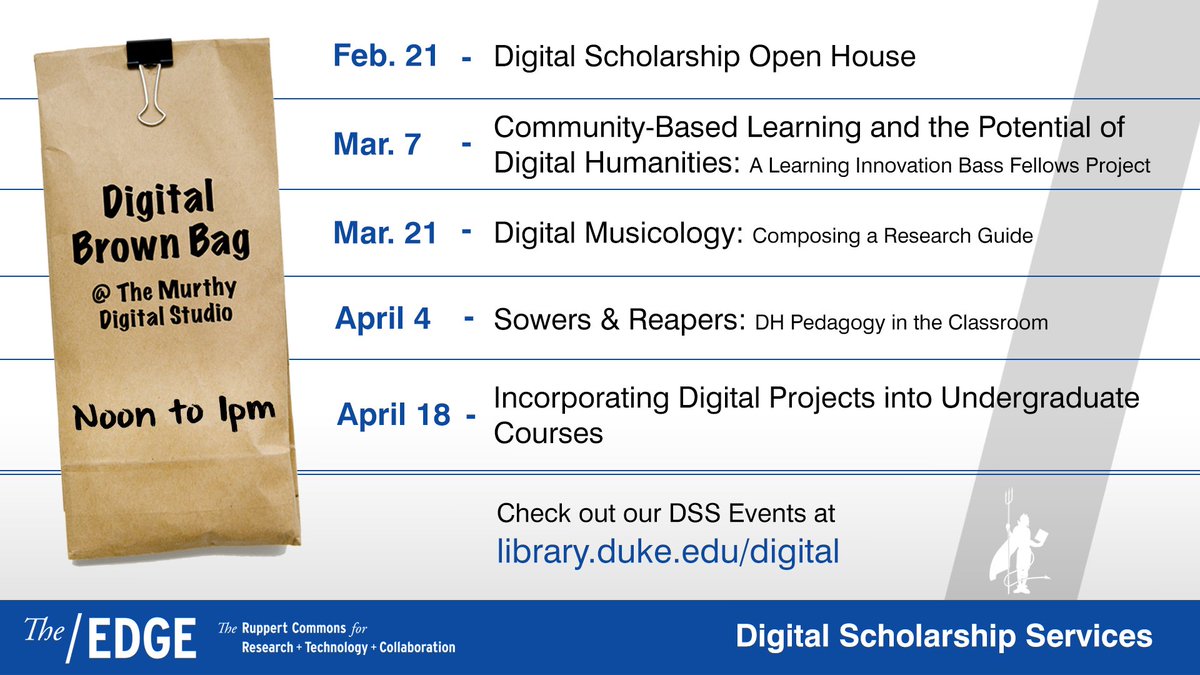
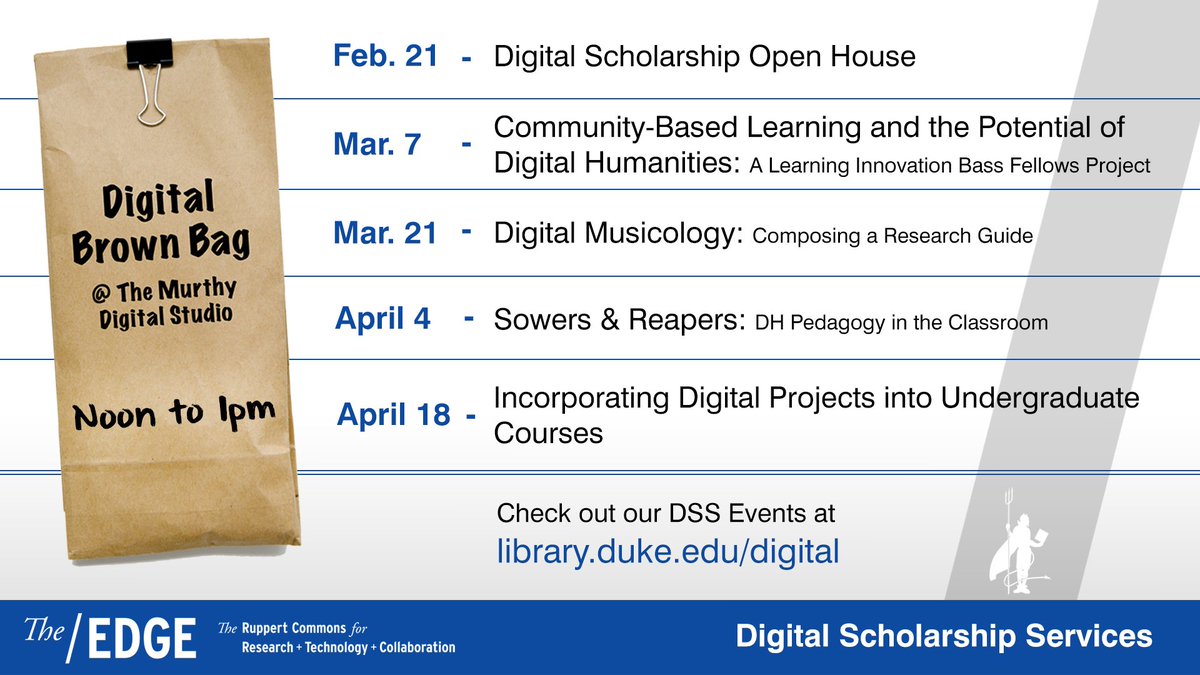
We are hosting the last Digital Brown Bag on Thursday at 12pm about incorporating digital projects into undergraduate courses. Follow this link for more information https://t.co/Jy92q1x0St
@ethicaltechorg is hosting a talk on Thursday, April 2 at 12pm called Technology and Our Ethical Future in Rubenstein 153 @DukeLibraries #EthicalTech https://t.co/q1J7CjIlco
Your students have made a digital project. Now how do you grade them? Hear from @scribeth & @DukeCLST Adrian Linden-High on evaluating digital projects at #tdhipedagogy: https://t.co/EQxQB7DCxF @DukeLearning @DukeDSS @triangledh @duke_dhi
Great events! My faves: "Community-based learning and the Potential of Digital Humanities" and "Incorporating Digital Projects into Undergraduate Courses" #triangledh
Q: what's teh biggest threat to fair use? @thepublicdomain Permissions culture. Jennifer Jenkins: Ditto, and court decisions that are reducing fair use flexibility. @TimberlakeLaw Fair use is being asked to do things it was never intended to do, because of copyright terms.
Q: Will the EU changes to their copyright law impact us? @Mchl_Wolfe Though copyright law is territorial, global corporations play a hand (e.g., demands placed on YouTube by EU law (GDPR))
Q: How do we think about how fair use is applied to images, as opposed to texts? Cathy Rimer-Surles: the biggest distinction is the amount that you will need to use (often the whole work).