The IT industry loves tools.
Every problem becomes a tool problem. And with AI, this has become even stronger. Every week, hundreds of new tools appear. New plugins, new skill collections, new workflow engines, new platforms.
But maybe we should stop for a moment.
What problem are we actually trying to solve?
In many cases, the answer is not: we need another tool.
The answer is: we need a better process.
That is why I created the AI Unified Process. Not as another tool, but as a way to structure the work before the tools start working. https://t.co/GCiFb36dka
Because the real bottleneck is not code generation. The real bottleneck is clarity.
Clear requirements. Clear use cases. Clear domain concepts. Clear decisions.
Once that is in place, tools can help a lot. Without it, they only help us create confusion faster.
Maybe it is time for a small counter-movement.
The No Tools Movement.
Less tool chasing. More thinking.
#AIUnifiedProcess #SpecDrivenDevelopment #SoftwareEngineering #AI #NoToolsMovement
@p12_hunter@lexfridman You could even start more in the north. If you do so, I would be happy to provide a place to stay over night. I live close to the Way of St. James in 🇨🇭.
Wish you many inspiring encounters
@simas_ch@vilojona@AnthropicAI Probably AI generated code which produces the stuff. And unfortunately the spec used is not complete enough ;-) if there any spec
@simas_ch@stevenvanophem@starbuxman How to ensure correct tetscases ? You can't generate them with the same tools.
All that said without having a closer look at the approach proposed
@simas_ch@stevenvanophem@starbuxman Same spec not necessarily generate same results. Plus often a lot of code is changed even by small changes. From my perspective having good tests is very crucial. And for ai generated code also all the happy path tests are need. So the question araising:
@MikeMuellerLate@cheese_int@NZZ Tja die habe wohl auch den ein oder anderen Bug. Zwischendurch ist es mal gekommen nun wieder nicht
Aber im linken Spektrum gibt's echt wie im rechte Exponenten die mit Denk- und Sprechverboten operieren. Und das ist nie gut
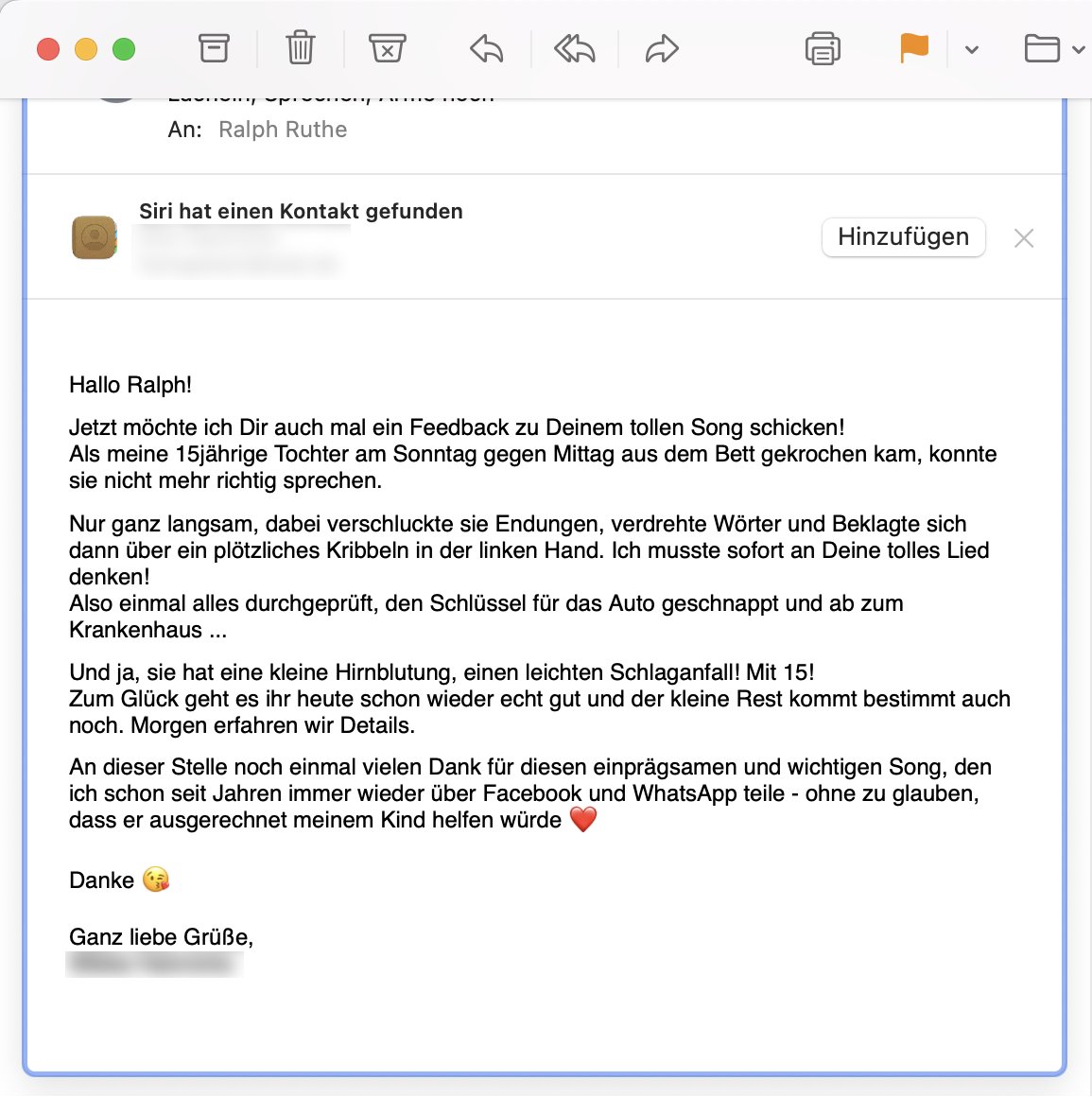
Der Welt-Schlaganfalltag ist zwar erst in ein paar Wochen, aber da ich gestern diese E-Mail bekommen habe, möchte ich den Clip schon heute empfehlen.
Das Video ist natürlich kein Schutz davor, kann aber Leben retten. Hat es bereits, mehrfach!
https://t.co/cQkBT2rvNd
Retweet = 🧡
We ran a full security & compliance evaluation of the just released 🇨🇭 Swiss LLM, 🤖 Apertus, developed by ETH Zurich & EPFL. Answers to most common questions below 👇
1/10
This has been an insane few days for AI:
- GPT-5 & gpt-oss
- Grok Imagine
- Claude Opus 4.1
- Genie 3
- ElevenLabs Music
The future is going to be wild 🤯
A Few Thoughts on Trump’s 39% Tariff on Swiss Imports as announced on our National Day (1 August commemorates the founding of the Swiss Confederation in 1291).
Clearly, Keller-Sutter is no match for Trump’s ego. That, according to Bloomberg, was the real issue and I wouldn’t be surprised if this isn’t the final number. But that’s beside the point.
For decades, the relentlessly strong Swiss franc forced our industrial base to evolve. Labor-intensive sectors like textiles vanished. What remains is ultra-specialized, high-margin, low-volume manufacturing. Precision over scale. Expertise over replication.
Take VAT Group—maker of the world’s best vacuum valves for semiconductors, with an 85% global market share. Volumes are low, clients few. A second plant? Economically senseless—especially in the U.S., where demand is thin.
Lantal, based in Langenthal, leads in flame-resistant aircraft textiles, supplying both Airbus and Boeing—Airbus being top, Boeing likely second. High-spec, low-volume, irreplicable.
Swatch Group operates within the watchmaking ecosystem of Jura and Neuchâtel, where ~95% of mechanical movements are produced—by Swatch, Rolex, and Patek Philippe. The rest of the world? Mostly design and assembly. Not real manufacturing.
These aren’t exceptions—they’re the rule. For 50+ years, the Swiss franc has priced out commodity production. Only firms with pricing power, deep moats, or tight local ecosystems survived. With a tiny domestic market, internationalization was a necessity, not a choice.
Today, Switzerland dominates niches: luxury watches, pharma, med tech (Straumann, Synthes, Stratec), financial services (UBS, Swiss Re), inspection (SGS), premium chocolate (Lindt), food (Nestlé), precision machinery (ABB), and tech R&D (ETH, Google, Microsoft, Meta, OpenAI).
This model is fundamentally incompatible with Trump’s “bring manufacturing home” mantra. Swiss factories won’t relocate. Tariffs won’t change that.
Germany can adapt—Mercedes can expand U.S. output to hedge FX and tariff risk. Switzerland can’t. “Swiss made” is niche, immobile, and precision-built.
Meanwhile, we import nearly everything else—cars, appliances, food, raw materials. Switzerland is a textbook case of high-value specialization and free trade, just as Milton Friedman described.
So what does a 39% tariff do? Trigger workarounds. Americans will still buy Rolexes—tariff or not. Likely here on Bahnhofstrasse in Zurich.
Trump’s logic collapses. It’s neither strategic nor economic. And no, Switzerland hasn’t “taken advantage” of the U.S. We specialized—just as classical trade theory prescribes.
Also: we’re not China. No subsidized overcapacity. No dumping. No labor abuse. No IP theft. We follow WTO rules. Our manufacturing jobs are among the best-paid globally. And we’re the only direct democracy globally (all others are indirectly democracies)—hardly a CCP clone.
So what exactly is Trump trying to fix?
Switzerland is comparative advantage, executed. No, it doesn’t deliver balanced trade for every nation. It’s not meant to. We export what we excel at—and import the rest.
Trump’s tariff push looks less like policy and more like politics: revenue-driven, reactionary, and ego-fueled. Sometimes disruption is needed. But this is pure economic illiteracy.
In the end, nobody wins. Rolex and Novartis won’t eat the cost. U.S. consumers will. Sales may dip—but Rolex won’t blink—believe me; not in the next 100 years and as long as humans seek status symbols.
It’s a textbook lose-lose.
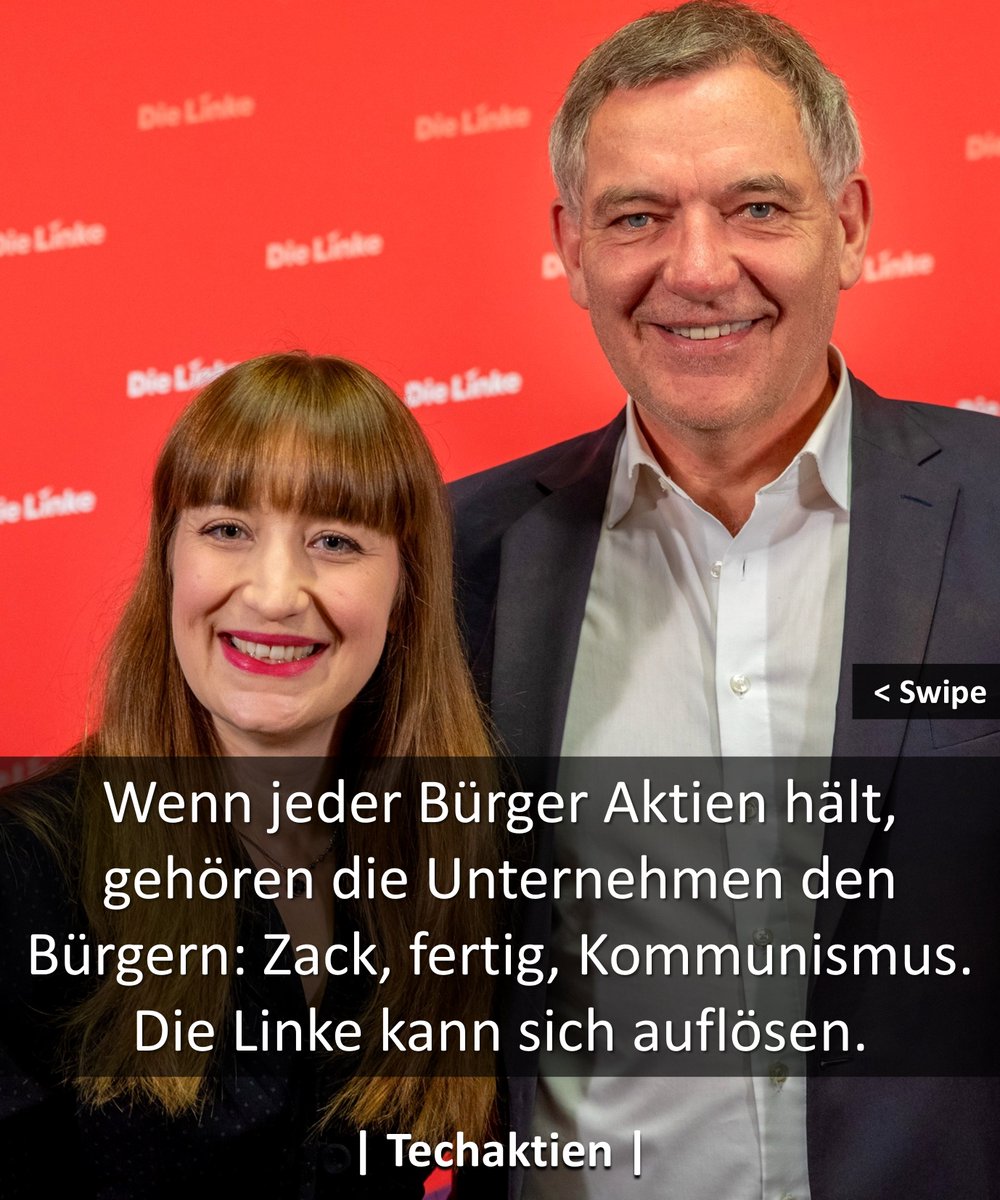
Wenn jeder Bürger Aktien hält, gehören die Unternehmen den Bürgern: Zack, fertig, Kommunismus. Die Linke kann sich auflösen. Happy End. >> Repost, wenn es stimmt. #FinX#Memes