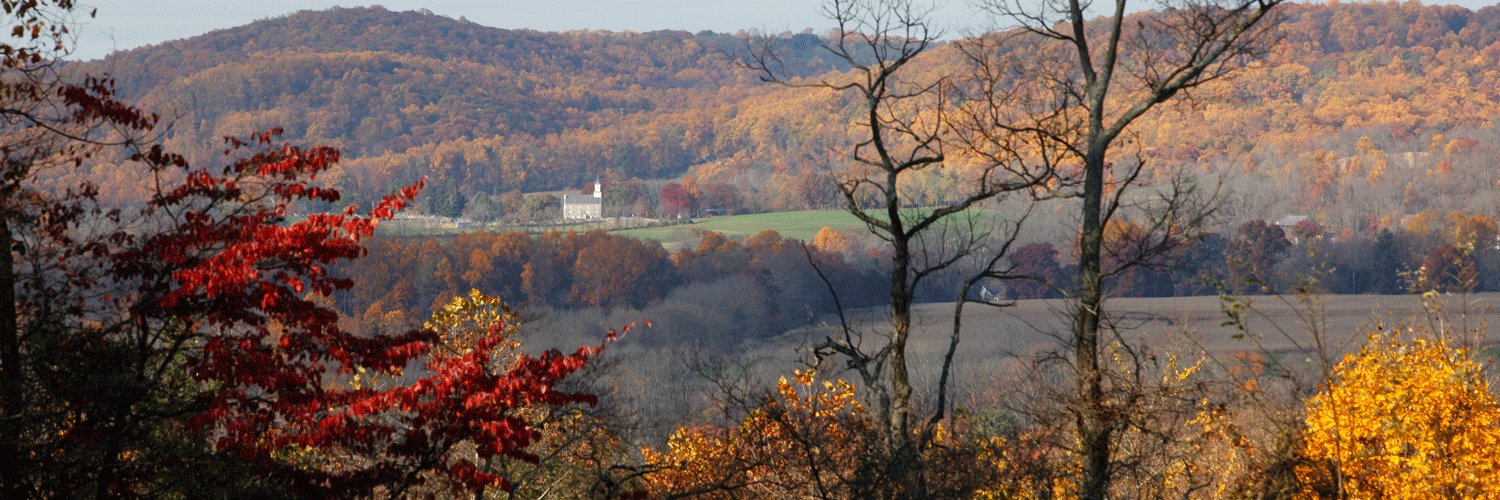
Friendly reminder from DCNR: Please slow down and obey posted speed limits on our park and forest roads.
Your caution protects you, our wildlife, and fellow visitors. Let’s all do our part to keep Pennsylvania’s natural places safe for everyone.
To commemorate Father's Day, I thought I'd share this amazingly modern autochrome portrait Henri Lumiere, which was taken in colour 112 years ago, during the Great War, by his father Auguste. It was his father who actually invented the Autochrome process, alongside sibling Louis, thanks to whom we now have a record of the world in colour from the opening years of the 20th Century. This was taken using his father's early colour glass-plate process in 1914 and isn't colourised.
Awesome 22 degree solar halo over Stonehenge today 🌈☀️ Photo credit Nick Bull 🙏
A 22° halo is an atmospheric optical phenomenon that consists of a halo with an apparent radius of approximately 22° around the Sun or Moon. Around the Sun, it may also be called a sun halo Around the Moon, it is also known as a moon ring, storm ring, or winter halo. It forms as sunlight or moonlight is refracted by millions of hexagonal ice crystals suspended in the atmosphere. Its radius, as viewed from Earth, is roughly the length of an outstretched hand at arm's length.
#solarhalo #sun #sunhalo #June #spring #rainbow
The single biggest irrigated crop in America isn't corn, wheat, or soybeans. It's not even avocados or almonds. It's lawn.
We grow more grass than any food crop in the country, around 40 million acres of it, and almost none of it feeds a single living thing.
Think about how strange that is. We took a grass that isn't even from here, planted it coast to coast, and now we pour water, fertilizer, and pesticide into keeping it short, green, and perfectly useless.
To a bee, a butterfly, or a bird hunting caterpillars for its chicks, a manicured lawn is a desert. Nothing to eat, nowhere to nest, mile after mile of it.
But here's the good news, maybe the easiest win on this whole account: you don't have to fix the entire desert. You just have to claw back a corner.
Pick one strip. The hellstrip by the sidewalk, the run along the fence, that awkward patch you hate mowing anyway. Stop mowing it and plant it with native flowers, a few black-eyed Susans, some bee balm, a couple of coneflowers. That's it. No ripping out the whole yard, no fight with anybody. Just convert one piece.
And that piece stops being dead space and starts being habitat: bees, butterflies, and birds showing up to a spot that offered them nothing a year ago.
Now picture your neighbor doing the same, and the one after that. That's how a desert turns back into a meadow, one reclaimed corner at a time.