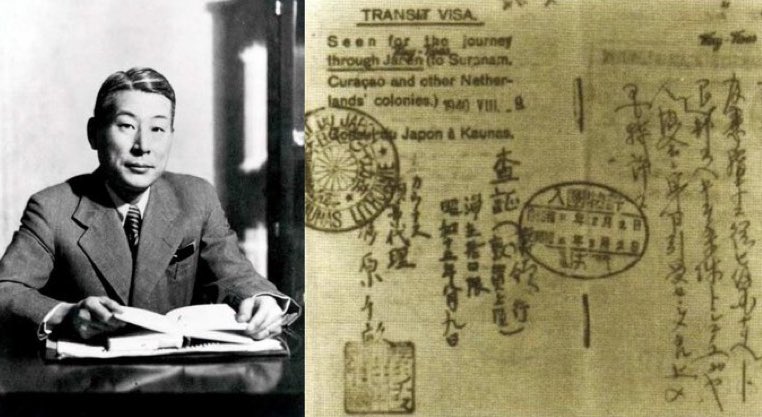
Chiune Sugihara was assigned as the vice-consul of the Japanese consulate in Kaunas, Lithuania in 1939.
Lithuania was occupied by the Soviet Union in June 1940, and many Jewish refugees from Poland and other countries had gathered in Kaunas, hoping to find a way out of Europe.
They heard that Japan was a possible destination for them, as Japan had not yet joined the Axis powers and had maintained diplomatic relations with some European countries. However, they needed transit visas from the Japanese consulate to cross the Soviet Union and reach Japan.
Hundreds of Jews in desperate need of visas approached Sugihara, imploring him to assist them. Despite his efforts, Sugihara was unsuccessful in obtaining permission from his superiors in Tokyo to issue visas to the refugees. He made three separate requests, but each time his appeal was turned down. The Japanese authorities stipulated that only those individuals who possessed valid passports, adequate funds, and confirmed exit visas from Japan were eligible to receive transit visas.
Sugihara decided to disobey his government, and worked more than 18 hours a day issuing hand-written visas to the Jews.
He continued issuing visas until September 4th 1940 when he had to leave Kaunas with his family due to the closure of the consulate. According to eye witness accounts, he was still busy writing visas and tossing them out of the train as it departed. Overall, his efforts saved the lives of over 6000 people. Despite his heroic actions, his story remained largely unknown until 1985, just a year before his passing.
It is believed that up to 100,000 individuals who are alive today are descendants of people who received visas from Sugihara.