🟦🟦FREE SEO AUDIT OF YOUR ECOM STORE🟦🟦
Let’s identify the bottlenecks in your store’s organic performance
If your ecom store generates $10k+/month in revenue, and you want to increase your organic traffic:
1/ Follow
2/ Like
3/ Comment “LOAK”
[ Spots are limited ]
Do you really need an SEO agency/consultancy?
To answer this question, you’ll need to consider whether the following scenarios apply to your website.
The more of these scenarios you answer “yes” to, the more likely you’ll need an SEO agency/consultant to help resolve these issues.
1/ Your organic traffic has dropped (and you don’t know why)
To check for any drops, it’s best to go to Google Search Console (GSC) and click on “Performance.” (Note: As you know, drops can be caused by seasonal fluctuations.)
2/ Your website has technical issues
You feel them, but you can’t prove they exist. Without an audit, you can’t be sure whether critical issues are present.
3/ Your competitors are getting more traffic than you
If your competitors are outperforming you online, it’s likely you could get more organic search traffic as well – with the help of SEO.
You can check this in the free website traffic checker by Ahrefs (https://t.co/OsWUbwJoNh).
4/ You want to rank higher for keywords important to your business
If you know a bit about SEO, you’ll know the importance of certain keywords for your business.
The “Golden Thread” concept states:
“The product sits on one end of this thread, and the prospect’s heart sits at the other.”
Basically, it is the unbroken connection between a prospect’s initial emotional trigger and the final call to action.
Every element of the copy (a product page, in other words), from the H1 and the lead to the product specifications and internal links, must be connected to this thread.
The brand loses the sale if the connection weakens for even a second by introducing irrelevant information or “noise.”
What a pleasure to return home after 10 days abroad, a few hours of sleep, and almost 9 hours of commuting.
Comfort zone someone would say.
Yes. Back to my comfort zone, to morning and bed routines, healthy sleep and food, and gym for sure!
If you have items that will never return, shift your strategy toward consolidating site authority and directing traffic to current "money” pages.
Here are the 4 strategies to do that:
1/ Leverage high-value pages;
2/ The 301 redirect;
3/ The 410 status code;
4/ Efficiency via URL reuse.
Let’s dig into each section:
1/ If you have discontinued products and the pages have significant inbound links or high search value → retain the pages, but pivot the content to the current “new version” (if you have such) or to the most relevant equivalent.
2/ Implement a 301 redirect to the most relevant parent category/product for the pages that have lower individual demand.
3/ Use an HTTP 410 status code (preferred over a “404”) if a page has no SEO value and will never return. Search engines will deindex the page permanently and that will save your “crawl budget” for “money” pages.
4/ Last but not least is reusing an existing URL to carry over the established ranking strength, if a product is simply a minor update or a slight new version of an old one.
But do not just leave it as it is!
Out-of-stock SEO management is a vital pillar of revenue protection for e-com stores.
It ensures that temporary unavailability gaps don’t lead to losses in search rankings or customer trust.
If an item is expected to return, the goal is to maintain the page’s existing SEO equity.
Keep pages available, maintain them, and never unpublish or “404” a product page for items that are expected to return to stock.
Doing so leads to the destruction of the page’s ranking power and confuses search engines.
Following the mantra, “If you confuse, you’ll lose,” label the product explicitly as "out of stock" immediately.
Also, consider adding restock notifications via email or SMS, as this acts as a “transitional call to action” and keeps relationships alive even if you can’t make a transaction immediately possible.
Out-of-stock SEO management is a vital pillar of revenue protection for e-com stores.
It ensures that temporary unavailability gaps don’t lead to losses in search rankings or customer trust.
If an item is expected to return, the goal is to maintain the page’s existing SEO equity.
Keep pages available, maintain them, and never unpublish or “404” a product page for items that are expected to return to stock.
Doing so leads to the destruction of the page’s ranking power and confuses search engines.
Following the mantra, “If you confuse, you’ll lose,” label the product explicitly as "out of stock" immediately.
Also, consider adding restock notifications via email or SMS, as this acts as a “transitional call to action” and keeps relationships alive even if you can’t make a transaction immediately possible.
Talking about the relationship between Page Speed and Conversion Rate in e-commerce, consider technical SEO as Revenue Protection.
Google uses mobile-first indexing. It means that primarily your mobile performance is evaluated for ranking.
Nowadays around 75% of e-commerce visits come from mobile devices, so the speed of your pages becomes a matter of Revenue Protection.
Since speed is a confirmed Google ranking factor, a slow site hurts your visibility.
That in turn reduces the traffic available to convert.
You can minify code (by removing unnecessary characters), utilize a Content Delivery Network (CDN), and use compressed image formats like WebP or AVIF
The relationship between Page Speed and Conversion Rate is one of the most critical metrics for e-commerce brands.
In the realm of digital "Salesmanship in Print," your page loading speed represents the moment your salesman opens his mouth;
delay → the customer has already walked away.
Keep in mind, that modern consumers are characterized by shortened attention spans and increased skepticism.
You have only 30 sec (or even less) to grab their attention and get them hooked.
slow page loading → lost a few moments on a loading screen rather than persuading them emotionally.
People are “Creatures of Habit,” and they skip anything that isn’t instantly rewarding.
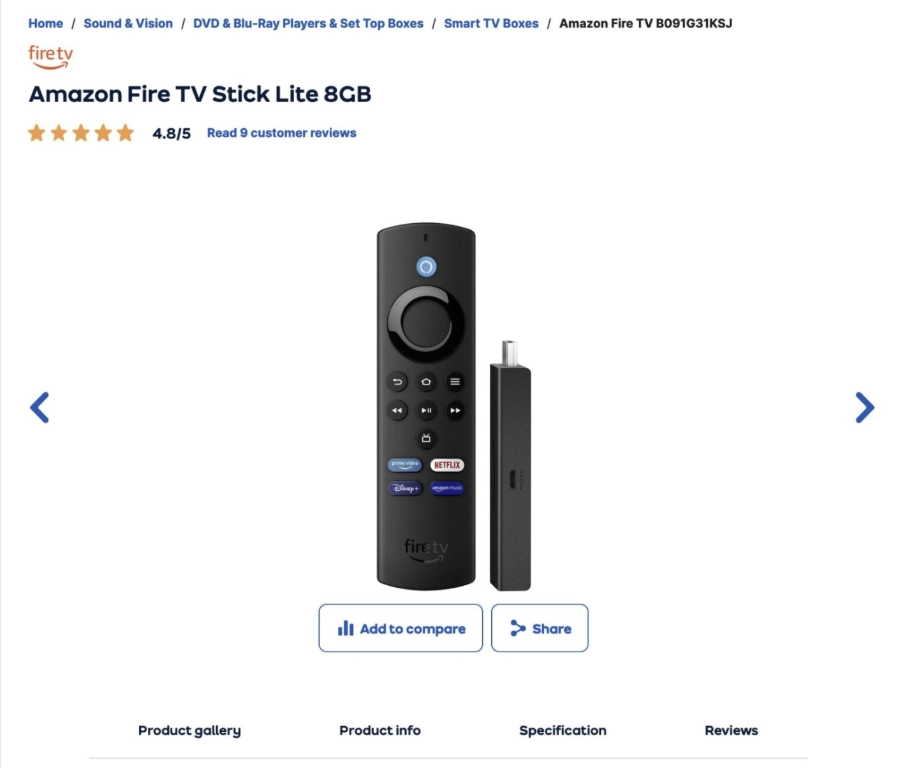
They likely have done this because users don’t search for product codes for this product, as shown in Keywords Explorer.
Of course, in some situations, you’ll want to set an H1/title combo that best matches the user’s search query and intent for an individual product if the potential traffic return is worth the time investment.
(5/5)
For convenience, use universal H1 and title tag templates for optimal results.
These templates should incorporate product H1s and other relevant product data, such as SKUs or brand names, to create the most effective format guided by your keyword research.
(1/5)
In AO’s ‘Sound’ category, they changed their H1 to be just the brand + product name rather than the product code + brand name combination shown previously.
(4/5)


![duubas's tweet photo. 🟦🟦FREE SEO AUDIT OF YOUR ECOM STORE🟦🟦
Let’s identify the bottlenecks in your store’s organic performance
If your ecom store generates $10k+/month in revenue, and you want to increase your organic traffic:
1/ Follow
2/ Like
3/ Comment “LOAK”
[ Spots are limited ] https://t.co/RQRSg29UWB](https://pbs.twimg.com/media/HCgTm_RXwAASiCl.jpg)