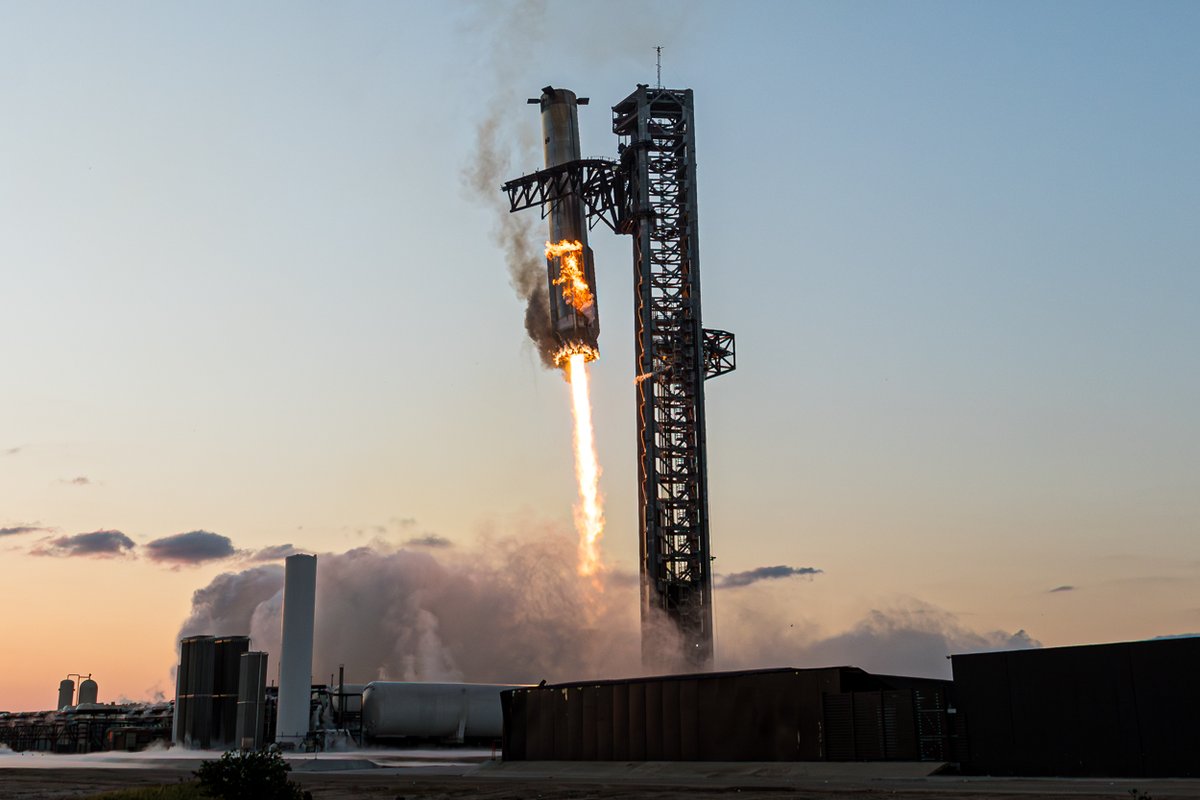
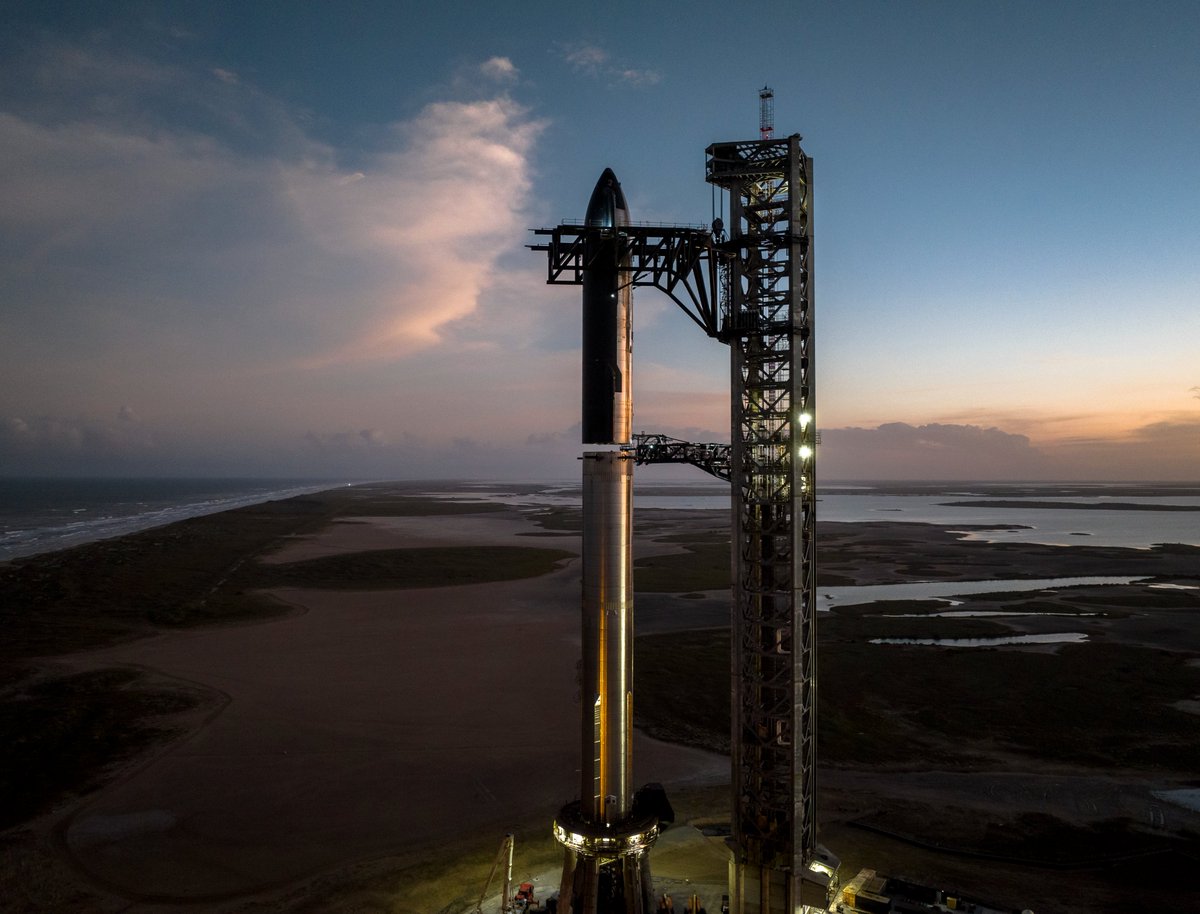
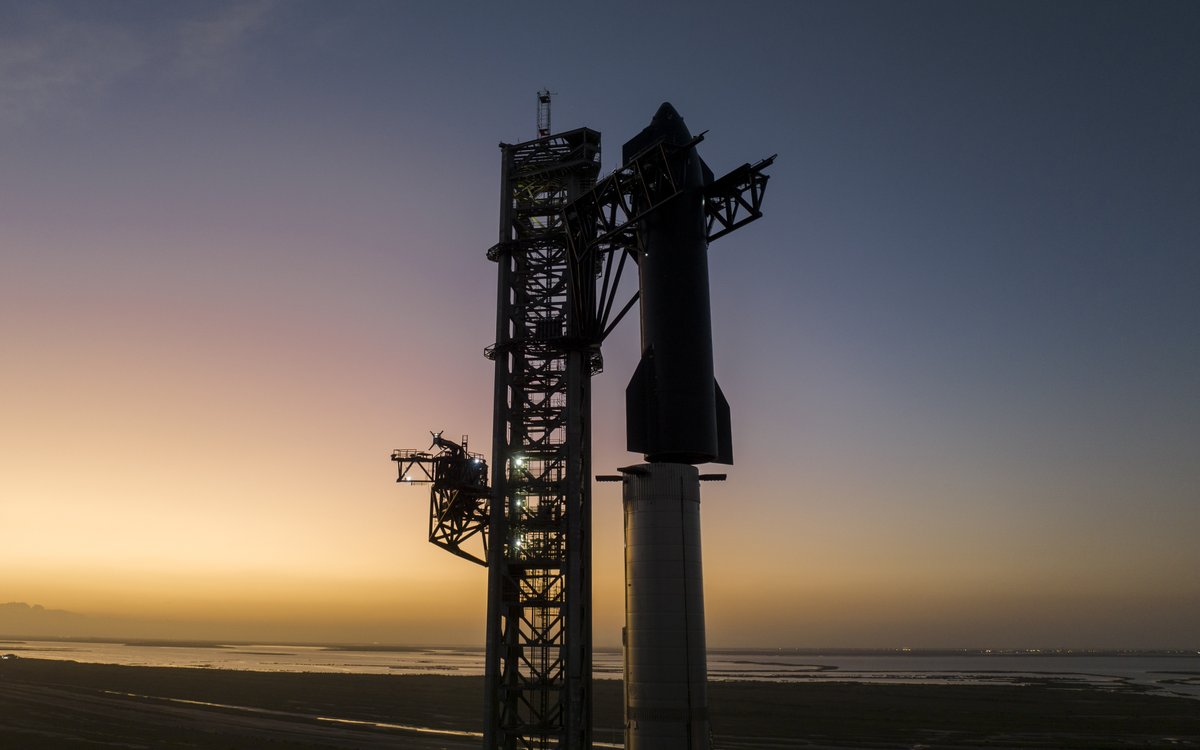
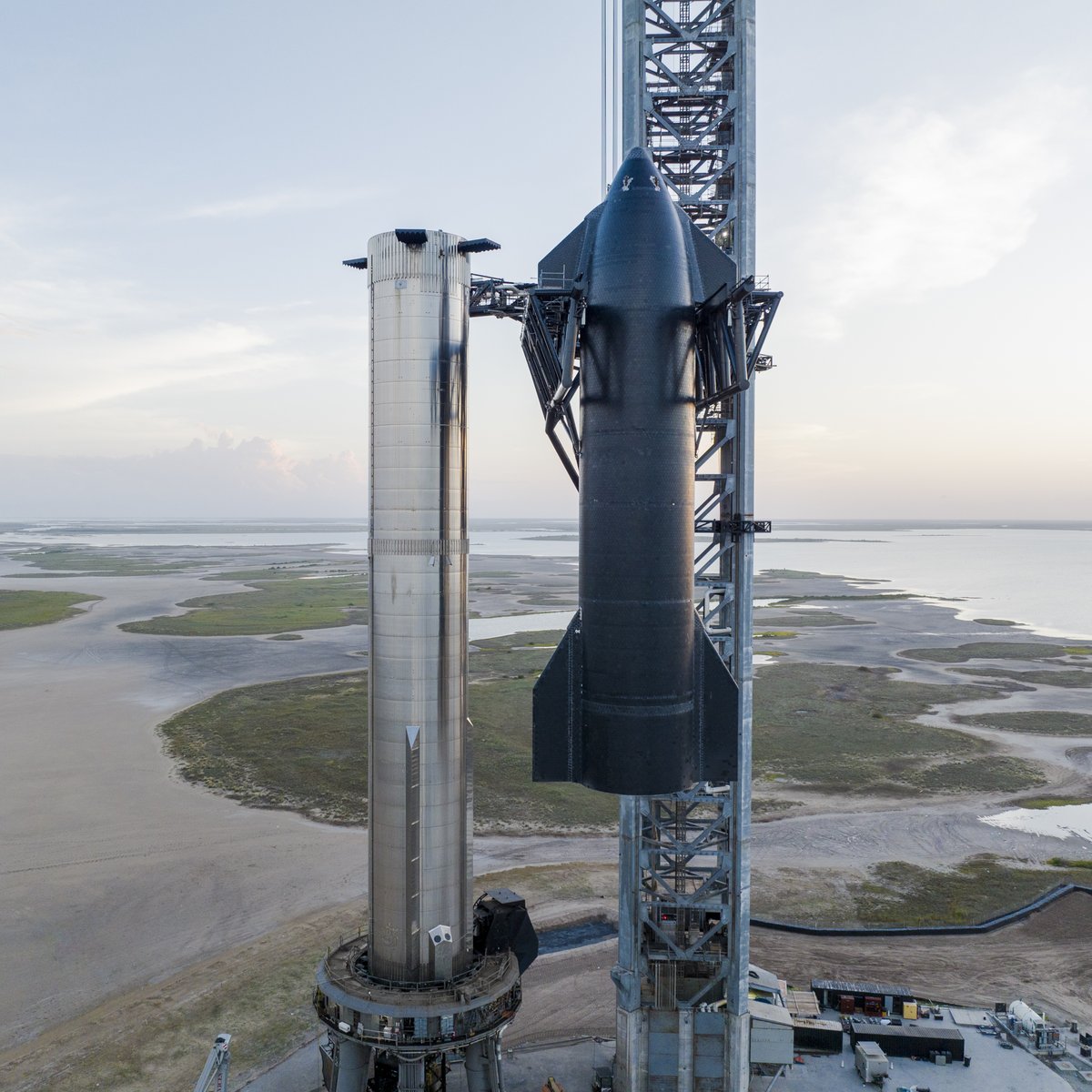
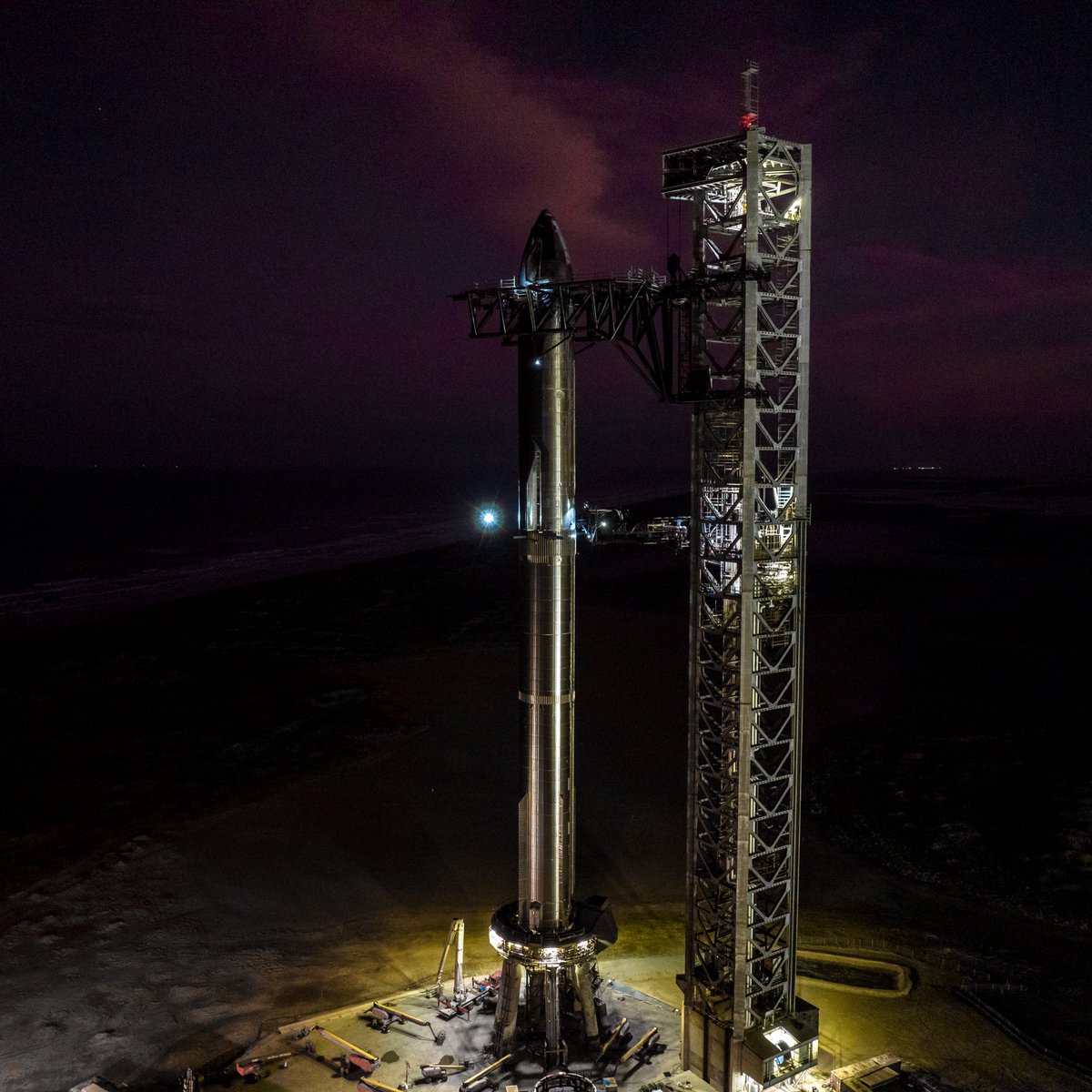
Starship's first five flights:
April 20, 2023 - Flight 1: Damaged launch pad, engines lost on ascent, vehicle tumbled and did not make it to staging, but a full-stack Starship finally took flight from Starbase; extremely valuable data gained to improve the vehicle and ground systems ahead of another flight in the same year
November 18, 2023 - Flight 2: 33/33 booster engines completed full burn, novel hot-staging technique successfully executed, booster lost shortly thereafter, Ship nearly completed full burn - a huge step forward after Flight 1
March 14, 2024 - Flight 3: Another successful ascent, hot-staging, booster made it to water in some capacity, albeit with an off-nominal landing burn,; Ship coasted in space and experienced an imperfect reentry due to lack of attitude control, but gathered valuable data
June 6, 2024 - Flight 4: Successful ascent and hot-staging, even with one engine out on the booster, centimeter-level accurate water landing for Super Heavy; Ship made it through reentry with off-nominal flap burn-through, executing a successful but off-target landing in the ocean
October 13, 2024 - Flight 5: 33/33 engine ascent, hot-staging, boostback, successful tower catch and landing on the first attempt; Ship successfully reentered with minimal burn-through and completed an on-target landing and splashdown in the ocean
Zoom out on these 18 months - where will Starship be in another 18 months? In five years? So far, the progress has been linear, and frankly, remarkable.
It is not unreasonable to expect some setbacks - that is how space works - but I have the utmost confidence that SpaceX will execute on this vision of a rapidly-reusable, affordable launch system that can deliver significant tonnage to Earth orbit, the Moon, Mars, and beyond.
What lies ahead over the next few years? In no particular order:
- Ship orbital insertion and deorbit burn for a landing on land and catch by tower
- Ship payload deploy
- Continued Super Heavy landings and reuse, especially at a pace faster than Falcon first stages today - what improvements are needed to enable the booster to fly again within weeks, then days, then hours?
- Ship orbital refilling demonstrations - vital for deep-space missions, including Artemis
- Ship reuse - managing heat shield tiles during reentry, catch, etc - after the space shuttle, can a vehicle with such a high number of intricate tiles re-fly again within days or hours?
These are not trivial engineering problems to solve - but the most talented engineers on the planet are working insane hours day in and day out to solve them. A lot of work remains, but in looking at the progress so far, it is only a matter of time.
How fortunate we are to be alive here and now. You could have been born at any other time in human history - either in a prehistoric era where the human lifespan was a fraction of what it is today and without these exciting technologies to watch come to fruition - or at a time so far in the future that these technologies are commonplace and taken for granted.
You get to be alive today to watch this happen in real-time - soak it in and appreciate that. Through my imagery, I am fortunate to play a small part in sharing this story with the world, and there's nothing I'd rather be doing. What an exciting time!
It is hard to move on from this major @spacex accomplishment. Not to sound hyperbolic, but I believe we got a proof point today that the Starship program is on par with the largest publicly funded engineering feats—like landing humans on the moon or the Manhattan Project.
Once you understand Kardashev Scale, it becomes utterly obvious that essentially all energy generation will be solar.
Also, just do the math on solar on Earth and you soon figure out that a relatively small corner of Texas or New Mexico can easily serve all US electricity.
I share with you this special note in Forbes in which Andrew placed his dedication and love for the dissemination of knowledge.
“As Global South scientists, our research is not simply an intellectual exercise; it is a call to action and a promise to build a more just world.”
@freddier Israel se transformó en unos de los países más innovadores del mundo después de una recesión, aplicó "renta universal" para startups con la condición de que el 70% de la inversión la colocaran VCs a cambio de beneficios tributarios. Los ajustes correctos marcan la diferencia!
⚠️ Los próximos 12-24 meses varias startups morirán. Las que no, harán despidos grandes. Algunas ya lo hicieron.
Muchos las acusarán de "insostenibles" o a sus fundadores de irresponsables.
Esto es ignorante y tonto. Te explicaré por qué:
1/9
Si son tan inteligentes...
Y tienen tan claro qué hicieron mal los founders que fallaron...
O que *deberían* hacer las startups actuales...
Háganlo.
Empiecen una compañía.
Más empresas exitosas crean más empleo, mejor calidad de vida para todos.
Emprendan.
La tecnología está cambiando el mundo a una velocidad increíble
Si no estás al día puedes quedarte anticuado
Por eso te traigo estos 12 videos de YouTube que son alimento para tu cerebro ⇩
[ H I L O ]
“We remain cautiously optimistic about tech investment in the region given 1) the enormous amount of dry powder for LatAm VC, including USD1b raised by first-time managers in the last 5 years, 2) the high amount of capital raised by repeat founders for new ventures...
1/2