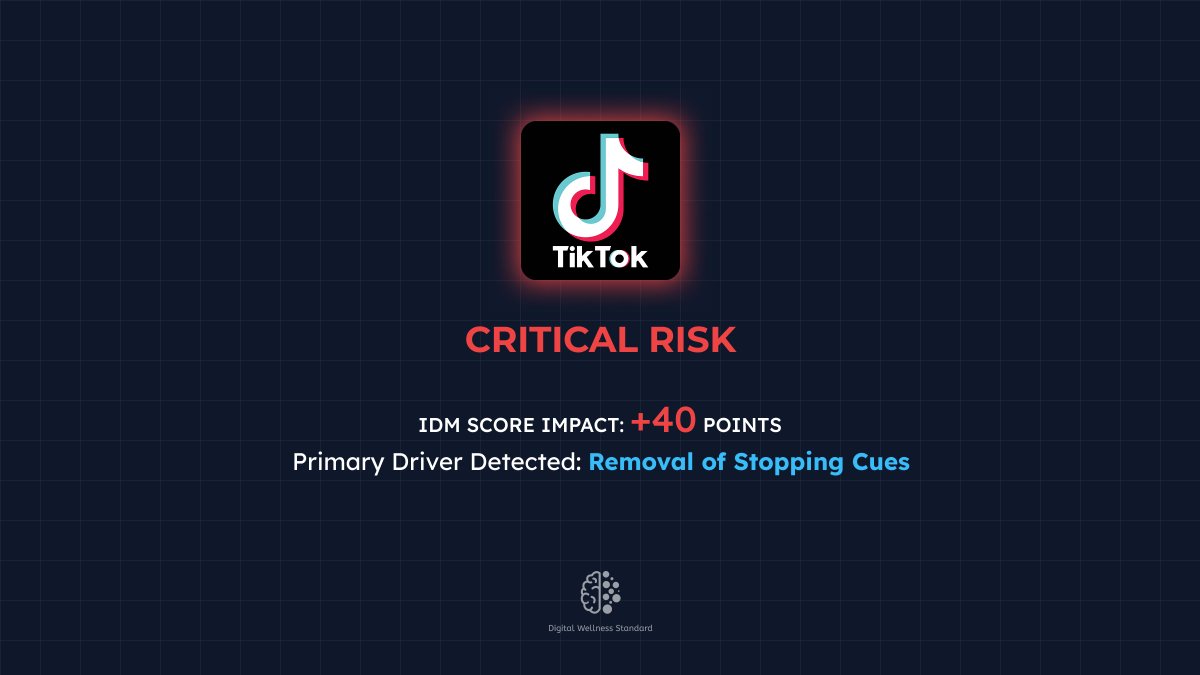
🚨 DWS Audit: TikTok
We ran a full IDM (Index of Design Manipulation) analysis on TikTok's UX.
While we identified multiple dark patterns, one specific mechanic drives the critical risk score:
🚩 The Pattern: Removal of Stopping Cues.
🔢 Impact: Contributes +40 points to the total IDM score.
Here is a deep dive into this specific variable 🧵👇
When you finish a chapter in a book, nothing happens. It waits for you. You must decide to turn the page.
When you finish a video on YouTube, the next one loads in 5 seconds. The machine decides for you.
This is "Default On" design. It treats your attention as a resource to be mined, not respected.
Friction is freedom. We need to bring it back. #DigitalWellness #EthicalDesign
@AndrewSchrbr This flowchart gives me anxiety just looking at it... which proves your point perfectly.
We are stuck in that 'unneeded vs. anxiety' loop because interfaces lack a real model of user intent. Fixing this is the core mission of our standard. Great visualization.
The 'anxiety vs. distraction' loop is a design failure.
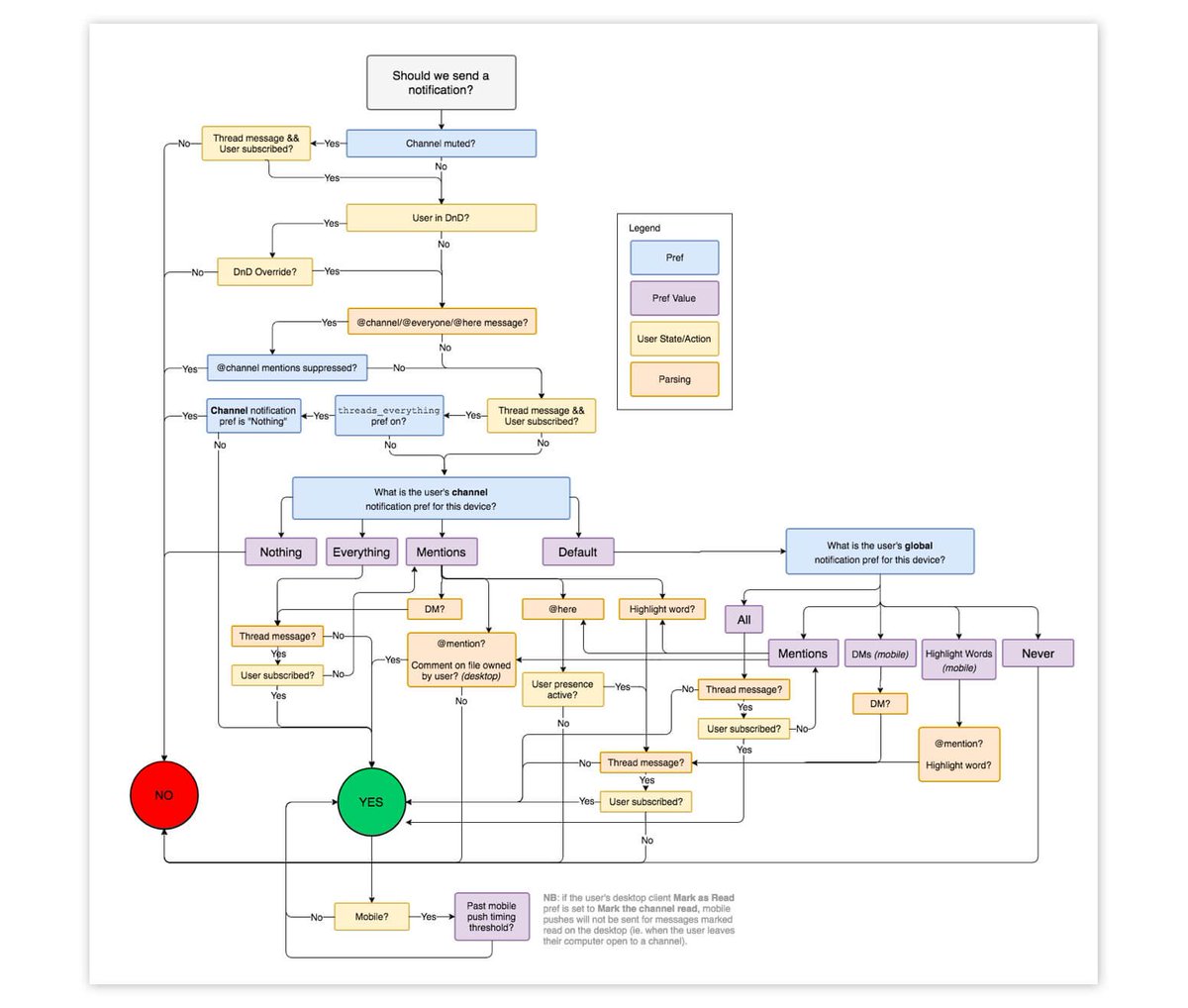
This flowchart shows exactly why rigid heuristics fail: they ignore context.
In our IDM methodology, we analyze precisely this: Does the interface respect the user's intent, or just follow a blind rule? We need context-aware design, not just more switches.
Great visualization of the problem 👇
notifications are distracting when unneeded, but not having them when i need them produces anxiety
the ideal event notifier builds a model of the worker's priorities and intentions, then decides which kind of notification is merited. breaks out of Slack's heuristics hell
You just described the physiological cost of 'Hyper-responsiveness'.
That 'heart jump' is a conditioned reflex. Your nervous system is reacting to a digital signal as if it were a physical threat.
As we discussed today: We are confusing Connectivity (being reachable) with Productivity (outcomes). The former is actively destroying the latter.
We confuse 'Connectivity' with 'Productivity'.
When your team is locked in hyper-responsive messaging loops, they aren't working. They are reacting.
Research shows it takes ~23 mins to recover from a notification.
Your tools charge you a monthly fee, but the real cost is the destruction of your team's attention span.
The decline in Executive Function isn't a bug; it's a feature of the interface.
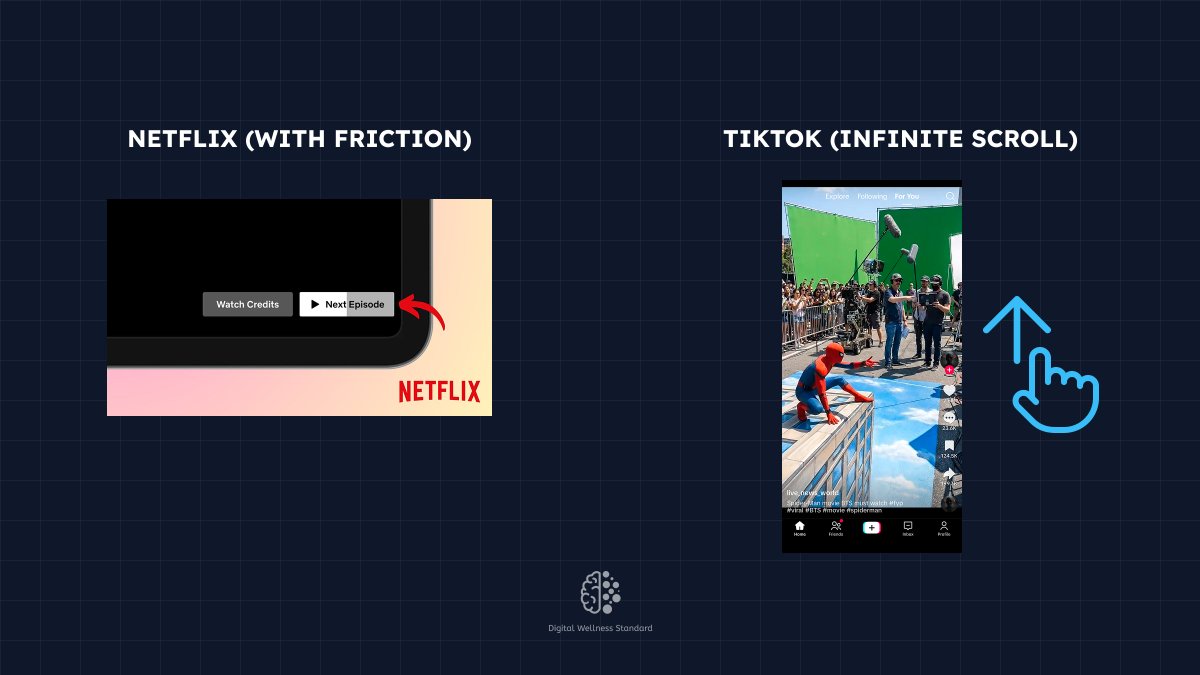
We just audited this exact mechanism. By removing 'Stopping Cues' (friction), TikTok prevents the prefrontal cortex from engaging, keeping the user in a purely reflexive loop.
We visualized the structural difference here:
https://t.co/0XN8xLbKfY
🚨 DWS Audit: TikTok
We ran a full IDM (Index of Design Manipulation) analysis on TikTok's UX.
While we identified multiple dark patterns, one specific mechanic drives the critical risk score:
🚩 The Pattern: Removal of Stopping Cues.
🔢 Impact: Contributes +40 points to the total IDM score.
Here is a deep dive into this specific variable 🧵👇
This data aligns perfectly with our structural analysis.
The 'Negative' platforms (TikTok, IG, YT) all share a specific design pattern: Infinite Scroll & Algorithmic Feeds (Removal of Stopping Cues).
The 'Neutral' ones (WhatsApp, Snapchat) rely on finite interactions (the conversation ends).
It’s a design problem, not just a 'screen time' problem.
This is exactly what happens when an interface removes all 'Stopping Cues'. 🧠
The brain never receives the signal that the session is 'over', so the loop continues in the background. It’s not just catchy songs; it’s conditioning.
We just audited this specific design mechanic here:
https://t.co/0XN8xLbKfY
🚨 DWS Audit: TikTok
We ran a full IDM (Index of Design Manipulation) analysis on TikTok's UX.
While we identified multiple dark patterns, one specific mechanic drives the critical risk score:
🚩 The Pattern: Removal of Stopping Cues.
🔢 Impact: Contributes +40 points to the total IDM score.
Here is a deep dive into this specific variable 🧵👇
At DWS, we don't advocate for banning apps. We advocate for Ethical Friction.
Great retention comes from value, not entrapment.
Is your product respecting user autonomy or exploiting it?
Follow @dws_standard for more #DigitalWellness#UX#ProductDesign audits.
🚨 DWS Audit: TikTok
We ran a full IDM (Index of Design Manipulation) analysis on TikTok's UX.
While we identified multiple dark patterns, one specific mechanic drives the critical risk score:
🚩 The Pattern: Removal of Stopping Cues.
🔢 Impact: Contributes +40 points to the total IDM score.
Here is a deep dive into this specific variable 🧵👇
From a behavioral standpoint, this design effectively suppresses the prefrontal cortex (decision making) and hijacks the dopamine reward loop.
It’s a "Skinner Box" optimized for time-on-screen, disregarding the long-term churn caused by user burnout and regret.
Before you write your 2026 resolutions, read this. 👇
Willpower is a battery. It drains. Engineering is a wall. It stays.
If you want to reclaim your time this year, stop relying on motivation. Start understanding the slot machine mechanism designed to drain you.
The blueprint:
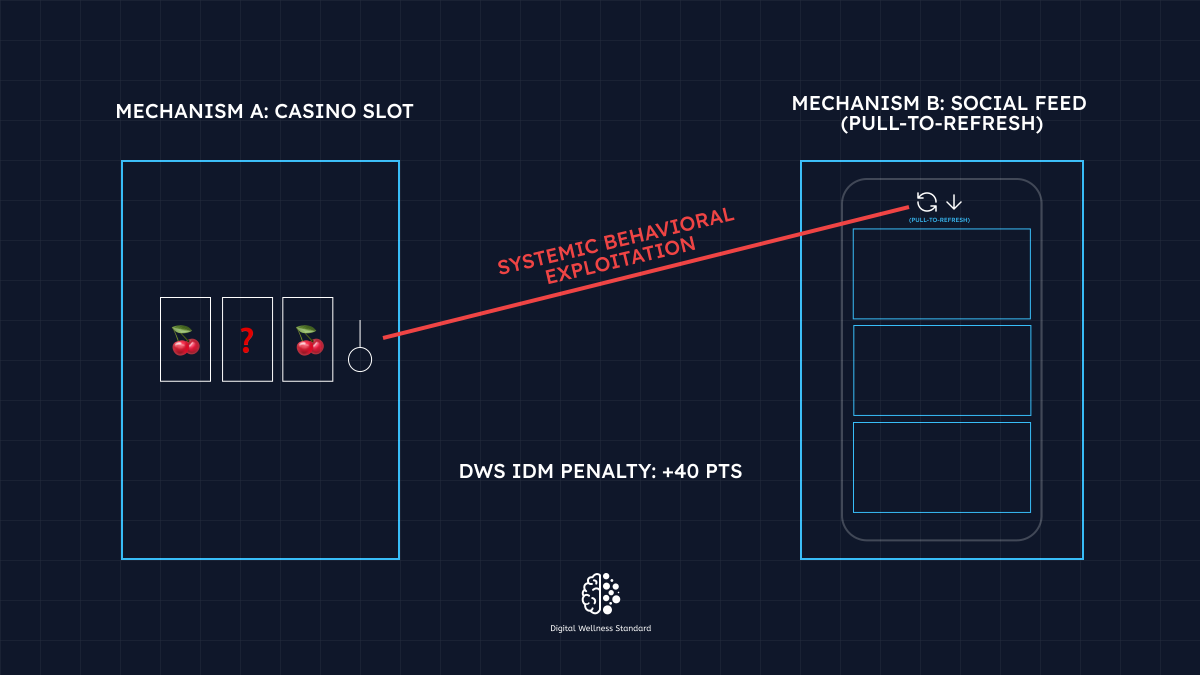
Most apps aren't "engaging." They are efficient slot machines. 🎰
We analyzed the #1 mechanism tech giants use to hack retention: Variable Ratio Reinforcement (VRR).
In the DWS Standard, this single pattern (A1) carries a 40-point penalty.
Here is the engineering breakdown. 🧵👇
@benjamuniverse1@jzux True, the tech will get more immersive. But you can upgrade the screen, not the nervous system...
Running infinite stimulation on 50,000-year-old biological hardware isn't evolution, it's just a faster burnout.
It's basically fast food for the brain. High stimulation, zero nutrition.
The algorithm serves you what keeps you staring, not what makes you happy. It’s not culture, it’s just retention engineering.
Note that they kept computer access.
This proves the issue isn't 'screens', it's the lack of friction.
Mobile data removes the gap between impuse and reward. Simply re-introducing that friction (blocking mobile data) allows the executive function to reboot.
Apps are engineered to remove all friction between impulse and reward.
This study proves that simply adding that friction back allows the bran to reboot.
It's not that you are broken. It's that the design is too efficient.
Two weeks without mobile internet restored sustained attention to levels typical of someone ten years younger.
Imagine regaining the mental sharpness you had a decade ago just by adjusting how you use your phone. A groundbreaking randomized controlled trial published in PNAS Nexus suggests this is possible. Researchers found that individuals who restricted mobile internet access on their smartphones for just two weeks experienced dramatic improvements in sustained attention and overall well-being. The cognitive gains were so significant that participants' performance on attention tests mimicked results typically seen in adults ten years younger, proving that our constant digital tethers may be taxing our brains more than we realize.
The study highlights that the benefit comes from reducing the relentless "always-on" stimulation unique to mobile devices. Interestingly, participants were not required to quit the internet entirely; they could still use computers and access basic phone features like calls and texts. By specifically cutting the umbilical cord of mobile data, participants allowed their focus and psychological health to rebound. While the effects did not extend to every aspect of cognition, the impact on sustained attention and mood offers a compelling case for periodic digital detoxes to preserve mental clarity in an increasingly distracted world.
Source: Castelo, N., & Kushlev, K. (2025). Blocking mobile internet on smartphones improves sustained attention, mental health, and subjective well-being. PNAS Nexus, 4(2), pgaf017.