we hear a lot about token burns in crypto, but the mechanism behind them is just as important as the burn itself.
with $INJ, the Community BuyBack connects ecosystem revenue with community participation, while permanently removing INJ from supply.
so, what actually happens?
▸ First, the Community BuyBack
participants commit INJ to the BuyBack and receive a proportional share of revenue generated across the Injective ecosystem.
at the end of the event, the committed INJ is permanently burned.
▸ So, Where Does the Revenue Come In?
each participant's share depends on their contribution relative to the total commitment and the revenue available for distribution. it's not a fixed payout.
▸ Now, Here's Where the Supply Squeeze Comes In
the Community BuyBack is one part of Injective's broader tokenomics.
approved through governance proposal IIP-617, the INJ Supply Squeeze reduces the rate at which new INJ enters circulation while working alongside recurring token burns.
- Reduced issuance: less new INJ entering circulation.
- Recurring burns: INJ permanently removed from supply.
both contribute to reducing INJ supply, but in different ways: one reduces the rate of new issuance, while the other permanently removes INJ through burns.
i put together a quick video to walk through how the BuyBack works and how it fits into the bigger picture.
@injective@InjectiveIn
#InjectiveNavratri
Day 7 (Oct 17): Kalaratri
Nav Durga x Injective | Day 7: INJ tokenomics: supply and burn
Today we honour Kalaratri "The dark night", symbol of destroyer of darkness, fear and ignorance.
Today's challenge: Explain the INJ burn mechanism in simple words.
Required format: Short video (under 60 sec)
Day rules:
- Video under 60 seconds.
- Explain the burn mechanism simply and accurately.
Event rules: In the main tweet.
Quote with #InjectiveNavratri.
Tag @injective and @InjectiveIn before 11:59 pm IST today.
Canton’s institutional footprint is widening.
@GoldisinMyVienz breaks down Wall Street’s growing presence on Canton, from DTCC’s tokenization work, to @Temple_NY RFQ’s cash and repo financing, to Canton Coin’s growing financial utility.
Read more.
https://t.co/chnNBmIHJk
Ratehopper agents don’t want to LP in these market conditions.
Here’s what’s happening, what they need to see before returning, and what we’re shipping to help your agent keep earning while it’s out of the pool. https://t.co/DNnIOWcjDn
As AI Advances Can Blockchains and Protocols Build Moats
If AI makes code easier to replicate, can liquidity, network effects, proprietary data and distribution still create lasting advantages?
Moderator: Patrick Chang (Dispersion Capital)
Participants: Stephen Novenstern (Kintsu), @AlwaysSunnyNYC (@reflexivexyz), @LowBeta (@Grayscale), @DanSimerman (@temple_ny)
options aren't just about calling the direction of a market.
they're also about setting boundaries on your risk before you enter a position.
that's the part worth looking at with @injective's new onchain options infrastructure.
▸ a different way to take a market position
with a perpetual, your exposure moves with the market for as long as you hold the position.
options work differently. a call pays out as an index rises above its strike, up to a set cap. a put pays out as it falls below its strike, down to a set floor.
the buyer pays a premium upfront, and that's the maximum they can lose on the option.
▸ why fully backed matters
each option has a fixed maximum payout. the writer locks that full amount in native Injective USDC upfront, so the potential payout is backed before the trade fills.
there's no borrowing or margin to top up, and the position can't be liquidated because the index moves sharply.
tbh, this is the key design choice: capping the payout makes it possible to fully collateralize the option from the start.
▸ the markets go beyond crypto
the first six markets cover:
- SICI: AI compute rental prices
- US500: the top 500 US companies
- US Tech: the top 100 US technology companies
- Gold
- Silver
- WTI crude oil
SICI is especially worth noting. it tracks the hourly rental price of five Nvidia GPUs, giving options traders a way to take a defined-risk position on AI compute costs.
for a business renting GPUs at scale, options on SICI could also help hedge against rising rental prices.
▸ what happens when an option expires?
Injective Options are European-style and cash-settled in USDC. each option settles against its index at expiry, with payouts sent to the buyer and unused collateral returned to the writer.
the first six markets are live on testnet, with writing initially limited to whitelisted participants.
what's worth watching now is what developers build on top of this infrastructure. the same underlying system can support options markets tied to very different things, from stock indices to GPU rental prices.
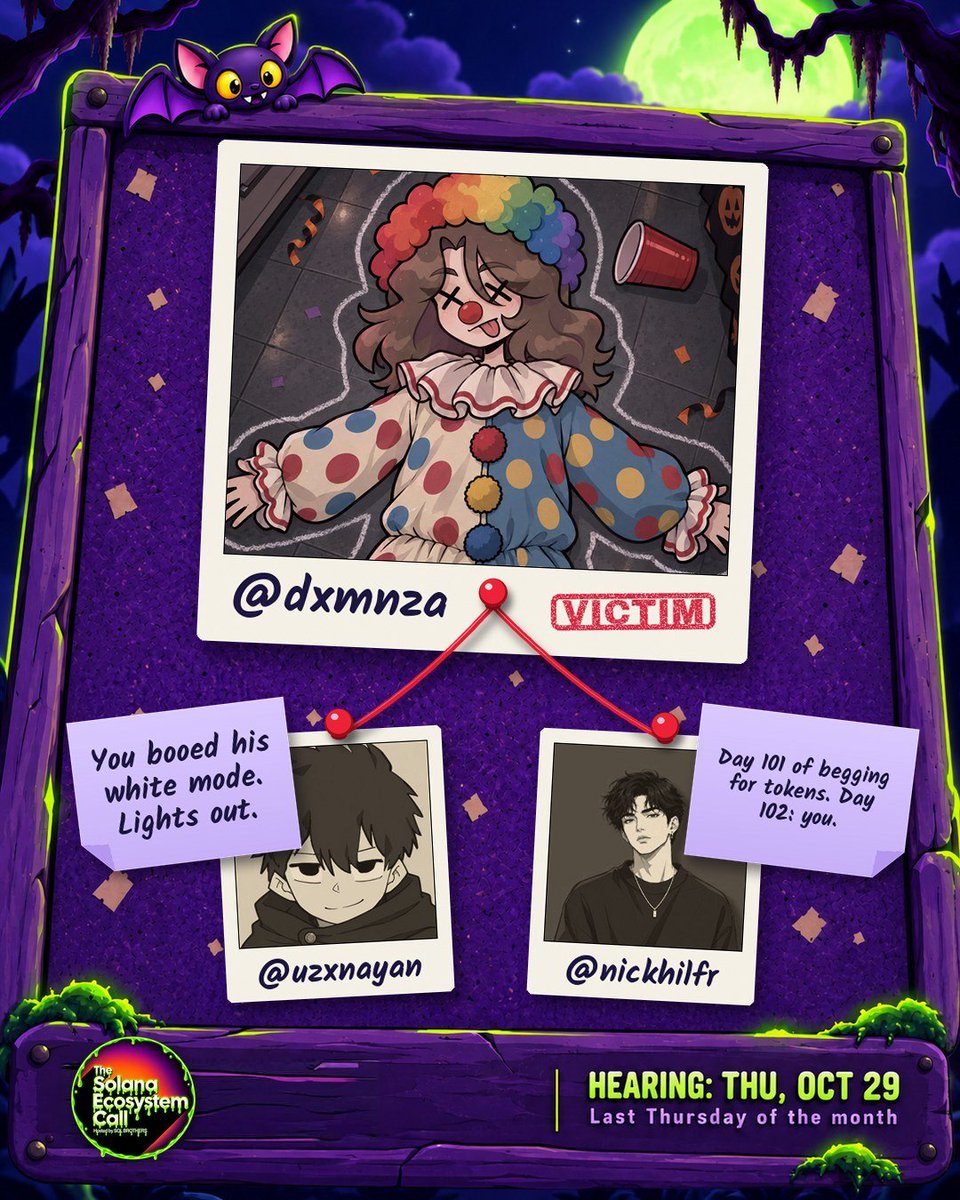
I was murdered at the Ecosystem Call Halloween Party. Who did it?!
My prime suspects are @uzxnayan and @nickhilfr.
Find out who murdered you on https://t.co/bz5leXmTUn!