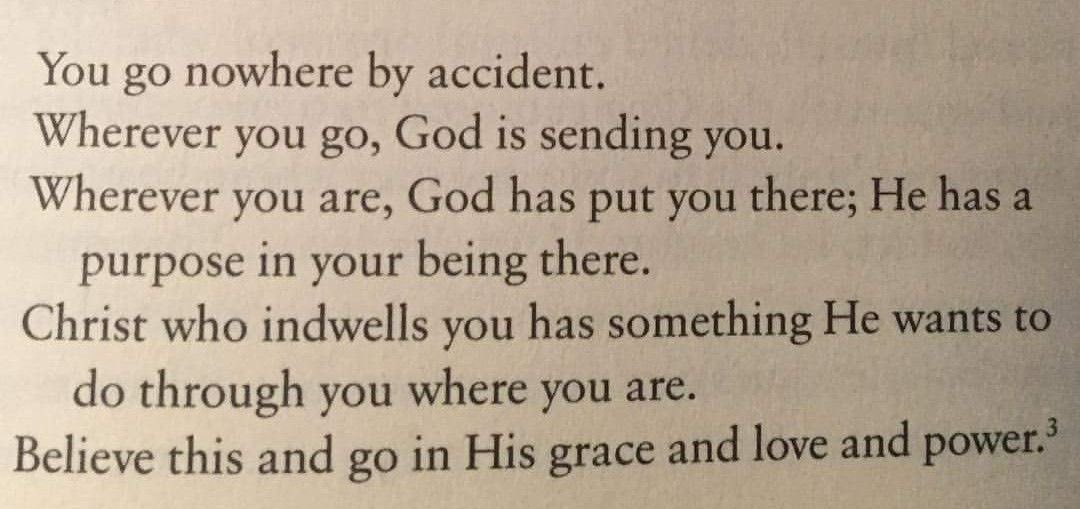
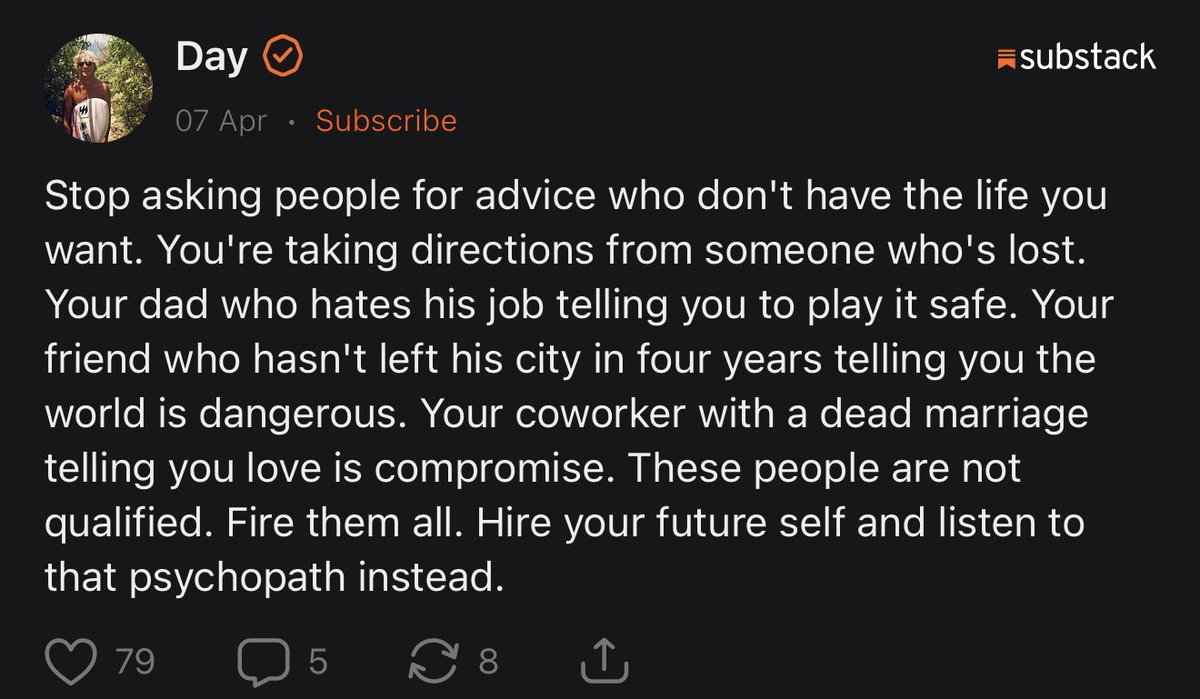
Stop glorifying urgency. Not every dream needs to be chased in panic. Some of what is meant for you will require patience, rhythm, and a nervous system that finally feels safe enough to receive it.
Everyone teaches you what to wear.
No one teaches you how to build a wardrobe that you don't have to reinvent every morning.
Your wardrobe is the only business asset that works before you say a word. It backs up your track record and personal brand, and, between you and me... It shows you grew up.
With The Curated Outfit, I help founders turn that asset into leverage.
it sounds dumb but it took me until 30 to internalize that people just say anything and it behooves you to ignore them and focus on what they do and how what they do makes you feel.
In low trust environments, be polite and cordial, yet brief. Minimise attack surface: share little personal information. Ignore provocations and be unprovocative. Be unopinionated. Express uncertainty when pressed. Do not emote. Avoid attachments. You are there, but not present.
upon Doing The Thing, you will invariably find two things to be true:
1. Doing The Thing was pretty easy, actually
2. not having Done The Thing was bothering you more than you thought it was
Write about your worst memory for 15 minutes a day, four days in a row. Six months later you'll go to the doctor half as often as people who didn't. James Pennebaker first ran that experiment at SMU in 1986. He's been trying to figure out why ever since.
Two years later he ran it again with two scientists who study the immune system. The writers' T-cells came back stronger. Way stronger than everyone else's. Those are the cells your body uses to fight off infections.
In 1999 the same idea got tested on people with asthma and arthritis. Twenty minutes a day, three days in a row. Four months later the asthma group was breathing better, and the arthritis group had fewer symptoms.
A 2004 study in New Zealand tried it on 37 people with HIV. The writers' CD4 counts went up. That's HIV's main target. The other group, who wrote about boring everyday stuff, didn't budge.
By 2006 someone had pulled 146 of these studies together. The same effect kept showing up across cancer patients, prisoners, college kids, and people with autoimmune diseases.
Researchers in the UK pushed it further in 2008. They split 36 people into two groups and gave each person a tiny circular cut on the inside of the arm, the kind you get from a skin biopsy. The first group had spent three days writing about something painful before the cut. The other wrote about their day. Two weeks later the writers' cuts had closed up faster on ultrasound.
Different angle, 2024. A team in Norway put EEG caps on people while they wrote. 256 sensors picked up brain activity. When you write by hand, wide stretches of your brain start talking to each other. The parts that handle movement and memory fire in patterns tied to learning. When you type, that doesn't happen.
Forty years in. The simplest version still works. Sit down for 15 minutes, write about what's bothering you. The "crazy gift" yimika is talking about shows up in blood draws, biopsy ultrasounds, and brain scans.
A surprising amount of adulthood is finally realizing that structure is not the opposite of freedom. It’s the thing that keeps freedom from turning into aimlessness.
Fun fact: inconsistent reinforcement is one of the strongest ways to create attachment.
It's the same psychological pattern used in gambling unpredictability keeps you hooked.