Blood tests and ECG’s are all well and good
But the real cardiac stress test is the sauna-stimulant combination
How long can you remain in the drivers seat once tachycardia creeps in and your whoop device starts malfunctioning?
MUSCLE: THE MOST POWERFUL ANTI-AGING TOOL YOU'RE PROBABLY IGNORING
Your skeletal muscle is not decorative tissue that lets you carry groceries. It's the primary metabolic organ that determines whether you age well or deteriorate into chronic disease. Most people, including most doctors, completely misunderstand this.
The medical establishment obsesses over BMI and weight scales. These metrics are garbage. Two people can weigh the same, have identical BMIs, and identical waist measurements, yet have drastically different amounts of visceral fat wrapping their organs.
One person might be metabolically healthy. The other is a heart attack waiting to happen.
The difference? Muscle mass.
MUSCLE AS METABOLIC CONTROL CENTER
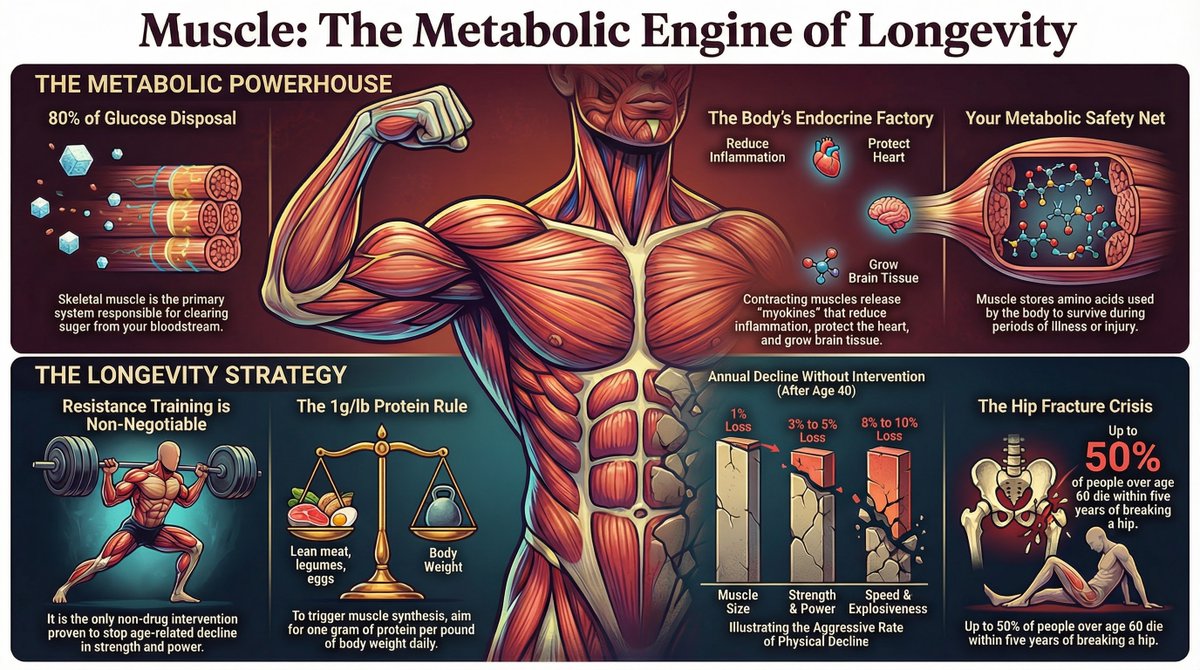
Your muscles are the largest glucose disposal system in your body. About 80% of glucose clearance happens in skeletal muscle. When you contract muscle tissue, it pulls glucose from your bloodstream without needing much insulin.
More muscle equals better glucose control. Less muscle equals insulin resistance, metabolic dysfunction, and eventually diabetes.
Fat oxidation works the same way. Higher muscle mass means more mitochondria, more fat-burning enzymes, better fatty acid transport. Your muscles literally create the metabolic machinery that determines whether you burn fat or store it around your organs.
Amino acid metabolism matters more than most realize. Your body turns over 250 to 300 grams of protein daily, possibly 500 grams if you're larger or carry more muscle.
Think of amino acids as Lego pieces. Your body recycles some, but when you're stressed, sick, injured, or fasting, it breaks down muscle tissue to get those pieces. If you lack adequate muscle stores, you have no metabolic buffer during illness or injury.
MUSCLE AS ENDOCRINE ORGAN
When you contract your muscles, they release myokines into your bloodstream. These signaling molecules regulate glucose and fat metabolism, reduce chronic inflammation, improve insulin sensitivity, protect brain function, and even have anti-cancer properties.
Brain-derived neurotrophic factor, one of these myokines, acts like fertilizer for your brain. It improves neuroplasticity and cognition. You literally grow your brain by contracting your muscles. Other myokines protect against cardiovascular disease and diabetes. Some regulate muscle growth and repair.
This endocrine function explains why muscle mass predicts mortality better than almost any other metric. Strong people die less often from everything, not just falls and fractures. Cancer, heart disease, dementia, all show inverse correlations with muscle strength.
THE HORMONE CONNECTION
Testosterone and estrogen are critical for muscle health. Testosterone is anabolic and anti-catabolic. It preserves muscle mass during stress and fasting. It increases strength, power output, and muscle fiber size. It improves the brain-muscle connection that makes contraction efficient.
Americans have epidemic levels of low testosterone in both men and women. Fat tissue contains aromatase, which converts testosterone to estrogen. More body fat equals less testosterone. Alcohol does the same conversion. Poor sleep, lack of sunlight, sedentary behavior, all suppress testosterone.
Estrogen matters just as much, especially for women. Postmenopausal women have less estrogen than their male partners. Estrogen is crucial for muscle growth and repair. It reduces inflammation and speeds recovery. It's anti-catabolic. Women in their follicular phase, when estrogen peaks, report feeling stronger in the gym.
Estrogen also regulates mitochondrial function. It increases expression of respiratory complexes and antioxidant molecules. When women lose estrogen at menopause, their mitochondria suffer.
They lose lean tissue, gain subcutaneous and visceral fat, and face sharply increased cardiovascular risk. Their A1C creeps up. All from estrogen loss affecting muscle and mitochondrial health.
THE MORTALITY DATA
Grip strength, sit-to-stand tests, push-up capacity, rise-from-floor ability, all predict all-cause mortality. These tests measure muscle strength, which serves as a proxy for total muscle mass. Strong people with healthy muscle tissue die less frequently from any cause.
Hip fracture data should terrify you more than cancer statistics. More women die from osteoporosis and hip fractures than from breast cancer.
If you break a hip after age 60, there's a 10% chance you'll die within a month. About 20 to 30% chance you'll be dead within a year. Nearly 40 to 50% chance you'll be dead within five years.
Weak bones correlate with weak muscles, which correlate with poor metabolic function. Low muscle strength links to diabetes, obesity, metabolic disease, hypertension, inflammation, COPD, dementia, and Alzheimer's.
THE AGING PROBLEM
Three conditions destroy muscle as you age: sarcopenia (age-related muscle loss), dinapenia (age-related strength and power loss), and myosteatosis (fatty infiltration into muscle tissue).
You start losing muscle in your 30s. After 40, you lose about 1% of muscle size annually, 3 to 5% of strength and power, and 8 to 10% of speed and explosiveness.
You lose type 2 fast-twitch fibers first. This is why elderly people can't catch themselves when they trip. They still have slow-twitch fibers but lost the fast ones that enable quick reactions.
Testosterone drops. Estrogen drops. Growth hormone declines. IGF-1 production falls. Inflammation rises. Oxidative stress increases. Nutrition becomes harder to manage. Stomach acid changes, impairing protein digestion. Mitochondria dysfunction spreads. Fat infiltrates not just muscle but heart and pancreas tissue.
THE SOLUTION
Resistance training is the only non-pharmacological intervention proven to consistently offset age-related decline in muscle mass, strength, and power. Not walking. Not cardio. Resistance training specifically.
Studies in women over 60 show the required work isn't overwhelming. Resistance bands work for beginners. But power training matters most. You need high-intensity interval training or sprint work to preserve fast-twitch fibers. This sounds intimidating but it's necessary.
The Metabolic Uncle platform will soon be online. I have prepared very comprehensive and detailed guides that enable everyone to strengthen their muscles at home, be it with bodyweight exercises or resistance band exercises.
Dietary protein requirements are grossly underestimated. The US recommended dietary allowance is set to prevent disease, not optimize health. Most men get 80 to 90 grams daily. Most women get under 60 grams. This is inadequate.
You need 20 to 30 grams of protein per meal to trigger muscle protein synthesis. This is driven by leucine, a branch-chain amino acid. Aim for minimum 90 grams daily, ideally one gram per pound of body weight. Balance the mTor triggering amino acids with collagen or glycine.
Timing matters. When you break your overnight fast, your body needs a large protein bolus, at least 30 grams providing 2.5 grams of leucine.
Same before your nightly fast. The body requires this protein at fast-breaking and fast-entering times. Meals in between matter less.
Animal foods are superior protein sources. You can get adequate leucine from plants but it requires consuming more calories. A few ounces of dairy, steak, beef, or chicken delivers concentrated leucine efficiently.
Sleep matters for growth hormone production and hormone optimization.
THE BOTTOM LINE
Muscle is the largest organ in your body by mass. It's not just structural tissue. It's your primary metabolic control system, your glucose disposal mechanism, your fat oxidation engine, your amino acid reserve, your endocrine signaling network.
Everything that kills people early or makes late life miserable correlates with low muscle mass. Cardiovascular disease, diabetes, cancer, dementia, falls, fractures, all show inverse relationships with strength.
You control this. Resistance training and adequate protein intake are within your power. These interventions work regardless of age. The data shows consistent benefits even in people over 60.
Eat animal protein and collagen and train your muscles. You can do that at home. No gym needed!
That's the formula. Build and maintain muscle mass throughout your life. It's the most effective anti-aging intervention available.
The polyunsaturated fats in seed oils lower metabolism, while the saturated fats in coconut oil, butter, cacao, and beef fat increase it.
Women who ate extra virgin olive oil as part of their breakfast lost almost twice as much fat as those who ate the same amount of seed oil.
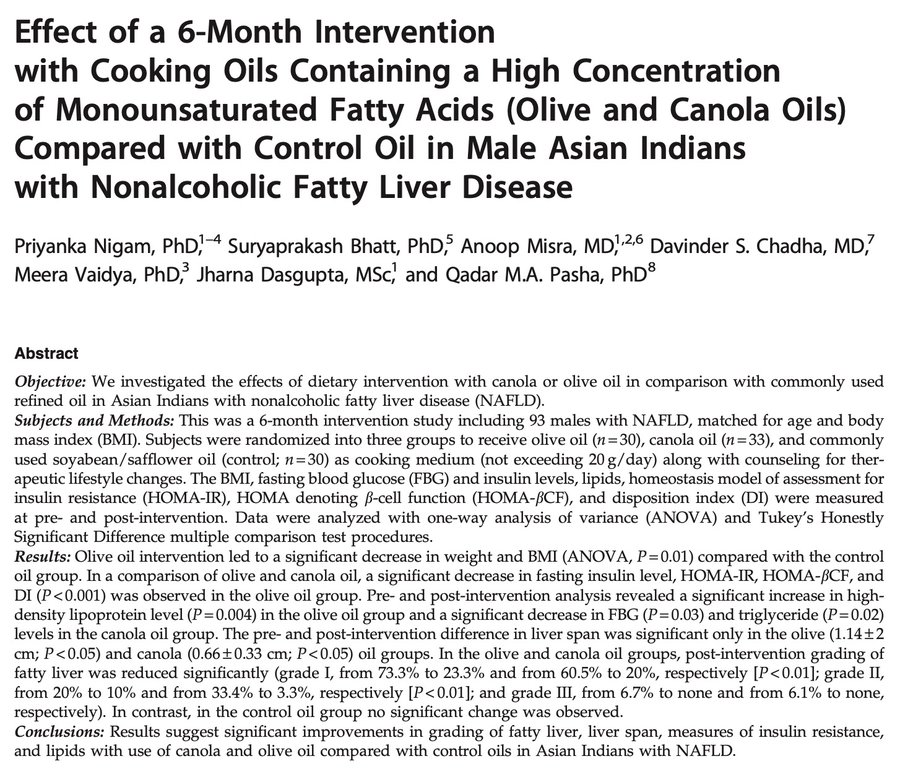
Men with fatty liver disease lost more weight when using olive pomace oil instead of seed oils. The more omega-6 linoleic acid in the diet, the less weight lost.
An analysis of 9 human studies showed a significant reduction in body fat percentage and BMI with coconut oil.
I am literally SHAKING right now. I presented my laminated Seed Oil Allergy card to the cashier at Taco Bell and was LAUGHED AT. This is NOT how our ancestors would have been treated at Taco Bell. This is NOT ancestrally consistent. We need real change. @RobertKennedyJr
Seed oils ruin thyroid function!
🟥 Reducing thyroid hormone binding
🟥 Reducing thyroid hormoneconversion
🟥 Reducing nuclear receptor binding
🟥 Probable cause of hashimoto’s disease
The thyroid gland produces several thyroid hormones. T3, is the active thyroid hormone. T4 is a precursor, one enzymatic step away from T3.
The thyroid hormone (T3) aims to reach the cell’s nucleus and activate the nuclear receptor. Many things can go wrong along the way, and seed oils are a huge problem in this regard.
T3 and Metabolic Health
T3 helps regulate the speed at which your body’s cells work. When T3 levels are high, cells work faster. This means they use more energy and your resting metabolic rate increases.
T3 enters the cell nucleus (the control center) and binds to specific receptors. This triggers the expression of genes that control the production of proteins involved in energy production and use.
T3 stimulates the production of proteins within the mitochondria. These mitochondria produce ATP - energy currency.
T3 increases the rate at which cells use oxygen and nutrients to produce energy. When T3 levels are high, your body is more efficient at converting food into usable energy rather than storing it as fat.
Heat is generated as a byproduct of increased metabolism and energy production. This is why people with high levels of T3 (reaching the nucleus) feel warmer and have a higher body temperature. Hypothyroid people are usually cold all the time.
Your body needs energy to maintain vital functions like breathing, circulating blood, and repairing cells. T3 influences the resting metabolic rate by keeping these processes running efficiently.
Anything that interferes with T3 can lead to issues including fatigue, weight gain, depression, hormonal imbalances, sexual dysfunction, mental health problems, and serious heart conditions. The full list is endless.
T3's final destination is the nuclear receptor of the cell, where it enters cells and binds to thyroid hormone receptors (TRs). This binding can either up-regulate or down-regulate the transcription of target genes, leading to changes in protein synthesis.
These proteins regulate metabolism, cardiovascular function, lipid metabolism, protein synthesis, mitochondrial function, neurological function, and reproduction.
These hormones ride binding proteins along the way. T4 may or may not be converted to T3, which must bind with the nuclear receptor.
Anything that interferes with the flow of T3/T4 from the gland to T3, activating the nuclear receptor, can cause problems to any system in the body. Seed oils interfere with this flow in numerous ways.
Thyroid Hormone Transport
Thyroid hormones are transported around the body by binding proteins in blood serum. It’s been noted that these proteins drop or unbind thyroid hormones during illness.
During stress (including illness), free fatty acids (FFAs) are released, including linoleic acids from seed oils.
Because of this, researchers were curious whether FFAs could affect thyroid hormone binding to transport proteins, so they conducted experiments on healthy individuals’ blood serum. The blood serum was mixed with different FFAs, and the researchers looked at their effects on thyroid hormone binding to transport proteins.
Arachidonic acid and linoleic acid had the most potent anti-thyroid effect.
Another study showed similar effects; linoleic and arachidonic acids prevented binding, as did oleic acid, but saturated fatty acids did not.
Linoleic acid is the major fatty acid in seed oils like soybean oil. We consume multiple times more linoleic acid than our grandparents did. Arachidonic acid comes from animal foods, and we can make it from linoleic acid. These two are the major omega-6 fatty acids.
Linoleic acid also tends to increase arachidonic acid as a free fatty acid, inhibiting thyroid binding and lowering thyroid function.
Bovaer is being added to BEEF and MILK because it is thought to prevent climate change.
This is based on woke science.
The truth is, it might harm your health in many ways.
I’ll explain.
When I saw this this morning, I though it was just another 'crazy conspiracy theory'. So like all good conspiracy theorists, I decided to fact check it before spreading more 'disinformation' and was shocked by the results.
Firstly, it is absolutely true that Arla, who supply Tesco, Morrisons and Aldi, are trialling Bovaer on their dairy cattle https://t.co/nfbdecK6j0
So I went on. Bill Gates' Bovaer is so dangerous that it should not be handled without wearing full PPE as it is harmful if inhaled and a skin irritant. It's side effects include:
Eye and skin irritation.
Breathing difficulties
And as always with any of Bill Gates' products - Male infertility. https://t.co/k1H6hoc1KI
Worse still, Bovaer's genotoxicity (damage to DNA that could lead to such side effects as cancers and birth defects) is not known! https://t.co/2IVlMg7qUO
Milk, butter, cheese etc, will all immediately be effected, but further, it is not clear whether crops grown in ground where manure has been used as a fertiliser will be effected.
When they say trial, they really do mean trial as not much is known about the long terms effects of Bovaer, particularly if it were to enter the food chain. And we are, as usual, its unwitting participants.
I guess we can't stop it from happening but we can choose where we buy our products and I for one will be boycotting Arla!
#BoycottArla