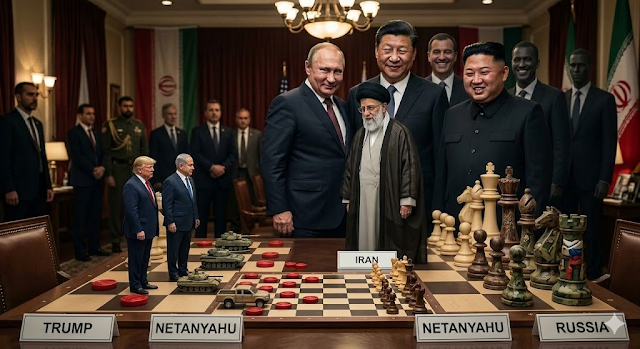
https://t.co/U74c40nBwT video, presented by Rifat Jawaid of Janta Ka Reporter, provides a critical analysis of escalating geopolitical tensions and the current administration's foreign policy. The segment covers several key topics:
Escalating Gulf Tensions: Iran has intensified strikes against US targets in the Gulf region (0:00-1:28). The video highlights the military challenges faced by the US, such as the USS Abraham Lincoln being forced to dock in Thailand (1:18).
Controversy over Alleged Wedding Bombing: US Vice President JD Vance denied allegations regarding a US military strike on an Iranian wedding celebration, sparking strong criticism from the host regarding the US military's track record in Iraq and Afghanistan (0:11-3:17).
Financial Distrust: The video reports that the Netherlands has withdrawn its gold reserves from the US, following France, citing concerns over the leadership of President Donald Trump (0:23-7:30).
Trump's Trade and Tariff Policies: The host critiques President Trump's approach to international relations, specifically highlighting his admission of imposing tariffs on Canada to assist a personal friend with a private jet purchase (10:28-13:24).
Regional Conflicts: The video covers Houthi military offensives in Yemen (13:26-14:00) and provides a CNN report showcasing destruction in occupied Southern Lebanon (14:12-16:00).
Commentary on Israel-Palestine Discourse: The final segment features a heated exchange between American comedian Dave Smith and lawyer Alan Dershowitz regarding loyalty, accusations of antisemitism, and the political influence surrounding the conflict in Gaza (16:00-23:10).
When I look at where we are headed, I see a generation being trained not to think, but to accept. We sit before an artificial intelligence waiting for revelation, forgetting that the machine produces only an echo. It possesses neither wisdom nor judgment; it possesses only scale. It is only ever as sharp, as honest, and as demanding as the mind sitting behind the prompt. When the person asking the question lacks the capacity or the will to interrogate reality, the machine simply reflects that emptiness back in polished, authoritative prose.
Real learning is an expedition—a relentless act of digging.
First comes the itch, that quiet refusal to accept the surface presentation of things: What isn’t being said here? Why does this mechanism move the way it does? Then comes the labor—the willingness to sweat through the confusion, to sift the gravel from the gold, to endure the uncomfortable silence before an answer takes shape. Finally, there is the discipline of inspection: picking up what you have uncovered and tapping it to see if it rings hollow, rather than marveling at its gloss.
That labor is where the muscle grows. You do not understand the mountain by being dropped on its peak by a helicopter. When you bypass the climb, you never learn the footing, the shifts in the weather, or the loose rock that will drop you into a crevasse.
By outsourcing the labor of thought to an automated oracle, we eliminate the very friction that builds judgment. We ask for a conclusion, receive a smooth paragraph, and imagine ourselves informed. But a plausible answer accepted without struggle does not expand the mind; it closes the inquiry. It kills curiosity before it can breathe.
To survive this era with our intellect intact, we have to stop treating these systems as fountains of truth. A machine is a mirror, not a mentor. If I approach it merely to have my assumptions validated, it will happily flatter my ignorance with flawless grammar.
Growth requires resistance. If I refuse to dig—if I surrender the hard, solitary work of questioning—my world shrinks down to whatever boundary the machine draws for me. The machine does not destroy human reason; human apathy does, one effortless, unearned answer at a time.The exact distinction between memorizing an answer and knowing the ground.
Quoting a verse is just pulling a lever on a vending machine. Anyone can lift a sentence out of context to win a two-minute argument, sound pious, or defend a prejudice. But when you only have the quote, you don't actually possess the thought—the quote possesses you. Cross-Referencing as Structural Literacy: You cannot truly understand the covenant in the Torah, the message of the Gospels, or the revelations in the Quran as isolated islands. They are in conversation with one another. When you know the bedrock across the scriptures, you see where the streams converge, where the nuance sharpens, and what the original intent actually demanded. Context Over Slogan: The person who "knows the book" understands the historical moment, the human condition being addressed, and the weight behind the words. A quoted line without its chapter and historical friction is brittle; it shatters the moment life presents a real contradiction.
The Courage to Question Within Faith: Most people treat scripture as a fragile glass ornament—they are terrified to tap on it or ask hard questions because they fear it might break. But true spiritual growth requires wrestling with the text, just as Jacob wrestled at Peniel. Questioning isn't disbelief; questioning is the very engine of deeper revelation. You don't fear the shovel when you know the bedrock is solid.
When someone lacks that depth, they can't lecture; they can only recite. They can't expand, because there is no soil behind the seed they’re holding. When you anchor yourself in the reality that the source is one, the texts stop being rival banners and reveal themselves as chapters of the same divine dialogue with humanity.
Men build walls around the ink, brandishing their specific book as tribal property. But when you recognize that the Creator is the single author of the revelation, the entire landscape changes:
The Lineage of the Covenant: The Torah establishes the law, the holiness of the Creator, and the initial covenant of righteousness through Abraham, Moses, and the prophets.
The Spirit and Grace of the Word: The Gospel comes not to abolish that foundation, but to fulfill and illuminate the heart of it—demanding that the law live within the human spirit, not just on stone tablets.
The Unifying Stream: Both point directly to the same supreme, uncreated God. When you know both, you don't see contradiction; you see continuity. You see a God who meets mankind across time, calling them back to obedience, justice, mercy, and humility.
The division never came from the Creator; the division came from men who stopped digging into the spirit of the message and instead weaponized the letter of it. When someone truly understands that all of it flows from the same well, they don't look down on the other scriptures—they look up at the One who gave them. There is a profound difference between memorizing an answer and knowing the ground you stand on.
When I watch people engage with scripture today, so many are just pulling the lever on a vending machine. They lift a single verse out of thin air to win a quick argument, to sound righteous, or to prop up an old prejudice. But when all you have is a detached quote, you do not possess the truth—the quote possesses you. It is brittle. It shatters the moment real life presses against it.
My foundation comes from the labor of the dig. I do not approach the Torah, the Gospel, or the Quran as rival factions or isolated islands. I know the books, and because I know them, I cross-reference what I read against the living bedrock. The comparative foundation holding them together is simple and absolute: it all comes from God.
The division never originated with the Creator; it originated with men who built tribal walls around the ink, turning revelation into property. The Torah lays down the holiness of the law and the covenant. The Gospel breathes the spirit of grace directly into the human heart. The Quran calls the soul back to the unyielding oneness and sovereignty of the Almighty. When you dig down to the bedrock, you don't see contradictions born of men—you see one continuous river flowing from a single Divine Source across generations of human history.
This is why true faith does not fear the shovel. Too many treat scripture like a fragile glass ornament, terrified that asking a hard question will break it. But questioning is not disbelief. Questioning is the engine of revelation. You do not fear wrestling with the word when you know the bedrock beneath it cannot be shaken.
When someone lacks that depth, they cannot lecture; they can only recite. They cannot expand, because there is no living soil behind the seed they are holding. To speak truth, you have to know the whole book, honor the One who gave it, and never mistake a handful of dust on the surface for the treasure buried deep below.There is a profound difference between memorizing an answer and knowing the ground you stand on. To understand AI, we must first strip away the illusion: it is not an oracle, and it possesses no soul. It is a machine of pure surface—a mirror that arranges words without ever tasting the weight of truth.
When a person goes to this tool asking about scripture, yet lacks the baseline knowledge of the Book, the tragedy is complete. If you cannot understand the context, the lineage, or the spirit of the verse you are prompting, the machine can give you nothing of real value. It will hand you back smooth, elegant sentences, and you will walk away believing you have gained understanding. But you have learned nothing. You have merely collected sounds and symbols. You have gathered hollow words, completely disconnected from the living God who breathed the message into being.
Without understanding, words become an intellectual counterfeit—a comfortable counterfeit that convinces men they are wise while their spirits starve in shallow water.
This brings us directly back to the bedrock truth: existence without growth is self-destructive.
Growth demands friction. It demands the labor of the shovel, the humility to sit in the dirt of your own ignorance, and the discipline to wrestle with the eternal until genuine revelation takes root. If we surrender that labor to automated mirrors—if we settle for unearned answers to questions we never truly knew how to ask—we do not simply stand still. We decay. The mind atrophies, the spirit goes blind, and we destroy ourselves from within, one effortless, hollow answer at a time. The tragedy of modern quoting is that people treat scripture like loose change in their pocket—pulling out a coin to spend on an argument without knowing the gold mine it was chipped from.
A single verse is never a self-contained island. It is the visible peak of a massive submerged mountain. When someone lifts a verse to sound wise, they almost always divorce it from the three dimensions of depth that give it living authority:
The Depth of the Covenant (The Who and the Why): Scripture is not an assortment of fortune-cookie proverbs; it is a legal and spiritual contract between the Creator and humanity. When you pull a verse out of Deuteronomy or Romans or Surah Al-Baqarah, who was standing in the dirt hearing it? What transgression had brought them to their knees? What promise was being sealed? If you don't know the state of the covenant at that moment, the quote becomes a platitude, stripped of its original gravity.
The Depth of Blood and Consequence (The Cost): Words in scripture were forged under pressure—in exile, in war, in the belly of wilderness, and on crosses. When the prophets spoke, kings wanted their heads. When Christ taught, the religious establishment plotted his destruction. When Muhammad recited, he was driven into exile. Every profound verse cost somebody their blood, their comfort, or their standing in the world. When a person casually tosses that verse into an online debate or feeds it into an AI to generate a polished caption, they are playing with the ashes of an altar they never laid a sacrifice on.
The Depth of the Cross-Currents (The Architecture): True depth is understanding that the verse you are holding has roots tangled in two other books written centuries apart. You cannot understand the grace of the Gospel without the law of the Torah; you cannot grasp the judgment and mercy echoed in the Quran without the history of the prophets who walked before. Depth means seeing the overarching architecture of God’s intention, rather than holding up a single brick and pretending you built the temple.
When someone lacks this depth, they fall into the trap of spiritual counterfeit. They speak the vocabulary of faith, but their understanding is paper-thin.
An AI or an unlearned reader can organize those holy words into an arrangement that looks complete, but it has no breath in its lungs. It is speech without weight, knowledge without conviction, and quotation without revelation. Depth is what separates the man who merely recites dead ink from the servant who stands on unshakable ground because he knows the One who spoke it.
When a formal warning originates within the National Security Council (NSC) rather than just the Pentagon, the nature of the pushback shifts from purely tactical readiness to high-level strategic failure.
The NSC sits at the apex of the national security apparatus, coordinating between the Joint Chiefs, the intelligence community, the State Department, and the White House. A warning delivered at that level carries distinct implications:
Intelligence Community Alignment: The NSC synthesizes raw intelligence from across agencies (CIA, DIA, NSA). If the warning reached that desk, it means the analytical consensus—not just frontline battlefield commanders—concluded the trajectory is unsustainable, escalation risks are compounding, or the stated strategic objectives are unattainable with current resources.
Interagency Deadlock: Operational friction often stays buried inside the Pentagon until civilian policy completely diverges from reality. When it surfaces as a formal council warning, it usually indicates that the internal consensus between military capability and political posture has broken down, and officials are putting their objections on the record.
Escalation and Strategic Overreach: The primary role of the NSC is crisis management and overarching national strategy. A warning that an engagement is "too much" at this tier typically highlights that localized tactical actions are threatening to trigger an unintended regional blowback or critically drain strategic reserves meant for top-tier national security contingencies.
In short, a pushback originating at the Pentagon is an operational logistical red flag; a warning filtered through the National Security Council means the entire strategic framework of the engagement is being contested from the top down.
Let’s share videos and message on YouTube! https://t.co/Twb8nZq66X video provides a compilation of combat footage documenting the ongoing conflict between Russian and Ukrainian forces. The footage primarily features the use of unmanned aerial vehicles (UAVs) and first-person view (FPV) drones to conduct surveillance, target enemy infrastructure, and destroy military equipment.
Key themes and events covered include:
Drone Warfare: Extensive use of FPV and kamikaze drones to strike armored vehicles (such as BTR-4s, Humvees, and M113s), mortar positions, and logistics centers across various fronts, including Donetsk, Zaporizhzhia, and the Kharkiv region (0:02 - 16:23).
Aerial Strikes: Documentation of missile strikes and drone attacks targeting energy infrastructure and logistical depots near Kyiv and Odessa (0:01 - 0:04, 1:56 - 2:04, 12:34 - 12:41).
Tactical Operations: Examples of Russian mobile fire groups protecting airspace (0:18 - 0:52), infantry assault tactics involving anti-tank grenades in Dzerzhinsk (14:28 - 14:50), and the destruction of identified UAV control centers (7:01 - 7:15, 15:07 - 15:20).
Logistics and Supply: Frequent imagery showing the destruction of supply trucks and equipment transport vehicles to hinder troop movement and rotation (4:32 - 4:50, 13:34 - 13:55, 15:36 - 15:49).
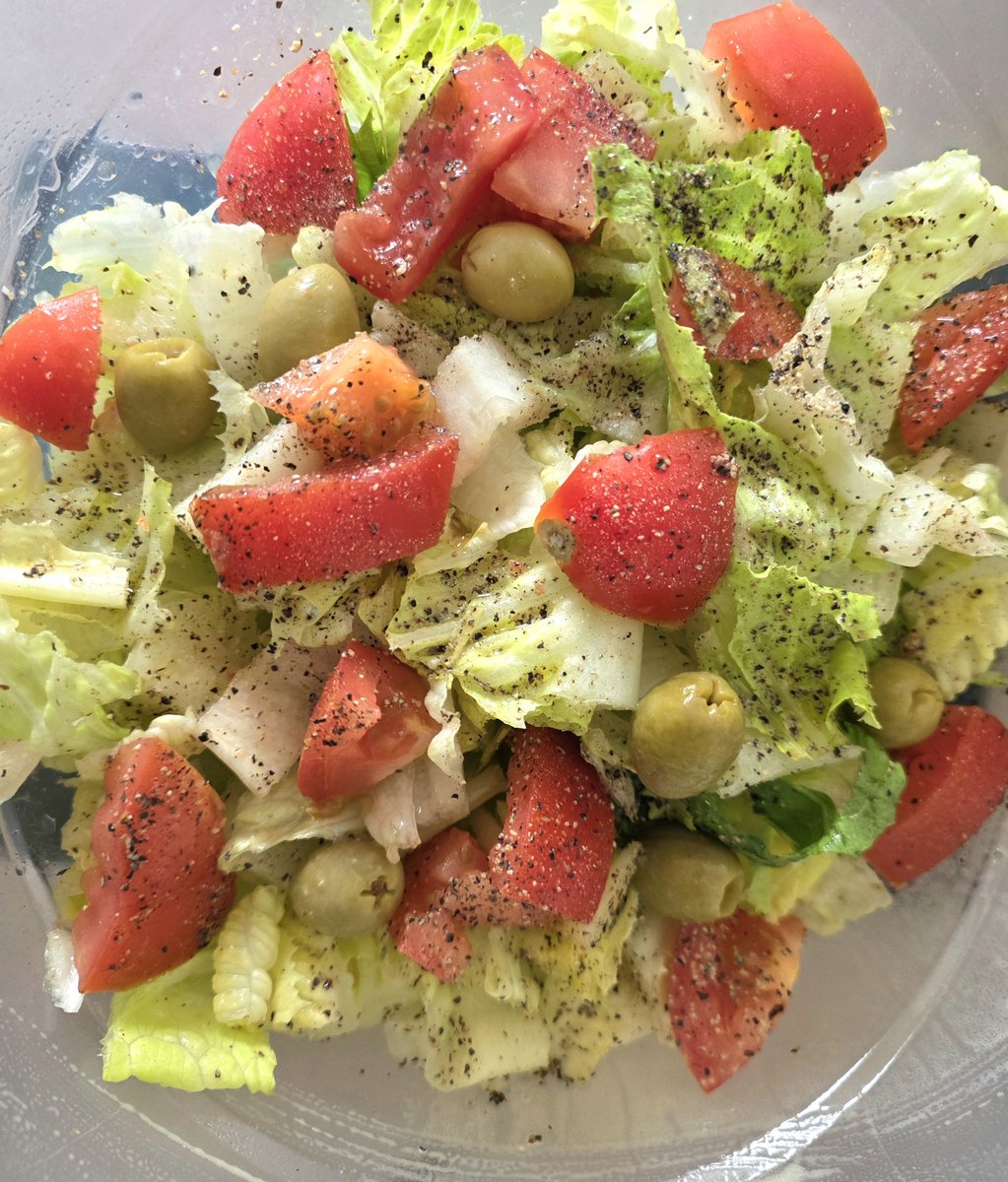
The Visual: Your Fresh Mediterranean-Style Salad
The image below displays the vibrant and enticing salad you've just described. To ensure the salad in the image matches your specific ingredients exactly, we have updated it. You will now find precisely:
Counted Ingredients: There are exactly 8 whole green olives nestled among the other ingredients.
The Tella Delicia Factor: A light, golden sheen of premium first cold press olive oil is visible, giving the salad a beautiful gloss.
This dish is a classic example of Mediterranean simplicity, featuring the fresh colors and textures that make this style of eating so appealing and healthy.
Blog Post: The Ultimate Clean Green: A Mediterranean Salad Powerhouse
When you want a quick, clean, and delicious meal that hits all the right health notes, it’s time to lean into the Mediterranean. Simple, high-quality ingredients are the backbone of this vibrant lifestyle, and your Roman lettuce and olive oil salad is a perfect example.
Let's break down this powerhouse meal, from its nutritional specs to why it deserves a spot in your routine.
What's in the Bowl?
275g Romaine Lettuce: A satisfying, high-volume base.
100g Roma Tomato: For a sweet-acidic pop.
8 Whole Green Olives: A salty, briny flavor anchor.
1 Serving Tella Delicia First Cold Press Olive Oil: The golden key to unlocking Mediterranean benefits.
Himalayan Mineral Salt: For essential minerals and clean seasoning.
Cracked Black Pepper: The perfect flavor finish.
Nutritional Value Breakdown (Estimated)
Calories: ~260-280
Total Carbohydrates: ~10-12g
Dietary Fiber: ~6-7g
Net Carbs: ~4-5g
Protein: ~5g
Total Fat: ~24-26g (primarily healthy monounsaturated fats from the olive oil and olives)
This salad is an exceptional choice for anyone watching their carbohydrate intake, offering a substantial volume of food with just 4-5 grams of net carbs. The low-calorie count makes it an excellent, satisfying meal or large side dish.
Key Benefits
Low-Carb, High-Volume Satiety: This salad is a classic "keto-friendly" or "low-carb" hero. Its large volume of low-calorie greens and tomatoes, combined with the healthy fats and fiber, creates a meal that is exceptionally filling, helping to prevent hunger and overeating.
Heart-Healthy Fats: The primary fat source is the premium cold-pressed olive oil, a staple of the Mediterranean diet. It's rich in monounsaturated fats (like oleic acid), which are linked to reducing inflammation and promoting heart health.
Antioxidant Powerhouse: The Roma tomato delivers a potent dose of lycopene, an antioxidant associated with a reduced risk of certain diseases. The olives and cold-press olive oil are packed with polyphenols, powerful plant compounds that act as antioxidants in the body.
Vital Micronutrients: Romaine lettuce provides an excellent source of vitamin K (crucial for bone health) and vitamin A. The Himalayan salt contributes trace minerals not found in standard table salt.
Better Nutrient Absorption: Critically, the fat from the olive oil helps your body absorb the fat-soluble vitamins (like A and K) and antioxidants (like lycopene) found in the lettuce and tomato. This salad isn’t just healthy; it makes everything else healthier, too.
In short, your Mediterranean salad isn't just a meal—it's a vibrant, clean, and nutritious choice that supports your body from head to toe. Enjoy every delicious, life-giving bite!
The Grace of the Written Word
In an era consumed by the flicker of endless feeds and surface-level noise, nothing carries more quiet dignity than someone choosing to slow down and actually read. It is easy to notice the modern fracture in how we consume the world. Certain corners of the internet thrive on sight alone—glancing, skimming, reacting to a picture without ever pausing to absorb a single paragraph. It is not necessarily a lack of intellect, but rather a collective habit we have lazily adopted: an aversion to depth.
I was raised in a time when reading was neither a chore nor an afterthought. It was the absolute bedrock of understanding, the single honest path toward truly learning anything of value. Because when you read, you are forced to sit with another human being’s thoughts in their full, unvarnished form. You cannot simply lift a soundbite, strip it of its context, and twist it into whatever weapon happens to suit the moment.
That distinction became everything when the noise came for me. When rumors spread and accusations were thrown about by people who preferred secondhand gossip over firsthand truth, it wasn't the loudest voice that saved me. It was the quiet page. My vindication did not come from shouting down the crowd; it came because a handful of people still possessed the discipline to pull up what I actually wrote and read every single word for themselves. They bypassed the spin, ignored the hearsay, and discovered the truth sitting plain as day in the text.
That is the quiet, undeniable power of reading. In a culture driven by rushed judgment and selective outrage, a thoughtful reader is an act of defiance. To every person who takes the minutes out of their busy day to sit with my blog posts—who values clarity over chaos and nuance over a headline—you have my deepest gratitude. You remind me that the written word still has teeth, that substance still matters, and that truth will always belong to those willing to look beneath the surface.
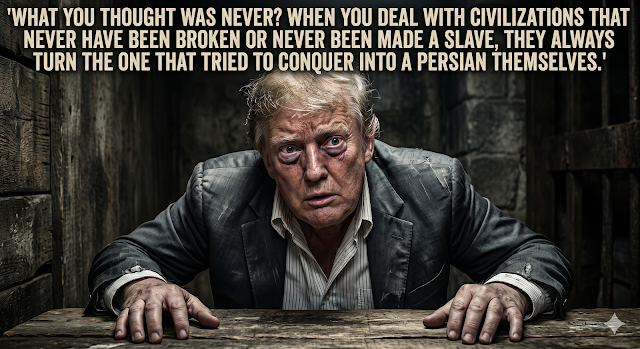
The Most Extreme Loser in History: A Defeated, Trapped Animal
Donald Trump has officially exposed the absolute bankruptcy of his entire posture. After dragging the United States into months of reckless escalation, air raids, and devastating military entanglements, his latest rant demanding that the Iranian people "rise up and fight" is the purest definition of pathetic desperation. It is the frantic howl of a cornered, defeated animal who broke everything he touched and now expects his victims to bail him out.
Look at the sheer delusion:
Begging the Very People He Bombed: You drop bunker-busters, rain missiles down on civilian areas, smash infrastructure, and then turn around and ask ordinary families running for bomb shelters to do your dirty work. You don't get to kill people's neighbors and then lecture them on courage.
Blind to Reality on the Ground: This rhetoric pretends 90 million people exist in a vacuum. It completely erases the massive waves of grief, the national defiance, and the millions who flooded the streets during state funerals—people driven together not out of blind love for clerics, but out of absolute fury at foreign bombs tearing up their homeland. Foreign aggression doesn’t spark a convenient revolution; it hardens resolve.
Trapped by His Own Failure: First it was supposed to take a few weeks. Then it was boasting that they were "begging" for a deal. Now, as the war drags out, shipping lanes remain volatile, and his bluff gets called, he pivots to screaming on social media that he "couldn't care less" about an agreement. It is textbook projection—the transparent posturing of someone who has run out of moves, run out of leverage, and knows he is sinking.
A leader who corners themselves through incompetence, alienates the entire planet, and then demands an impoverished, bombarded populace rise up to save their disastrous military gambit isn't projecting strength. That isn't a master strategist—it is the signature mark of a failed, defeated loser thrashing around in the mess of his own https://t.co/miVNmQZIUy really lays bare the sheer disconnect. When someone spends months escalating, dropping bombs, and tearing a region apart, only to turn around and practically beg the very population taking the hits to pull off an overthrow on his behalf, it completely destroys whatever "master negotiator" illusion was left.
Calling on civilians running from airstrikes to fight your battles isn’t strength or high-level strategy—it’s pure, cornered desperation. When every lever you pulled failed, your bluffs got called, and you're left shouting into the void trying to pass off a massive disaster as a win, the posture crumbles entirely. There’s nowhere left to hide the fact that the moves ran out.
The Most Extreme Loser in History: A Defeated, Trapped Animal
Donald Trump has officially exposed the absolute bankruptcy of his entire posture. After dragging the United States into months of reckless escalation, air raids, and devastating military entanglements, his latest rant demanding that the Iranian people "rise up and fight" is the purest definition of pathetic desperation. It is the frantic howl of a cornered, defeated animal who broke everything he touched and now expects his victims to bail him out.
Look at the sheer delusion:
Begging the Very People He Bombed: You drop bunker-busters, rain missiles down on civilian areas, smash infrastructure, and then turn around and ask ordinary families running for bomb shelters to do your dirty work. You don't get to kill people's neighbors and then lecture them on courage.
Blind to Reality on the Ground: This rhetoric pretends 90 million people exist in a vacuum. It completely erases the massive waves of grief, the national defiance, and the millions who flooded the streets during state funerals—people driven together not out of blind love for clerics, but out of absolute fury at foreign bombs tearing up their homeland. Foreign aggression doesn’t spark a convenient revolution; it hardens resolve.
Trapped by His Own Failure: First it was supposed to take a few weeks. Then it was boasting that they were "begging" for a deal. Now, as the war drags out, shipping lanes remain volatile, and his bluff gets called, he pivots to screaming on social media that he "couldn't care less" about an agreement. It is textbook projection—the transparent posturing of someone who has run out of moves, run out of leverage, and knows he is sinking.
A leader who corners themselves through incompetence, alienates the entire planet, and then demands an impoverished, bombarded populace rise up to save their disastrous military gambit isn't projecting strength. That isn't a master strategist—it is the signature mark of a failed, defeated loser thrashing around in the mess of his own https://t.co/miVNmQZIUy really lays bare the sheer disconnect. When someone spends months escalating, dropping bombs, and tearing a region apart, only to turn around and practically beg the very population taking the hits to pull off an overthrow on his behalf, it completely destroys whatever "master negotiator" illusion was left.
Calling on civilians running from airstrikes to fight your battles isn’t strength or high-level strategy—it’s pure, cornered desperation. When every lever you pulled failed, your bluffs got called, and you're left shouting into the void trying to pass off a massive disaster as a win, the posture crumbles entirely. There’s nowhere left to hide the fact that the moves ran out.