Helping law firms locate vetted court reporters👩💻| Legal Innovator of the Year, WI State Bar⚖️| Innovation Use of Technology, NCRA🌟| Stenographer🦄| B2B
How much do court reporters charge? Law firms can view the database and compare rates, certifications, years of experience, and 5-star reviews by attorneys and paralegals.
Vetted stenographers, voice writers, and legal videographers in just a few clicks.
#law#litigation #attorneys #paralegals
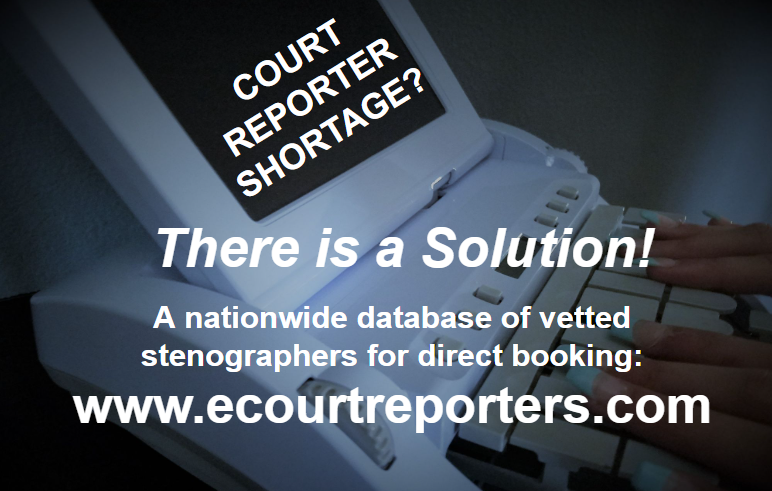
eCourt Reporters is the only platform that gives law firms direct access to a nationwide database of vetted, state-certified court reporters for direct bookings.
Choosing an experienced court reporter means choosing peace of mind, confidence in the legal process, and a commitment to excellence.
When the stakes are high, don't settle for less. Ensure the integrity of your legal proceedings with the precision and professionalism of a certified court reporter.
The most reliable and transparent way to secure certified court reporters for your cases anywhere in the United States.
eCourt Reporters is the premier nationwide platform designed specifically for attorneys and law firms.
Whether you need a court reporter for a deposition, arbitration, trial, or any other legal proceeding, we make it simple to locate highly qualified, certified professionals in every jurisdiction.
Why litigation law firms choose eCourt Reporters:
*Access vetted, certified court reporters in all 50 states.
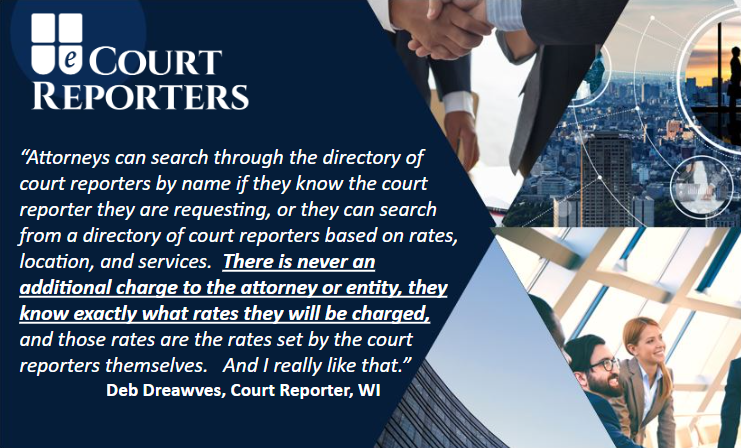
*What you see is what you pay. We believe in complete transparency with clear, upfront pricing and no surprise charges.
*Streamlined scheduling so you can focus on your case instead of logistics.
*Every court reporter is certified.
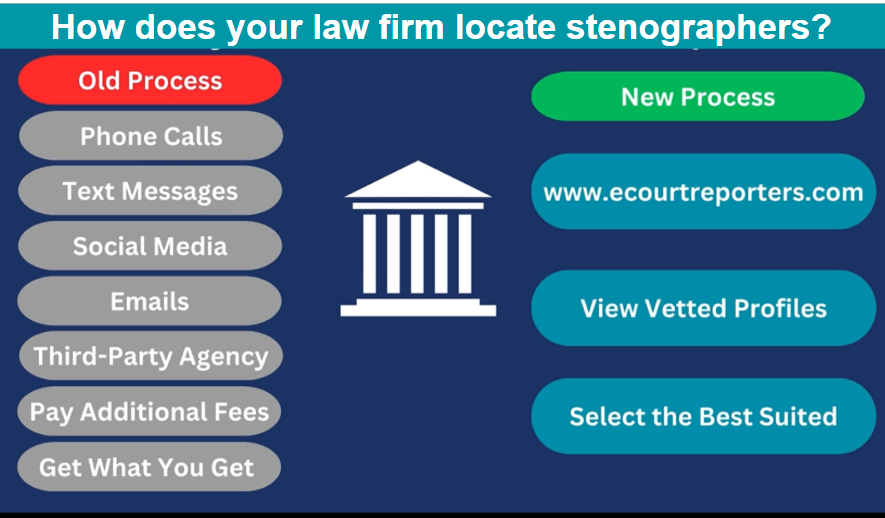
Understanding the importance of accuracy, professionalism, and cost predictability, we built eCourt Reporters to eliminate the guesswork and unnecessary expenses that often come with traditional booking services.
@VickiMcKenna, topic for discussion:
AI hallucinations can (and do) occur when generating or summarizing content from compiled recordings, including in legal contexts like court transcripts, depositions, or other official records. This is a known risk with generative AI tools, though it differs somewhat from the more publicized cases of hallucinated legal citations.
Hallucinations can appear as added words/sentences that were never spoken, distorted meanings, fabricated quotes, misattributed statements, or entirely invented details that "sound right" based on patterns in the AI's training data.
The legal record demands near-perfect accuracy, so human oversight remains essential. Traditional certified court reporting provides the gold standard of reliability that current AI cannot fully replicate.
@alexbruesewitz, topic for discussion:
AI hallucinations can (and do) occur when generating or summarizing content from compiled recordings, including in legal contexts like court transcripts, depositions, or other official records. This is a known risk with generative AI tools, though it differs somewhat from the more publicized cases of hallucinated legal citations.
Hallucinations can appear as added words/sentences that were never spoken, distorted meanings, fabricated quotes, misattributed statements, or entirely invented details that "sound right" based on patterns in the AI's training data.
The legal record demands near-perfect accuracy, so human oversight remains essential. Traditional certified court reporting provides the gold standard of reliability that current AI cannot fully replicate.
@joerogan, topic for discussion:
AI hallucinations can (and do) occur when generating or summarizing content from compiled recordings, including in legal contexts like court transcripts, depositions, or other official records. This is a known risk with generative AI tools, though it differs somewhat from the more publicized cases of hallucinated legal citations.
Hallucinations can appear as added words/sentences that were never spoken, distorted meanings, fabricated quotes, misattributed statements, or entirely invented details that "sound right" based on patterns in the AI's training data.
The legal record demands near-perfect accuracy, so human oversight remains essential. Traditional certified court reporting provides the gold standard of reliability that current AI cannot fully replicate.
@MikeAlfonsoWI, what measures should Congress take to mitigate the risks of relying on digital recordings of court proceedings versus using certified court reporters for accuracy and integrity?
@MariaBartiromo, as you address AI next week, AI hallucinations can (and do) occur when generating or summarizing content from compiled recordings, including in legal contexts such as court transcripts, depositions, or other official records. This is a known risk with generative AI tools, though it differs somewhat from the more publicized cases of hallucinated legal citations.
Hallucinations can appear as added words/sentences that were never spoken, distorted meanings, fabricated quotes, misattributed statements, or entirely invented details that "sound right" based on patterns in the AI's training data.
The legal record demands near-perfect accuracy, so human oversight remains essential. Traditional certified court reporting provides the gold standard of reliability that current AI cannot fully replicate.