🔴ALERTE INFO
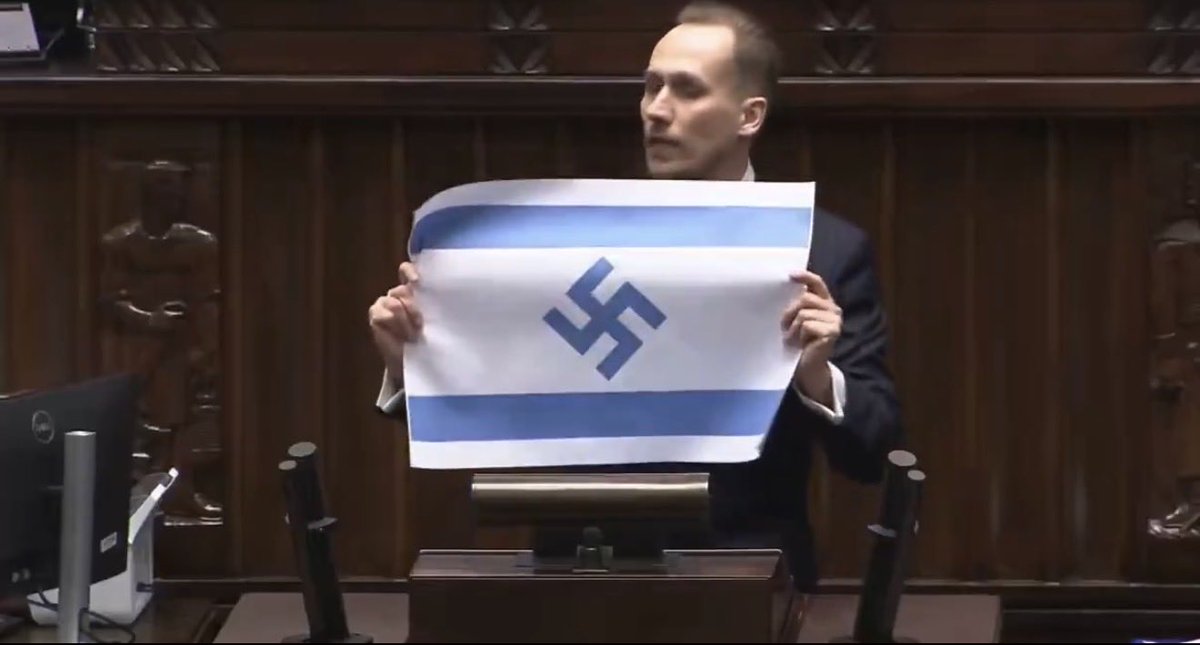
« Israël est le nouveau Troisième Reich ! »
🔴🇵🇱🇮🇱 Un député polonais d’extrême droite compare les crimes de guerre d'Israël à ceux du Troisième Reich et exhibe un drapeau israélien orné d’une Croix Gam **ée.
A guy once said he wanted a daughter first because girls are more caring and take care of others. He probably didn’t mean anything bad, but it’s telling how even before they’re born, girls are already expected to serve.
Le cessez-le-feu n’a même pas tenu vingt-quatre heures.
Ce matin, l’Iran accepte l’accord et ouvre le détroit d’Ormuz : 7 navires passent sans encombre.
L’après-midi, Israël frappe le Liban comme jamais auparavant et clame : « Le cessez-le-feu ne s’applique pas ici. » L’Iran réplique : « Le Liban était inclus, point. »
Ce soir, Ormuz est refermé. Des centaines de navires coincés. La marine iranienne menace de détruire tout pétrolier qui bouge.
En moins d’une journée, Israël a torpillé l’accord. Et c’est l’Iran qu’on accuse. Toujours le même scénario : l’axe sioniste provoque, frappe, triche, et laisse les autres ramasser les morceaux, puis vient pleurer à l’ONU. Les faits sont là, clairs. Tout a été détruit. Leur faute, et rien que leur faute.
Les images sont dégoûtantes, horribles à voir.
Des soldats israéliens opérant dans le sud du Liban à Marjayoun s’introduisent dans des domiciles laissés vacants par des réfugiés et s’approprient des biens personnels et se mettent en scène avec ces objets.
Here's what a few hours in the life of Lebanon's National Lifeline for Suicide Prevention (1564) sound like during #war time:
- A 23-year-old displaced mother from South Lebanon (Khyem) calling from inside a car in Saida (now known as the transit city) - where she is living with her 3 young children because shelters are full.
- An 88-year-old man displaced from Southern #Beirut calling to ask for basic assistance
- A young man calling from Southern Beirut, currently under attack, calling because he and his mother had nowhere safe to go.
- Another caller described feeling “مخنوق” — suffocated by the density, the noise, the uncertainty created by war.
And in the middle of all of this:
- A 16-year-old girl who attempted suicide
- A 23-year-old struggling with addiction after a suicide attempt yesterday
- A mother with cancer caring for a child with epilepsy while seeking help for her suicidal daughter
- A man who was about to end his life with shattered glass before picking up the phone
This is the daily reality of answering Lebanon’s National Lifeline (1564), where every call reflects the collision of our crises: war, displacement, poverty, chronic illness, addiction, and the silent toll on mental health.
In contexts like #Lebanon, a crisis hotline is much more than an emotional support line. It becomes a first point of access to the entire health and social protection system.
In a single shift today, our team provided:
- suicide intervention and safety planning
- emotional support during acute distress
- referrals for psychiatric care and medication
- shelter and humanitarian assistance referrals
- support for displaced families
- guidance for parents responding to suicide attempts
- connection to emergency services and NGOs
Behind each call is a trained responder, a volunteer, holding space for someone who may have nowhere else to turn, while silently living many of the same struggles themselves.
In times of war, mental health emergencies do not pause. They multiply, and set the stage for the long term psychological consequences that follow conflict.
Lebanon’s National Lifeline continues to operate 24/7, responding to hundreds of calls each month from people facing the most difficult moments of their lives.
Every call our volunteers answer, is a proof of why this Lifeline is essential to our national infrastructure, and must be protected and sustained.
Mother of a martyr in Damascus:
“Isn’t it cruel that my boy, whom I raised with the lashes of my eyes, is now under the dirt? Don’t you fear God? My son was like a flower, and you made me bury him. Nothing in this world will ever replace him.”
Syrian Christian woman at the church bombing site: "If they tell me to take my kids and flee to Europe, I won’t. I raised them here, and here I will die. I will never abandon my land, my faith, or my Christianity. Our religion is peace. We don’t know violence or hatred….”