Please repost! 🙏
In collaboration with Iran Roman and the QMUL Centre for Multimodal AI, the McFadden Computational Ecology Lab is offering a 3-year, fully-funded PhD studentship at the interface of ecological theory, AI and global biodiversity mapping:
https://t.co/DDEahKY83c
I’m delighted to share that my “MicroRefugia” proposal has been funded by the Marie Skłodowska Curie Actions 🎉
Grateful for the opportunity to pursue a research direction I’ve been thinking about for a long time and to build new collaborations.
#MicroRefugiaProject
A map of 260 EUNIS habitat types for Europe has been prepared under the leadership of Sara Si-Moussi and Wilfried Thuiller and published in Scientific Data. It shows the most probable habitat for each 100-m pixel.
Article: https://t.co/9vZqvrbd1S
Map data: https://t.co/GU6Ut3WNuk
Happy to share that our book chapter on the sdm R package has been published in R Coding for Ecology.
In the first Chapter, we present a complete SDM workflow, from data preparation to model fitting, evaluation, prediction, and projection.
https://t.co/ScoL6HmWNr
Starting the new year on my way to #TIBS2026 in snowy Aarhus 🇩🇰
Excited to meet so many excellent researchers and see lots of inspiring work. See you there!
#Biogeography#IBS2026
So I have been working on a textbook on theoretical ecology and modeling. #openaccess. Using @rstudio and #quarto for writing and @github for publishing. You can check it at https://t.co/Hy3HlmUcmW and follow my (slow) process. First two chapters mostly written, yeah!
I'm still buzzing from presenting Reproducible Report at #ECM9. Our R package simplifies camera trap data reporting, making wildlife monitoring more efficient. The conversations that followed were invaluable. Grateful for @BiodiversaPlus support through the #BIG_PICTURE project!
Published in #Biological_Conservation:
How can we improve conservation planning under climate change?
Our latest paper introduces a new gap analysis to rank biodiversity priorities, reduce uncertainty & avoid info loss.
🔗 https://t.co/Ut29U5P6qN
@Araujo_lab@BabakNaimi
Fabiola Iannarili opens the workshop on camera trapping in Europe at Konstanze, Max Plank Institute for Animal Behavior. @EuropaBon_H2020 @GEOBON_org
Just in time for the peak of this year's #mushroom season, we tested the prototype of our new mushroom identification tool in the field! 🍄We're thrilled with the accuracy—it can distinguish over 1,000 #species and has provided many good results.🎉 https://t.co/tNpPdqsZ7D
Today, I had an #oral_presentation at #IAVS2024!
I discussed how past climate shapes the current distribution of plants and ways to improve #SDMs.
Honored to be #awarded the travel grant. Huge thanks to @IAVS5 for this incredible opportunity for early career researchers!
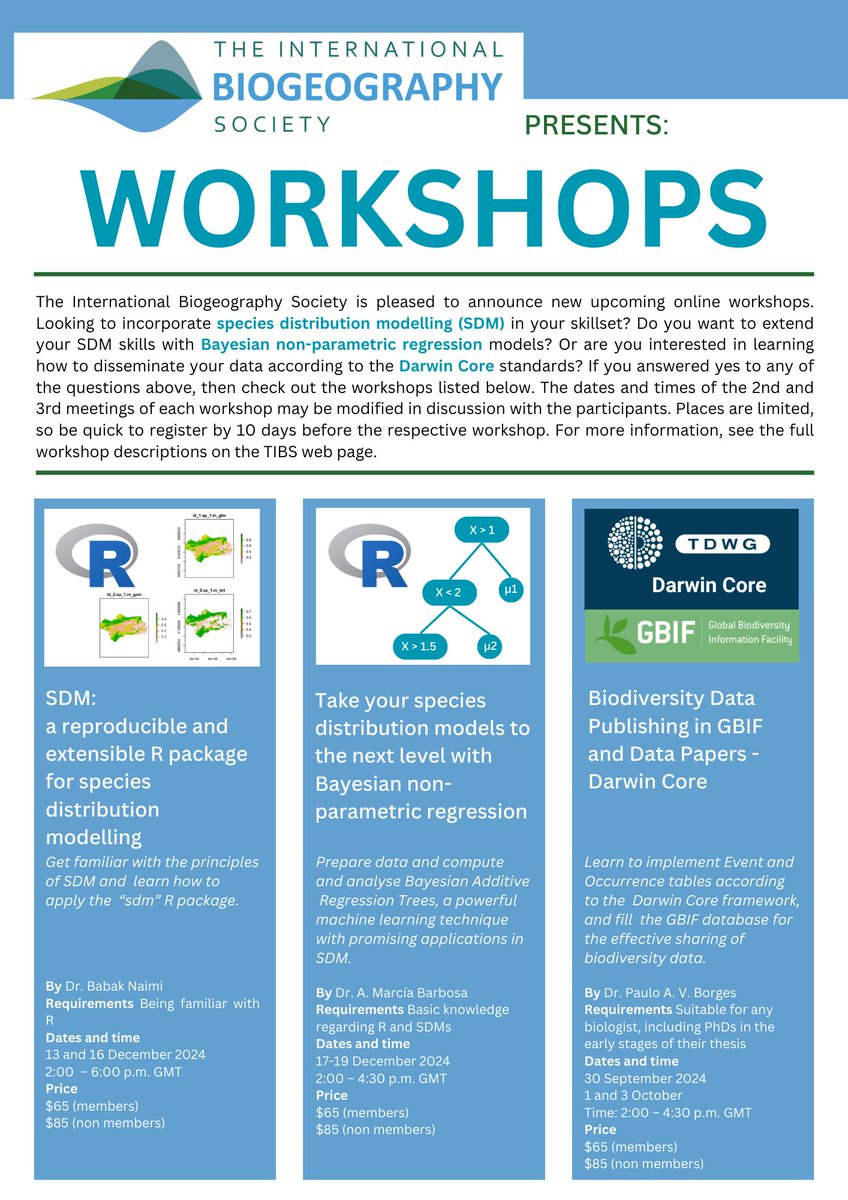
The International Biogeography Society is excited to announce three upcoming workshops. For more details on each course and to register please visit the TIBS website: https://t.co/NPvzDo9WaC
Today, @DirkNKarger from @WSL_DME presented his research at #WBF2024 in #Davos on how biodiversity trends from Natures Futures scenarios differ in feedback to the climate system. Great talk!
🌍🌿‼️ Standard registration for the @WorldBioForum, taking place in June 2024 in ☀️Davos, ends in two days, on 15 May‼️🗓️ Late registration will be possible at a higher fee. We recommend to register now!😁
https://t.co/L42R7vMSgS
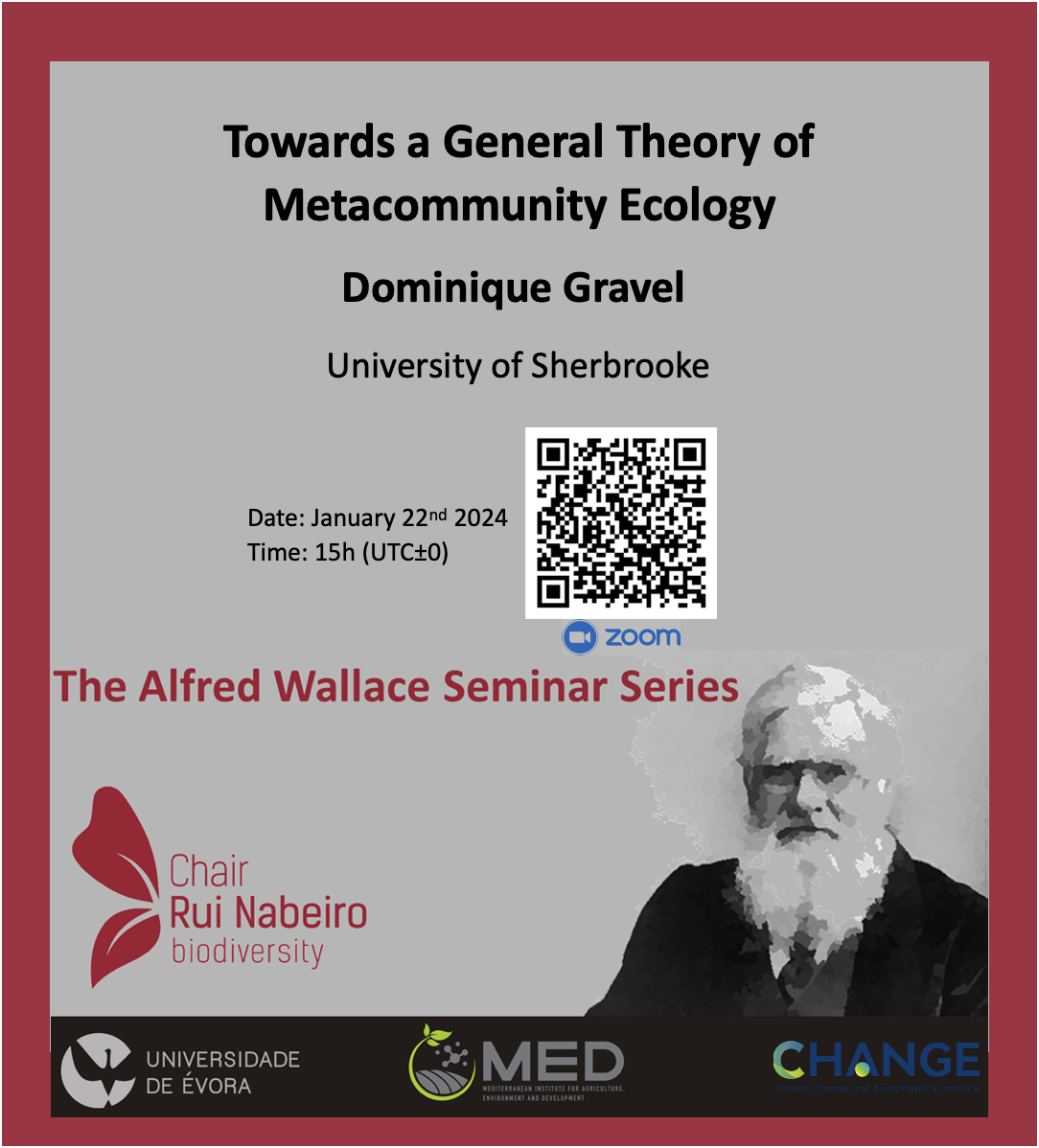
Our last Wallace Talk: "Towards a General Theory of Metacommunity Ecology", by Dominique Gravel from the University of Sherbrooke.
Link to talk: https://t.co/K9OaXlNoWu
@lotta_schultz@PPFalpine#ibsprague2024 Elham Ebrahimi (couldn't come) - long lived species have a higher legacy of past climate effect (not sure how far the "past" is) on present diversity but there could be a response delay to current climate change.