The Episcopal Academy Center for Teaching & Learning provides teachers with the foundation and inspiration to maximize every opportunity for students to learn.
Seeing—and supporting—this trend with faculty here at EA of late.
Contextual knowledge of student needs adds a layer of depth lacking from most (all?) Edtech tools.
I was helping my daughter with her homework and she just couldn't make sense of the 24-hour clock. She was getting frustrated etc. so we made this interactive inline visualisation based on times of the day she understands: breakfast/her specific home from school time etc. She got it within 5 mins, no more tears.
Amazing to be living in an age where you can make sophisticated instructional tools like this in minutes.
Teachers contain multitudes, and so does this week's WDYN—from 1,306 sticky notes turned into a painting, to a philosopher wondering whether writing gets too much credit.
https://t.co/kPBNcdxAFY
This is literally us in @ea_ctl.
Indy school, so different. We’re really fortunate. But it really does make a difference.
Things lag. But learning is a lagging metric. At every age.
(@SrShimrock@AllisonBSchultz)
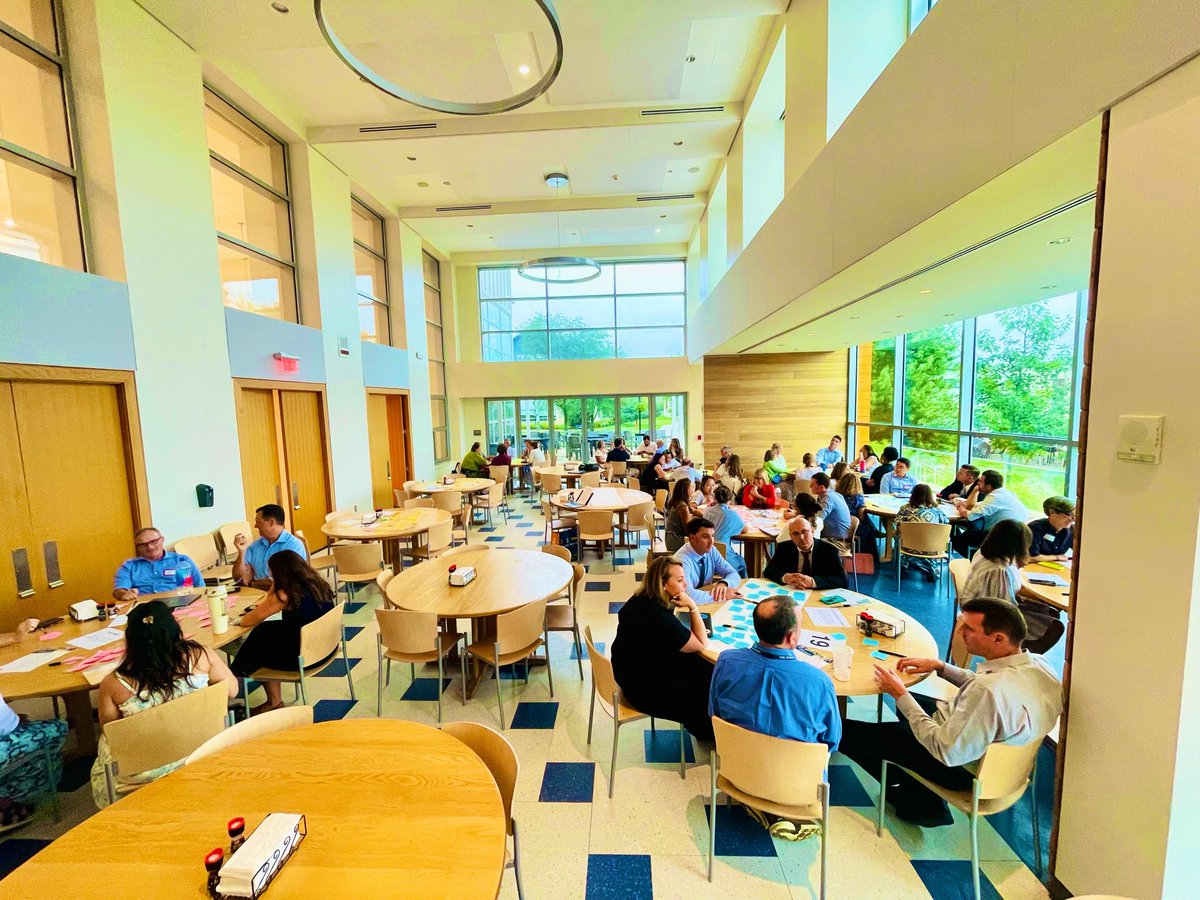
Good things happen when you get a room full of talented teachers, coaches, artists, and leaders into a room to talk about students.
Back at it for the 2026-2027 school year talking portrait of a graduate with LS, MS, and US faculty and staff.
#LEGGO
WDYN is back with a Week Zero post. Three recent pieces that caught our attention, made us think, and made us ask even more questions than we usually do. We're not all of the way back yet...but we're close! #LEGGO
https://t.co/RUTxbIQLJR
New school year? Don't wait to start talking with your students about effective learning strategies.
Here's how I start that conversation:
https://t.co/4g0H5R6XWS
After stops in Pittsburgh (for @InitialView’s Dialogue Council) & California (for the @CandleUSC Design Sprint) last week, the @ea_ctl tour of America continues in Newport, RI for (@DragonsofSG’s annual Building Bridges teaching & learning conference).
#CantStopWontStop
A YouTube pivot, an AI-built discussion tool that's mostly sound and silence, and an old essay on why understanding takes sweat equity.
This week's Thursday's Three Things 📺🎣🧠
Link in 🧵
Before I go full USA maniac tonight:
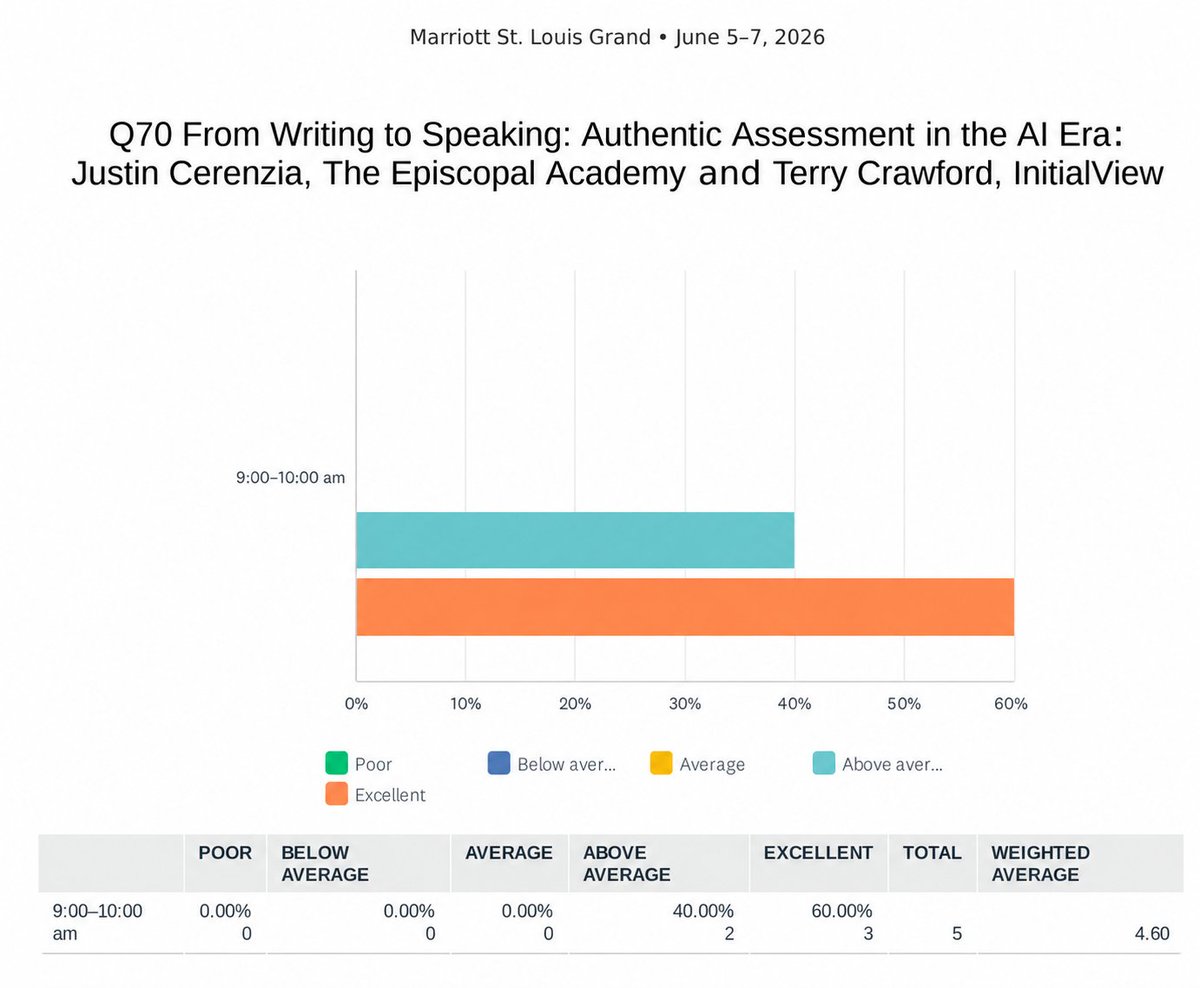
Here is the feedback from my recent presentation at the @teachprof conference in St. Louis. (It's better than my Uber rating).
Again, we're on to something with @InitialView's Viva platform and our @ea_ctl collaboration.
In a world where anyone can build anything, we've been wondering if it's even worth it. This week we consider the bias that makes us overvalue our own builds, what building with AI actually asks, & why playing with 100 imperfect pots beats polishing 1. 🔗 in 🧵
Thursday's Three Things is live on measuring, asking, and inviting.
Why testing measures action, not knowledge. How to teach questions that compound. And why one professor is opening fall with a letter, not a policy. 🔗 in 🧵
Creative work can feel risky before it feels rewarding.
@drmarcbrackett and @ZoranaPsych talk about what students need in the messy middle of creativity, and why “I’m not creative” may be telling us more than we think.
Full episode on Dealing with Feeling.
🔗https://t.co/SFQGHkbw4L
#EmotionalIntelligence #RULER #SEL #Education #Creativity #StudentWellbeing #Teaching #SchoolCulture #DealingWithFeeling
First summer edition of Thursday's Three Things is live: an AI ethics toolkit built for remixing, a 2009 paper on why soccer matches are badly designed experiments (and what that might mean for a classroom), and a CEO's 75/25 rule for AI in the classroom.
https://t.co/oGfrD3VdCs
Same test, twice. Once alone, once together. Nearly ten years in, I finally measured if it mattered.
Maybe some residue lingers longer when the thinking is shared?
https://t.co/NVL8riNQLZ