You have to be 16 to drive.
You have to be 18 to vote.
You have to be 21 to drink.
You have to be 25 to rent a car.
Why are teachers talking to our kids about sexuality at 12?
Why are kids encouraged to mutilate their bodies at 13?
This gender ideology madness needs to end.
Mexican President Claudia Sheinbaum launched her strongest criticism to date against what she says are blunt US attempts to interfere in Mexican domestic politics. https://t.co/tM1YvidVC2
📵 | La improvisación del registro telefónico...
Desde hace días quería publicar la respuesta que dio Abán Román, director general de planeación de la @CRTGobMX, en entrevista con el estimado @oscarbalmen para #EsquinaBalderas
¿Cómo es posible que nunca hayan considerado algo tan básico como la protección de activistas, periodistas en riesgo o víctimas que necesitan tener líneas anónimas y digan —con toda ligereza— que después hallarán una posible solución?
Todos esos escenarios debieron haberse planeado desde mucho antes de obligar a toda la población a efectuar un registro que, reitero, no servirá de nada.
Y es el director de PLANEACIÓN.
One of the most fascinating geological discoveries is the existence of “polystrate fossils”, fossilized trees that run vertically through multiple layers of rock.
Some even pass through layers supposedly separated by millions of years.
The problem?
A dead tree doesn’t stand upright for millions of years waiting for sediment to slowly build around it. It rots. It collapses.
These trees appear to have been rapidly buried by massive sediment flows before they could decay.
Even events like the eruption of 1980 eruption of Mount St. Helens showed how catastrophic conditions can quickly bury trees upright in layers of sediment.
The fossil record looks a lot more like the catastrophic world described in Genesis than the slow evolutionary timeline we’ve been sold.
Mi estimado piloto… tu todavía no lo sabes, pero tu vida va a cambiar para bien gracias a tu ingenio, ganas de salir adelante y sobre todo a que aparentemente nada te detiene.
¿Nos ayudan a encontrarlo?
¡Ya estamos aquí en Sonora! ⭐️ Desde el Centro EducationUSA OEE Sonora estamos aún más cerca de ti. Visítanos y juntos buscaremos cumplir tus sueños y metas educativas en Estados Unidos 🇺🇸🤝🇲🇽
📍Atendemos a estudiantes de todo Sonora y te acompañamos en cada paso de tu proceso académico internacional ✨
¡Te esperamos! 🎉
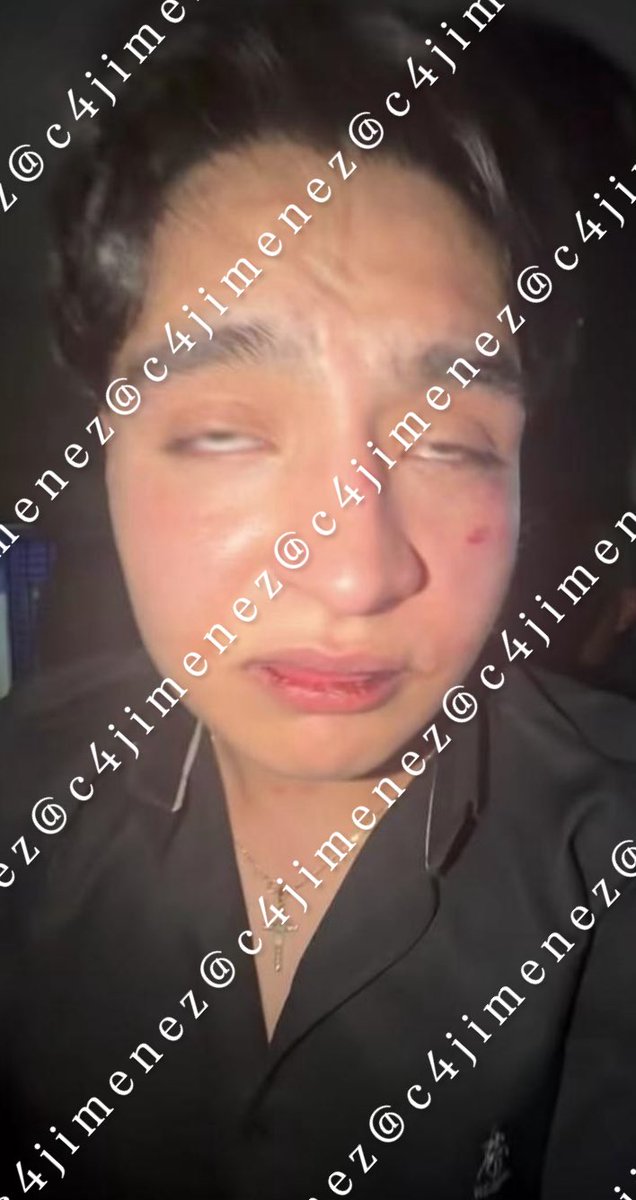
EL ABOGADO BORRACHO "INFLUYENTE"
Es Ihan Guzmán
Dijo ser del despacho más cabrón de Sta Fe, amigo de la @GN_MEXICO_
Manejaba briago e hizo de todo para q no lo detuvieran.
Se echó en reversa para huir de @SSC_CDMX; arrolló a un agente, llamó a su mamá, se agarró a golpes.
Luego inventó abuso policial
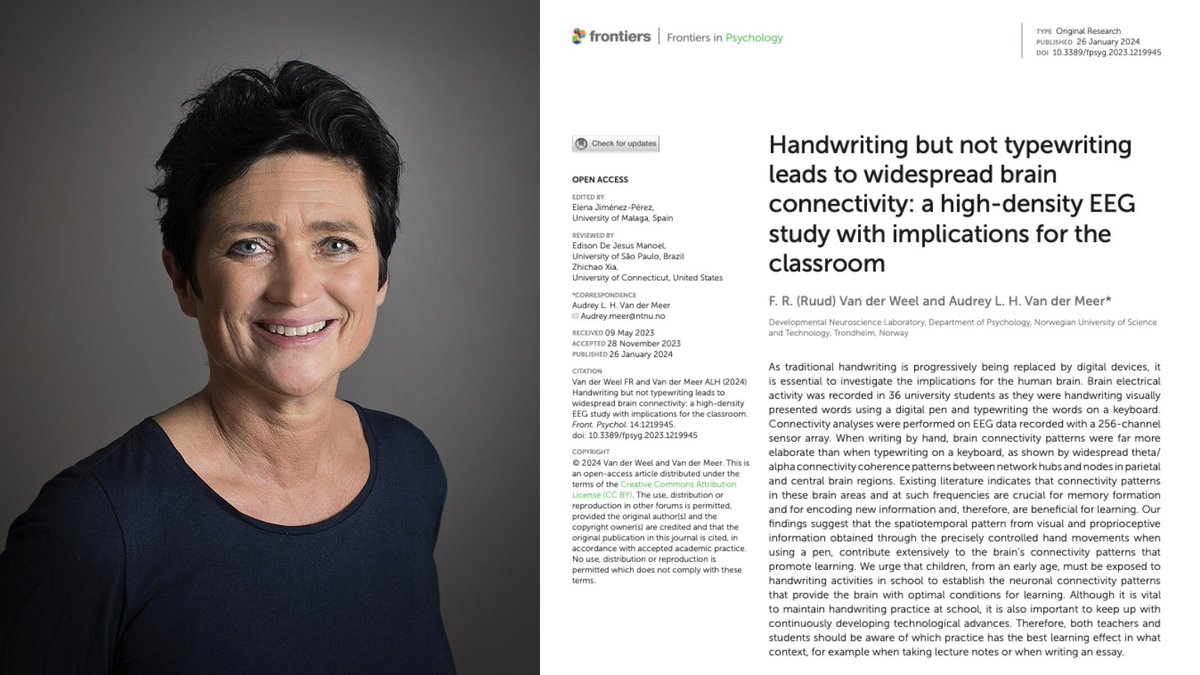
A Norwegian neuroscientist spent 20 years proving that the act of writing by hand changes the human brain in ways typing physically cannot, and almost nobody outside her field has read the paper.
Her name is Audrey van der Meer.
She runs a brain research lab in Trondheim, and the paper that closed the argument was published in 2024 in a journal called Frontiers in Psychology. The finding is brutal enough that it should have changed every classroom on Earth.
The experiment was simple. She recruited 36 university students and put each one in a cap with 256 sensors pressed against their scalp to record brain activity. Words flashed on a screen one at a time.
Sometimes the students wrote the word by hand on a touchscreen using a digital pen, and sometimes they typed the same word on a keyboard. Every neural response was recorded for the full five seconds the word stayed on screen.
Then her team looked at the part of the data most researchers had ignored for years, which is how different parts of the brain were communicating with each other during the task.
When the students wrote by hand, the brain lit up everywhere at once.
The regions responsible for memory, sensory integration, and the encoding of new information were all firing together in a coordinated pattern that spread across the entire cortex. The whole network was awake and connected.
When the same students typed the same word, that pattern collapsed almost completely.
Most of the brain went quiet, and the connections between regions that had been alive seconds earlier were nowhere to be found on the EEG.
Same word, same brain, same person, and two completely different neurological events.
The reason turned out to be something nobody had really paid attention to before her work. Writing by hand is not one motion but a sequence of thousands of tiny micro-movements coordinated with your eyes in real time, where each letter is a different shape that requires the brain to solve a slightly different spatial problem.
Your fingers, wrist, vision, and the parts of your brain that track position in space are all working together to produce one letter, then the next, then the next.
Typing throws all of that away. Every key on a keyboard requires the exact same finger motion regardless of which letter you are pressing, which means the brain has almost nothing to integrate and almost no problem to solve.
Van der Meer said it plainly in her interviews.
Pressing the same key with the same finger over and over does not stimulate the brain in any meaningful way, and she pointed out something that should scare every parent who handed their kid an iPad.
Children who learn to read and write on tablets often cannot tell letters like b and d apart, because they have never physically felt with their bodies what it takes to actually produce those letters on a page.
A decade before her, two researchers at Princeton ran the same fight using a completely different method and ended up at the same answer. Pam Mueller and Daniel Oppenheimer tested 327 students across three experiments, where half took notes on laptops with the internet disabled and half took notes by hand, before testing everyone on what they actually understood from the lectures they had watched.
The handwriting group won by a wide margin on every question that required real understanding rather than surface recall.
The reason was hiding in the transcripts of what the two groups had actually written down.
The laptop students typed almost word for word, capturing more total content but processing almost none of it as they went, while the handwriting students physically could not write fast enough to transcribe a lecture in real time, which forced them to listen carefully, decide what actually mattered, and put it in their own words on the page.
That single act of choosing what to keep was the learning itself, and the keyboard had quietly skipped the choosing and skipped the learning along with it.
Two studies. Two countries. Same answer.
Handwriting makes the brain work. Typing lets it coast.
Every note you have ever typed instead of written went into your brain through a thinner pipe. Every meeting, every book highlight, every idea you captured on your phone instead of on paper was processed at half depth.
You did not forget those things because your memory is bad. You forgot them because typing never woke the part of the brain that would have made them stick.
The fix is the thing your grandmother already knew.
Pick up a pen. Write the thing down. The slower road is the faster one.
For XPENG IRON, we developed a general-purpose framework that mimics human skeletal geometry and utilized a muscle-like lattice structure to replicate actual muscular movement.
We need biblical, Holy Spirit-filled preaching in this final hour.
ACTS I & II | Hear These Words
WATCH | YouTube, 2819 App
LISTEN | Amazon Music, Spotify, Apple Podcasts
Now available online in Spanish.
#2819Church#WeAre2819Church#UntilAllHaveHeard
@DEmba23837@Guiller93457131@AztecaNoticias Ehm… me parece que era otro tipo de Delito y no un “padre desobligado” solamente. Haya o no haya gobierno que haga cumplir la ley, habrá quien cometa algún delito de cualquier índole; si no hay justicia impartida por el gobierno, las cosas escalan a otro nivel, este justamente😉