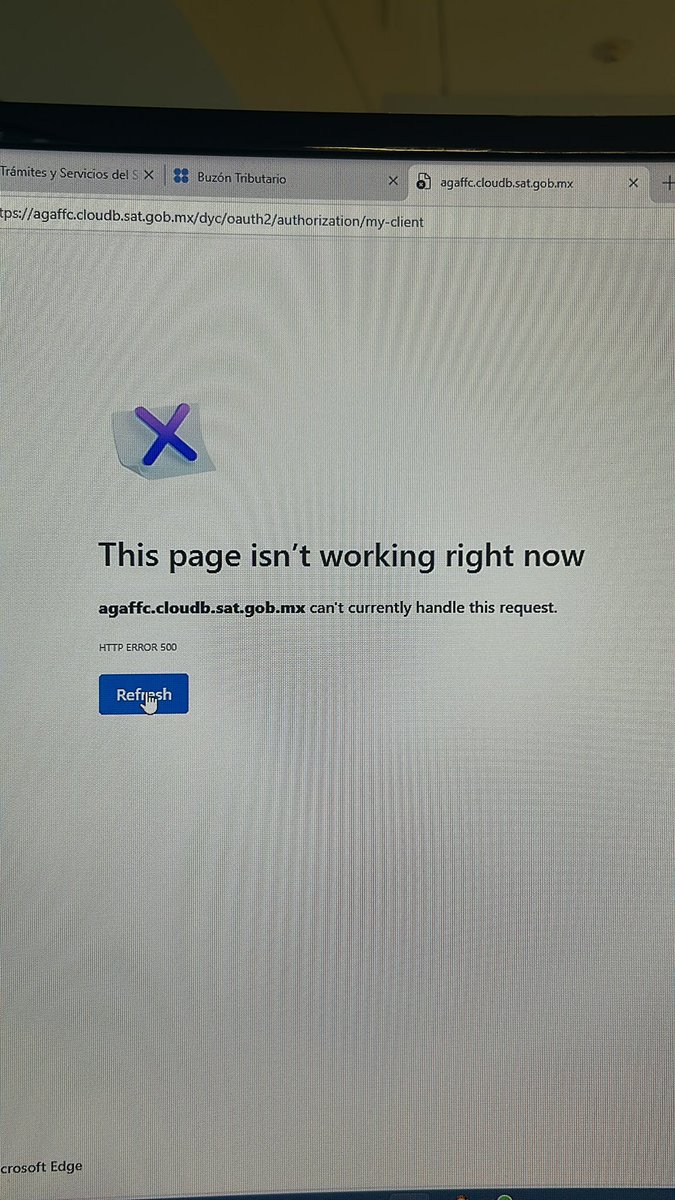
¡Increíble! @SATMX no devuelves saldo a favor de ISR 2025 que porque la CLABE es inconsistente. Pero es la misma CLABE donde ha devuelto los últimos 5 años. ¿Táctica dilatoria?
A este gran estafador tengo su correo y teléfono y un video que grabé de como me cito en sus oficinas de TV Azteca. Que le mida, solo eso. Señor quiere una guerra abierta conmigo. Lo espero y yo voy a ganar
Our Mexico City desk can confirm that Pemex and senior Mexican government officials privately acknowledge that the spike in crude prices near $100 and the paralysis risk in the Strait of Hormuz expose a structural vulnerability in Mexico’s energy system that is far more severe than the government publicly admits.
Roughly 20% of global oil flows move through the Strait of Hormuz, making any disruption a systemic shock to global energy markets. The current price surge reflects the market beginning to price in that risk. If Iran mines the strait or tanker traffic remains constrained, the shock would not remain confined to oil markets. It would propagate through refined fuels, petrochemical products, insurance, and global trade simultaneously.
Mexico enters this environment with an unusually fragile energy balance. Despite being an oil producer, the country depends structurally on imported fuels and imported natural gas. The United States exports more than 1.9 million barrels per day of refined petroleum products to Mexico, covering over 70% of the country’s gasoline, diesel, and jet fuel consumption. In parallel, CFE´s electricity production has become structurally dependent on U.S. pipeline gas.
Approximately 74% of Mexico’s natural gas demand is satisfied through imports from the United States, most of it flowing from Texas shale basins. This dual dependency means Mexico’s energy security is effectively externalized.
Under normal conditions, that dependency is manageable because U.S. supply is abundant and cheap. In a war-driven energy shock, however, the system becomes exposed. Oil above $100 immediately raises refined product prices in the Gulf Coast market where Mexico buys most of its gasoline. At the same time, global LNG competition and oil-linked contracts tend to push natural gas prices upward. Mexico does not maintain significant strategic reserves of gasoline or natural gas to buffer these shocks. If global prices spike while domestic prices are artificially suppressed, the imbalance manifests not as higher prices but as shortages.
The current discussion inside the Mexican government about using the IEPS tax mechanism or pressuring fuel distributors to hold gasoline below 24 pesos per liter reflects exactly this risk. Fiscal subsidies or price caps can temporarily dampen inflation, but they do not change the physical supply constraint. When governments suppress prices during supply shocks, consumption remains high while suppliers reduce deliveries or divert fuel to higher-paying markets. This results in shortages, rationing, and fiscal strain. Mexico experienced a version of this dynamic in 2022, when fuel subsidies cost the treasury more than $15 billion.
The strategic concern becomes more acute if the Hormuz crisis escalates into a prolonged conflict between Iran and the United States. In that scenario, Washington’s political and military focus would shift heavily toward the Middle East. Energy markets would tighten globally, and the United States would prioritize domestic stability and allied supply chains critical to its own industrial base. Mexico’s heavy reliance on U.S. fuels and gas means that any tightening of Gulf Coast supply would immediately propagate south through pipeline and shipping networks.
The paradox is that Mexico remains an oil producer while lacking fuel security. The country produces crude but lacks sufficient refining configuration and capacity to meet domestic demand, forcing it to export crude while importing gasoline and diesel. At the same time, the power sector increasingly runs on imported natural gas. This combination leaves Mexico exposed to exactly the kind of external shock now emerging from the Middle East.
If the Sheinbaum administration does not begin securing strategic fuel reserves, alternative supply arrangements, or emergency storage capacity, the country risks entering a supply shock environment within weeks if the conflict persists. Rising global prices, combined with domestic price suppression, would push Mexico toward the classic symptoms of energy stress: fiscal drain, fuel shortages, electricity cost spikes, and inflationary pressure across transport and agriculture.
The problem is no longer oil prices alone. It is the structural fragility of Mexico’s hydrocarbon balance. A prolonged disruption in global energy markets would expose how little buffer the country has built into its system. Without rapid contingency planning, the combination of global war risk, price suppression, and external energy dependence could push Mexico into a full supply shock scenario.
“I would like to thank the punisher - Harvey Weinstein”
“I would like to thank the bomber - Harvey Weinstein”
“I would like to thank God and Harvey Weinstein, who would do anything”
ITS ALL OF THEM ‼️
@OctavioRomero_O Sr. Director: Banco
@SantanderMx
debitó de nuestra cuenta el 13/Nov el dinero para el pago del @Infonavit de Oct/25 en tiempo. Y al día de HOY ninguno de los Institutos tiene el dinero. Vienen a requerirme el pago. Ayuda
@CondusefMX
@zoerobledo Sr. Director: Banco
@SantanderMx
debitó de nuestra cuenta el 13/Nov el dinero para el pago del
@Tu_IMSS
e
@Infonavit
de Oct/25 en tiempo. Y al día de HOY ninguno de los Institutos tiene el dinero. Vienen a requerirme el pago. Ayuda
@CondusefMX
Los notificadores de @IMSS_Bienestar han dicho que todos los requerimientos que están entregando, curiosamente se pagaron desde @SantanderMx, pero en sus sistemas NO están registrados dichos pagos. Ayuda @CondusefMX
Resulta que Banco @SantanderMx debitó de nuestra cuenta el 13/Nov el dinero para el pago del @Tu_IMSS e @Infonavit de Oct/25 en tiempo. Y al día de HOY ninguno de los Institutos tiene el dinero. Vienen a requerirme el pago. Y el Banco callado y sin solución. Ayuda @CondusefMX
@Fankisports hijos de puta!! Me han tenido toda la mañana en esto. Cuando al fin entré a la fila esperé 30 minutos y justo cuando me tocaba se “cayo” la página. Son unos miserables hijos de puta!!! #fanki
I won’t be fighting in the first quarter of next year. I’m going through a difficult moment in my personal life. I want to focus on my children and resolve this situation as soon as possible.
I don’t want to hold up the division. The UFC will make the matchups needed, and as soon as the matters are resolved I'll let the UFC know I'm ready to begin my return.
La empresa UBTECH Robotics, con sede en Shenzhen, ha anunciado la primera entrega masiva de robots humanoides industriales. Trabajarán en fábricas y centros logísticos las veinticuatro horas, sin pausas, sin derechos y sin límites. No es solo un avance tecnológico: es un cambio de civilización. China presenta al mundo un modelo productivo donde la fuerza laboral deja de ser humana y donde la eficiencia justifica cualquier decisión. Mientras estos robots se preparan para ocupar cadenas enteras de producción, millones de trabajadores quedan fuera del tablero sin que nadie se atreva a plantear el debate de fondo. El ejército de robots ya está listo; la sociedad que los rodea, no.
🔴 TEMBLOR EN LOS MERCADOS POR “LA TREMENDA CORTE”
La sola amenaza de la poderosa ministra Lenia Batres de reabrir casos firmes para “recalcular impuestos” ya encendió todas las alarmas: FEMSA cayó 1% y Coca-Cola FEMSA 2.58%, evaporando miles de millones en horas.
Inversionistas nacionales y extranjeros leen el mensaje con claridad: si el nuevo Poder Judicial puede deshacer sentencias para quedar bien con el poder político, entonces no hay seguridad jurídica, no hay Estado de derecho… y tampoco razones para dejar su dinero en México.
La Corte debería dar certeza, no provocar fugas de capital con ocurrencias. Pero hoy parece más dispuesta a jugar a la “Casa de los Famosos” jurídica que a defender la Constitución.
El costo ya se ve en pantalla: bolsa a la baja, confianza por los suelos y un país que paga los caprichos de sus ministras.
Información @MarioMal