New system upgrades means that MIT's Haystack Observatory can now become a critical piece of instrumentation for MIT's Planetary Defense Project, measuring space objects that could pose a hazard to Earth.
https://t.co/m9osSUnHCh
Congrats to recent MIT-WHOI graduate Liam Moser on his Fulbright award! On top of his research on subduction zones, Liam helped found the annual MIT-WHOI Geophysics Retreat and taught incoming graduate students in the MIT-WHOI Summer Math Review.
https://t.co/SenT0IN4AS
EAPS PhD student Perrin Davidson does theoretical work on the carbon cycle to explore the powerful mechanisms that keep our planet habitable — when he's not playing bluegrass music with his EAPS advisor, Professor Dan Rothman.
https://t.co/558PSwzEW6
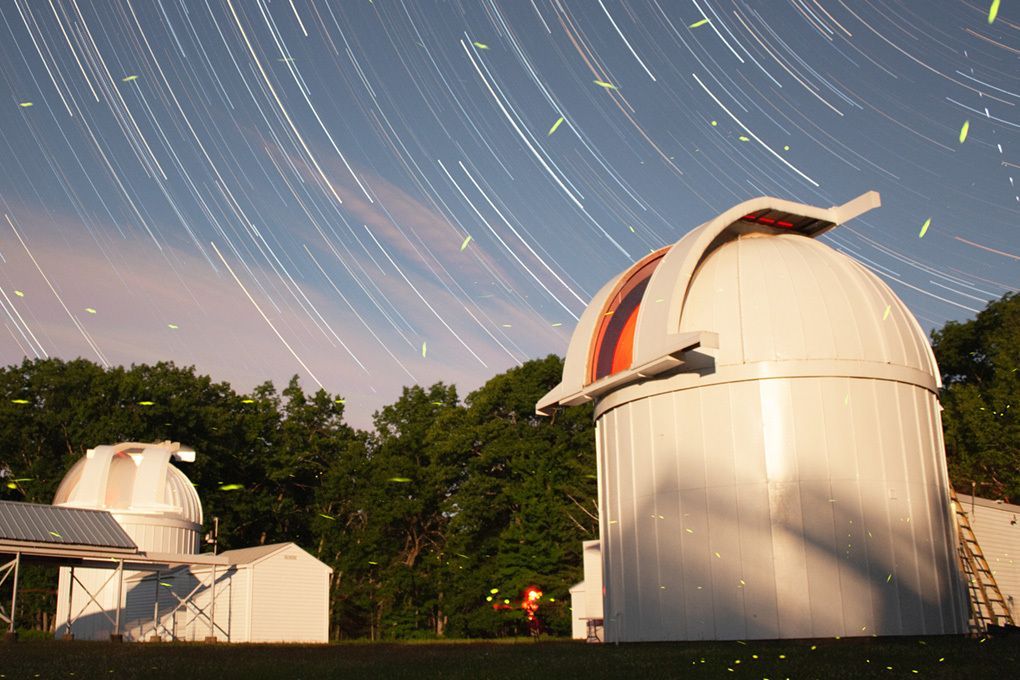
University observatories like MIT's Wallace Astrophysical Observatory play a key role in providing students hands-on astronomy experience and important research opportunities that larger observatories may not have time for.
https://t.co/KG1SfTj8VI
Congrats to EAPS grad student Angelina Serafini for receiving a Dwornik Award for best grad poster presentation at this year's Lunar and Planetary Science Conference! She used moon samples to constrain the strength of the ancient lunar magnetic field.
https://t.co/vn0r9DXzUU
Hello, Mars 👋 The NASA Psyche spacecraft completed a flyby of the red planet in May, and took the opportunity to test out its on-board instruments to make sure everything is functioning properly on its @MissionToPsyche in 2029.
https://t.co/9PrU53kQ7k
Is there another period in Earth's past where the climate changed as quickly as it is today? Geologic records like ice cores and ocean sediments show that the last 50 years warmed faster than any other 50-year period in at least 2,000 years.
https://t.co/kS2jXkc9GT
Congrats to EAPS 51 Pegasi b Fellow Jess Speedie for being recognized by the IAU PhD honorable mention prize! Her thesis work on detecting early-formation planets is helping scientists study protoplanetary disks where planets form. @ScienceMIT
https://t.co/jE2tNUzTKX
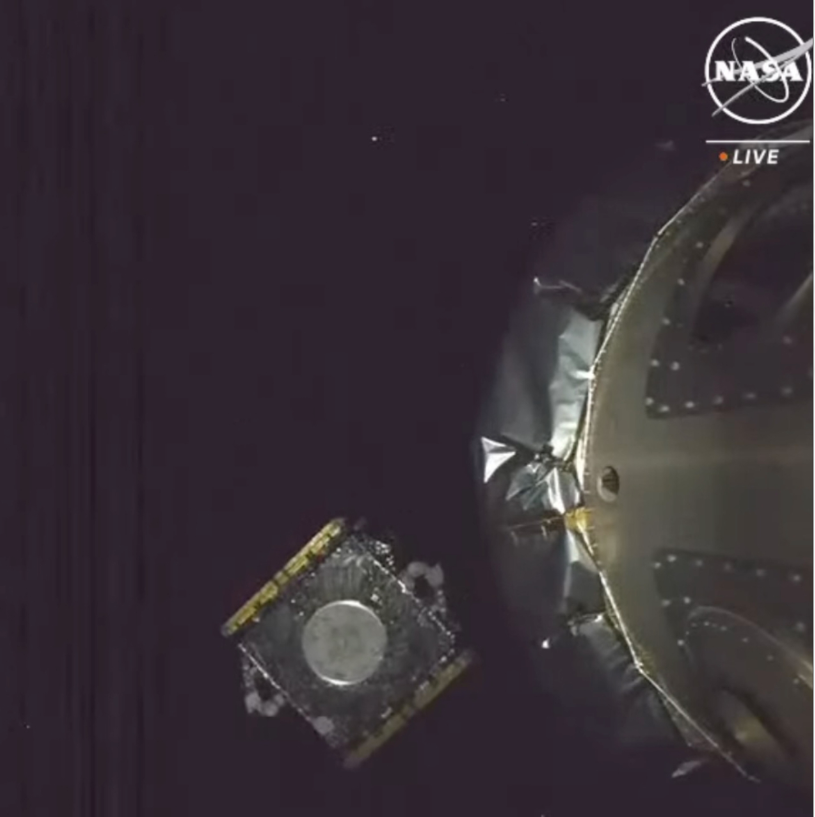
Congratulations on 1,000 days in flight, Psyche mission!
Here's the moment in 2023 when 1 hr 2 min 40 sec after liftoff that gorgeous Falcon Heavy (on the right) gave our s/c (lower left) a perfect tip-off, no angular momentum, on her way. @MissionToPsyche@NASA
EAPS Prof Dan Rothman and Sergei Petrovskii from the University of Leicester found that the mismatch in the rate at which the environment changes on a global scale and the rate at which species adapt can determine the severity of a mass extinction event.
https://t.co/lJNZY6KBwa
While the concrete is hot today in Cambridge, it's not to blame for rising global temps. Urban heat islands only change estimates of how much the world has warmed since 1900 by 0.01°C. Cities don't cover enough of the earth to compete with CO2 emissions.
https://t.co/v47cxBI5tk
Scientists led by Prof. Susan Solomon have discovered that ozone depletion began decades before the ozone hole itself was detected. The culprit? Carbon tetrachloride, a dry-cleaning and degreasing agent used as early as the 1930s.
https://t.co/vchVOqu25P
From flowing rivers to shifting sand, nature is always on the move. This lecture series by @eapsMIT breaks down the fascinating science behind how water and wind shape our environment — and why it matters. Click the link to learn more! https://t.co/wY4uAyYULZ
Always free. Always available 24/7.
(Image by Efotosadis on Flickr. CC BY-SA).
Congratulations to MIT Prof/CS3 faculty affiliate Susan Solomon, 2026 Tang Prize Laureate in Sustainable Development for “groundbreaking advances and leadership in #atmospheric and #climate sciences that shaped global #policy for #Sustainable Development.” https://t.co/lFFVZkBM7o
UPDATE: @NASA can confirm a fireball over New England at 2:06 p.m. EDT on Saturday, May 30, 2026. The meteor was about 5 feet (1.6 meters) in diameter with a mass of 5.6 metric tons and entered Earth’s atmosphere at roughly 42,000 mph.
The meteor traveled through the atmosphere from northwest to southeast for 26 miles before breaking up at an altitude of 31 miles and producing a meteorite fall into Cape Cod Bay.
Based on the latest data, the energy released at breakup is estimated to be equivalent to about 230 tons of TNT, which accounts for the sonic boom.
Have questions? Check out our fireball FAQs: https://t.co/HyyRIGmeoI
Congrats to EAPS Professor Carl Wunsch on receiving a Frontiers of Knowledge Award from the BBVA Foundation! His pioneering research on oceans "epitomizes the power of collaborative science to answer fundamental questions".
https://t.co/XGprGbaXaU