A car has been "completely destroyed" after it was set alight outside a family home, in what police are treating as a race-motivated arson attack.
https://t.co/nQac54rTnp
@neuralreckoning ...and if science were nothing but a binary search tree through all possibilities, wouldn't that be pretty powerful? You could rule out half the possible realities with every experiment. [I don't think science is like that. My brain has broken trying to picture it.]
@neuralreckoning Ooh, or can't you get more than one bit of information from a single bit if the probabilities aren't even? If hypotheses were well chosen non-randomly (eg informed by pilots, experience or perhaps even models) this could be the case.
We rarely hear one sound at a time, but we can often separate out the sounds we want to hear (and sometimes can't). Join us at SARC (Belfast) on Sat. 24th Feb. to make sense of the patterns. https://t.co/xkF1QUOtn4 @QUBMusicteam @UlsterOrchestra @RNID@ukacoustic@NIOpera
Can you think of singable songs with a nature theme? Tenuous links are welcomed. (We may have organised nature-themed karaoke in a hi-spec 48-loudspeaker set-up without stopping to think how many decent nature-themed karaoke numbers there are...) https://t.co/oJEGujDCSF
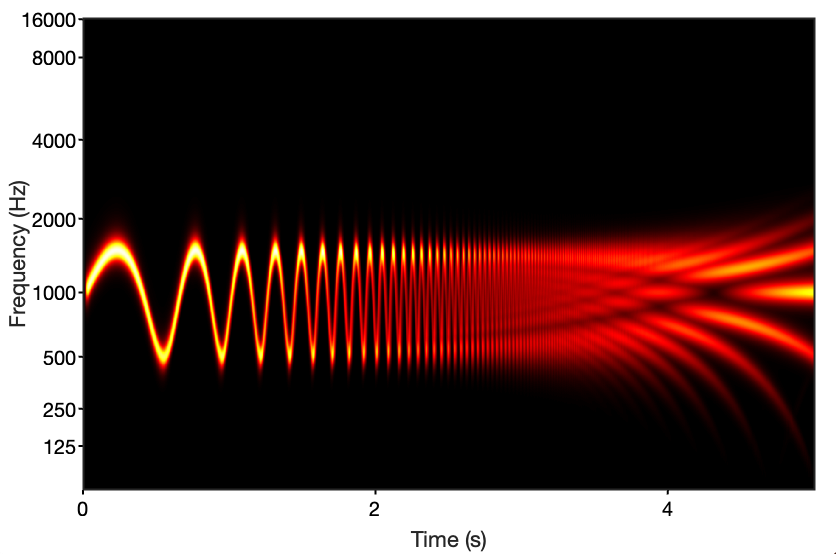
Here's a ghostly sound for Hallowe'en. It sounds like it goes up, but (if you can bear to re-listen) it ends up lower than it started. I'm calling it an Escher tone—a variant on the classic Shepard tone. (The topic of this morning's class was pitch perception!) @QUBMusicteam
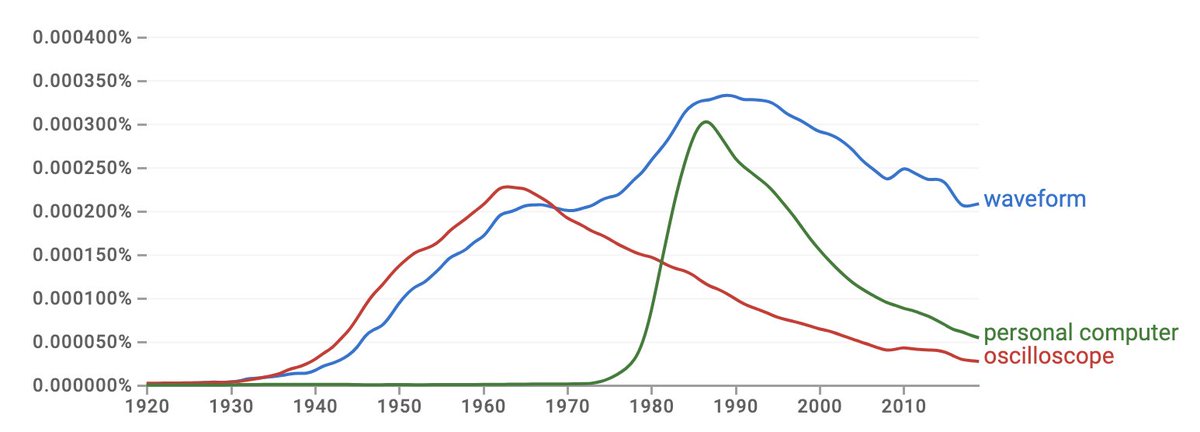
It seems that we're not talking about waveforms as much as we used to. I wonder is it because we can now manipulate sounds in a computer without getting bogged down in low-level details. We see waveforms, but don't need to talk about them as much.
Congratulations to Krista, the EA Music Service and @UlsterOrchestra for being the Best Music Learning initiative with their minibassoons and other endangered orchestral instruments! @QUBMusicteam https://t.co/OucUYt1fZl
Here's a fun music memory game: https://t.co/iHV5BRf1M0 220 to beat... Note that for half of the boards, you have to match original snippets with their distorted versions.
@neuralreckoning I vaguely remember reading of experiments where people tested whether you get consistent measures of sensitivity across different paradigms, and you don't! But a yes/no task and 4-alternative-forced-choice differ in ways that could affect performance.
@neuralreckoning To expand a little, signal-detection theory (incl. d-prime) is all about measuring the underlying sensitivity despite the foibles of yes/no, forced-choice designs, etc.