This government is moving like kenya is an absolute monarchy doing all they want! Now Listen to this about Finance Bill and Repost Widely!
#RejectFinanceBill2026
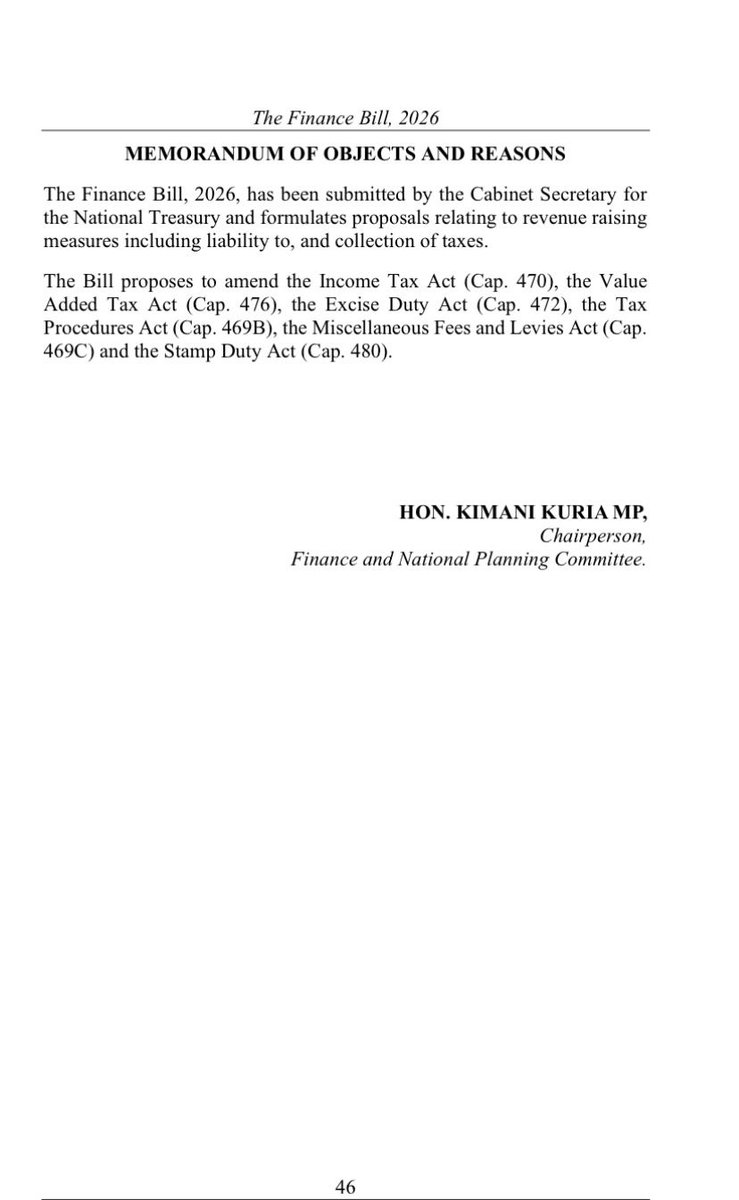
The Finance Bill, 2026 was published on 30th April and is now before Parliament and every Kenyan deserves to know what is in it.
The government targets Ksh3.63 trillion in revenue for 2026/27 and a wider budget deficit of 5.3% of GDP in the 2026/27 fiscal year (July-June) up from 4.7% in 2025/26. These are not unreasonable fiscal objectives but the manner in which the burden of achieving them is distributed is a cause for serious concern.
On tax filing timelines, the Bill moves the income tax return deadline to April 30th which is two months earlier than the current June 30th and compresses nil return filing to January 31st. This reduces the time available for audit completion, cash flow planning and compliance. For small businesses and individual traders, this is not administrative reform. It is an additional compliance cost they can ill afford.
On mitumba, the Bill inserts a new Section 12H into the Income Tax Act which deems profit at 5% of customs value payable upfront before goods are released by KRA as a final tax. A trader importing a bale worth Ksh1 million pays Ksh50,000 regardless of whether they make a profit or a loss. I cannot in good conscience describe this as equitable.
The Bill increases residential rental income tax from 7.5% to 10%. Absent a serious enforcement framework, this will drive non-compliance rather than revenue. The government must fix the enforcement gap before it increases the rate. One without the other is burden-shifting.
On digital financial services, the Bill removes existing VAT exemptions on money transfers and payment processing. These are the tools of financial inclusion that millions of Kenyans including the very people this government says it wants to reach rely on daily. Making them more expensive will not serve the objective of a broader tax base.
By including interchange and merchant service fees within the definition of management or professional fees for withholding tax purposes, the Bill introduces a compliance burden into automated banking processes. That burden will be passed on to businesses and ultimately to consumers.
The amendment to Section 24 of the Income Tax Act empowers KRA to deem at least 60% of a company's undistributed income as dividends for tax purposes. This fails to account for legitimate decisions on reinvestment, working capital and business growth. It is a retrogressive measure that sends the wrong signal to the investors Kenya needs.
A 25% excise duty on telephones for cellular and wireless networks is proposed. A phone is not a luxury. It is how Kenyans bank, communicate, conduct business and access government services. Parliament must interrogate this carefully.
On PAYE, Kenyans were led to expect relief and a restructuring of the tax bands to ease the burden on salaried workers. That proposal does not appear in this Bill. That is not a minor omission. An explanation is owed to every employed Kenyan who was waiting for it.
To be fair, the Bill is not without merit. The reduction of corporate tax for non-resident companies from 37.5% to 30% improves our investment climate. The extension of the tax amnesty to cover liabilities up to 31st December 2025 provides a genuine and welcome pathway to compliance. VAT exemptions on electric buses, bicycles, dialysers, animal feed raw materials and PPP infrastructure are sensible measures. The clarity introduced on trust taxation ensuring beneficiaries are not taxed on income already taxed at the trust level and the recognition of gratuity contributions as exempt income are also steps in the right direction.
Be that as it may, we cannot afford a repeat of June 2024. Parliament must discharge its oversight role with the seriousness this moment demands. They should not merely rubber-stamp what the Treasury has placed before it. Every clause must be scrutinised. Every punitive or ambiguous provision must be rejected or amended.
#FinanceBill2026 #PublicParticipation
Kenyans are being told fuel prices can’t come down.
Now we’re learning through the Auditor general that over Ksh7 billion from the fuel levy was diverted to pay French contractors for a cancelled Mau Summit highway deal.
Money you pay at the pump, believing it will fix roads, is being used to clean up government blunders.
The Auditor General has flagged it.
This is the real problem in Kenya:
Leaders sign reckless deals.
Cancel them.
Taxpayers carry the bill.
No consequences.
No accountability.
Just more taxes, expensive fuel, and broken roads.
At what point do we say enough?
Harry Truman once said: “The only thing new in the world is the history you do not know.”
Fellow Kenyans, our crisis did not begin yesterday.
The looting. The illegal debt. The betrayal of the Constitution. The collapse of public services. The silence of career politicians. These are old scripts repeated by leaders who believe Kenyans forget quickly.
They believe another scandal will trend. Another distraction will come. Another funeral, another handshake, another coalition, another slogan.
Meanwhile, you pay more taxes for debts you never approved and never benefited from.
Between 2014 and 2024, Kenya borrowed Sh9.11 trillion. Only Sh2.57 trillion received proper parliamentary approval. The remaining Sh6.54 trillion is odious debt, unconstitutional borrowing forced onto the backs of struggling citizens.
This is why food prices rise while wages stagnate. This is why hospitals lack medicine while billions disappear. This is why schools decline while politicians grow richer. This is why young people graduate into hopelessness.
And while Kenya bleeds, legacy politicians remain silent. Many are not fighting to fix the system. They are fighting to inherit it.
They criminalize protesters. They weaponize police. They reward political loyalists with advisory jobs funded by taxpayers. They protect corruption networks while ordinary Kenyans suffer.
We go to court because the Constitution is the last line of defense between the people and organized state plunder.
From the struggle for independence in 1963, to Saba Saba, to the 2010 Constitution, every generation of Kenyans has been called to defend freedom against greed and impunity. History is watching us now.
If we remain silent while our country is looted, future generations will remember us as the people who watched Kenya collapse and did nothing.
Read history. Defend the Constitution. Reject fear. Reject silence. Reject thieves disguised as leaders.
We must be a nation that reads, remembers, and refuses to be misled by the same old tricks. Know your history, defend your rights, and let us not be "newly" surprised by what we should have already learned.
Kenya istahili heshima
#OdiousDebt
#ReKe
#Constitutionalism
When Uhuru left power, NSSF was at flat rate of KSh 200. For Ruto, it's 6% on the employer side and 6% on the employee side.
When Uhuru was leaving power, the dollar was KSh 118. Ruto took it to 160 and brought it down to 129.
When Uhuru was leaving power, petrol was going for KSh 158 with subsidy. Ruto took it to 217, brought it down to 178, and now it’s at 198 with subsidy.
When Uhuru was leaving power, the maximum NHIF contribution was KSh 1,700. For Ruto, it's 2.75% of your salary.
During Uhuru’s time, KSh 100 would give you about 6 KPLC units of tokens, but under Ruto you now get about 3 units for the same amount.
During Uhuru’s time, VAT across key sectors was 8%, but under Ruto it has gone up to 16%.
For Uhuru, affordable housing meant no deductions on your payslip, but under Ruto, you now have an additional mandatory deduction.
Despite all this, borrowing hasn’t stopped. In fact, it has picked up.
So, how has Ruto reduced the cost of living ?🤔
Kithure Kindiki reportedly spent KSh 8 million in a single day on helicopters and flowers.
This came out during a parliamentary session scrutinizing the DP’s office expenditure.
Even more concerning?
Most of those flights were reportedly to Tharaka Nithi.
So the question Kenyans should be asking is simple:
Why is taxpayers’ money being used on frequent helicopter trips home?
Let’s be honest, Nairobi to Tharaka Nithi is not some unreachable war zone.
A motorcade can do that trip at a fraction of the cost.
This is not about denying anyone the right to go home.
It’s about priorities and accountability.
At a time when Kenyans are struggling to afford basic needs,
leaders are spending millions in a single day on luxury items.
This is exactly why people are angry.
This is exactly why trust in government keeps collapsing.
The people shutting down your businesses and killing your careers will be asking you to re-elect them so they can keep their jobs. Never forget what they're doing to you.
People keep talking about how there’s no viable candidate when this man is right here. Legacy media has given you the impression that this is a 2 horse race. He gets next to no airtime while we’re treated to a grotesque theatre of profanity and mudslinging. Refuse.
🚨BREAKING NEWS: Ghana president declares I a televised address->
“We are going to stop selling Cacao to foreign countries, buy our own cocoa and transform it locally”
There was such much talk on human trafficking when Andrew and I were arrested without evidence and imprisoned without trial that now people are over it.
It’s a boring topic now, why discuss the 3,000,000 pages of proof that all the world’s richest and most powerful men were ACTUALLY customers of a REAL human trafficker?
The media is silent.
How grimly predictable.
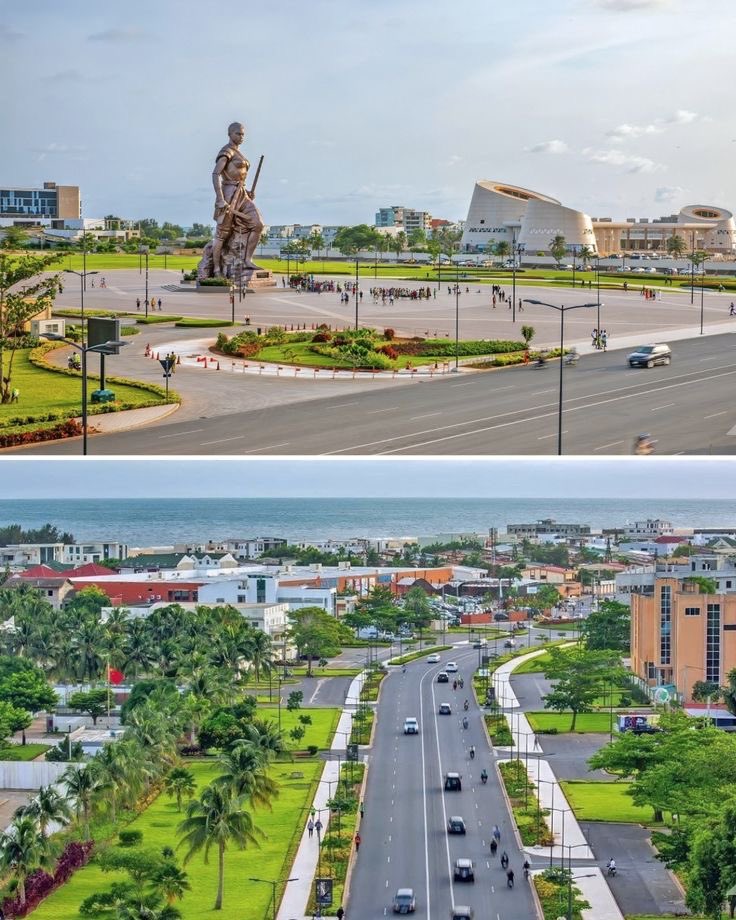
To change Nairobi to be like this itakua war. You'll be fought by hawkers, slums dwellers, Matatu cartels, those with illegal business besides the roads na cartel wa kuokota takataka. Then illiterates wa kusema "our community is being targeted."