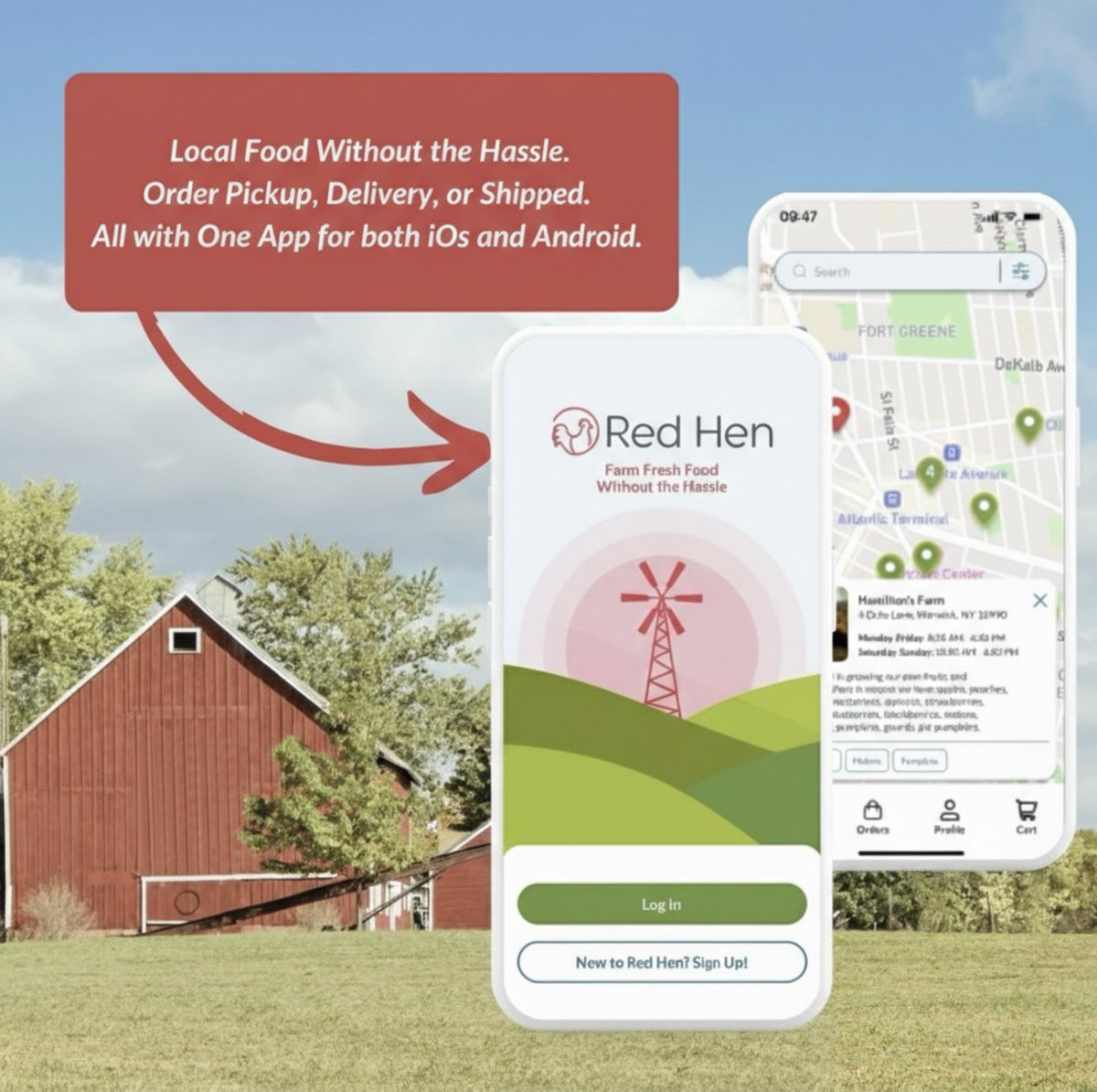
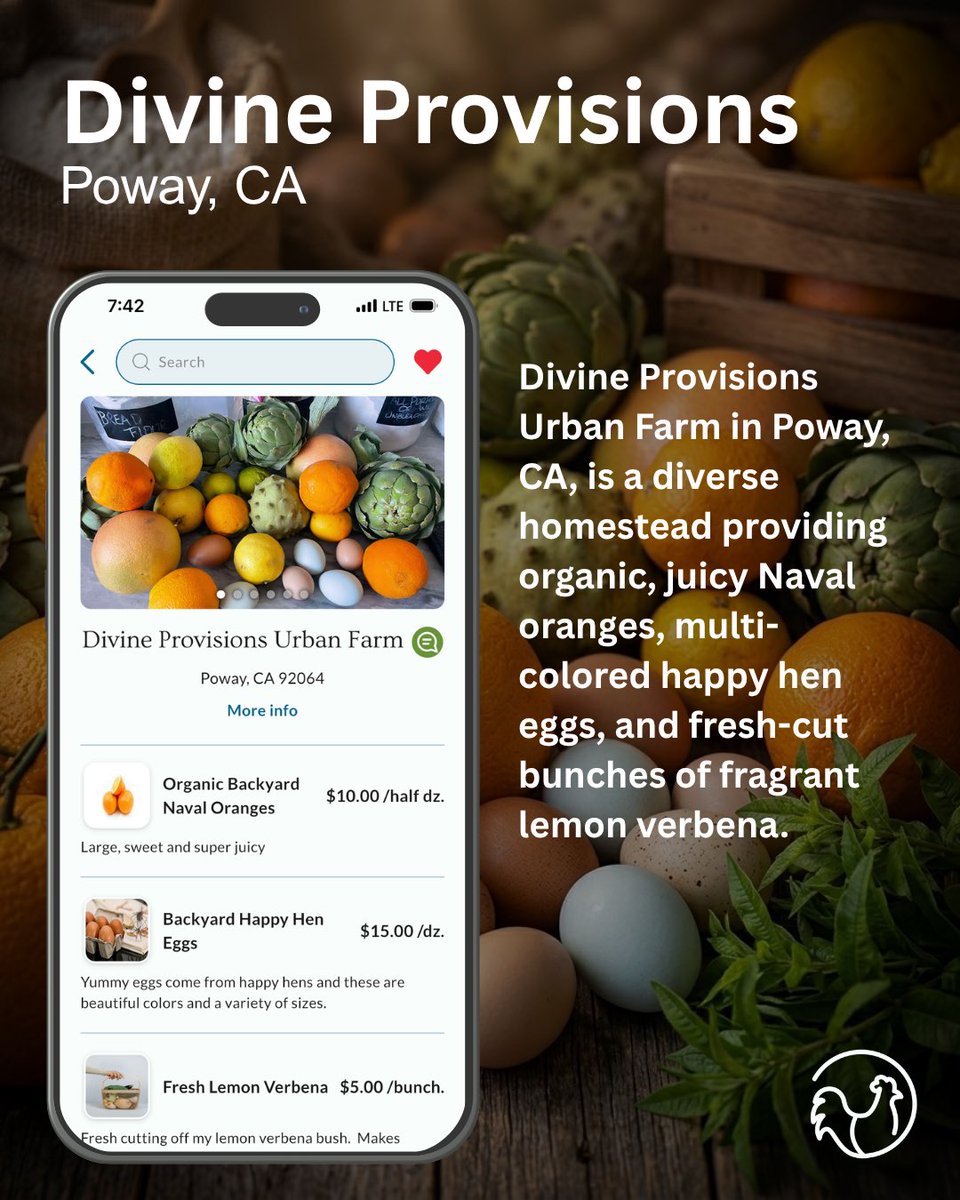
Partnering with @redhenapp! 🌱
Sellers: Download Red Hen for Farmers in the App Store or Google Play.
USE REFERRAL CODE: e01fcb23f3 (2% fees)
Buyers: Download Red Hen to shop local
Turn your harvest into income or support local growers 🌾🛒
🌿 Four more incredible local sellers now on @redhenapp 👉
🥩 Meats With DJ — San Diego
🐉 TNL Wholesale — Oceanside
🥚 Gaby’s Homestead — Lancaster
🥥 Ramosbynoe — Oceanside
Shop local or sell local 👇
Sellers: code e01fcb23f3
Buyers: code d4f8044e1c
🍅 We beat the pesticide industry in a House vote — and your voice was part of it.
https://t.co/Svpz3TDjiY
But this issue of Organic Bytes is also a reminder of why we can't stop. Pesticides are being linked to colon cancer in young adults. Toxins and heat stress are threatening fertility across species. Your food still contains chemicals no one has independently tested.
And yet — grass-fed farms are healing soil, urban farmers are building community in city backyards, and science keeps confirming what organic advocates have said for decades.
This week, read about all this and more, about your health, our food system, and using our power to make this a world where people come before profit. 🌻
Speaking as a former solar project manager…
California = way too much permitting red tape — biggest bottleneck
Texas = way less red tape — some counties don’t even require a permit
Everyone who cares about climate should understand this. Texas, with no pro-climate policies, has blown passed California in clean energy. In large part because Texas has less red tape and makes it easier to build.
My contribution to the solar/farm discourse is that solar panels capture about 100x as much usable energy from the sun as corn grown for ethanol, if you include the energy cost of growing corn.
Ethanol corn is 40% of all US corn and is literally just there to capture energy from the sun. We have a way of doing that much more efficiently now!
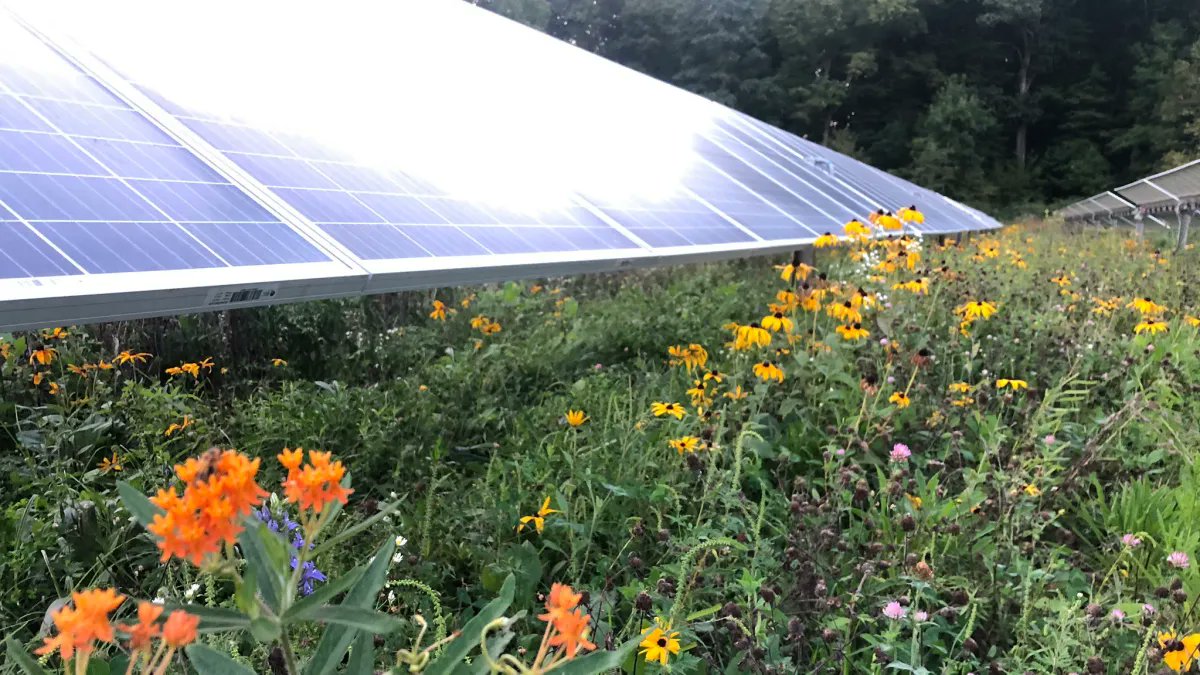
A solar farm in Minnesota planted native wildflowers between its panel rows. Five years later, total insect populations tripled. Native bees increased 20-fold.
Not only did insect populations boom, soybean fields next to the solar arrays got twice as many bee visits as fields farther away.
Two of the things we usually think of as competing turned out to reinforce each other.
One study, published in Environmental Research Letters in late 2024, tracked two utility-scale solar sites built on retired farmland in southern Minnesota, where the developer seeded native prairie species between rows of panels in 2018.
By 2022, the sites looked less like industrial energy infrastructure and more like remnant prairie.
Goldenrod soldier beetles colonized the goldenrod stands. Bumblebees nested in the soil. Monarch butterflies passed through during migration. The wildflower diversity grew sevenfold; insect diversity grew eightfold.
This matters because, like it or not, utility-scale solar is going to take up real space. The US is on track to cover roughly six million acres in panels by 2050.
The default approach is turfgrass, gravel, or herbicide-maintained bare ground, which is ecologically dead.
The Argonne study shows the alternative isn't more expensive or harder to maintain. It's just a different seed mix.
BREAKING: 70% of U.S. farmers say they can't afford the fertilizer they need for this year's growing season.
They plan to reduce their crop size to compensate.
U.S. Farm Bankruptcies Surge +46% as Fertilizer Costs Squeeze Farmers:
The American Farm Bureau Federation reported 315 Chapter 12 bankruptcy filings in 2025, up from 216 in 2024 and the third consecutive annual increase.
The Midwest got hit hardest with 121 filings, a +70% jump.
The Southeast followed with 105, up +69%.
Together, those two regions accounted for more than two-thirds of every farm bankruptcy in the country.
Fertilizer prices are pouring gasoline on the fire.
Urea, the most widely used nitrogen fertilizer on the planet, has ripped +87% year-to-date and trades near $720 a tonne.
For corn growers who depend on nitrogen, this is a dire situation.
Many farmers are reporting they will cut the amount of fertilizer they use, shift from corn toward less nitrogen-dependent soybeans, or just take the yield loss.
Farms are under pressure.
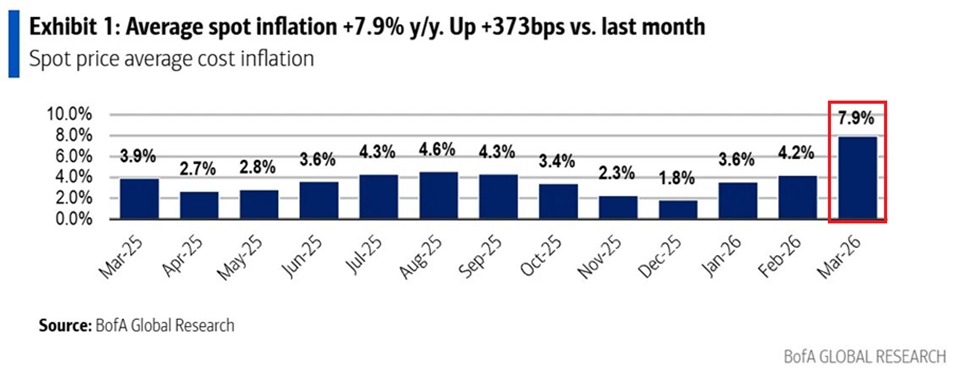
Food inflation is set to accelerate in the US:
Average inflation for food and beverage companies surged +7.9% YoY in March, the biggest jump in at least 12 months.
This is up +373 basis points from +4.2% in February.
The largest jump was recorded in tomatoes at +102% YoY, vegetables at +90%, and diesel at +88%.
This was largely driven by higher fuel costs, meaning the full impact of rising fertilizer and plastics prices has not yet been reflected.
Meanwhile, urea prices, the world's most widely used nitrogen fertilizer, have doubled since February, to ~$900 per metric ton, the highest since the 2022.
Fertilizer costs are rapidly rising for farmers and will eventually translate into higher wholesale food prices before landing on grocery store shelves.
Food inflation is set to accelerate.