Anyone who has read Dostoevsky's Crime & Punishment would agree that the rebirth of a being is SOMETIMES possible & that punishment can as well absolve a crime. Raskolnikov was a murderer, then reborn, through punishment and love. Fiction indeed has happened or will somewhere.
“I cannot find anybody capable of producing a solution to the suffering masses of this country. The most unfortunate thing is that the much talked about civilian regime is going to be worse than the military administration.” -Chief Níyì Òníòrorò, The Country is Hard, 1968.
Every Nigerian needs to pay very close attention to this official press release by the Finance Minister of Nigeria, Taiwo Oyedele. This serves as the direct response by the Federal Government to the International Monetary Fund 2026 Article IV Concluding Statement on Nigeria.
The recent IMF statement on Nigeria is overflowing with glowing praises for the Tinubu Administration and their supposedly brilliant economic policies.
The IMF is loudly cheering for the reunification of the foreign exchange market because the gap between the official and black market exchange rates has remained below 5%, which is absolutely fantastic for foreign investors since they love predictability, guaranteed margins, and zero currency friction. They also excitedly applaud the fact that Nigeria's foreign reserves have built back up, supposedly providing a comfortable cushion against global economic shocks. Finally, the IMF highly commended the Tinubu government's decisions to eliminate deficit monetization (which stopped the CBN from printing money to fund government projects) and to permanently remove petrol subsidies.
Now, the Tinubu Administration, speaking through the office of the Finance Minister, is proudly parading this IMF report like a shiny gold medal. They are framing this praise as an "independent validation" that their brutally painful economic policies over the past few years are finally yielding positive macroeconomic results. The glaring problem here is that this is not something Nigeria as a sovereign country should be celebrating, and this is entirely because of who the IMF actually works for and who dictates their underlying policies. The G7 nations and Western superpowers entirely control the IMF board, and the institution itself exists strictly to protect the financial interests of international creditor nations, massive global investment banks, ruthless hedge funds, and wealthy foreign bondholders. The primary job of the IMF is merely to ensure that the global financial system remains perfectly stable and that struggling developing nations never default on their massive, crippling debts to foreign creditors. Therefore, the IMF works exclusively for the lenders (the global financial-industrial complex), absolutely not for the bleeding borrowers like Nigeria, Ghana, Kenya, or any other struggling African nation.
To see how bad this is, just observe this currency unification being praised by the IMF as a massive win for the Tinubu Administration. They are celebrating simply because the exchange rate is now mathematically stable and investors are finally happy. This is spectacularly good for foreign speculators, but it is deeply catastrophic for us because the currency stabilized at a spectacularly weaker level of N1,400 per dollar, compared to N770 in the black market and N450 in the official rate before this administration took over.
So yes, the currency is technically unified, but at a permanently crippled level. Since Nigeria is a heavily import-dependent economy, this unified weakness has made the cost of food, life-saving medicines, basic hospital bills, school fees, transportation, building materials, imported spare parts, and daily survival astronomical, thereby permanently destroying the purchasing power of everyday Nigerians.
Furthermore, the IMF congratulating the Tinubu Administration on increasing the country's foreign reserves might sound like brilliant news, until you suddenly realize that it is this exact, deliberate policy that violently crippled our local industries. Most of the money that makes up these bloated new foreign reserves was forcefully squeezed out of the removal of petrol subsidies, a move that has deeply suffocated our local businesses, artisans, manufacturers, and logistics companies who rely entirely on petrol generators to survive. But this is not even the full tragic story. Even the bloody change they violently squeezed out of the dying Nigerian middle class was not enough to impress these foreign investors. To aggressively entice them, the Tinubu Administration spiked the base interest rate from 18% up to a staggering 27%. This was no mistake. In the US, for example, when you lend money to the government by buying Treasury Bills, federal bonds, municipal securities, or index funds, the interest you expect to make per year is at most 5%. But the Nigerian government is desperately signaling to these foreign speculators and international bondholders to come drop their dollars in Nigeria, effectively guaranteeing them a massive 27% interest by the end of the year. This might look like a huge economic win as foreign capital flows into the country, but this hot money never ends up in the pockets of ordinary Nigerians. It is never used to build schools, pay hospital bills, subsidize agriculture, fix dead refineries, or reduce house rents. The money just sits idly in the central bank to impress the IMF and World Bank creditors, proving to them that Nigeria is highly liquid and perfectly safe to lend to.
The absolute worst part of this trap is that it is not just the CBN increasing the base interest rates. The commercial banks are naturally forced to aggressively increase their lending rates even higher. Today, some predatory commercial banks are charging desperate businesses as much as 35% to 40% interest on loans. This financial terrorism has forced countless local businesses to drastically cut down production, lay off massive numbers of staff, and permanently close their branches in remote areas across Nigeria, forcing them to operate strictly within the suffocating limits of their own personal, depleted capital. It is practically mathematically impossible to borrow from a Nigerian bank, scale up production, create actual wealth, and employ the millions of struggling graduates in our society when you first have to pay 40% to the bank. Add that to the reunified currency making imports insanely expensive, meaning businesses still have to pay extra for imported raw materials, clear goods at exorbitant customs duties, pay multiple state taxes, and buy the hyper-expensive fuel that spiked in price due to the celebrated subsidy removal.
It is very possible to analyze this insulting press release further, but there is absolutely no need to waste the time. Clearly, this administration should not be celebrating warm handshakes, pat-on-the-back press releases, and polite diplomatic smiles from foreign creditors and international bondholders. They should be focusing entirely on the bleeding Nigerians who are brutally forced to carry the crushing, suffocating burden of these massive economic miscalculations just to please a comfortable, wealthy board of directors at the World Bank and the IMF.
Firstly, Ethiopia is under US sanctions while Vietnam is not. And speaking of former French colonies, Haiti was the first to get independence (1804) and is still one of the poorest countries in the world because of the debt they had to take on to gain independence (it took them until 1947 to fully repay it!). Whereas, New Caledonia is still a French colony and is neither rich nor poor.
"If colonialism were the answer to why Africa is poor..."
This line completely ignores the European powers' (and US) post-colonial control over Africa. Patrice Lumumba, the first democratically elected leader of the DRC, was tortured and killed by Belgium and the US for being a nationalist. His body was dissolved in acid so he wouldn't become a martyr. His legacy is largely unknown even within the continent. Several other such "lessons" were meted out. Google Thomas Sankara (Burkina Faso) and Sylvanus Olympio (Togo).
Once you set the example, you gain obedience. The VietCong, on the other hand, didn't surrender even though 3 million Vietnamese died during the war, and several thousand more continue to die to this day (!) from Agent Orange exposure.
As for former French colonies in Africa, France still controls their currency and holds their central bank reserves in France. As Rothschild purportedly said, "permit me to issue and control the money of a nation, and I care not who makes its laws."
Third, the borders in Africa were drawn in such a way that conflict was inevitable. At the Berlin Conference in 1884-85, the European powers simply carved up the continent by drawing straight line borders. African leaders were conspicuous only by their absence at this historic event which shaped the next century. This is why Cameroon, a French-speaking country, has a minority English-speaking territory, ensuring it remains destabilized. Likewise for West Asia/the Middle East, where the Sykes-Picot legacy lives on.
@magattew conflates formal colonial rule with colonial control. Vietnam managed to fully kick out both France and the US, reunified the North and the South, and kept its sovereignty. All African leaders who attempted the same have been systematically eliminated (see Muammar Gaddafi, Libya's divisive leader, for a recent example), ensuring Africa forever bears the open wounds of its colonial legacy.
But Ms. Wade is right on one thing: Vietnam owes its prosperity to overcoming colonial rule. Maybe Africa can become prosperous if Africans do the same.
The conversation on Agriculture is long overdue in the South East.
Join us, as we explore the limitations, opportunities, bottle neck, certifications, logistics in the Agro Sector.
Alaigbo can feed Nigeria and the rest of the world.
Join us, as we Redefine Alaigbo, through Agriculture.
From June 1st to July 5th, I will be posting only about the Redefine Edition of Onitsha Business Hangout @OBHNG_.
I won't retweet, like or engage in any conversation not about it.
I apologise for any inconvenience and hope you my mutuals understand this. Once we are done with the event on July 4th and 5th, anyị ebidokwa ebe anyị kwụsị.
If you can lend a voice, "like, retweet, share, post, quote", it will be well appreciated. Your voice matters, and will go a long way.
Dalụnụ.
5 months and @alexottiofr never pay the newly employed health workers in Abia State.
Yesterday was Pentecost, yet the coming of the Holy Spirit no touch Alex Otti heart. Even na Obi Mkpume he get.
@myabiadaily and @kepukepunews, even @UkohaNjoku dey avoid this issue like pIague. None has deem it wise to address this wickedness.
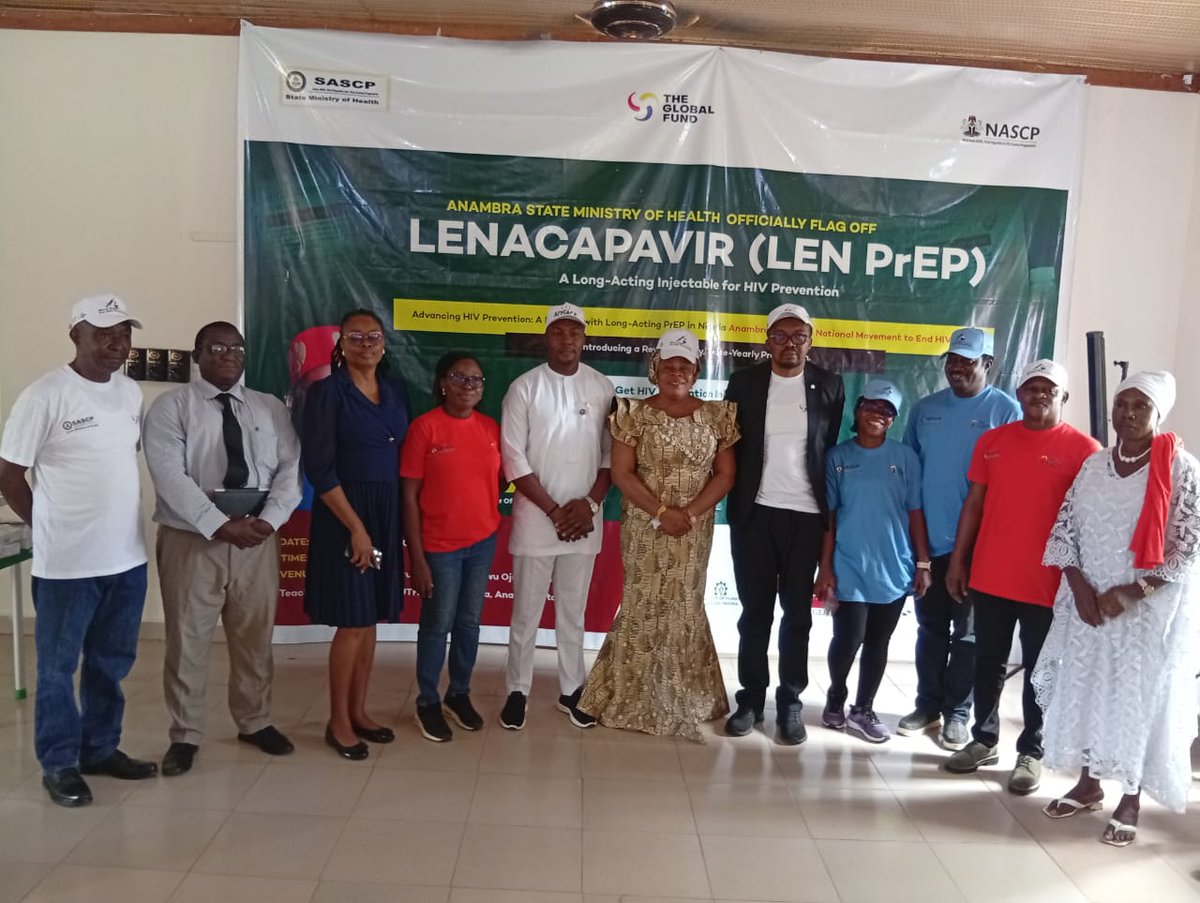
The Anambra State Government has commenced the rollout of Lenacapavir (LEN PrEP), a long-acting injectable medication designed to prevent HIV infection, as part of efforts to strengthen HIV prevention and reduce new infections across the state.
Unlike the conventional daily preventive pills, LEN PrEP is administered twice a year, offering a more convenient option for individuals at risk of contracting HIV.
The medication is being provided free of charge at selected healthcare facilities, including the Chukwuemeka Odumegwu Ojukwu University Teaching Hospital, Amaku Awka; Federal Medical Centre, Onitsha; Trauma Centre, Oba; Comprehensive Health Centres in Ukpo and Neni; as well as OSS, Awka.
Speaking during the official launch, the Anambra State Commissioner for Health, Afam Obidike, stated that prevention remains a critical strategy in the drive to eliminate HIV. He noted that the introduction of LEN PrEP would help improve HIV prevention among vulnerable individuals and communities with higher exposure risks.
Dr Obidike cautioned against the commercialization or diversion of the medication, stressing that the drug is meant strictly for public health purposes.
According to him, the state’s HIV prevalence figures appear high partly because more residents are embracing regular testing and status checks.
Also speaking, the Chief Medical Director of Chukwuemeka Odumegwu Ojukwu University Teaching Hospital, Maureen Umeakuewulu, described the rollout as timely, especially with rising HIV cases among adolescents.
The Anambra State AIDS Programme Coordinator, Tonia Mbagwu, revealed that the state currently has an HIV prevalence rate of 2.4 percent, the highest in the South-East region. She disclosed that over 56,223 people are currently living with HIV in the state and highlighted the need for behavioural, structural, and biomedical interventions to curb the spread of the disease.
Every time you transfer money in Nigeria, someone takes a cut.
Not from your income. Simply from moving your own money.
₦50 here. ₦6.98 there. VAT. Alert fees. Maintenance charges.
In 2025 alone, Nigerians were charged across more than 8 billion transactions.
Government earned about ₦400bn from transfer-related charges. Two banks alone made ₦283.7bn from electronic banking and account fees.
Meanwhile: • Zelle transfers in America are free • Europe capped transaction fees • India subsidises digital payments
In Nigeria, the citizen carries the cost every single time.
This is not a banking problem. It is a policy issue @cenbank
In the latest OsitaInsight, I explain why this keeps happening — and what Nigeria can do differently.
Link https://t.co/OGpSEhNWDZ
A whistle blower in the Ministry Of Health said some members of CSC are working for @alexottiofr opponents. That they are intentionally owing the newly employed health workers to rubbish Otti(pelemense).
One guy, Daniel of "APPMART Biometrics" has refused to show up, even when the Permanent Secretary of Ministry Of Health has called him severally to complete the verification of over 600 newly employed health workers. Without him, those workers won't be verified and cannot be paid.
Last week, they paid around 45 persons one month salary, out of 4 months. Ndị ife na eme na isi.
At this point, this reeks if gross incompetence and a shameful wicked inhumane act from the Alex Otti government, even for @enojerry22, head of Abia State CSC.
Pay workers their salaries, akụkọ eju ụnụ́ ọnụ. Now there is no guarantee they will be paid again this month.
@alexottiofr, have some shame and pay these guys!!
I just remembered how APC people, especially APC SW downplayed all the killings in Middle belt, SE * SS.
They called it communal clash, you'll hear something like "I did my NYSC in Benue & witnessed how they kill each other over farmlands".
APC people are evil, simple.
22 years ago, in Enfield, London, I met this Nigerian guy whose job was to wash celebrities' cars at a very high-end car wash. Everything he made, he sent back to Nigeria to invest in property. He was not well educated and didn't know of any other assets to preserve wealth.
At the time I met him, he was saving a lot and regularly sending home millions of Naira. His clients and patrons were very generous, and he was very hardworking.
The first thing I asked him was why he didn't take all the knowledge he had gained to set up a similar business back home. His answer was - "They will rob me blind if I am not there."
He wasn't ready to leave his cash cow in England, and he also knew that setting up a business at home was a risky endeavor. I see this pattern repeated with many successful Nigerians outside Nigeria. Trust is rare, and many have been burned.
The surprising thing is that when Nigerians do the reverse and try to set up businesses abroad from Nigeria, they would most likely choose other Nigerians to run them. I have seen this with banks and churches. Some are successful, and others are not, but they keep doing it anyway.
What happens to Nigerian trust locally, and why is it different when things are abroad? The simple answer is systems. A Nigerian doing business with another Nigerian abroad is protected by the rule of law and the systems in place there. There is also something deeper that I stumbled upon.
Nigerians typically choose other Nigerians to run things, even though their products are originally Nigerian products or products largely meant for Nigerians in the Diaspora. When it is a universal product, they would choose others, but would still likely choose Nigerians first. It is a paradox.
There are many times when choosing a Nigerian to run a Nigerian business outside Nigeria is a very bad idea, especially in those places with xenophobia, and where Nigerians are despised, but the reason Nigerians choose other Nigerians is that Nigerians abroad work hard. They know what they are running away from and put everything into it so they don't go back.
I always joke that I have more relatives in Atlanta, Georgia, USA, than in Benin City, and it is likely true, as a family reunion there once had 200 people. One thing I noticed was that the family members almost always employed other family members in their businesses, and those businesses thrived.
One of them even ran a car wash, employing his brothers, who later set up their own car washes. These were informal arrangements without any contracts, but everyone behaved and played their part. The interesting thing was that they never tried to do the same thing back home in Benin City. The answer seemed simple: maybe desperation and greed led to bad choices by those at home, but why?
I have always wondered why the same family bonds abroad that bring people together and help them do well disintegrate when they get back home. The only people I have seen who have kept these family bonds in business, tight at home and away, were the Igbo people. The interesting thing was that the car guy in London was also an Igbo man, but he couldn't leave a business with his people back home to run.
I later asked why, and he told me it was a high-end, personalized service that took years of apprenticeship to perfect. He was cleaning and detailing Ferraris, Lamborghinis, and other high-end cars for footballers and bankers. If he tried to train people to do that, they may end up taking the business away from him. I finally got my answer.
Trust is multifaceted. You have to first trust yourself before you can trust others. I have a barber in Lagos called Chika who has absolutely no fear that I would choose others over him, as we have had a relationship for decades. I have the same relationship with Chika as I had with my late co-founder, because we were always truthful with each other. It was something that grew over time.
I have followed Chika from Ikoyi Hotel to Victoria Island, to a shed when his shop was demolished, and finally to his current place, where he has operated for the last decade. I have even begged him to come to Accra, as I still don't have a regular barber here after 17 years. Many others in Lagos have the same relationship with him, and there are more of them there than in Accra. Chika is that good.
He has also been unable to transfer that skill to others, making his business less scalable. It will always remain a niche luxury service. The type of business we try to do matters. High-trust businesses with a personal touch require the founder to micromanage everything.
In Ghana, I once lost a $ 330k-a-year deal because someone (a Ghanaian) was too laid-back to respond to an email on time. Another Nigerian took the deal. Nigerians are more aggressive in doing business than others. So, I understand why people hire Nigerians abroad, especially in other African countries. They have more hunger. Nigerians choose Nigerians because they are easier to micromanage.
Hunger at home can easily turn into greed. A Nigerian guy I recruited in Lagos for a project at MTN Group in the early days had tried to circumvent me with my South African partner. I was lucky to have seen the email he wrote to that effect when he left his screen open in the office. I became more cautious about who I worked with. It repeated itself much later, when I saw that our internal company emails were being read in the Ericsson office before they poached a lot of our people.
Could these things have happened outside Africa? Maybe the probability would have been much less. The hunger is the same, but the greed is less, as many of the needs are usually already met. This is the same for Nigerians working in other parts of Africa. You don't need to worry about diesel for your generator, fuel scarcity, or security. When those basic needs are met, Nigerians become very different people.
This is why I keep telling people recruiting from the diaspora not to bring them to Nigeria, but to allow them to settle in other African countries for now. Trust is enhanced when people worry less about basic things.
This is a simple and pedestrian explanation, but trust me, it works all the time. There are people I know who would love to work for Nigerian companies but would never want to live in Nigeria. Hire them, but don't let them come back home unless you are ready to treat them as expats.
Nigeria is the problem with a lot of people; it is not because they are Nigerians but because they are in Nigeria.
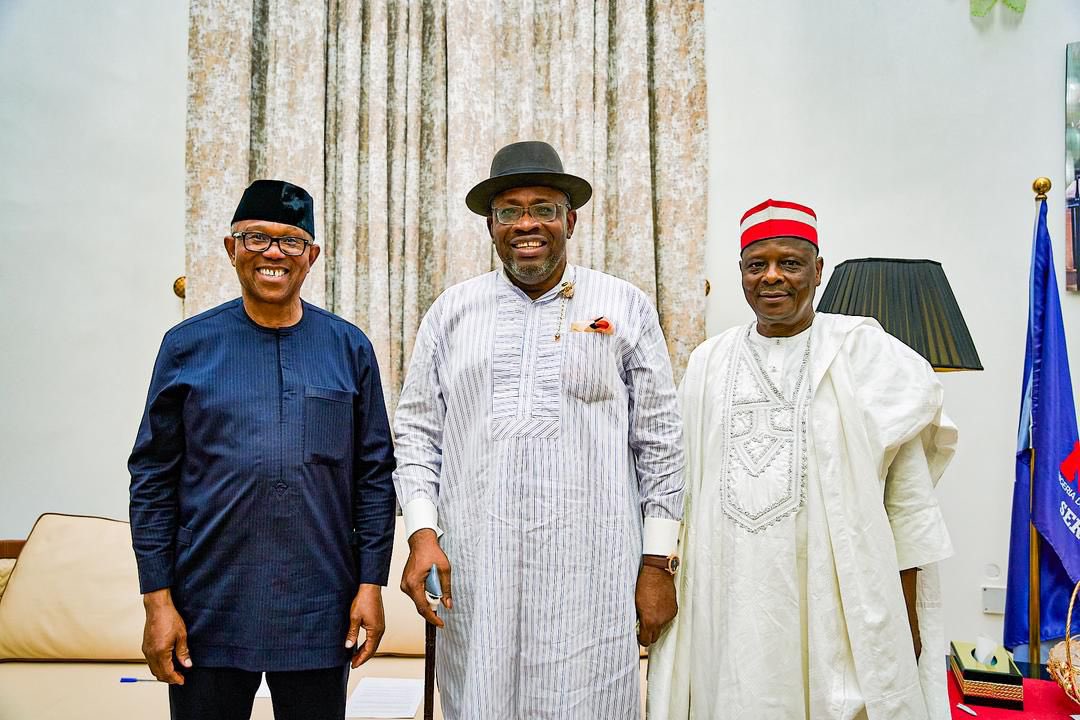
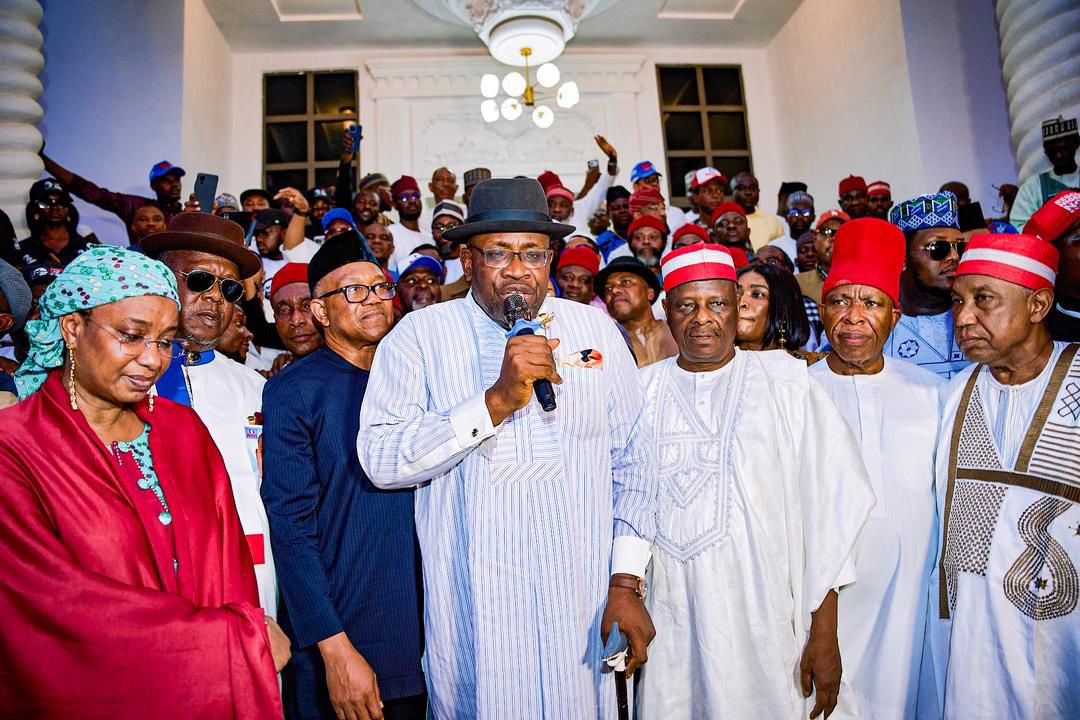
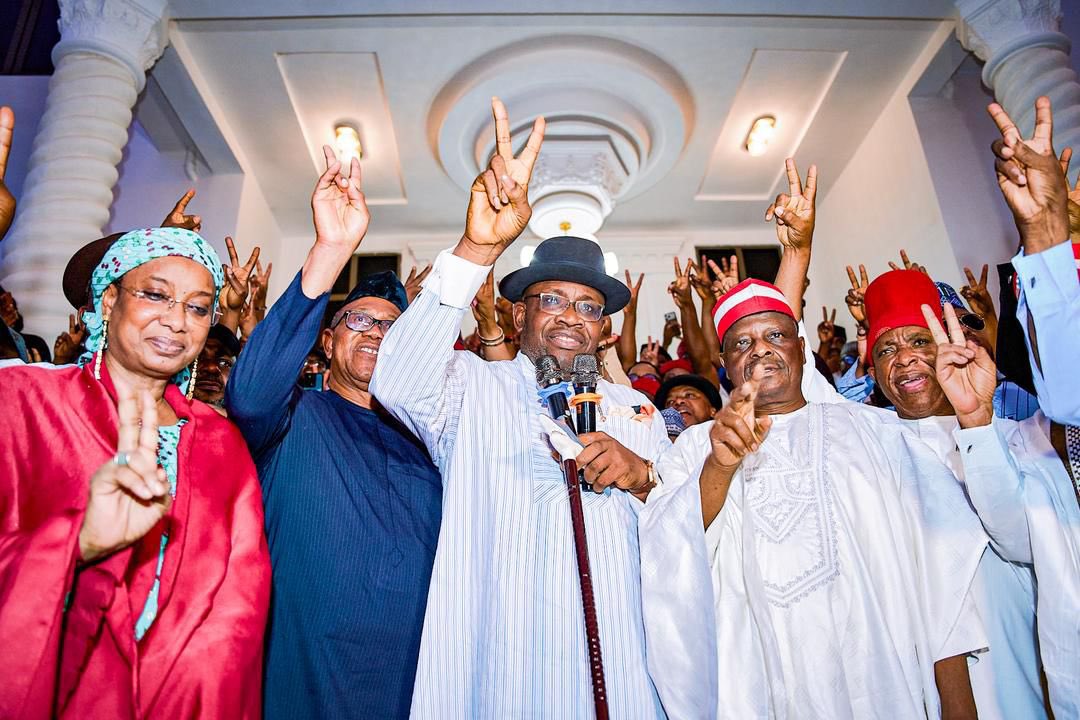
Yesterday, we took a bold and decisive step by formally joining the Nigeria Democratic Congress (NDC).
At the residence of Senator Seriake Dickson in Abuja, I announced that our decision stems from a deep commitment to democratic values.
We are determined to provide our people with a credible platform where they can thrive and realise their full potential.
I therefore call on all our dedicated supporters and well-meaning Nigerians to join the NDC and stand with us in this renewed fight for good governance and true democracy. - RMK