DeviceScript - TypeScript for micros by Peli de Halleux, Michał Moskal, and Tom Ball in Raspberry Pi and Microsoft https://t.co/uK1AhZ3yov #iot#typescript#raspberrypi
I’ve been thinking about how dynamic type checks could be improved in JavaScript:
– Introduction: https://t.co/HBgClk5Tgl
– Tests: https://t.co/5xpfaYMz75
The HTTPbis working group has updated specifications for one of the most widely used protocols on the Internet. RFCs published this month provide new definitions at the core of HTTP, affecting all versions of the protocol, and HTTP/3, the latest version. https://t.co/FIgJ6ldzja
Another AWS billing horror story. This engineer *did* follow best practices in setting up billing alerts: still got no alerts due to delays in these alerts firing.
AWS has no ways to add hard spending limits - which Azure has - and these stories keep happening again and again.
Today, after over 5 years of work, HTTP/3 was finally standardized as RFC 9114! https://t.co/IGMNam0AOS
Together with RFC 9204 (QPACK header compression) and RFC 9218 (Extensible Priorities) it ushers in an important new chapter for the Web!
Proud to have been part of this!
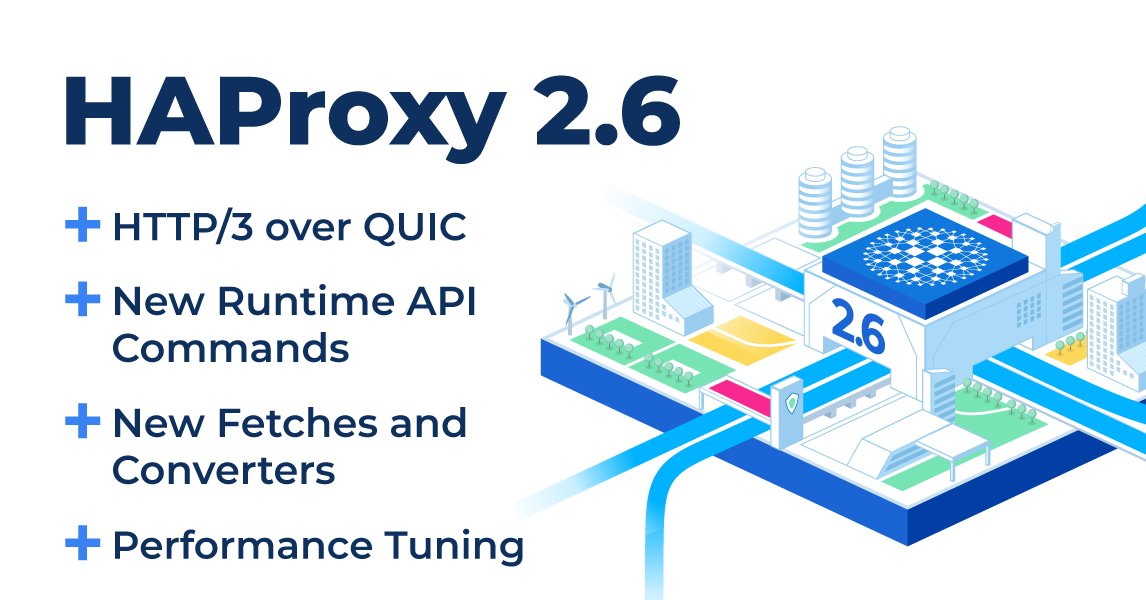
HAProxy 2.6 is released! 📢
The latest version of HAProxy brings practical support for HTTP/3 over QUIC, a new hash algorithm, a new Runtime API command, new fetches & converters, and many more additional features.
Read our blog post to discover more! 👇
https://t.co/4QD4yDfft3
Apache Kafka 3.2.0 is released!
Learn all about it from the release blog post: https://t.co/HCXyUlSOlp
Thanks to all contributors and our release manager Bruno!
Access to safe and reliable internet for all is more critical than ever.
So we enabled HTTP/3 and QUIC, with build-in encryption and better performance, for all our customers — free:
https://t.co/wwuivpqx5M
I've made an interactive guide to QUIC, a secure replacement for TCP that's also the basis of HTTP/3!
The Illustrated QUIC Connection: https://t.co/59aS2yGbrU
Last week, RFC 9221 was finalized. It defines sending Datagrams on a #QUIC connection:
https://t.co/N63EgAN5rF
This allows you to have both reliable and unreliable data in a single, encrypted connection, at the same time. Think of it as combining UDP and TCP, all-in-one!
1/6
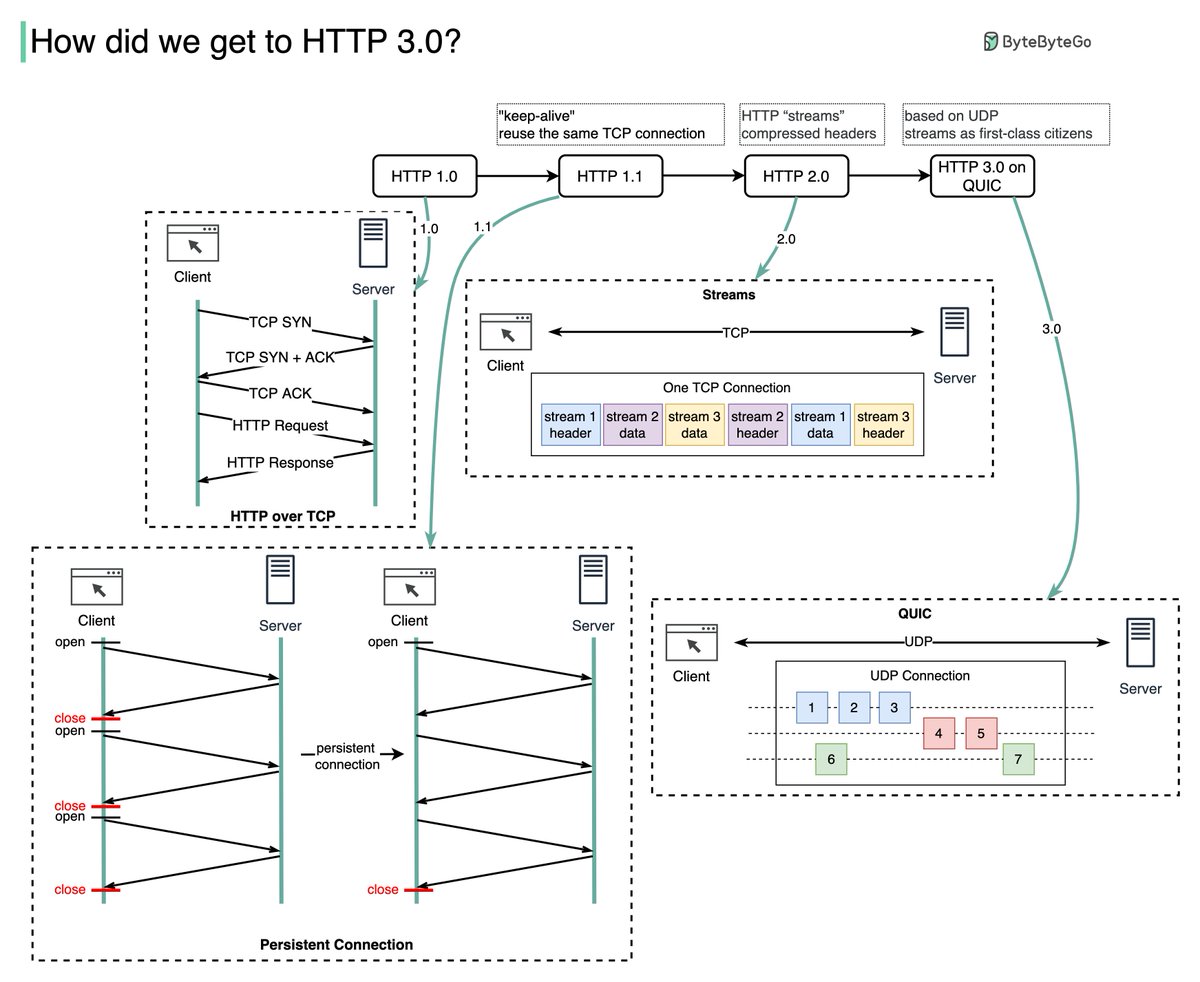
HTTP 1.0 -> HTTP 1.1 -> HTTP 2.0 -> HTTP 3.0 (QUIC).
What problem does each generation of HTTP solve?
The diagram below illustrates the key features.
🔹HTTP 1.0 was finalized and fully documented in 1996. Every request to the same server requires a separate TCP connection.