One must ask the critical path deductive question: How were the casing stones removed if they lay beneath approximately 55,000 tons of reconstituted travertine (below)?
Conversely, if the travertine was deposited after the casing stones had already been scavenged (a ridiculous notion), what was its source? Did they cart in calcium carbonate sludge and artfully drizzle it into parabolic shapes to later harden on all 8 pyramidal facings in equal quantity, just to screw with everyone who came later?
The conventional stone-scavenging explanation has yet to provide a satisfactory explanation for this falsifying evidence.
Under the rules of evidence, the Narrative must do so before its "hypothesis" can be accepted. This is not a misintepreted quote from antiquity, this is hard undeniable evidence in photograph.
🔥 Hero of the Day - Shirttail Creek, Brenham TX
Most people walk past dead dirt. Sam Moffett bought over 100 acres of it outside Brenham, TX and went all in.
A century of conventional farming had wrecked the soil. He tells the whole turnaround at https://t.co/oNVe2XilXW: his bet was that the land could fix itself if he just stopped getting in the way.
Cattle graze a paddock. Chickens follow days later, scratching through the manure and breaking the parasite cycle before it starts. Cover crops go in. The land rests. Then it starts over.
No hormones. No pesticides. No unnecessary interventions.
Eight years later that dead dirt is running 100% grass-fed, grass-finished beef, pastured chicken, pork, and eggs — rebuilt by the land itself, not a fertilizer invoice.
It never needed rescuing. It needed someone to quit managing it and start trusting it.
When talking #ECDO with friends, I found it's hard (I'm bad) at describing exactly what pole motion & polhode are; whilst "a curve produced by the angular velocity vector on the inertia ellipsoid" is correct, it doesn't get the point across to the unfamiliar. So I created this.
Jackson's spinal recovery stunned news stations & millions online. Doctors said he'd never walk, breathe, or move again.
His mom's secret? DMSO—a simple compound vets use on spine injuries the FDA won't approve
But that's not the only "incurable" neurological disorder it helps.
Approximately 2000 studies support DMSO's use for conditions ranging from Alzheimer's and Parkinson's to strokes, MS, ALS, chronic pain, neuropathy, depression, epilepsy, and Down syndrome, and a physician who began treating his patients with it estimates roughly 80% of what people see neurologists for goes away with DMSO.🧵
Last night, I read the entirety of C.S. Lewis' The Screwtape Letters. It's a novel told in the form of letters written by a demon to another demon instructing him on ways to manipulate his "patient" to do evil.
This one quote sounded familiar.
From my book, JUSTIFY THIS, in the chapter about GOSNELL:
"We were filming the movie in Oklahoma, and there was one role that we still had not cast. I just had not seen anyone that struck me as right for the role.
On a Sunday after the second week of shooting, I went to a Waffle House (my favorite restaurant chain by the way) in Oklahoma City. The place was very busy, and the manager was going around apologizing to everybody for their meals being late.
I kept looking at her. There was something about her. She was very attractive, and she had a tattoo on her neck. There was a certain toughness about her, and she way she carried herself was so poised and competent. There was a strength and a wisdom to her that I thought would really read on camera.
I felt moved to go and talk to her. I waited until she had a free moment, and I said, “Look, I know this sounds like a crazy pickup line, but…um, have you ever done any acting?”
Obviously having never been asked that question, she predictably responded, “Um, no.”
I said, “Look, I know this might sound like a cliche pick-up line, but…I really am a director from Hollywood and I really am shooting a movie here in town, and there’s a part in it that you would be right for. Would you mind if I got the script and let you read it with me to see if it’s something you want to do?”
“Um, okay.”
I drove home and got the script and went back to the Waffle House and sat down with her in a booth to read the script together. I explained that the character only had three or four lines, but they were very important to the story. I said, “I think you could do this. Would you be willing?”
She was understandably skeptical of this guy who suddenly showed up at her job claiming to be a Hollywood director and offering her a role in a movie. “I don’t know. How much would it pay?” she asked.
I said, “Well, it’ll probably be at least two or three days of work—and it’ll pay about eight hundred and thirty dollars a day.”
She said, “Okay.”
Probably a little better than Waffle House.
The first day she came to work, she practically brought her entire family with her to make sure I wasn’t some sort of crazy serial killer. We shot with her a couple of days, and she did very well. She was a natural. I kept telling her, “Tessya, don’t try to be interesting. You’re interesting enough. Just tell the truth. Let the words do the work for you.” And she was terrific.
On the third day, one of the producers, Ann, came over to me and said, “You’re not going to believe this.”
I replied, “Oh no. What now?” I was sure someone had quit, or some location had fallen out, or some other low-budget-movie disaster had occurred.
She said, “The thing that happened to her character in the movie happened to her in real life.”
I said, “What are you talking about?”
“Tessya, in her real life, went to have an abortion, and when they let her listen to the heartbeat of the baby, she decided not to go through with the abortion. She had her baby, just like her character in the movie.”
I was floored. I felt the hand of God was at play here. I believe God led me to that Waffle House to find her. That something inside me, telling me, when I first saw her, “She can do it! She can do it!”—was Him.
She is now the proud mother of three boys, including her firstborn, whose heartbeat changed her life.
@sagesteele@WaffleHouse
At the beginning of the twentieth century, twelve men sat down to dinner knowing exactly what awaited them: every bite they ingested was contaminated.
They eat it so you didn’t have to. The only thing is that industry found and exploited loopholes.
They ate anyway, three times a day, every single day, for five long years. They did it because the American table had become a quiet slaughterhouse.
Milk dosed with formaldehyde to hide the souring. Meat dusted with borax to disguise rot. Vegetables lacquered green with copper sulfate. Desserts sweetened with lead and mercury. This was not carelessness. It was commerce, protected by silence and sanctioned by law.
Dr. Harvey Washington Wiley, chief chemist at the Department of Agriculture, understood exactly what was happening. He knew that millions of families were feeding their children slow poison with every meal, and that no statute on the books required a single word of truth on a label.
So he stopped waiting for permission.
In the basement of his government office in Washington, he built a different kind of laboratory: a formal dining room dressed in white linen and set with proper china.
There he offered something radical and terrible free meals in exchange for the daily consumption of the very chemicals flooding the food supply. Borax. Formaldehyde. Salicylic acid. Sulfurous acid. Volunteers had to sign away their right to sue the government if the experiment killed them. Students, clerks, and letter carriers stepped forward anyway.
They were not reckless.
They were willing to let their own bodies become the evidence that might save everyone else’s. The newspapers named them the Poison Squad.
At first the meals looked ordinary; the poison arrived hidden inside the food. Later, for precision, it came in capsules. The men joked in the beginning. Then the jokes stopped. Their skin grew pale and waxy. Weight fell from them in visible stages. Nausea became permanent. Stomach pain turned savage. Headaches folded them double. Every day they were weighed, examined, and logged like specimens. Not one of them walked away.
The country watched the slow spectacle with a mixture of fascination and unease. The food industry responded with lawyers, lobbyists, and character attacks on Wiley. None of it mattered. The data was pitiless: the substances long declared “harmless” were systematically destroying healthy young men.
Five years of deliberate suffering produced an undeniable result. In 1906 the Pure Food and Drug Act became law the first federal statute that forced manufacturers to tell the truth about what they were selling and made it illegal to poison the public for profit. It was the foundation on which the FDA would later stand.
The victory belonged to Wiley’s stubborn courage, but it belonged far more to the twelve men who had volunteered to become living proof. They left the experiment with no medals, no pensions, and almost no public recognition. They simply returned to their ordinary lives. Yet every ingredient list we now read, every expiration date we trust, every time we open a refrigerator without fear we are living inside the protection they purchased with their own bodies.
They swallowed poison so the rest of us would not have to. Their names are mostly forgotten. Their courage is not. It sits on every shelf in every kitchen in America.
But the industry did not surrender. It simply learned a more sophisticated game.
When blatant adulteration became illegal, the manufacturers discovered they could invent entirely new classes of substances emulsifiers, stabilizers, flavor enhancers, artificial colors, preservatives, texture agents and slip them into the food supply through a loophole called “Generally Recognized as Safe.”
1 of 2
Well, Alberta.... guess you're going to have to do this the hard way.
On the plus side the Canadian military has like 3 airplanes and you're nowhere near water so their 1 boat isn't much of a threat
If you ask nicely you might get 5 or 6 guys from Idaho to head up there for the weekend and handle it for you
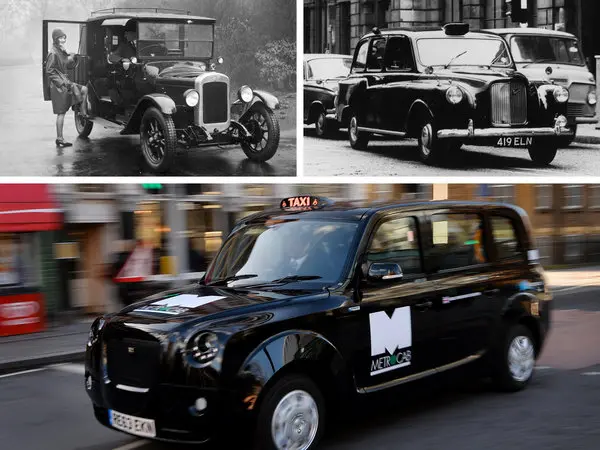
To get a license to drive a black cab in London, you have to memorize 25,000 streets, 20,000 landmarks, and the fastest route between any two points in a six-mile radius of Charing Cross. It takes most people three to four years.
A British neuroscientist asked the obvious question nobody had thought to ask. What does that actually do to a human brain?
Her name was Eleanor Maguire. The study changed neuroscience forever.
The exam is called The Knowledge. It was introduced in 1865, and the format has barely changed since.
Applicants ride a moped around London for years with a clipboard strapped to the handlebars, tracing every possible route between every possible pair of points in the city.
They get tested in person by an examiner who can ask them, on the spot, for the shortest legal route between any two addresses in a database of tens of thousands. Half the people who attempt it fail.
The ones who pass have spent an average of four years studying full time and have taken the test 12 times before getting through.
Maguire was watching a TV movie about it in 1995 when she had the idea. These were not ordinary people. They were people running one of the most extreme spatial memory training programs that exists anywhere on Earth.
If the human brain could be reshaped by experience, this was the cleanest natural experiment anyone was ever going to find.
She put 16 of them in an MRI machine.
Their posterior hippocampi were significantly larger than the brains of matched controls. The longer a driver had been working, the bigger the difference got.
A 40-year veteran had a measurably more developed hippocampus than a 5-year veteran, and both had more than someone who had never driven a cab.
Here is why that finding broke a century of consensus.
Until 2000, every neuroscience textbook in the world taught a version of the same idea. The adult brain is essentially fixed. You are born with a set number of neurons. Childhood is the window where the wiring gets laid down. After puberty, the structure freezes, and the rest of your life is just slow decline.
Maguire's study was one of the first pieces of human evidence that this was simply wrong. Adult brains physically remodel themselves in response to what you ask them to do. Not metaphorically. Structurally. With grey matter you can measure on a scan.
The skeptics had an obvious objection. Maybe people with bigger hippocampi were just more likely to become taxi drivers in the first place. The brains were not changing. The job was selecting for brains that already looked that way.
So Maguire ran the experiment again. Properly this time.
She recruited 79 trainees who were just starting to study for The Knowledge and 31 controls who were not. She scanned all of them at the start. Then she waited four years. Of the 79 trainees, 39 eventually passed the exam and 20 failed. She scanned them again.
The trainees who passed had grown larger posterior hippocampi over those four years. The trainees who failed had not. The controls who never studied had not. The brain change was not selection. It was construction.
The act of memorizing the city had physically rebuilt the part of the brain responsible for spatial memory, and the rebuild only happened in the people who actually did the work.
There is a quieter finding from this research that almost nobody quotes, and it is the one I cannot stop thinking about.
The drivers had a bigger posterior hippocampus, but they had a smaller anterior hippocampus. The brain had not magically expanded. It had reallocated. Tissue that was being used for one type of memory had been compressed to make room for another.
When Maguire ran follow-up cognitive tests, the cabbies were measurably worse than controls at certain visual memory tasks unrelated to navigation. They had paid for The Knowledge with something else. The trade was real.
She also ran a second control experiment that is the part of the story most people never hear. She scanned London bus drivers. Same hours behind the wheel. Same city. Same traffic. Same stress. The only difference was that bus drivers follow fixed routes. They do not have to navigate. Their hippocampi looked completely normal.
The cab drivers had not grown bigger hippocampi from driving. They had grown them from the constant, active, effortful retrieval of spatial information from memory.
That distinction is the entire study.
Then in 2020, McGill researchers ran the inverse experiment. They tracked 50 regular drivers and measured how often they used GPS. The participants who relied most heavily on turn-by-turn navigation had measurably weaker spatial memory. When the researchers retested a subset of them three years later, the heavier GPS users had declined fastest.
The hippocampus, the same region the cabbies had built up by ignoring shortcuts, was being slowly hollowed out in everyone else by accepting them.
The mechanism Maguire spent 25 years documenting works in both directions. Brains grow what you make them grow. They lose what you stop asking them to do.
The taxi drivers were running the most intense spatial memory training program on Earth. Most of the rest of us are running the opposite program without realizing it.
Maguire died in early 2025. UCL's tribute described the cabbie study as a stroke of creative genius. She had spent her entire career on a single question. What does it physically take to remember something, and what changes inside a person who remembers a lot of it.
The answer is the part that should change how you live.
If DMSO was used for strokes and spinal injury, millions would be spared from paralysis and death—yet despite over a hundred studies showing this, the FDA banned it.
Since publishing this article, dozens of readers shared DMSO saved them from a stroke.🧵
https://t.co/nuFAanzwvp