My op-ed in @timesofindia on the rupee:
https://t.co/bvVoq7bGZK
There is nothing automatic about foreign exchange running out. Only the RBI can deplete reserves. The policy question is whether to deplete reserves to support the rupee. I argue that there are ample grounds to let the rupee adjust to arrive at lower imports, higher exports, and to encourage capital inflows. Intervention in FX markets can wait another day.
@NDTVProfitIndia The shift toward digital cash (e-wallets, UPI, credit cards) has significantly increased consumer consumption, with research indicating that digital payment users can spend up to 15% to 48% more than those using physical cash 🙏
@StockSavvyShay 🇨🇳 Chinese laptops & smartphones (Lenovo, Xiaomi, Oppo, Vivo, etc.) rely heavily on American hardware:
• 90% Processors: Mostly Intel, AMD, Qualcomm (USA)
• 90% Modems: Qualcomm (USA)
• Storage/RAM: Significant share from Micron & Western Digital (USA)
#TechFacts
@Terenceshen • 1995 (peak): Japan ~$5.45T vs. US ~$7.66T → 71% (closest it ever got)
• After 1995: The ratio declined sharply due to Japan’s asset bubble burst,“Lost Decades” of stagnation, deflation, and yen movements. By the 2010s–2020s,Japan fell to ~25–30% of US GDP in nominal terms
The Petro Dollar defined the last 50 years of American economic dominance. The Token Dollar - the currency AI compute is bought and sold in - will define the next 50.
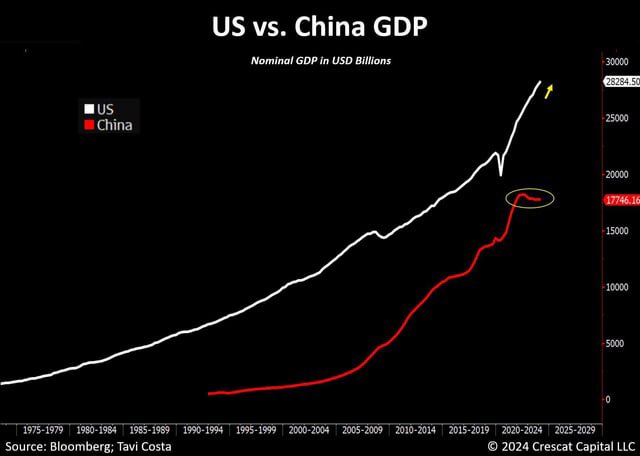
The dream of China surpassing the U.S. as the world’s largest economy is fading. In 2021, China’s GDP was about 78% of the U.S.; by 2024, that share had fallen to roughly 64%, back to around 2017 levels, with the gap between the two economies doubling in just a few years.
@ButterflyS77651@srivatsayb This echoes the old Freight Equalisation Scheme distortion — eastern states supplied raw materials while processing boomed elsewhere. Now they’re reversing it with local clusters, but outcomes depend on execution and governance.
@ButterflyS77651@srivatsayb This socialist-era policy (part of Nehru’s planning) achieved the opposite: it exacerbated regional inequality. Eastern mineral-rich states like Odisha, Bihar (then including Jharkhand), and West Bengal lost their competitive edge. The policy was finally scrapped in 1993 🙏