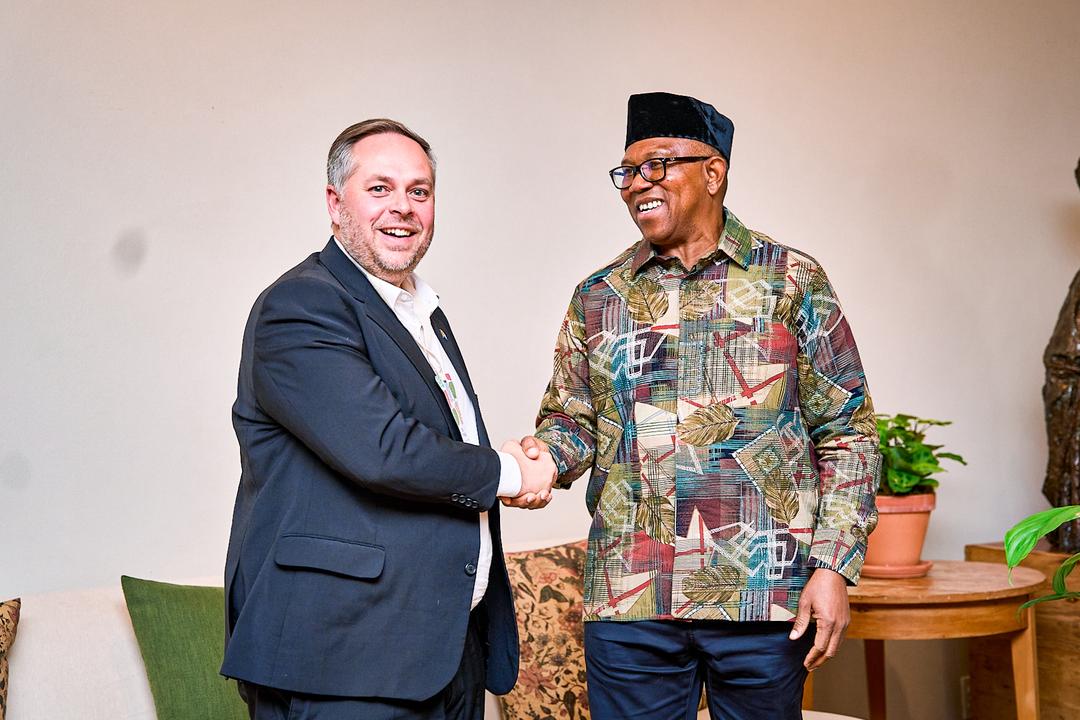
Earlier today, I met with the British High Commissioner to Nigeria, His Excellency Dr Richard Montgomery. We had a thoughtful discussion on the state of our democracy, the economy, the importance of strengthening our institutions, and the need to ensure that our elections remain free, fair, credible, and truly reflective of the will of the Nigerian people.
As Dr Montgomery prepares to conclude his diplomatic assignment in Nigeria next month, I thanked him for his service and for the role he has played in strengthening the longstanding relationship between Nigeria and the United Kingdom. His time in Nigeria has been marked by constructive engagement and support for our democratic and economic development.
I wished him well as he prepares for his next assignment and thanked him for the friendship and cooperation he has extended to Nigeria throughout his tenure. I look forward to seeing the strong relationship between our two countries continue to grow.
A New Nigeria is POssible. -PO
Building a Healthier Nigeria Through Stronger Healthcare Systems
As part of our desire and commitment to building a healthier Nigeria, I met with some healthcare professionals and experts in the United States on Friday, June 5, 2026. The meeting was essentially to deepen my understanding of how successful health insurance systems deliver improved healthcare, especially in the areas of primary and emergency care.
One of our key health objectives remains unchanged: to expand health insurance coverage, strengthen primary healthcare across our electoral wards, train more healthcare workers, and make quality healthcare accessible and affordable for all Nigerians.
A New Nigeria must be a healthier Nigeria.
A New Nigeria is possible. -PO
Concerns About Deteriorating Security
Two weeks have passed since schoolchildren were kidnapped in Borno and Oyo States, yet they remain in captivity. Meanwhile, the government is promoting the formation of a thousand-member rescue team through the media while the children continue to suffer in the wilderness.
Today, the security situation across the nation continues to deteriorate. On Sunday, terrorists killed at least seven people and injured ten others in Gwon-Ajang Village, located in the Foron District of Barkin Ladi Local Government Area of Plateau State.
In Kogi State, armed assailants kidnapped over 25 individuals and killed one resident during a coordinated raid on the Ayegunle-Igun Community in Kaba-Bunu Local Government Area. These heavily armed attackers carried out their operation in a commando-style manner, terrifying residents in the early hours of Monday.
In Anambra State, we also mourn the loss of two police officers who were killed in a bandit attack.
We still remember the painful incident in which armed individuals targeted three schools—Community Grammar School, Yawota Baptist Nursery and Primary School, and L.A. Primary School in the Ahoro-Esinle Community (Oriire Local Government Area near Ogbomoso)—and kidnapped 46 people, including 39 students, seven teachers, and the school principal.
On the same day, between 48 and 51 pupils and students in the Mussa Community (Askira-Uba Local Government Area) were abducted by suspected Boko Haram insurgents. The victims, who included young children from nursery classes as well as primary and secondary school students, were taken on May 15, 2026, and have now remained in captivity for two weeks.
Meanwhile, amid all these tragic developments, we politicians remain consumed by the next election, paying far more attention to political ambitions than to the safety and well-being of our children and fellow citizens.
In a nation that is not at war, the ongoing insecurity that endangers schoolchildren signifies a profound and serious challenge. -PO
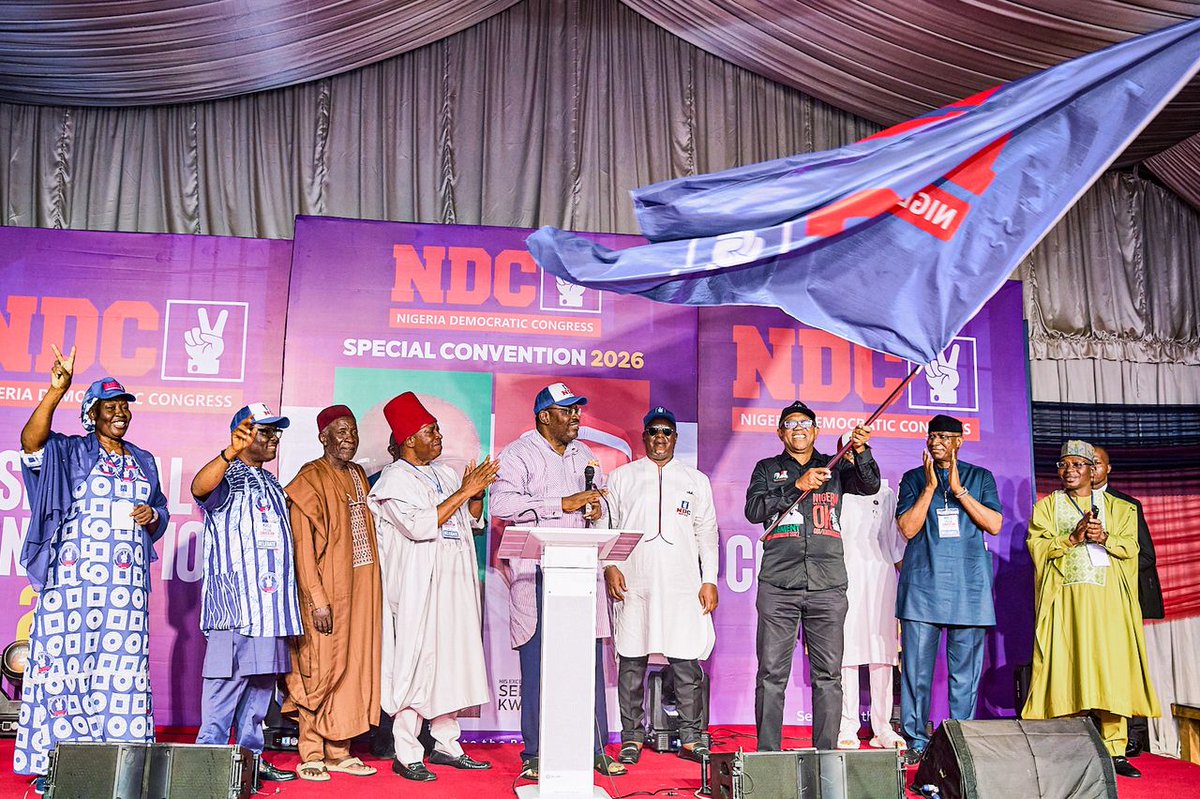
ACCEPTANCE SPEECH BY MR. PETER OBI FOLLOWING HIS NOMINATION AS THE PRESIDENTIAL CANDIDATE OF THE NIGERIAN DEMOCRATIC CONGRESS(NDC) – MAY 30, 2026
Protocols,
Esteemed citizens of Nigeria,
It is with deep humility that I accept the role of presidential candidate for our party.
I express my profound gratitude to the leaders of our party. His Excellency Seriake Dickson, the National Chairman, National Secretary and the National Working Committee, NWC members and members of our relentless supporters, and the Nigerian populace who have steadfastly kept the spirit of hope alive. I commend those who have made the journey from every region of our nation to convene here in Abuja.
I wish to assert unequivocally: a New Nigeria is Possible. This conviction has united us; it must serve as our compass on the challenging road ahead and sustain us through all trials we may face. This pivotal moment transcends the individual ambitions of Peter Obi; it concerns the essence of our nation and the future of our children. It is about rekindling hope for millions who have faced adversity yet remain committed to Nigeria.
Today, our nation finds itself at a crucial juncture, enveloped in uncertainty. Families are anxious about their safety; parents are concerned for their children's futures; and talented youth increasingly question their prospects in their homeland.
Businesses are struggling, communities are suffering, and an alarming number of citizens have lost faith in the very concept of governance. Yet, I stand before you filled with optimism and strong faith in the resilience of our people, for I firmly believe that a New Nigeria is possible.
UNITY
To realise this New Nigeria, we must first mend the foundational elements essential for the success of any nation.
Nigeria cannot advance while fragmented by ethnic, religious, regional, or narrow political divides. We may communicate in different languages and practise diverse faiths, but we share a singular destiny under one flag. Our diversity should not be a source of division; rather, it is among our greatest strengths.
We should build bridges where others erect barriers, replace mistrust with confidence, division with understanding, and resentment with a collective purpose. A united Nigeria is indispensable. As Will Durant wisely pointed out, "A great civilisation is not conquered from without until it has destroyed itself from within." We must never self-destruct. We must heal, unify, and progress together.
INSECURITY
In terms of security, the situation in Nigeria has considerably worsened. The global terrorism impact assessments ranked Nigeria as the 8th most affected nation in 2022, 6th in 2024, and 4th in 2026.
Yet, for many years, Nigeria garnered global recognition as a reliable contributor to peacekeeping, regional stabilisation, and conflict resolution. Our troops have not only displayed bravery but have also shown professionalism, discipline, resilience, and empathy in the most challenging operational contexts. Our officers and personnel have successfully commanded multiple international forthe ces, safeguarded vulnerable civilian populations, monitored ceasefires, reinstated constitutional order, and contributed to rebuilding efforts.
Nigeria became one of the leading contributors of troops from Africa to UN peacekeeping missions and earned widespread admiration for operational effectiveness and leadership in various countries, including Rwanda, Sudan, Liberia, Sierra Leone, Mali, Western Sahara, Congo, Lebanon, Cambodia, Haiti, and Kuwait. At one pointin a Nigeria, Lt. General Isaac Obiakor (rtd) even led global peacekeeping initiatives.
We must address insecurity with resolve and urgency, for no nation can thrive while its citizens live in trepidation. The primary responsibility of the government is to ensure the safeguarding of lives and property.
CONTINUOUS ABDUCTION OF NIGERIAN SCHOOLCHILDREN AND THE COLLAPSE OF SCHOOL SAFETY
After congratulating Nigerian children as they celebrate their day today, my heart remains heavy and troubled, knowing that some Nigerian children have remained in captivity for years. It is a shame that days, weeks, months, and even years have passed while our children continue to languish in kidnappers’ dens, with their heartbreaking images still circulating on social media.
A nation that cannot protect its children from criminals has little but shame to present to the global community. No parent can bear the shame of being unable to protect his or her children, yet here we are as a nation, moving on while our children continue to suffer in forests and captivity for years. -PO
Celebrating Eid-el-Kabir with Faith, Sacrifice and Hope
I warmly felicitate with the Muslim Ummah in Nigeria and across the world as they celebrate Eid-el-Kabir, a sacred occasion that embodies the timeless virtues of faith, sacrifice, obedience to God, compassion, and love for humanity. Let us focus our prayers on unity and hope at this year’s Sallah.
As we reflect on the profound lessons of this solemn celebration, we are reminded of the need for selflessness, tolerance, and commitment to the common good. These values are especially important at this critical period of our national journey. Nigeria is a nation of immense potential, currently weighed down by avoidable challenges, but the spirit of Eid-el-Kabir teaches us that after sacrifice comes fulfilment. We must never lose hope in the possibility of a functional, just, and productive nation where no citizen is left behind.
Let us use this sacred period to pray for our security forces on the frontlines, for wisdom for our leaders, and for meaningful economic relief for the masses who continue to bear the burden of our collective difficulties. Let us also recommit ourselves to peace, mutual respect, and unity across faiths and regions.
May this Eid-el-Kabir bring joy to our families, peace to our communities, and renewed hope to our dear nation. I wish all our Muslim brothers and sisters a blessed and joyful Eid-el-Kabir celebration. -PO
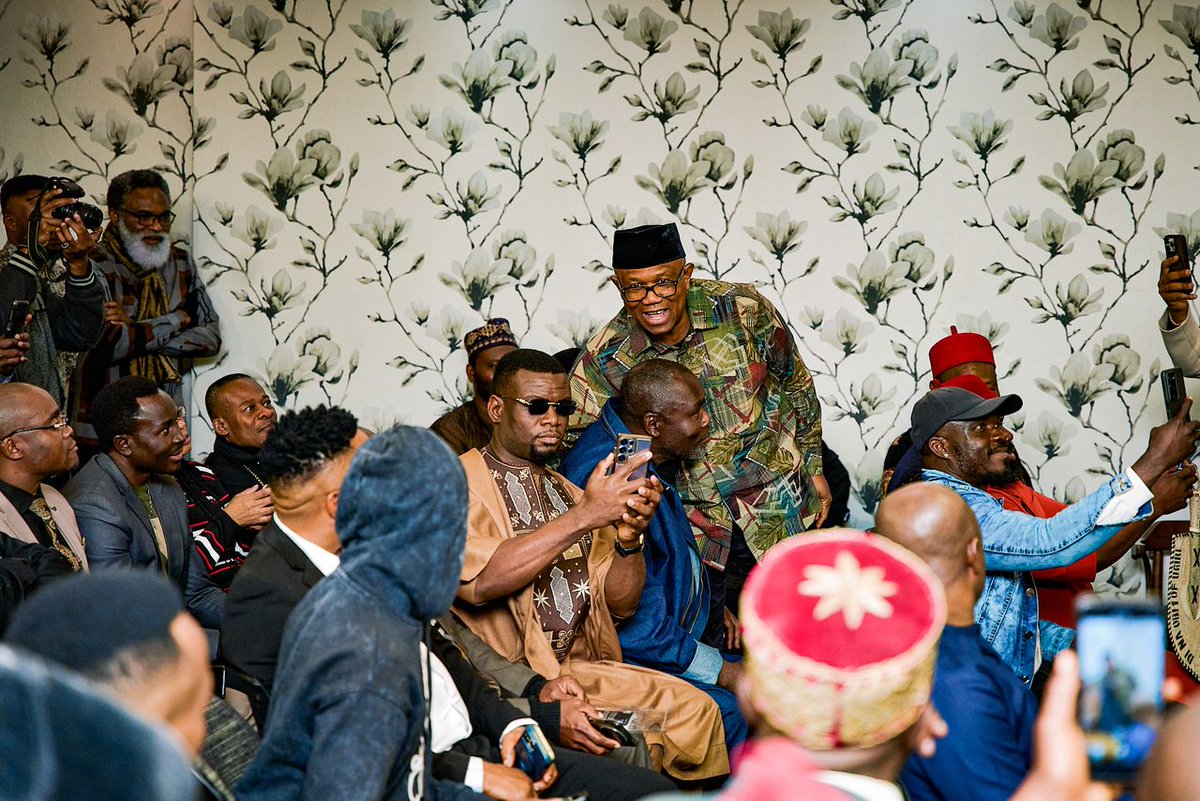
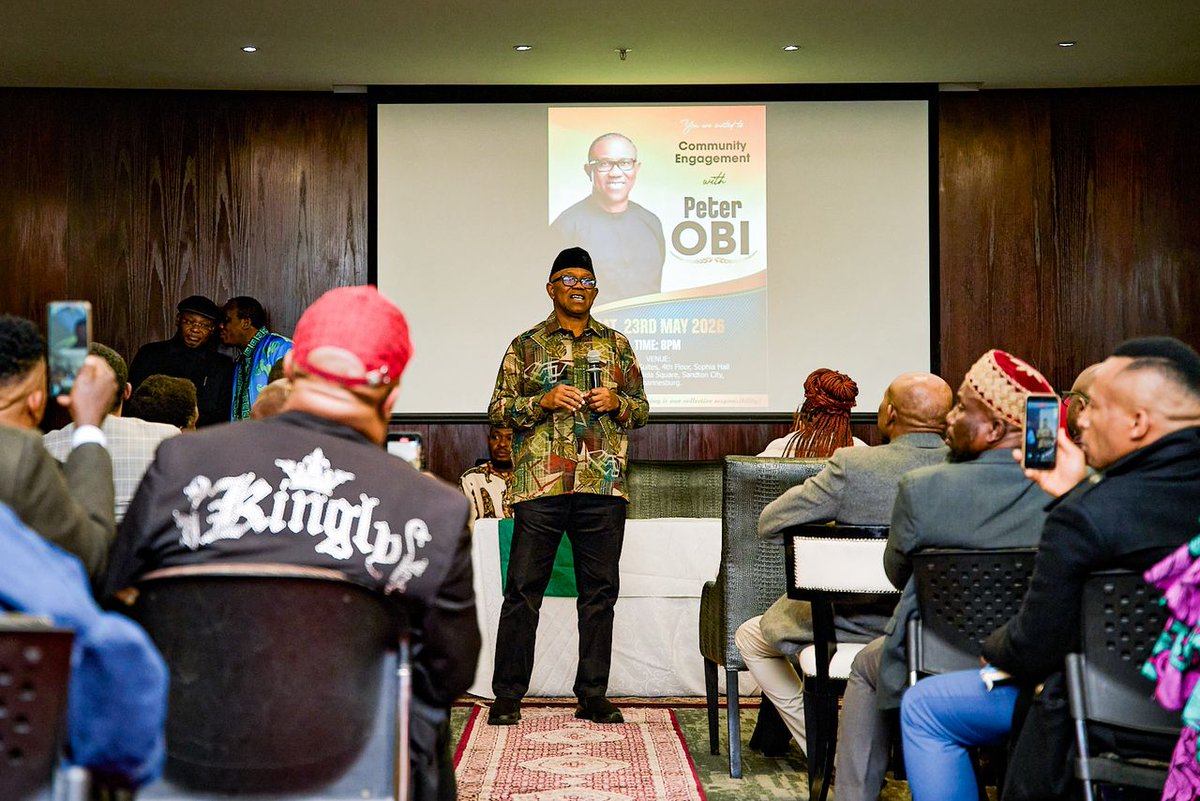
My final engagement in South Africa was yesterday in Johannesburg with my interaction with Nigerians in the diaspora. The discussions were frank, emotional, and deeply reflective of the realities confronting our people both at home and abroad.
The conversation was interrupted several times by passionate questions bordering on diplomacy, the treatment of Nigerians in foreign countries, the political situation back home, and the growing desire of many young Nigerians abroad to return home and contribute meaningfully to nation-building, if only the environment becomes conducive.
I also reminded our people that the respect any citizen receives abroad is often tied to how respected their nation is at home. A country that works, protects its institutions, upholds justice, and cares for its people naturally commands global respect. This is why leadership and governance must remain people-oriented, accountable, and rooted in competence and integrity.
While acknowledging the frustrations and pains many expressed, I emphasized the need for all of us to continue to conduct ourselves within the ambit of the law, irrespective of the provocation or difficulties we face. Nation-building demands discipline, civic responsibility, and the willingness to pursue change through constructive engagement.
The interaction further reinforced my belief that Nigerians across the world remain hopeful about the future of our nation despite the present challenges. Our task as leaders is to inspire that hope with sincerity, measurable action, and a commitment to building a secure, productive, and inclusive Nigeria.
A new Nigeria is POssible. -PO
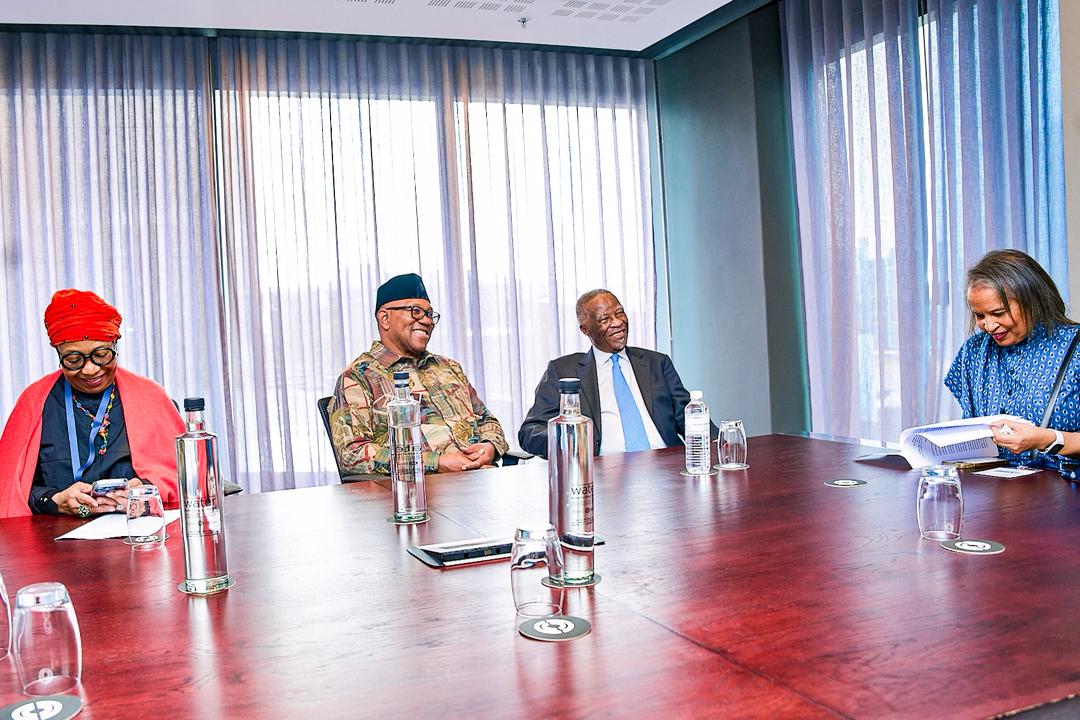
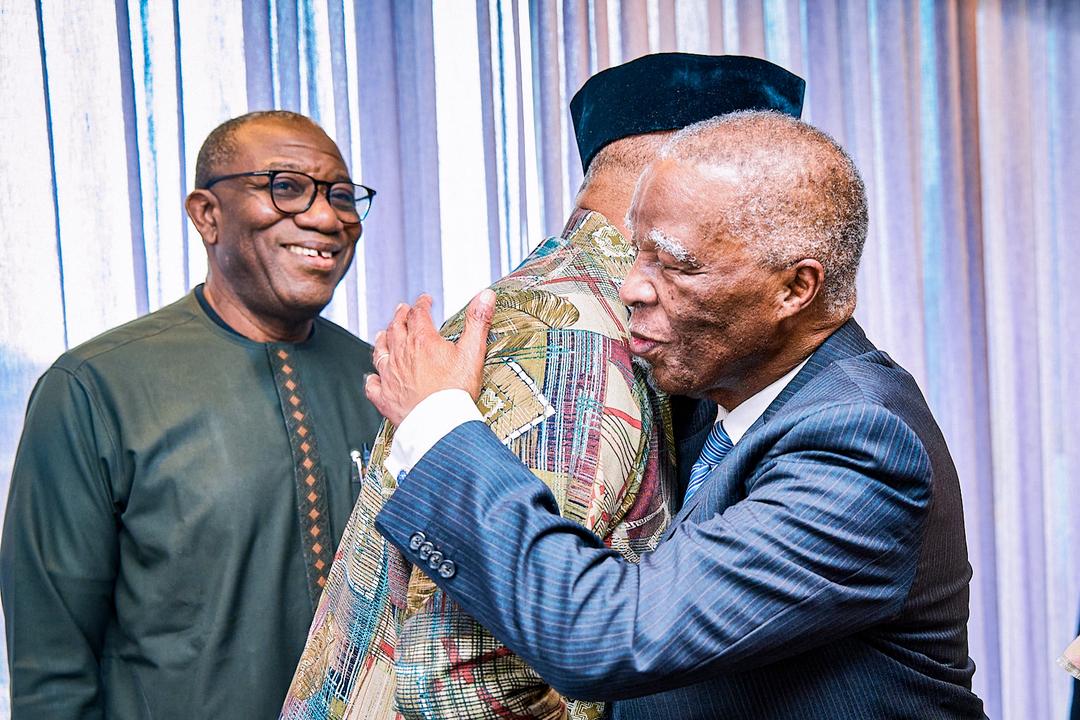
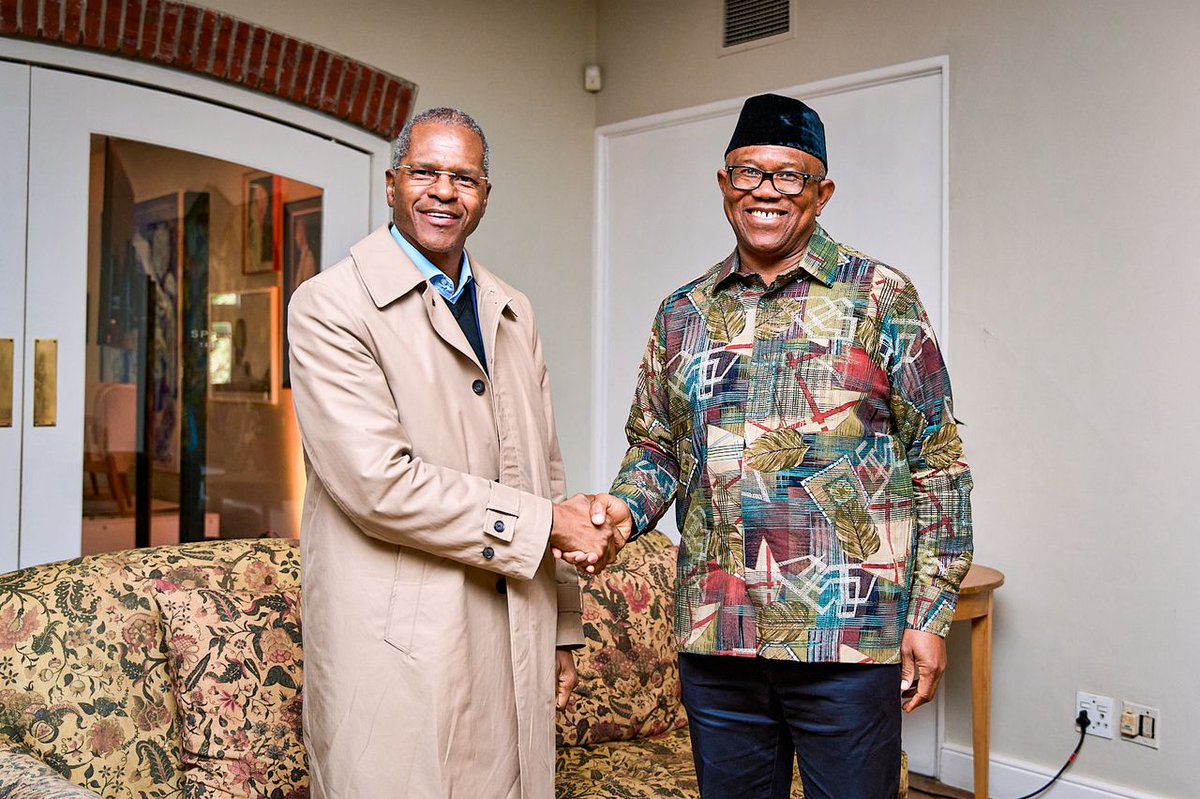
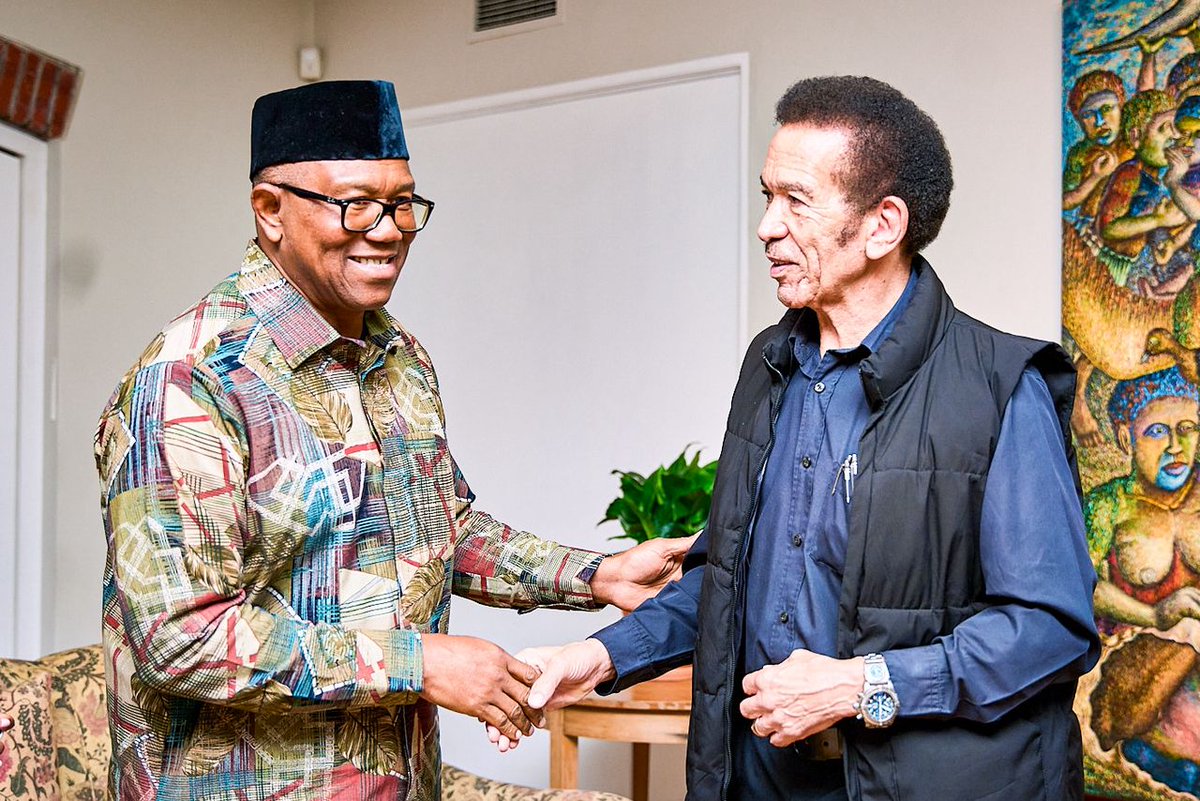
My final engagement before leaving Capetown for Johannesburg yesterday, I had the privilege of meeting two distinguished former leaders, President Ian Khama of Botswana and President Thabo Mbeki of South Africa, before departing Cape Town for Johannesburg yesterday.
This meeting was an opportunity for me to express my heartfelt appreciation for their positive comments on the recent immigration issues in the region and their continued advocacy for peace and unity among African nations.
Both Mr Khama and Mr Mbeki continue to hold significant respect across the continent due to their remarkable contributions, both during and after their presidencies.
During my audience with Mr Mbeki, I also reconnected with my good friend, former Ekiti State Governor Dr Kayode Fayemi, who delivered a keynote address at the Thabo Mbeki Africa Day lecture, focusing on the themes of rebuilding unity and revitalising institutions throughout the continent.
This event was organised by the Thabo Mbeki Foundation. -PO
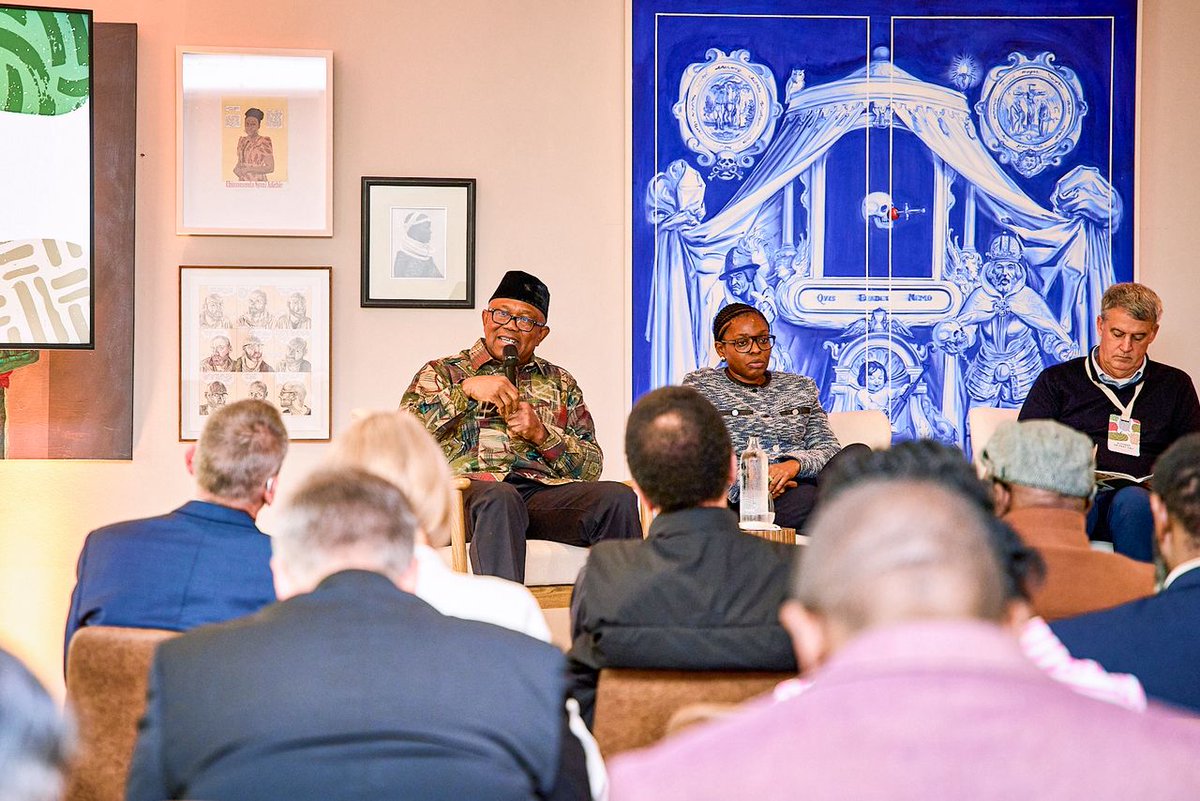
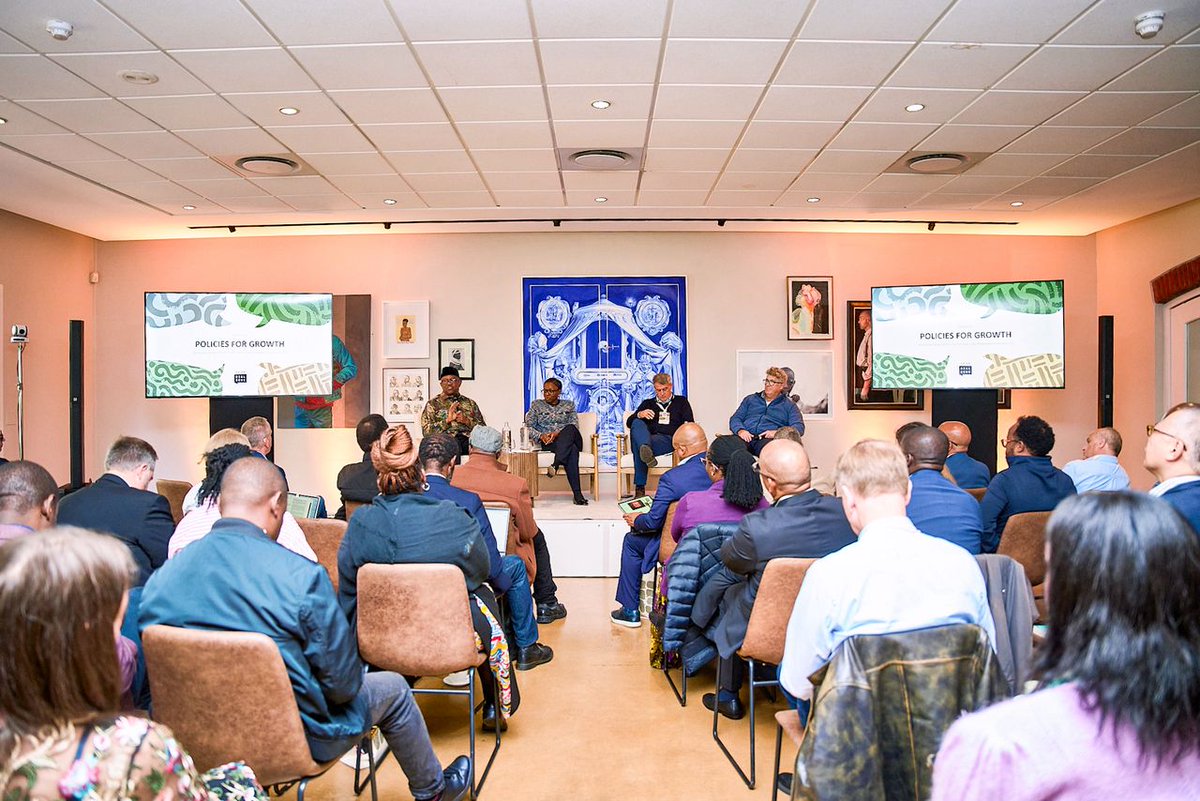
Yesterday in South Africa, after meeting with the ministers in the morning, I delivered a guest speech at the Spier Dialogue Event on “Policies for Growth in Africa” in Cape Town, where I reiterated that Africa has no reason to remain poor. Our continent is blessed with enormous natural and human resources. Africa holds huge mineral reserves, possesses over 60% of the world’s uncultivated arable land, and has the youngest population globally. These are not liabilities; they are strategic assets for economic transformation.
Yet, despite these enormous advantages, Africa continues to lag due to poor leadership, corruption, weak institutions, and the high cost of governance.
Africa must now look ahead and move forward with decisive action. We must shift our focus from politics and endless election cycles to productivity, development, and nation-building. The future of Africa lies in investing aggressively in Human Development Index (HDI) indicators, especially education, healthcare, and lifting people out of poverty.
Today, many African countries still record low life expectancy, high infant mortality, widespread unemployment, and growing poverty levels. Small and medium-scale businesses, which should be the engine of growth, are collapsing under harsh economic conditions, poor infrastructure, and policy inconsistency.
What Africa needs is competent leadership with the capacity, compassion, and commitment to prioritise production over consumption, and development over politics. If we invest in our people, strengthen institutions, reduce the cost of governance, combat corruption, and create an environment where businesses can thrive, we can build a more productive, secure, democratic, and prosperous Africa that works for all its people.
A New Africa is Possible. -PO
After speaking with Nigerians in Cape Town yesterday, I was able to have meaningful discussions this morning with three South African ministers and political party leaders regarding the ongoing challenges related to immigration, regional collaboration, and fostering peaceful coexistence between our nations.
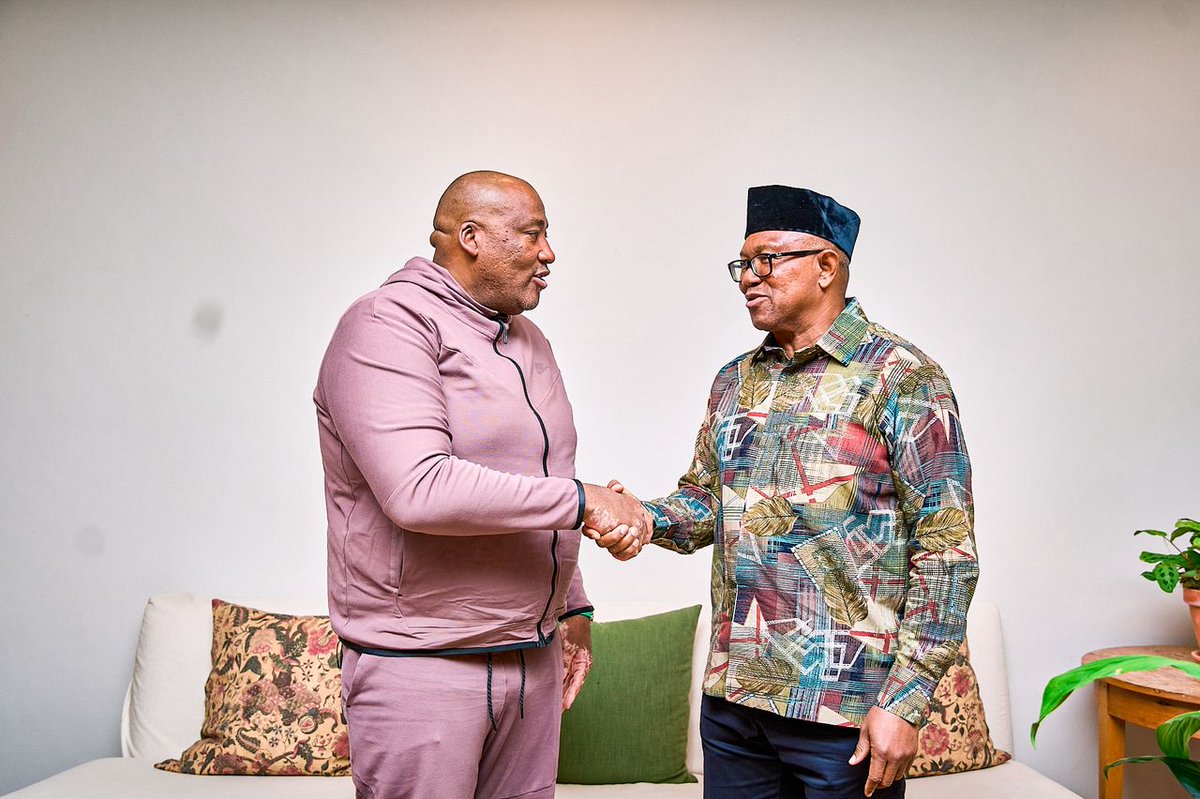
I had the pleasure of meeting with Mr Leon Schreiber, the South African Minister of Home Affairs and a prominent figure in the Democratic Alliance; Mr Velenkosini Hlabisa, the Minister of Cooperative Governance and Traditional Affairs and leader of the Inkatha Freedom Party (IFP); and Mr Gayton McKenzie, the Minister of Sports, Arts and Culture and leader of the Patriotic Alliance (PA).
Our conversations were productive and candid, focusing on the current challenges that affect both countries—particularly those related to migration, economic strains, youth unemployment, security issues, and the rising tensions faced by African foreigners in South Africa.
I firmly believe that Nigeria and South Africa, both prominent African nations, must enhance dialogue, bolster cooperation, and seek solutions based on justice, mutual respect, and adherence to the rule of law. In challenging times, leaders and citizens alike need to demonstrate responsible leadership, compassion, and restraint.
We collectively stressed the importance of law-abiding behaviour, avoiding violence, resisting hate or provocation, and allowing lawful institutions to address grievances through democratic and constitutional processes, regardless of the challenges we face.
The progress of Africa hinges on our ability to create unity, foster economic inclusivity, invest in our communities, and uphold the dignity of every African, no matter where they live. -PO